Delta Ends Three Short-Lived JFK Routes as Domestic Flying Shifts Back to LaGuardia
Delta Air Lines is eliminating three domestic routes from John F. Kennedy International Airport (JFK), ending nonstop service to George Bush Intercontinental Airport in Houston (IAH), Memphis International Airport (MEM), and St. Louis Lambert International Airport (STL).

All three routes were introduced in September 2025 as Delta attempted to strengthen domestic feed into its international hub at John F. Kennedy International Airport (JFK). Less than a year later, they have disappeared from the carrier’s future schedule.
The decision does not represent a complete withdrawal from any of the three markets. Delta will continue flying to Houston Airport (IAH), Memphis Airport (MEM), and St. Louis Airport (STL) from New York LaGuardia Airport (LGA), where the airline operates a much larger schedule of short- and medium-haul domestic flights.
Read our stories in your inbox
Two aviation newsletters. Zero fluff.
For passengers, the change means fewer nonstop options at JFK and less convenient access to Delta’s international network. For Delta, it allows scarce JFK operating capacity to be concentrated on routes that may produce stronger revenue or play a more important role in its long-haul strategy.
Three Routes Lasted Less Than One Year
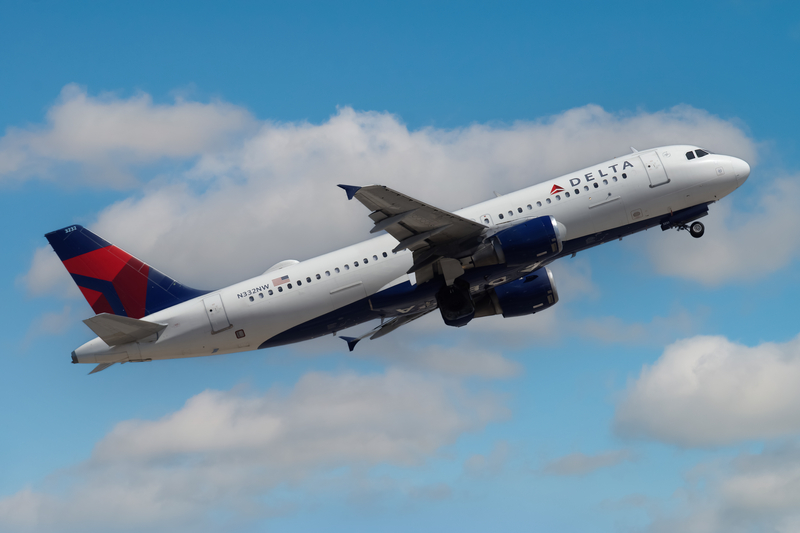
Delta launched the three JFK routes within days of one another in September 2025.
The airline began daily service between Memphis Airport (MEM) and John F. Kennedy International Airport (JFK) on September 8, 2025. According to the original Memphis Airport announcement, Delta scheduled a 76-seat Embraer E175 on the route.
St. Louis Airport (STL) received its restored JFK service on the same date. The route operated once daily and marked Delta’s return to the market after ending its previous St. Louis–JFK operation in 2015. The published St. Louis schedule included an afternoon departure from JFK and an evening arrival back in New York, timed to support both local travel and international connections.
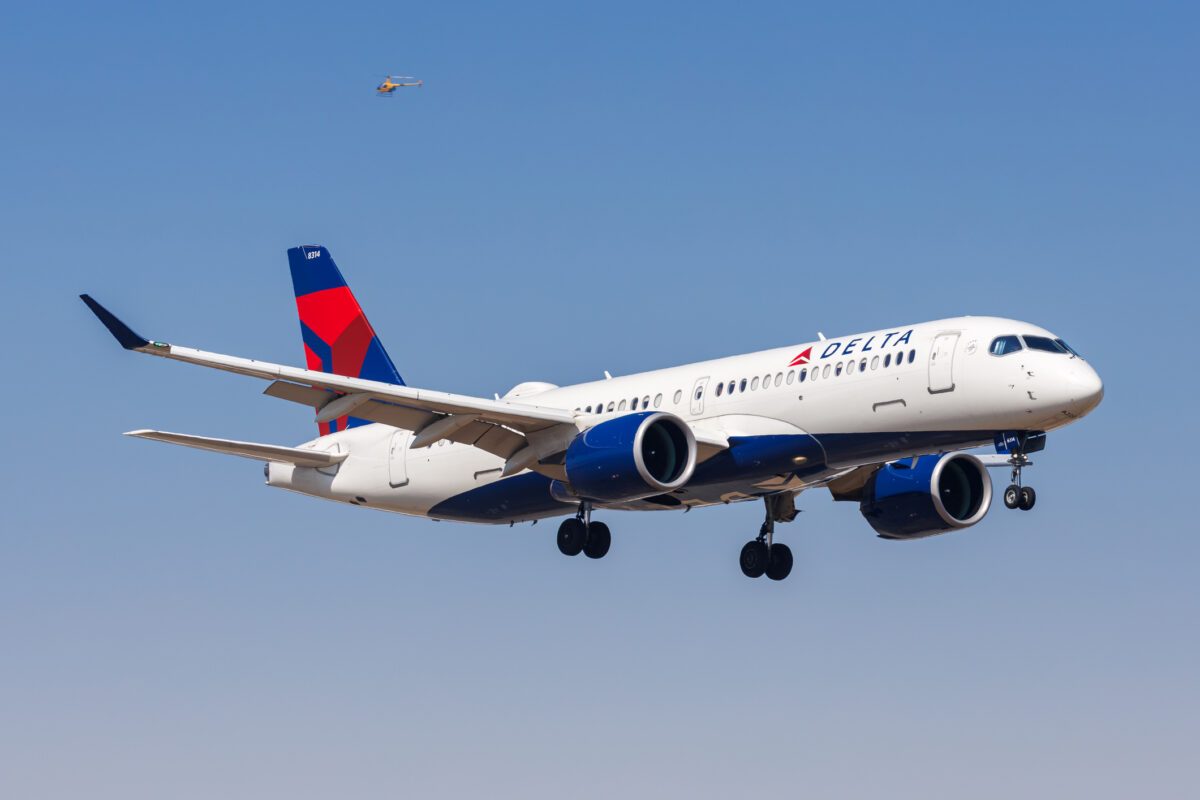
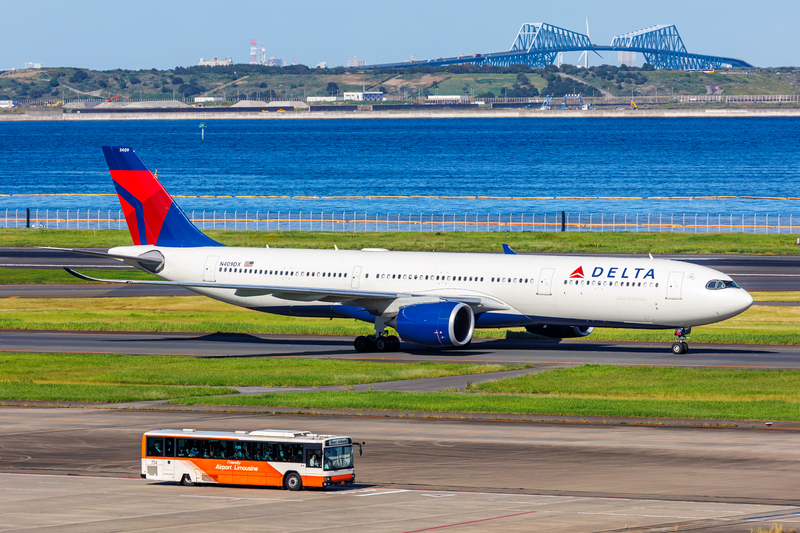
Houston Airport (IAH) was served with the Airbus A220-100, giving the route mainline capacity and a more spacious passenger product than the regional aircraft used to Memphis and St. Louis.
Delta’s three affected JFK routes were:
| Route | Typical aircraft | Delta’s continuing New York service |
|---|---|---|
| JFK–Houston (IAH) | Airbus A220-100 | LaGuardia–Houston |
| JFK–Memphis (MEM) | Embraer E175 or CRJ-900 | LaGuardia–Memphis |
| JFK–St. Louis (STL) | Regional jet | LaGuardia–St. Louis |
Delta has not issued a detailed public explanation for ending the routes. The changes were identified through schedule filings, and the services are no longer expected to return after earlier temporary suspensions.
The Routes Had Already Been Repeatedly Reduced
The Memphis and St. Louis routes encountered schedule instability even before their inaugural flights.
Delta initially planned to suspend both services during the winter of 2025–26, operating them primarily during periods with stronger international connecting demand. They returned to the schedule but were later removed for much of summer 2026.
Earlier schedule filings described the interruption as a temporary pause between June and September. The latest update goes further: the flights are no longer scheduled to resume.
That progression suggests Delta continued evaluating the routes after launch but ultimately determined that they did not justify a permanent place in its JFK network.
The short operating history also made it difficult for the services to become established. A route that repeatedly disappears for several months can be challenging to sell to corporate accounts and frequent travelers who value a dependable year-round schedule.
Passengers may instead book an airline that offers consistent service, making it even harder for the returning route to rebuild demand.
Why LaGuardia Makes More Sense for These Markets
LaGuardia Airport (LGA) is Delta’s primary New York airport for domestic business and regional flying.
John F. Kennedy International Airport (JFK), by contrast, plays a much larger role in Delta’s transatlantic, transcontinental, Caribbean, and Latin American networks. Delta and its major international partners operate from Terminal 4, with some partner flights using Terminal 1.
Delta identifies both JFK and LaGuardia as major New York operations, but the airports serve different purposes within the network.
For passengers traveling only between New York and Houston, Memphis, or St. Louis, LaGuardia Airport (LGA) is often more convenient than JFK. It is closer to Midtown Manhattan and offers a large schedule designed around local domestic traffic.
Concentrating flights at LGA also allows Delta to offer more frequencies in each market. A passenger may prefer several daily LaGuardia departures over one daily flight from JFK, even when JFK provides better international connections.
This creates a basic network tradeoff.
The JFK flights were valuable to passengers connecting to Delta’s overseas network. The LaGuardia flights are generally more useful to travelers whose journeys begin or end in New York.
Delta appears to have concluded that the local market is more valuable than the international connecting traffic generated by the three JFK routes.
JFK Slots Carry a High Opportunity Cost
John F. Kennedy International Airport (JFK) operates under federal scheduling restrictions intended to prevent airlines from adding more flights than the airport and surrounding air traffic control system can reliably accommodate.
The Federal Aviation Administration manages slots and schedule limits at JFK and other heavily congested airports. A departure used for a regional flight to Memphis Airport (MEM) cannot simultaneously be used for an international widebody, a premium transcontinental service, or a higher-capacity domestic flight.
The relevant question is therefore not simply whether a route is profitable.
A JFK route must generate enough value to justify using a scarce operating opportunity that could be assigned elsewhere.
A daily regional flight may cover its direct operating costs but still produce less total revenue than another use of the same slot. International flights can also generate premium-cabin sales, cargo revenue, partner traffic, and multiple connecting opportunities across Delta’s network.
Delta has been expanding its international schedule at JFK, including new routes to destinations such as Malta International Airport (MLA), Olbia Costa Smeralda Airport (OLB), and Porto Airport (OPO).
The airline has not said that one of those services will directly replace Houston, Memphis, or St. Louis. It could also use the freed capacity to increase frequency, deploy larger aircraft, or improve schedule reliability rather than announce another route.
Claims about precisely where the slots will go remain speculation until Delta publishes an updated schedule.
The Airbus A220 Could Not Save Houston
Of the three routes, Houston Airport (IAH) received the most capable aircraft.
Delta used the Airbus A220-100, a modern single-aisle jet designed for routes that need more capacity and range than a regional aircraft but do not require a larger Airbus A320 or Boeing 737.
The Delta A220-100 offers a range of approximately 2,415 miles and cruises at around 515 mph. It has a two-by-three Economy Class layout, meaning only one middle seat is installed in each row. The aircraft also offers seatback entertainment, Wi-Fi, power, and a dedicated First Class cabin.
The A220’s relatively low trip cost made it a logical choice for the approximately 1,400-mile JFK–Houston route.
Even so, Delta faced several commercial disadvantages.
George Bush Intercontinental Airport (IAH) is United Airlines’ principal hub for the south-central United States. United controls a large share of Houston’s corporate contracts, frequent travelers, and connecting passengers.
Delta was also dividing its New York–Houston operation between JFK and LaGuardia. Maintaining flights from two New York airports can improve customer choice, but it also spreads demand across separate schedules.
The situation became more competitive when JetBlue restored service between JFK and Houston Airport (IAH) on May 21, 2026.
JetBlue operates two daily JFK–Houston round trips, providing a stronger schedule for local passengers and travelers connecting through the airline’s JFK network.
Delta’s departure will leave JetBlue as the only airline flying nonstop between JFK and IAH, while United continues to dominate the wider New York–Houston market from Newark Liberty International Airport (EWR).
Delta will remain in the market from LaGuardia Airport (LGA).
ID 137673533 © Tom Samworth | Dreamstime.com
Memphis Loses a Useful International Connection
Delta’s Memphis Airport (MEM) route had a stronger strategic argument than its relatively small aircraft might suggest.
When the service was announced, Memphis Airport said the New York market generated approximately 352 passengers in each direction every day. The JFK flight also gave travelers access to Delta’s extensive European and international schedule without requiring a connection at Atlanta Airport (ATL), Detroit Airport (DTW), or another domestic hub.
The 76-seat Embraer E175 was well suited to testing that demand. It provided a two-by-two cabin without middle seats, along with separate First Class and Economy cabins.
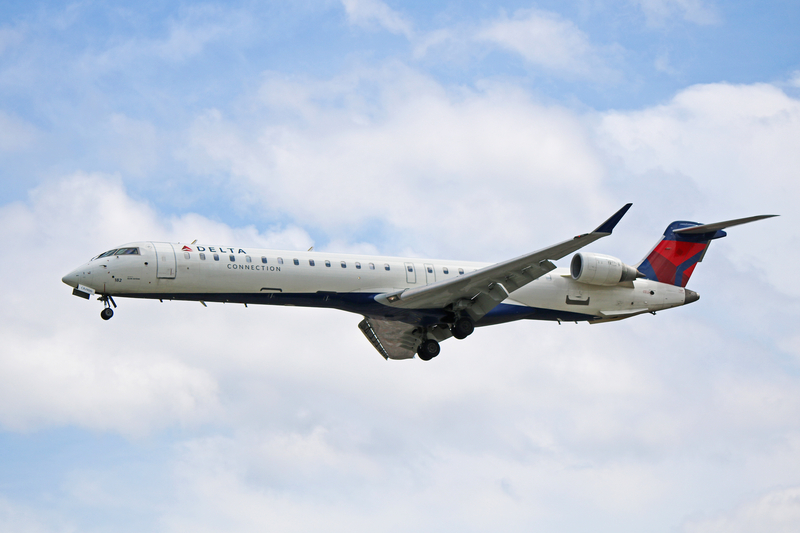
Some rotations later used the Bombardier CRJ-900, another 70- or 76-seat regional jet. Delta’s CRJ-900 configurations include 12 First Class seats, 20 Delta Comfort seats, and either 38 or 44 Main Cabin seats.
The small aircraft reduced the number of passengers needed to achieve a respectable load factor. However, a route can appear reasonably full and still perform poorly.
A high percentage of connecting passengers may produce lower average fares than local business traffic. Regional aircraft also have relatively high operating costs per seat, while one daily frequency limits the route’s appeal to passengers requiring scheduling flexibility.
Delta will continue operating between Memphis Airport (MEM) and LaGuardia Airport (LGA), preserving nonstop access to New York. The tradeoff is that travelers connecting to an international flight at JFK will need to use another Delta hub or make an impractical ground transfer between LaGuardia and JFK.
St. Louis Was the Weakest of the Three
The St. Louis Airport (STL) route restored a connection that Delta had not operated for a decade.
Airport officials emphasized its value for international travelers, since passengers could connect at JFK to Delta and its partners rather than traveling through Atlanta Airport (ATL), Detroit Airport (DTW), or Minneapolis–St. Paul International Airport (MSP).
Published traffic data indicated that St. Louis was the weakest-performing of the three routes, with load factors frequently below those recorded on Houston and Memphis.
Load factor alone does not explain route profitability, but consistently lower occupancy is especially difficult to overcome on a regional aircraft using a valuable JFK slot.
Delta also faces substantial competition between St. Louis and New York.
American Airlines, Delta, and Southwest Airlines serve St. Louis from LaGuardia Airport (LGA), while United Airlines operates from Newark Airport (EWR). Those alternatives give local passengers several choices without requiring Delta to maintain a separate JFK flight.
After Delta’s withdrawal, St. Louis Airport (STL) will again lose nonstop access to JFK.
Reasonable Load Factors Do Not Guarantee Profitability
The three cancellations demonstrate why airline network decisions cannot be evaluated using load factor alone.
An aircraft can operate 80% full and still lose money if fares are too low, premium demand is limited, or too many passengers are traveling on discounted connecting itineraries.
A less-full flight may be more valuable if it carries a larger proportion of high-fare business travelers, premium passengers, or profitable cargo.
JFK also changes the calculation because of slot opportunity cost. Delta must compare each domestic flight with every other route that could use the same operating window.
Other relevant factors include:
- Average fare and corporate-contract revenue
- The percentage of local versus connecting passengers
- Premium-cabin performance
- Aircraft and crew utilization
- Seasonal demand
- Competitive capacity
- The revenue created on onward international flights
The JFK–Memphis route may have fed passengers onto transatlantic flights, but Delta must calculate whether those passengers would have traveled through Atlanta, Detroit, or another hub anyway.
When a traveler can be retained elsewhere in the airline’s network, operating a separate JFK feeder flight becomes less essential.
Delta Is Sharpening the Roles of Its New York Airports
Delta’s decision reflects a broader division between JFK and LaGuardia.
LaGuardia Airport (LGA) is optimized for frequent domestic service, particularly to business markets throughout the eastern and central United States.
John F. Kennedy International Airport (JFK) is increasingly concentrated around long-haul international routes, premium transcontinental flying, and domestic services that provide especially valuable feed or local revenue.
That does not mean Delta will remove every short domestic flight from JFK. Many routes remain essential for connecting passengers or serve markets that cannot be accommodated as effectively through LaGuardia.
Houston, Memphis, and St. Louis simply did not appear to generate enough incremental value to justify serving both New York airports.
The change may improve efficiency, but it reduces convenience for passengers in those cities connecting through JFK.
A Memphis passenger traveling to Europe, for example, may now connect through Atlanta Airport (ATL), Detroit Airport (DTW), Boston Logan International Airport (BOS), or another Delta gateway instead of taking a single domestic flight directly into JFK.
Bottom Line
Delta Air Lines is ending nonstop service from John F. Kennedy International Airport (JFK) to Houston Airport (IAH), Memphis Airport (MEM), and St. Louis Airport (STL).
All three routes launched in September 2025 and lasted less than a year before being suspended and ultimately removed from future schedules.
Delta is not abandoning the three markets. It will continue serving Houston, Memphis, and St. Louis from LaGuardia Airport (LGA), where it operates a much larger domestic network.
The greatest impact will be felt by passengers connecting to Delta’s international flights at JFK. Travelers will now need to use another Delta hub or, in Houston’s case, consider JetBlue’s twice-daily JFK service.
The cuts also highlight the economic pressure attached to every JFK operation. A regional flight can carry a reasonable number of passengers and still fail to justify a slot that might support a larger, more profitable, or strategically important service.
Delta has not disclosed how it will reuse the operating capacity. The most likely explanation is not that the three routes were empty, but that they were less valuable than the alternatives available at one of the airline’s most important international hubs.
Keep reading FlyMag
Get the Daily Brief in the morning or the Route Watch weekly recap on Fridays. Or both.