United 767 Makes Six-Hour Return to Newark After Reported Hydraulic Fault Over Atlantic
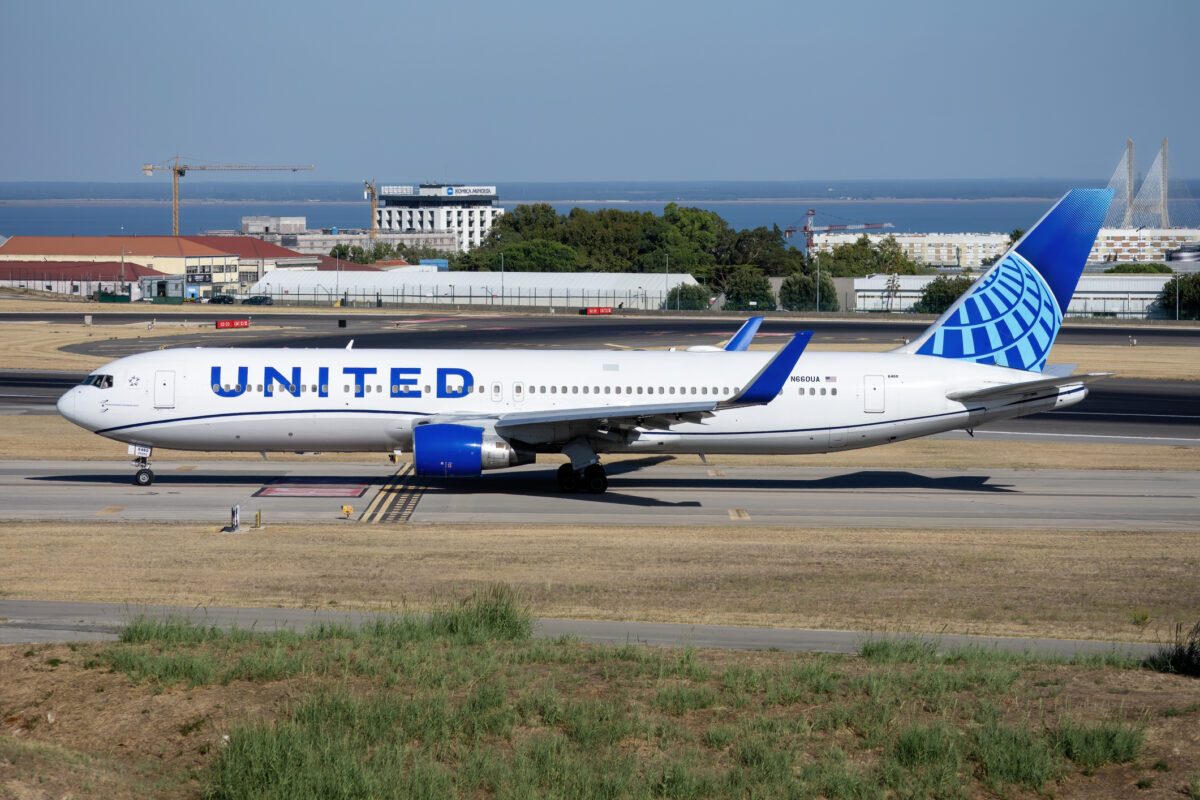
A United Airlines Boeing 767-300ER returned to Newark Liberty International Airport (EWR) after encountering a reported hydraulic-system problem several hours into a transatlantic flight to Geneva Airport (GVA).

Flight UA956 departed Newark Airport (EWR) at approximately 6:38 p.m. local time on July 20, 2026. The aircraft had traveled northeast across Canada and into the North Atlantic region before reversing course south of Greenland.
The Boeing 767 remained airborne for approximately six hours before landing safely back at Newark Airport (EWR). There were no reports of injuries, and the aircraft returned to commercial service the following evening.
Read our stories in your inbox
Two aviation newsletters. Zero fluff.
The incident involved N673UA, a 26-year-old Boeing 767-322ER powered by Pratt & Whitney PW4000-series engines. United operates the aircraft in a premium-heavy configuration designed for long-haul routes that do not require the capacity of a Boeing 777 or 787.
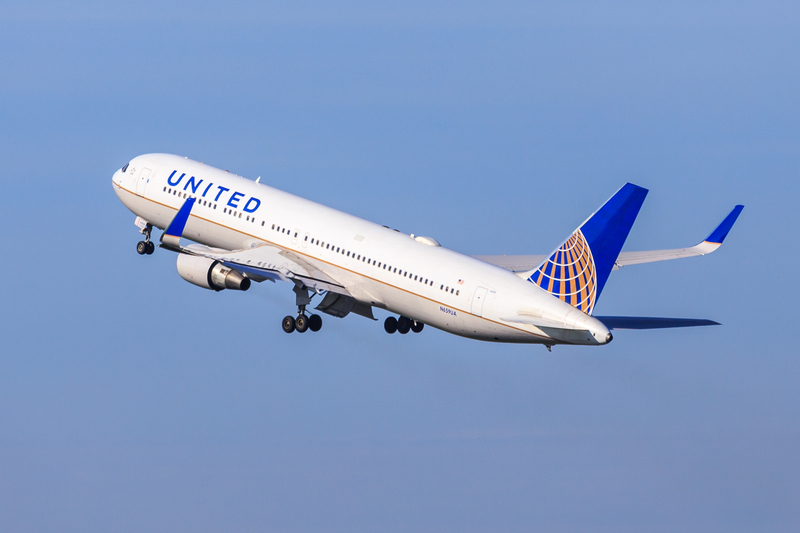
Flight UA956 Turned Around Over the North Atlantic
United flight UA956 is a regular nonstop service between Newark Liberty International Airport (EWR) and Geneva Airport (GVA), covering approximately 3,850 miles.
On July 20, the flight was scheduled to leave Newark Airport (EWR) at 5:30 p.m. but departed just over an hour late. Flight-tracking records for N673UA show that the Boeing 767 took off at 6:38 p.m. and was subsequently recorded as having diverted back to EWR.
Public reports indicate that the aircraft was cruising at approximately 35,000 feet south of Greenland when the crew received an indication involving the hydraulic system.
Passengers aboard UA956 said they were told that a backup hydraulic system was not functioning. United’s customer-facing flight information reportedly described the reason for the return more generally as a technical issue.
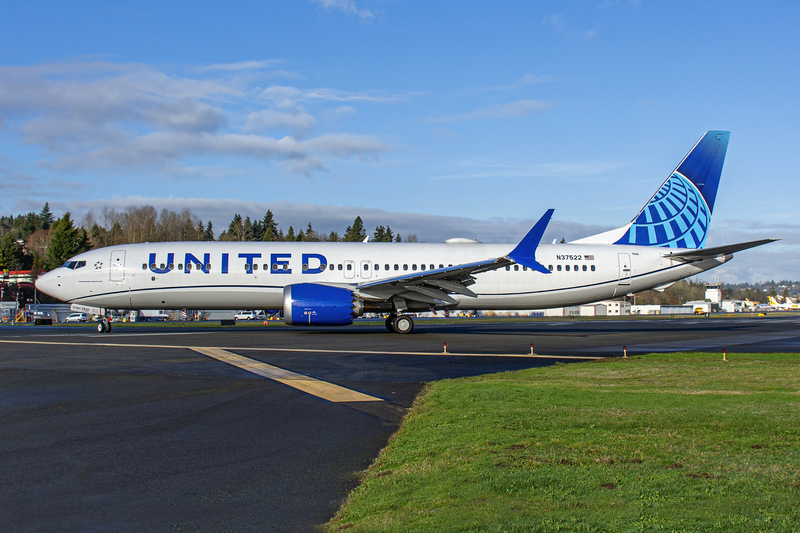
United has not publicly identified the affected pump, component or hydraulic circuit. It has also not released a detailed technical statement explaining whether the indication involved a loss of pressure, low fluid quantity, an electrical problem, a sensor fault or another condition.
That makes it important not to describe the event as a total hydraulic failure. The aircraft remained under normal control, turned back toward the United States and landed safely at Newark Airport (EWR).
“Backup Hydraulic System” May Be a Simplified Description
The Boeing 767 does not rely on a single hydraulic system with one separate backup.
The aircraft has three independent hydraulic systems, conventionally identified as the left, center and right systems. Those systems provide power to combinations of the flight controls, landing gear, brakes, steering, flaps, slats and other aircraft equipment.
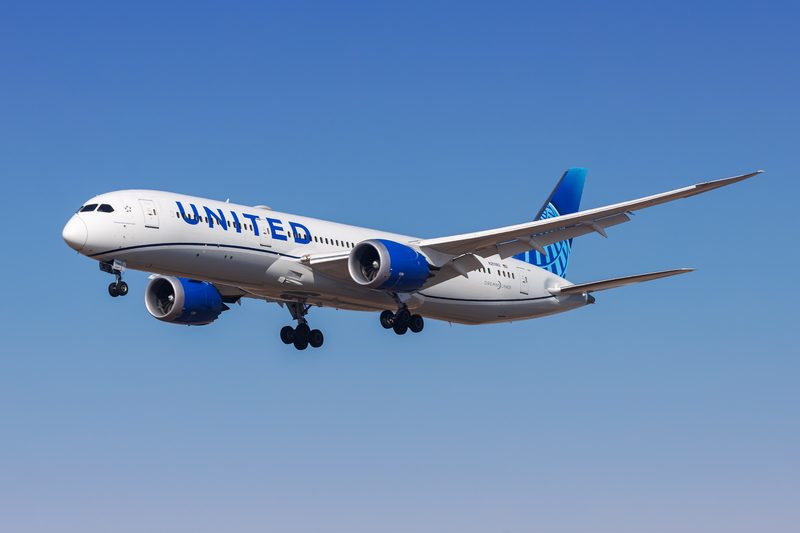
The architecture is designed so that the loss of one source does not ordinarily result in the loss of control of the aircraft. Flight-control functions are distributed among separate systems to provide redundancy.
The phrase “backup hydraulic system” may therefore have been passenger-friendly language used in an onboard announcement. It could have referred to one of the three main systems, an alternate source of hydraulic pressure or another standby component.
Without United’s maintenance findings, it is not possible to determine exactly what failed.
What is clear is that the crew did not consider continuing to Geneva Airport (GVA) appropriate with the reported system degradation. Instead, the pilots coordinated a return to Newark Airport (EWR), where United maintains one of its largest technical and operational bases.
Why the Crew Did Not Continue Across the Atlantic
The Boeing 767-300ER is approved for extended overwater operations, commonly known as ETOPS.
The Federal Aviation Administration’s ETOPS guidance applies to routes containing points more than one hour from an adequate airport at the approved one-engine-inoperative cruising speed.
ETOPS planning does not apply only to engines. Airlines must also consider the reliability and redundancy of electrical, hydraulic, fuel, fire-suppression and other systems needed to operate safely for an extended period away from diversion airports.
A single hydraulic-system problem does not automatically require an immediate landing. The appropriate response depends on which system is affected, whether it can be isolated, which functions remain available and whether the fault is stable.
The crew of UA956 apparently determined that the aircraft could be flown safely but that continuing the remaining oceanic crossing would unnecessarily reduce its safety margin.
Returning to Newark Airport (EWR) also provided access to United maintenance personnel, spare parts and passenger-rebooking resources. A diversion to a smaller North Atlantic airport could have left a widebody aircraft, its crew and its passengers in a location with limited United support.
The decision does not necessarily mean Newark was the nearest airport. Flight crews select the most suitable airport based on the seriousness of the problem, weather, runway conditions, fuel, maintenance support and the aircraft’s remaining capabilities.
United has not disclosed whether other airports were considered.
Load-Sheet Confusion Delayed the Departure
The flight had already experienced an operational complication before leaving Newark Airport (EWR).
Passenger accounts indicate that UA956 initially remained near the gate while the crew and dispatchers resolved conflicting load-sheet calculations. The captain reportedly told passengers that the figures raised questions about the distribution of baggage and cargo.
Updated information subsequently showed that the aircraft remained within its approved weight-and-balance limits, allowing the flight to proceed without returning fully to the gate.
A load sheet documents the aircraft’s operating weight and the distribution of passengers, baggage, cargo and fuel. It is used to confirm that the airplane is below the applicable takeoff weight and that its center of gravity falls within the certified envelope.
The issue is not simply whether an aircraft is too heavy. An aircraft that is below its maximum weight can still be improperly balanced if too much weight is concentrated toward the nose or tail.
The FAA’s aircraft weight-and-balance guidance explains that an incorrect center of gravity can affect stability, controllability and takeoff performance. Airlines therefore must resolve discrepancies before departure, even when they result from conflicting data rather than the physical loading of the aircraft.
There is no evidence that UA956 took off outside its approved weight or center-of-gravity limits. The corrected calculations reportedly confirmed that the aircraft was safe to depart.
The later hydraulic indication appears to have been unrelated to the load-sheet delay.
N673UA Is a 26-Year-Old Boeing 767-300ER
The aircraft involved was N673UA, manufacturer serial number 29241.
The FAA aircraft registry lists it as a Boeing 767-322 manufactured in 2000 and registered to United Airlines. The “22” in the detailed model designation is Boeing’s historical customer code for United, while the aircraft is commercially described as a Boeing 767-300ER.
N673UA made its first flight in December 1999 and entered service in January 2000. It is powered by two Pratt & Whitney PW4000-series turbofan engines and has been operated by United throughout its commercial life.
The aircraft is configured for 167 passengers, including 46 United Polaris Business Class seats, 22 Premium Plus seats and 99 Economy Class seats.
That unusually premium-heavy layout is one reason the 767 remains valuable to United. It allows the airline to offer substantial premium capacity on international routes where a larger Boeing 777-300ER or 787-10 could introduce too many Economy Class seats.
United’s Boeing 767-300ER fleet information lists a typical cruising speed of 540 mph and a wingspan of almost 157 feet. The type’s two-three-two Economy Class layout also means only one middle seat is installed in each row.
Aircraft Age Does Not Establish the Cause
The incident will inevitably raise questions about United’s aging Boeing 767 fleet, but the age of N673UA does not establish why the hydraulic indication occurred.
Commercial aircraft do not become unsafe simply after reaching a particular age. They remain in operation only while meeting required inspection, maintenance and airworthiness standards.
Older aircraft generally require increasingly intensive maintenance as components accumulate operating hours and cycles. Airlines must inspect structures for fatigue and corrosion, replace life-limited parts and comply with airworthiness directives issued by regulators.
Hydraulic pumps, valves, sensors and seals can also be replaced repeatedly during an aircraft’s life. The age of the airframe does not necessarily reflect the age of the component that produced a cockpit warning.
The Boeing 767 remains widely used because it has a mature maintenance network, established parts availability and favorable capacity for thinner long-haul routes. However, it consumes more fuel than newer aircraft such as the Boeing 787 Dreamliner and Airbus A330neo.
United has already said it intends to remove all Boeing 767s from its fleet by 2030 as additional Boeing 787s enter service.
Until enough replacement aircraft arrive, the 767 will continue playing an important role in United’s transatlantic network.
N673UA Returned to Service the Following Evening
The relatively brief period N673UA spent on the ground indicates that maintenance personnel were able to inspect the aircraft, address the reported issue and release it back into service.
Flight-tracking data shows that the aircraft next operated United flight UA962 from Newark Airport (EWR) to Berlin Brandenburg Airport (BER).
N673UA departed EWR at approximately 11:18 p.m. on July 21 and arrived at Berlin Airport (BER) at 7:24 a.m. local time on July 22. Its return to long-haul service suggests United did not identify damage requiring an extended repair or component shortage.
The aircraft subsequently continued operating additional transatlantic flights.
A rapid return to service does not reveal what maintenance was performed. The resolution may have involved replacing a component, correcting an indication, completing system tests or performing another approved maintenance procedure.
United has not published those details.
A Precautionary Return Rather Than an Emergency Outcome
The most important distinction is between a serious operational decision and a loss of control.
UA956 did not continue to Geneva Airport (GVA), but the Boeing 767 remained controllable and had sufficient capability to return across the Atlantic to Newark Airport (EWR).
The crew’s decision preserved additional redundancy rather than waiting for the situation to deteriorate. That is precisely the purpose of multiple aircraft systems and conservative airline operating procedures.
Passengers endured a six-hour flight that ended at the airport where it began, along with the disruption of an overnight cancellation. Operationally, however, the event ended with a normal landing and no reported injuries.
Until United releases further information, describing the event as a complete hydraulic failure, a near disaster or proof that the Boeing 767 is unsafe would go beyond the available evidence.
Bottom Line
United Airlines flight UA956 returned to Newark Liberty International Airport (EWR) on July 20 after a reported hydraulic-system problem developed during its flight to Geneva Airport (GVA).
The Boeing 767-300ER, registered N673UA, turned around south of Greenland and landed safely after approximately six hours in the air.
Passenger reports described the problem as the loss of a backup hydraulic system, but United has not identified the affected hydraulic circuit or component. The Boeing 767 has three independent hydraulic systems, and the aircraft remained fully controllable throughout its return.
An earlier disagreement involving load-sheet calculations delayed the departure, but updated figures confirmed that the aircraft was within its approved weight-and-balance limits. There is no evidence connecting that issue to the later technical fault.
After an inspection at Newark Airport (EWR), the 26-year-old aircraft returned to service the following evening and operated to Berlin Brandenburg Airport (BER).
The incident highlights why system redundancy and conservative decision-making remain critical during long overwater flights. It does not, by itself, demonstrate that the age of the aircraft caused the problem.
Keep reading FlyMag
Get the Daily Brief in the morning or the Route Watch weekly recap on Fridays. Or both.