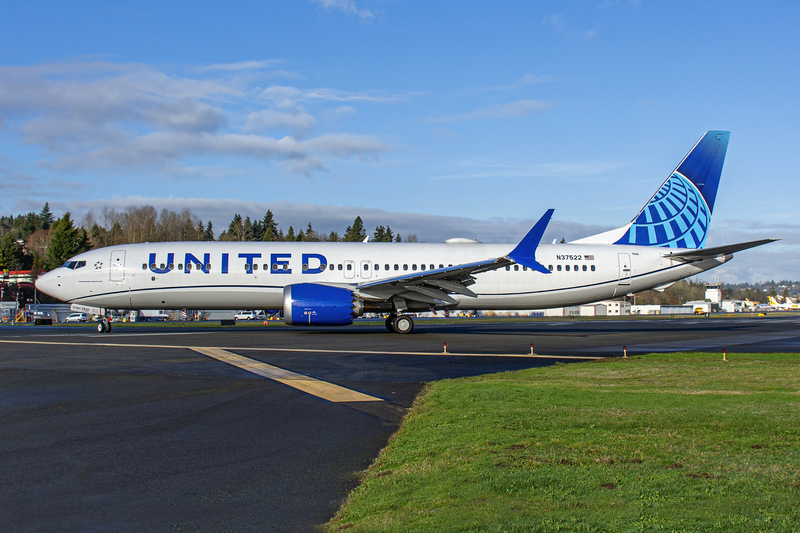
United Airlines is preparing to introduce the Boeing 737 MAX 8 into one of the most operationally distinctive narrowbody markets anywhere in the world, with 10 aircraft set to be based in Guam for the carrier’s Western Pacific operation beginning in May.

The first scheduled 737-8 flight from Antonio B. Won Pat International Airport (GUM) is set for May 1 to Tokyo Narita Airport (NRT), marking the beginning of a fleet transition that is far more significant than a simple aircraft swap. United is not just refreshing a subfleet. It is modernizing the backbone of a network that links Guam with Japan, Micronesia, Palau, the Philippines, Taiwan, and the airline’s famed Island Hopper operation across the central Pacific.
For a carrier that remains the only U.S. airline providing regular service to several small island communities in the Western Pacific, the arrival of the 737 MAX 8 in Guam is a serious fleet and customer-experience milestone.
Read our stories in your inbox
Two aviation newsletters. Zero fluff.
This Is A Fleet Upgrade With Real Strategic Weight
United has been planning this move for some time, but it now appears to be entering its visible operational phase. The first Guam-based 737 MAX 8 has already arrived, and United says the type has begun operating elsewhere in its system on an as-needed basis while Guam-based teams familiarize themselves with the aircraft.
That matters because Guam is not a routine narrowbody outstation. It is a specialized operational base supporting a network that includes both conventional regional flying and some of the most logistically complex scheduled routes in commercial aviation. Any aircraft assigned there has to do more than offer better cabin finishes. It has to fit a network with long overwater segments, dispersed island stations, limited alternates, and a mix of local, connecting, and essential-service traffic.
United’s plan is to replace the Guam-based Boeing 737-800 fleet with 10 Boeing 737 MAX 8 aircraft. That is a notable transition because the 737-800 has been a familiar workhorse in the region, especially on shorter international routes out of Guam and on the Island Hopper network linked to Honolulu’s Daniel K. Inouye International Airport (HNL).
The Cabin Upgrade Is Obvious — But The Operational Benefits Matter Too
For passengers, the most visible changes will be onboard.
United’s Guam-based 737 MAX 8s are arriving with the carrier’s newer interior standard, including larger overhead bins, seatback entertainment at every seat, Bluetooth connectivity, charging options, LED lighting, and an overall more modern cabin presentation. For a region where some flights are relatively short but others can feel long because of multiple stops or remote routing, that is a meaningful improvement.
But the more important story is not aesthetic. It is economic and operational.
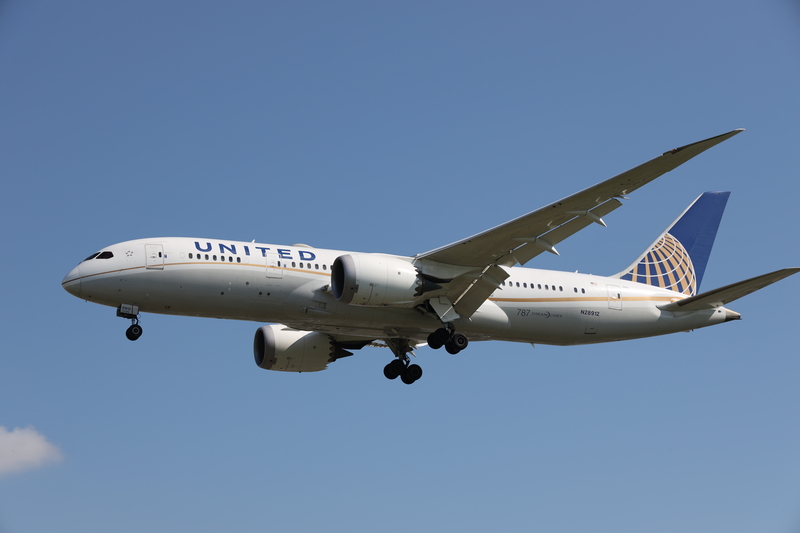
The 737 MAX 8 offers better fuel efficiency than the older 737-800, and on a network built around long sectors over water and limited-margin regional flying, fuel burn matters enormously. It also gives United a more future-oriented platform for a market where fleet commonality, maintenance planning, and aircraft reliability are especially important.
That does not mean the 737 MAX 8 transforms the economics of every route overnight. But across a 10-aircraft subfleet, the cumulative benefit is meaningful.
Guam Is Not Just Another Base In United’s System
That is what makes this story more interesting than a standard fleet-refresh announcement.

United’s Guam operation is unusual in the U.S. airline industry. It supports regular service not only to major regional markets such as Tokyo Narita (NRT), Tokyo Haneda (HND), Osaka Kansai (KIX), Nagoya (NGO), Manila Ninoy Aquino International Airport (MNL), and Taipei Taoyuan Airport (TPE), but also to smaller and more isolated points across Micronesia and Palau.
Those include destinations such as Majuro (MAJ), Kwajalein (KWA), Kosrae (KSA), and Pohnpei (PNI), all of which sit within a network that is commercially narrow but strategically and socially important. United’s presence in these markets is not interchangeable with ordinary regional flying. In several cases, it provides the only scheduled U.S. carrier service.
That gives the Guam fleet an outsized role in United’s broader identity. These are not just aircraft assigned to a secondary base. They are aircraft supporting some of the carrier’s most distinctive flying.
The Island Hopper Remains The Defining Mission
No discussion of United’s Western Pacific operation is complete without the Island Hopper.
The route, which links Honolulu (HNL) and Guam (GUM) through a chain of small Pacific island stops, is one of the most unusual scheduled services in commercial aviation. It is part passenger route, part cargo lifeline, and part essential connectivity service for communities that have very limited alternative access.
That is why the arrival of the 737 MAX 8 in Guam matters beyond standard network planning. If the type becomes central to the Guam fleet as planned, it will eventually shape the passenger experience on one of the world’s most storied narrowbody routes.
For travelers, that means a more modern aircraft on a route famous less for luxury than for geography and rarity. For United, it means deploying newer technology on an operation where aircraft performance, dispatch reliability, and efficiency all matter disproportionately.
Narita Comes First, But The Network Opportunity Is Broader
United’s first scheduled Guam-based 737-8 operation is set to be Guam–Narita on May 1. That is a sensible launch point. Narita is a major, proven market for United from Guam and a relatively clean route on which to introduce the new type into regular scheduled operations from the base.
From there, the aircraft is expected to spread across the wider Western Pacific network.
United has also indicated the 737-8 will appear on Tokyo Narita–Ulaanbaatar Chinggis Khaan International Airport (UBN) seasonal flying beginning April 30, as well as Narita–Koror Roman Tmetuchl International Airport (ROR) starting May 2. Those Narita-based routes are not Guam services, but they reinforce the broader point: United is using the 737 MAX 8 more aggressively in niche Pacific and Asian markets where a right-sized narrowbody can do jobs a widebody should not.
That is a very United move. The airline has increasingly shown a willingness to use creatively deployed narrowbodies to build network relevance in markets too thin for larger aircraft but too valuable to ignore.
Replacing The Guam 737-800s Is About More Than Age
The obvious reason for the transition is fleet renewal. The Guam-based 737-800s are older aircraft, and replacing them with 737 MAX 8s improves the product and the economics.
But there is another reason this matters: consistency.
A base like Guam benefits from having a more capable and more standardized fleet for the missions it needs to perform. Older aircraft can still do the work, but as an operation ages, the complexity of keeping a specialized subfleet reliable in a remote setting becomes harder to justify. A newer 737 MAX 8 fleet should give United better long-term efficiency and a stronger platform for maintaining service quality in a market where substitutes are limited.
That is especially relevant given how many of these routes are not just discretionary leisure flying. They are part of the region’s connective infrastructure.
The Competitive Dynamic Is Different Here
One reason this deployment stands out is that the Western Pacific is not a market where every airline can simply add aircraft and compete its way in.
United’s presence in Guam is historically rooted and operationally unusual. On major trunk routes, the carrier faces competition. On other sectors, especially some Micronesian and island services, its role is much harder to replicate. That gives fleet decisions in Guam a strategic importance beyond raw seat count.
A newer narrowbody fleet helps United defend that position. It strengthens the onboard proposition in markets where passengers may not have many alternatives, and it improves the airline’s ability to operate reliably across dispersed island stations.
For a carrier with a globally sprawling network, Guam is still a small base in absolute terms. But in strategic terms, it punches above its weight.
Bottom Line
United’s decision to base 10 Boeing 737 MAX 8 aircraft in Guam beginning in May is a meaningful development for both the airline and the Western Pacific market.
The first scheduled Guam-based 737-8 flight, from Guam (GUM) to Tokyo Narita (NRT) on May 1, is the starting point for what amounts to a full modernization of United’s Guam narrowbody operation. The new aircraft will replace the older Guam-based 737-800s and bring a stronger onboard product, better fuel efficiency, and a more future-ready operating platform to a uniquely demanding regional network.
That matters not just for major routes to Japan, the Philippines, Taiwan, and Palau, but also for the smaller island communities that depend on United’s Western Pacific operation, including those touched by the Island Hopper network from Honolulu (HNL) to Guam (GUM).
For aviation professionals, the key takeaway is straightforward: this is not just a cabin refresh in an outlying market. It is a fleet upgrade at one of the most distinctive narrowbody bases in the world, and it will shape United’s Pacific operation well beyond Guam itself.
Keep reading FlyMag
Get the Daily Brief in the morning or the Route Watch weekly recap on Fridays. Or both.