Delta Becomes the Only U.S. Airline on Los Angeles-Manila With New A350 Route
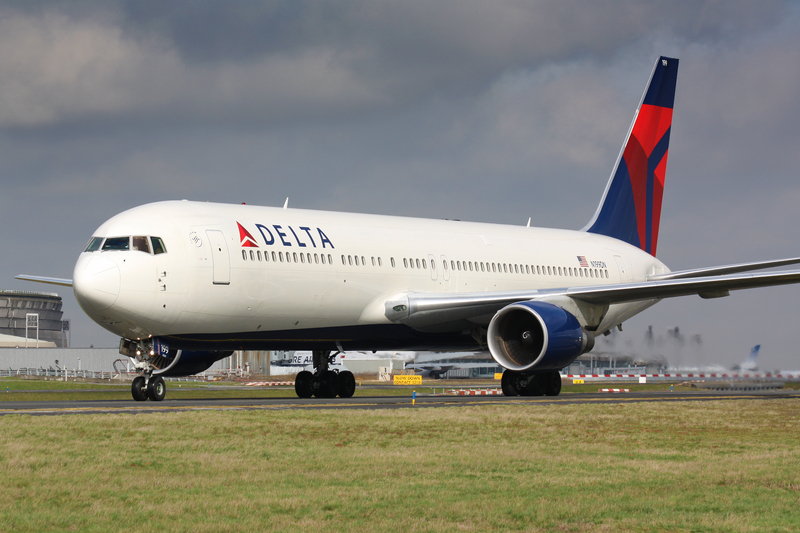
Delta Air Lines will launch nonstop service between Los Angeles International Airport (LAX) and Ninoy Aquino International Airport (MNL) on March 28, 2027, establishing a new transpacific connection between Southern California and the Philippines.

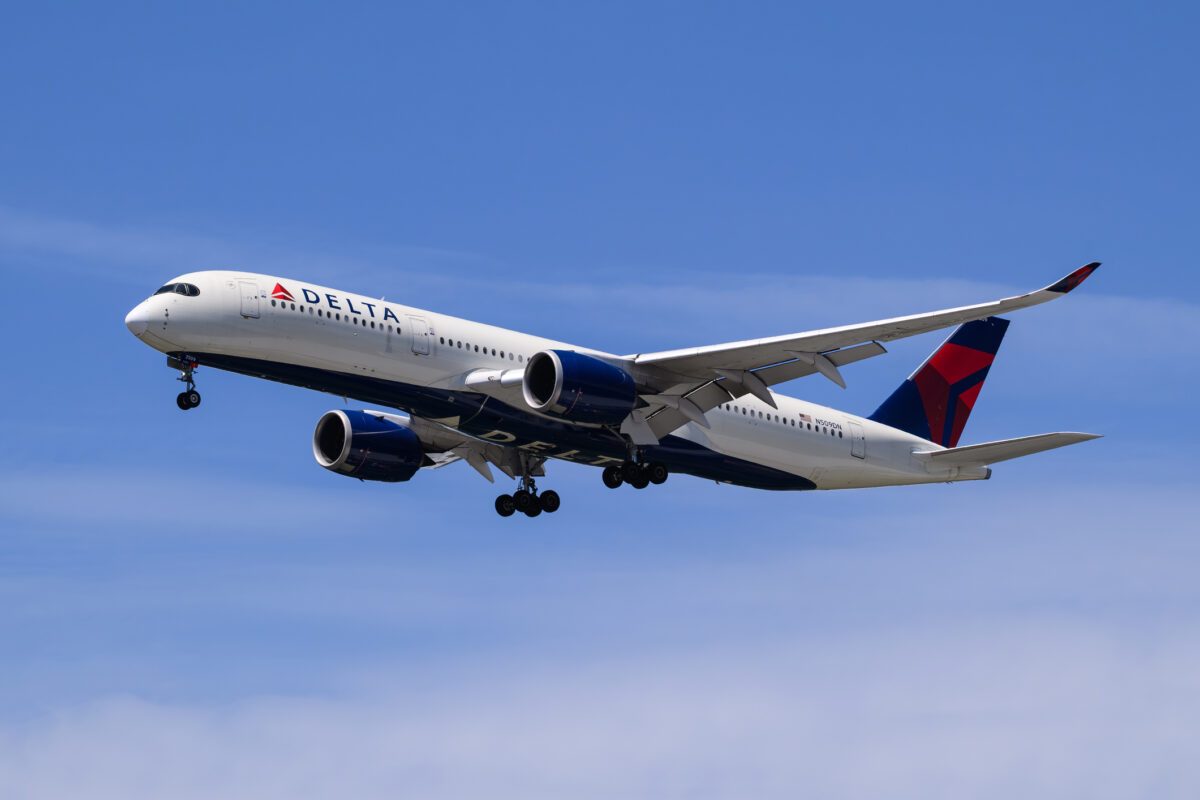
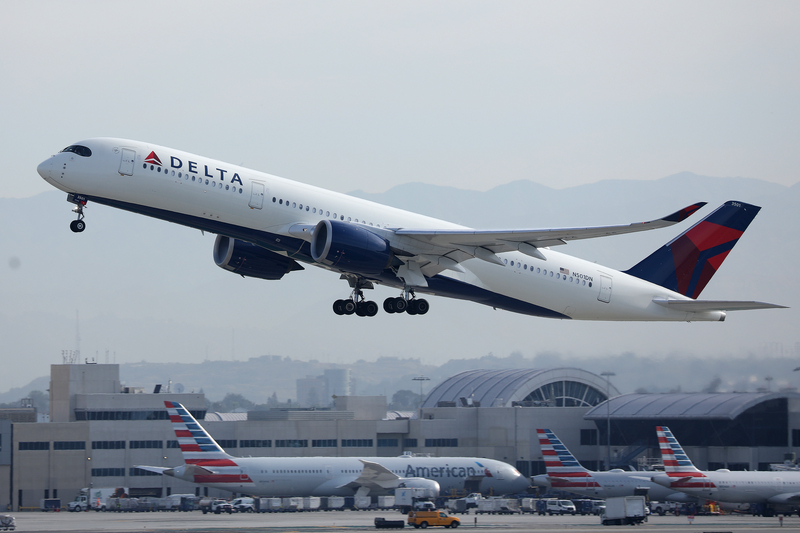
The route will initially operate three times weekly before increasing to daily service on June 7, 2027. Delta will use an Airbus A350-900 offering Delta One, Delta Premium Select, Delta Comfort, and Delta Main cabins.
The new service will make Delta the only U.S.-based airline operating nonstop between Los Angeles International Airport (LAX) and Manila Airport (MNL). It will enter a large and established market currently dominated by Philippine Airlines, which operates multiple daily flights between the two cities.
Read our stories in your inbox
Two aviation newsletters. Zero fluff.
Delta describes the service as its first-ever nonstop route between Los Angeles and Manila. It will also restore the airline’s own presence in the Philippines after Delta ended its previous Tokyo Narita Airport (NRT)–Manila Airport (MNL) operation in 2020. (Delta’s official Manila announcement)
Delta’s Los Angeles–Manila Schedule
Delta has filed the following timetable:
| Flight | Route | Departure | Arrival | Scheduled Duration | Aircraft |
|---|---|---|---|---|---|
| DL181 | Los Angeles (LAX)–Manila (MNL) | 11:50 p.m. | 5:30 a.m. two days later | 14 hours, 40 minutes | Airbus A350-900 |
| DL180 | Manila (MNL)–Los Angeles (LAX) | 7:40 a.m. | 6:05 a.m. the same day | 13 hours, 25 minutes | Airbus A350-900 |
All times are local.
The apparent two-day journey from Los Angeles International Airport (LAX) results from crossing the International Date Line. Flight DL181 will leave California shortly before midnight and arrive in the Philippines early in the morning two calendar days later.
The return flight will produce the opposite effect. DL180 will leave Ninoy Aquino International Airport (MNL) at 7:40 a.m. and arrive at Los Angeles International Airport (LAX) at 6:05 a.m. on the same calendar date after crossing the International Date Line eastbound.
Delta will begin with three weekly flights on March 28. The route will become daily on June 7, giving the airline time to introduce the service at a measured level before adding substantially more capacity for the peak summer travel period.
“Only U.S. Carrier” Needs Some Context
Delta will be the only U.S. carrier operating nonstop between Los Angeles International Airport (LAX) and Ninoy Aquino International Airport (MNL), but it will not be the only American airline serving the Philippines.
United Airlines operates nonstop flights between San Francisco International Airport (SFO) and Manila Airport (MNL). United increased the route to twice-daily service beginning October 25, 2025, using Boeing 777-300ER and Boeing 777-200ER aircraft. (United’s Pacific network announcement)
Delta’s claim should therefore be understood as applying specifically to Los Angeles–Manila.
Delta Passenger’s Tarmac Outburst In Atlanta Could Bring Serious Federal Consequences
The route is nevertheless significant. Delta has never operated nonstop between Los Angeles International Airport (LAX) and Manila Airport (MNL), and no other U.S. airline is presently scheduled to compete with Philippine Airlines in that airport pair.
The new service gives travelers a U.S.-operated alternative in a market where Philippine Airlines has maintained a longstanding presence.
Philippine Airlines Will Be a Formidable Incumbent
Delta is entering one of Philippine Airlines’ most important long-haul markets.
Philippine Airlines increased its Manila Airport (MNL)–Los Angeles International Airport (LAX) schedule from 14 to 18 weekly flights on June 1, 2026. That means the Philippine flag carrier offers more than two daily departures on several days of the week. (Philippine Airlines’ Los Angeles schedule)
Philippine Airlines generally uses Boeing 777 widebodies on the route, giving it substantial passenger and cargo capacity as well as an established customer base on both sides of the Pacific.
If Philippine Airlines retains its 18 weekly flights when Delta becomes daily in June 2027, the market would grow to approximately 25 weekly nonstop frequencies. That would represent a frequency increase of nearly 39% compared with Philippine Airlines’ current schedule.
That calculation assumes Philippine Airlines makes no further changes before Delta’s daily operation begins.
The competition will extend beyond price. Philippine Airlines offers extensive domestic connectivity beyond Ninoy Aquino International Airport (MNL), allowing passengers to continue to cities and islands throughout the Philippines on the same airline.
Delta’s advantages will be strongest at Los Angeles International Airport (LAX), where it can feed the Manila flight with passengers arriving from numerous U.S. cities. It can also compete through its SkyMiles program, corporate contracts, premium lounges, and connections with other Delta-operated services.
Why Delta Is Starting With Three Weekly Flights
Beginning with three weekly frequencies is a cautious decision for a route that will ultimately require a large widebody aircraft every day.
The schedule allows Delta to concentrate initial demand onto fewer departures. Rather than selling several hundred seats in each direction every day from the outset, the airline can establish the route, build awareness, evaluate booking patterns, and measure premium demand before increasing capacity.
A late-March launch also comes before the beginning of the traditional northern summer peak. Delta can use the first two months to establish its operation before moving to daily service on June 7.
The strategy reduces the financial risk of the launch, but it creates schedule limitations during the introductory period. Three weekly flights are less convenient for business travelers and passengers whose preferred travel dates do not match Delta’s operating days.
Daily service will materially improve the route’s appeal. It will create more reliable domestic connections at Los Angeles International Airport (LAX), offer greater flexibility for longer family visits, and make Delta more competitive with Philippine Airlines’ multiple daily schedule.
The rapid increase from three weekly flights to daily service also suggests that Delta expects a significant seasonal increase in demand during the summer.
The Airbus A350-900 Is the Right Aircraft for Manila
Delta will operate the roughly 6,340-nautical-mile route with the Airbus A350-900, its flagship long-haul aircraft.
The A350-900 is powered by two Rolls-Royce Trent XWB-84 turbofan engines and was designed for long-distance operations requiring strong fuel efficiency, substantial cargo capability, and a competitive premium cabin.
Los Angeles–Manila is an appropriate mission for the aircraft. The westbound flight is scheduled for 14 hours and 40 minutes, making range, crew accommodations, fuel efficiency, and passenger comfort particularly important.
Delta operates two principal four-cabin A350-900 layouts:
| Delta A350 Configuration | Delta One | Premium Select | Delta Comfort | Delta Main | Total |
| 306-seat configuration | 32 | 48 | 36 | 190 | 306 |
| 275-seat configuration | 40 | 40 | 36 | 159 | 275 |
Delta has not disclosed which configuration will be assigned permanently to Manila.
The 306-seat aircraft offers more overall capacity and a larger Premium Select cabin. The 275-seat layout has eight additional Delta One seats and fewer Main Cabin seats, giving it a more premium-heavy configuration.
Either version would give Delta considerably less capacity than some high-density transpacific widebodies while still providing enough seats and cargo volume to support a major long-haul market.
Delta lists airline-specific ranges of approximately 7,275 miles for its 306-seat A350 and 8,000 miles for its 275-seat configuration. Those figures are comfortably sufficient for Los Angeles–Manila under normal conditions, although actual payload capability will vary with winds, weather, routing, reserve requirements, cargo, and operational weight. (Delta’s Airbus A350-900 fleet page)
Four Cabin Products Will Help Delta Compete
The A350 will allow Delta to address several distinct parts of the Los Angeles–Manila market.
Delta One provides fully flat seating and direct aisle access. Most Delta A350s have enclosed suites with sliding doors, although passengers should review the seat map for their specific aircraft.
Delta Premium Select gives the airline a separate premium-economy cabin, providing wider seats, additional recline, leg rests, and greater personal space than the standard Main Cabin.
That product could be particularly important on a flight approaching 15 hours. Many passengers may want more comfort than regular economy but may be unable or unwilling to purchase Delta One.
Delta Comfort offers additional legroom while retaining an economy-style seat, and Delta Main provides the lowest standard cabin price.
Delta has also announced that fast, complimentary Wi-Fi for SkyMiles members will expand to transpacific routes. Availability on the Manila service will depend on the aircraft’s connectivity equipment and the completion of Delta’s international Wi-Fi rollout.
The Timetable Is Built Around Connections
Delta’s schedule is not designed solely for passengers beginning and ending their journeys in Los Angeles and Manila.
The 11:50 p.m. departure from Los Angeles International Airport (LAX) gives travelers much of the day to reach California from other parts of the United States. Delta can feed DL181 with afternoon and evening arrivals from cities across its domestic network.
Passengers will then travel overnight and arrive at Ninoy Aquino International Airport (MNL) at 5:30 a.m. The early arrival supports morning ground transportation and may allow travelers to arrange onward domestic flights, although Delta has not announced a Philippine domestic codeshare partner as part of the launch.
The return schedule is similarly useful for U.S. connections.
Flight DL180 will arrive at Los Angeles International Airport (LAX) at 6:05 a.m. After completing immigration, collecting baggage, and clearing customs, passengers should have access to a large portion of Delta’s morning domestic schedule.
That timing allows Delta to distribute Manila passengers across the United States rather than depending exclusively on the Southern California market.
The schedule also gives the A350 approximately two hours and 10 minutes on the ground in Manila. That is a relatively efficient international turnaround for a large widebody, during which the aircraft must be refueled, cleaned, catered, inspected, and loaded for the return flight.
Southern California Is One of the Largest U.S.–Philippines Markets
The Los Angeles region has deep family, cultural, business, and tourism links with the Philippines.
That local traffic is essential because long-haul routes generally perform best when they have strong demand at both ends. Connecting passengers can supplement the route, but a substantial local market reduces dependence on discounted itineraries that begin or end elsewhere.
The Manila service will likely carry a large proportion of visiting-friends-and-relatives traffic. Those passengers often stay for extended periods, travel with checked baggage, and show significant seasonal demand around school vacations and major holidays.
The market also includes business travel, cargo, government traffic, tourism, and passengers connecting between smaller U.S. communities and destinations throughout the Philippines.
Los Angeles World Airports described the Philippines as one of Southern California’s most deeply connected international markets when welcoming Delta’s announcement.
The commercial challenge will be converting that demand into sustainable fares.
A large market does not automatically produce high yields. Visiting-friends-and-relatives passengers are often price-sensitive and may compare Delta’s nonstop with Philippine Airlines, United’s San Francisco service, and one-stop itineraries through Tokyo, Seoul, Taipei, Hong Kong, and other Asian hubs.
Los Angeles Is Becoming Delta’s Primary Pacific Growth Platform
The Manila announcement is part of a broader expansion at Los Angeles International Airport (LAX).
Delta expects to operate more than 160 departures on peak days from LAX to over 50 destinations. Recent or announced international additions include Hong Kong International Airport (HKG), Melbourne Airport (MEL), Shanghai Pudong International Airport (PVG), Vancouver International Airport (YVR), and Manila Airport (MNL).
That growth reflects Delta’s effort to establish Los Angeles as its principal West Coast gateway for local and connecting international passengers.
Los Angeles is a difficult hub to operate because domestic and international traffic is spread across multiple terminals, competition is intense, and a large percentage of passengers begin or end their journeys in Southern California rather than connecting.
It is also highly valuable. LAX provides access to one of the country’s largest population centers, a substantial premium-travel market, major entertainment and technology industries, and large communities with connections throughout Asia and the Pacific.
The Manila route complements Delta’s growing Asia-Pacific network without depending entirely on connections through an overseas partner hub.
Korean Air Still Plays an Important Role
Delta says the Manila service will strengthen its transpacific joint venture with Korean Air.
At first glance, a nonstop Los Angeles–Manila flight might appear to compete with Korean Air’s connecting service through Seoul Incheon International Airport (ICN). The partnership instead allows the two airlines to offer different products to different passengers.
Travelers prioritizing the shortest journey can use Delta’s nonstop flight. Passengers whose schedules do not match the three weekly introductory service—or who are traveling from other North American cities—can continue to use Korean Air connections through Seoul.
Korean Air operates multiple daily flights between Incheon International Airport (ICN) and Manila Airport (MNL). Through their joint venture, Delta and Korean Air market access to more than 260 destinations in the Americas and over 60 in Asia.
The joint venture also gives Delta additional itinerary options during disruptions. If a Los Angeles–Manila flight is canceled or significantly delayed, some passengers could potentially be rerouted through Seoul, subject to seat availability, ticketing rules, and operational conditions.
The nonstop route will not replace Incheon as Delta’s principal connecting point in Asia. It gives the airline a direct presence in a market large enough to support its own dedicated flight.
Delta Is Pairing the Route With a Premium LAX Experience
Delta has invested heavily in its facilities at Los Angeles International Airport (LAX).
LAX is the first Delta hub with two Delta One Lounges in addition to its standard Sky Club facilities. Delta plans to operate four lounge spaces at the airport by 2028, providing more than 60,000 square feet and over 1,000 seats.
Eligible Delta One passengers traveling to Manila will have access to premium check-in, expedited security facilities, and Delta One Lounge services.
Not every Delta One fare will necessarily include those benefits. For travel beginning January 19, 2027, Delta’s Basic Business product excludes Delta One Lounge access and Delta One check-in. Customers purchasing Manila tickets will need to review the benefits attached to their specific fare. (Delta One cabin and lounge information)
The distinction will matter on this route because Delta One fares may vary considerably by flexibility, mileage earning, lounge access, and change conditions even when the onboard seat is the same.
Cargo Could Be an Important Part of the Route
The passenger market will receive most of the attention, but belly cargo could provide a valuable additional revenue source.
The Airbus A350-900 offers substantial lower-deck capacity after passenger baggage has been loaded. Potential traffic between California and the Philippines includes electronics, semiconductors, medical products, e-commerce shipments, machinery components, perishables, and other time-sensitive goods.
Cargo revenue is particularly helpful on long-haul routes because it can improve the economics of a flight without requiring the airline to sell another passenger seat.
Actual cargo capacity will vary by departure. The westbound flight’s fuel requirements, headwinds, passenger load, baggage, and weather conditions will determine how much freight Delta can accept.
Delta has not published a cargo forecast for the route, so it is too early to determine how large a contribution freight will make.
The Route Will Test Delta’s Ability to Challenge a Home-Market Carrier
Philippine Airlines will have several important advantages.
It has longstanding recognition within the Filipino-American market, extensive service frequency, a domestic network beyond Manila Airport (MNL), and established sales relationships with travel agencies specializing in Philippine travel.
Delta will counter with a large U.S. network, a modern Airbus A350 product, premium facilities at Los Angeles International Airport (LAX), SkyMiles loyalty, and connections across its domestic operation.
Delta’s initial three-times-weekly schedule may make it difficult to compete for passengers requiring specific dates. Once the route becomes daily, frequency will become less of a disadvantage, although Philippine Airlines will still offer more flights if its current schedule remains in place.
Operational reliability will also be important.
A daily long-haul route requires substantial aircraft and crew resources. If Delta does not have another A350 readily available at Los Angeles, a technical problem could produce a lengthy delay or cancellation. The Korean Air joint venture may provide some reaccommodation options, but rerouting passengers through Seoul would still add significant travel time.
The route’s long-term performance will depend on more than load factor. Delta will evaluate Business Class and Premium Select revenue, cargo, domestic feed, seasonal demand, average fares, operating costs, and the value of strengthening its wider Los Angeles network.
Bottom Line
Delta Air Lines will launch nonstop service between Los Angeles International Airport (LAX) and Ninoy Aquino International Airport (MNL) on March 28, 2027, using an Airbus A350-900.
The route will begin three times weekly and become daily on June 7. Flight DL181 will leave Los Angeles at 11:50 p.m. and reach Manila at 5:30 a.m. two days later, while DL180 will depart Manila at 7:40 a.m. and arrive in Los Angeles at 6:05 a.m. the same day.
Delta will be the only U.S. airline operating the Los Angeles–Manila city pair, but it is not the only U.S. carrier serving the Philippines. United Airlines already operates twice-daily flights between San Francisco International Airport (SFO) and Manila Airport (MNL).
The new route will also face substantial competition from Philippine Airlines, which increased Los Angeles–Manila service to 18 weekly flights in June 2026.
Delta’s decision to begin with three weekly frequencies limits its initial exposure while allowing the airline to build the market before the summer peak. Moving to daily service after just over two months indicates considerable confidence in Southern California’s demand for Philippine travel.
The Airbus A350-900 gives Delta the range, premium seating, fuel efficiency, and cargo capacity needed for a flight scheduled at nearly 15 hours westbound. The aircraft’s four-cabin layout also allows the airline to compete for everything from price-sensitive family traffic to high-value Delta One passengers.
For Delta, Manila is more than another destination. It strengthens Los Angeles International Airport (LAX) as the airline’s primary West Coast international gateway, expands its Asia-Pacific network, and gives the carrier a direct position in one of the most important transpacific markets currently controlled by a foreign incumbent.
Keep reading FlyMag
Get the Daily Brief in the morning or the Route Watch weekly recap on Fridays. Or both.