Kenya Airways 787 Turns Back to Nairobi After Spoiler Malfunction on New York Flight
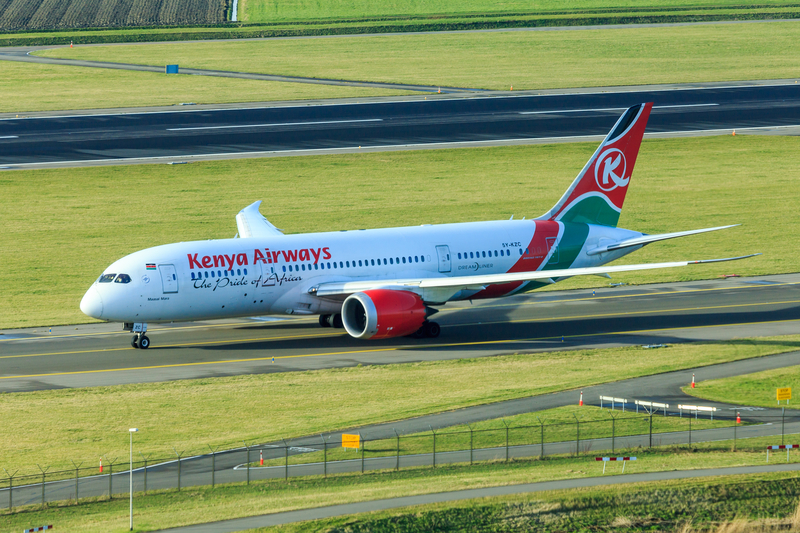
A Kenya Airways Boeing 787-8 Dreamliner operating from Nairobi to New York returned safely to Kenya after the flight crew reported a flight-control spoiler malfunction while over Chad.

The aircraft was operating as KQ002D from Jomo Kenyatta International Airport (NBO) in Nairobi to John F. Kennedy International Airport (JFK) in New York on July 5 when the issue occurred. Rather than continue across the Atlantic on one of the airline’s longest scheduled routes, the crew completed precautionary checks and elected to return to Nairobi (NBO) for technical evaluation.
Kenya Airways said the safety of passengers and crew remained its priority and described the return as a standard safety procedure. The aircraft landed safely back at Nairobi (NBO), with no injuries reported.
A Serious Turnback on Kenya Airways’ Flagship U.S. Route
The Nairobi (NBO)-New York (JFK) route is one of the most important flights in the Kenya Airways network. It is the carrier’s only nonstop link to the United States and one of the longest routes operated by an African airline.
Kenya Airways launched nonstop Nairobi-New York service in October 2018, creating the first direct scheduled link between East Africa and the United States. The route connects Kenya not only with New York, but also with U.S. and Canadian points through Kenya Airways’ partnership with Delta Air Lines and SkyTeam connectivity.
That strategic importance is why any technical turnback on KQ’s New York route attracts attention. A Nairobi (NBO)-JFK flight is normally scheduled at roughly 15 hours westbound, depending on winds and routing. Once the aircraft is deep into the mission, the diversion or return decision becomes more complex because of fuel planning, suitable alternates, oceanic routing, crew duty time, passenger handling, and aircraft availability.
In this case, the issue occurred while the aircraft was still over Africa. Returning to Nairobi (NBO) allowed Kenya Airways to bring the aircraft back to its home maintenance base rather than continue toward the Atlantic with a known flight-control-related fault.
The Aircraft: Boeing 787-8 Dreamliner
The aircraft type involved was the Boeing 787-8 Dreamliner, the long-haul backbone of Kenya Airways’ passenger fleet. Kenya Airways configures its 787-8s with 234 seats: 30 in Premier World Business Class and 204 in Economy Class.
The 787-8 is well suited to Nairobi (NBO)-New York (JFK). Kenya Airways lists the aircraft with a maximum range of 7,850 nautical miles, GEnx-1B engines, a cruise speed of Mach 0.85, and long-haul cabin features such as lower cabin altitude, higher humidity, larger overhead bins and improved air filtration.
For Kenya Airways, the 787 is more than just a passenger aircraft. It is the platform that makes the nonstop U.S. route possible. It gives the airline enough range to connect Nairobi with New York while carrying a commercially useful mix of passengers and cargo.
That is also why a 787 turnback has operational consequences. Kenya Airways has a relatively small Dreamliner fleet compared with major global long-haul carriers. If one aircraft requires technical inspection, the airline has fewer widebody spares to absorb the disruption.
What a Spoiler Malfunction Means
The word “spoiler” can sound minor to passengers, but on an airliner it refers to important flight-control surfaces on the top of the wing.
Aircraft spoilers are panels that deploy upward from the wing surface. Their basic job is to disrupt airflow, reduce lift and increase drag. Depending on the aircraft and flight phase, spoilers can serve several functions: they can assist roll control, help control descent rate, act as speedbrakes in flight, and deploy after landing to dump lift and improve braking effectiveness.
A spoiler malfunction can take several forms. A spoiler panel may fail to move as commanded, deploy unexpectedly, disagree with another panel, create asymmetric drag, or trigger flight-control system alerts. Without the aircraft’s technical report, it is not possible to say exactly what happened on this Kenya Airways flight.
Kenya Airways said spoiler malfunctions are rare but can occur, and that they increase drag and fuel consumption. That explanation is important. A spoiler issue may not make an aircraft immediately unsafe to fly, but it can change fuel burn, handling characteristics, performance margins and the available options for continuing a long-haul flight.
On a short sector, a crew may be able to continue to destination after completing the checklist. On a nearly 15-hour transatlantic flight from Nairobi (NBO) to New York (JFK), the decision is more conservative. Continuing with a flight-control spoiler issue across oceanic airspace would require a very high level of confidence in the aircraft’s condition.
Why Returning to Nairobi Made Operational Sense
The turnback happened over Chad, roughly several hours into the flight. At that point, the crew had a practical choice: continue toward Europe and the Atlantic, divert to a suitable airport along the route, or return to Nairobi (NBO).
Returning to NBO made sense for several reasons. Nairobi is Kenya Airways’ main base, where the airline has its engineering resources, spare parts access, maintenance control, operational support and passenger handling infrastructure. Bringing the aircraft home gives technicians the best environment to inspect the spoiler system properly and determine whether the aircraft can safely be returned to service.
A diversion to another airport could have landed the aircraft sooner, but it would also have placed the Dreamliner at an outstation where Kenya Airways may not have the same maintenance capability. That can create a second problem: an aircraft safe on the ground but difficult to repair, clear and reposition.
For passengers, a return to Nairobi was inconvenient. For the airline, it was the most controlled recovery environment.
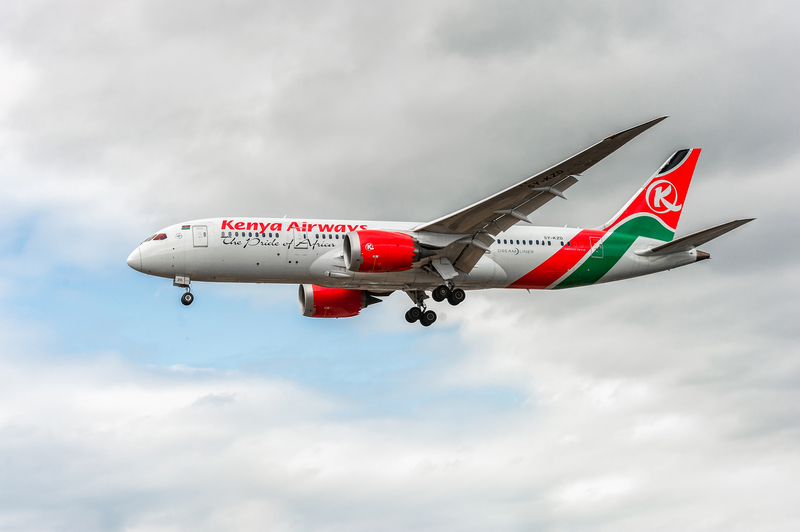
ID 89278078 © Mindaugas Dulinskas | Dreamstime.com
This Was a Precautionary Safety Decision, Not a Crash Emergency
It is important to describe the event accurately. This was an air turnback after a reported flight-control spoiler malfunction. The aircraft landed safely. There were no reported injuries. Kenya Airways said the crew followed precautionary safety checks and returned for further technical evaluation.
That is not the same as an uncontrolled emergency or a near-accident.
Modern airline crews train for system malfunctions, abnormal checklists, air turnbacks and diversions. The purpose of those procedures is to keep a technical fault from becoming a more serious event. A long-haul aircraft may be fully controllable and still return to base because continuing the mission would reduce margins or create unnecessary operational risk.
The aviation system is designed around that kind of conservatism. If a system issue affects performance, fuel planning or flight-control confidence, the safest answer may be to land where the aircraft can be inspected before the flight continues.
Passengers Faced a Long Delay, But a Safer Outcome
For passengers bound for New York, the delay would have been significant. A turnback on a long-haul flight often means missed connections, hotel arrangements, crew re-planning, immigration questions, baggage handling and rebooking onto a later service.
Kenya Airways said affected customers would be assisted with onward travel on the next available flights. That is the customer-facing recovery side of the event. Behind the scenes, the airline also had to manage aircraft inspection, possible component replacement, crew legality and the impact on later 787 rotations.
Those operational details matter because the Nairobi-New York route is not a high-frequency shuttle. If a passenger misses KQ’s nonstop JFK flight, the replacement options may involve waiting for the next Kenya Airways service or being rerouted through partners in Europe, the Middle East or the United States.
That is frustrating for passengers. But it is still a better outcome than continuing a very long mission with a flight-control-related defect that required further technical review.
What Engineers Would Likely Check
Kenya Airways did not release a detailed technical diagnosis, so any specific component claim would be speculation. However, a spoiler-system evaluation on a Boeing 787 would generally focus on the aircraft’s flight-control messages, maintenance fault codes, spoiler actuator behavior, control surface position data, hydraulic and electrical inputs, sensor feedback, and whether the fault could be reproduced on the ground.
Technicians would also review the flight crew’s report, aircraft maintenance computer data, flight logs, and any applicable Boeing troubleshooting guidance. If a component replacement is required, the aircraft may need functional tests before being released back into service.
The key point is that a safe landing does not automatically mean the issue is trivial. It means the aircraft was safely flown back and placed in a maintenance environment where the fault can be properly assessed.
For airline professionals, the question is not simply whether the airplane landed safely. It is whether maintenance can safely. It is whether maintenance can identify the fault, correct it, verify the fix and release the aircraft in compliance with the applicable maintenance procedures.
A Reminder of the 787’s Role in African Long-Haul Connectivity
The event also highlights how important the 787 has become for African carriers operating long, thin international routes. The Dreamliner’s range and economics allow airlines such as Kenya Airways to fly nonstop missions that would be harder to support with older widebodies.
Nairobi (NBO)-New York (JFK) is a perfect example. It is a strategically important route with tourism, trade, diaspora, diplomatic, business and cargo value, but it is not a route with the daily scale of London-New York, Dubai-New York or Paris-New York. The 787-8 gives Kenya Airways the right aircraft size and range for the mission.
That makes reliability especially important. When a Dreamliner operating a flagship route turns back, the effect is not limited to one flight. It can affect the airline’s brand, passenger confidence and operational resilience on one of its most visible routes.
Kenya Airways’ decision to return the aircraft rather than continue was therefore the correct kind of visible conservatism. On a high-profile long-haul route, safety margins matter more than schedule completion.
Bottom Line
Kenya Airways flight KQ002D returned safely to Nairobi (NBO) after the crew reported a flight-control spoiler malfunction while over Chad on a scheduled Boeing 787-8 Dreamliner service to New York (JFK).
The malfunction involved a system that can affect drag, lift and fuel consumption, making the decision to turn back understandable on a nearly 15-hour transatlantic mission. While the aircraft was not reported to be in immediate danger, continuing across the Atlantic with a known spoiler issue would have reduced operational confidence and complicated fuel and diversion planning.
For passengers, the return meant a major delay. For Kenya Airways, it meant protecting safety margins on one of its most important routes. The aircraft landed safely, and the next critical step is technical: identifying the fault, verifying the repair and returning the Dreamliner to service only when maintenance teams are satisfied the spoilersystem is functioning correctly.