Oman Air’s July Expansion Adds Five Routes as Muscat Gains New Reach Across Asia, Russia and the Gulf
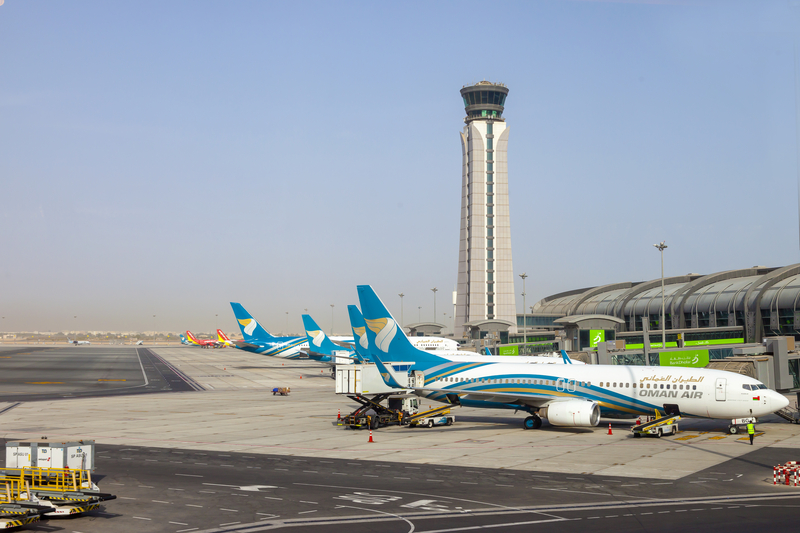
Oman Air is entering one of the most active network growth periods in its recent history, launching five routes in July 2026 and pushing its network to 49 destinations. The expansion adds new nonstop links from Muscat International Airport (MCT) to Singapore, Sochi, Tashkent and Abu Dhabi, while also opening the airline’s first direct Dubai International Airport (DXB)–Salalah International Airport (SLL) service.

The rollout begins with Muscat (MCT)-Singapore Changi Airport (SIN) and Muscat (MCT)-Sochi International Airport (AER) on July 2. Oman Air then adds Muscat (MCT)-Tashkent International Airport (TAS) and Dubai (DXB)-Salalah (SLL) on July 3, followed by daily Muscat (MCT)-Zayed International Airport (AUH) flights from July 9.
For Oman Air, this is more than a schedule expansion. It is a statement about the carrier’s post-restructuring network strategy: more point-to-point traffic, stronger inbound tourism flows, better Gulf connectivity and more efficient use of its Boeing narrowbody fleet.
Five Routes, Five Different Strategic Purposes
The new routes do not all serve the same purpose, which is what makes the July expansion interesting.
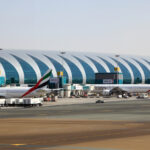
Singapore (SIN) gives Oman Air a major Southeast Asian business and leisure market, while also creating a link into one of the world’s strongest connecting airports. Sochi (AER) gives the airline a second Russian leisure route, complementing its Moscow operation and supporting inbound Russian tourism to Oman. Tashkent (TAS) extends Oman Air into Central Asia, a region with growing tourism and business relevance for the Gulf.
Dubai (DXB)-Salalah (SLL) is a different kind of move. Rather than routing passengers through Muscat (MCT), Oman Air is directly connecting the UAE with Dhofar, just as Salalah enters the popular khareef season, when cooler weather and green landscapes drive strong regional demand.
Abu Dhabi (AUH), meanwhile, restores a natural capital-to-capital link between Oman and the UAE. The daily Muscat (MCT)-Abu Dhabi (AUH) service gives Oman Air its tenth GCC destination and strengthens short-haul connectivity at a time when Gulf regional flows remain highly competitive.
Singapore Is The Headline Long-Haul Narrowbody Route
The most technically interesting route is Muscat (MCT)-Singapore (SIN). Oman Air says the route is operated by the Boeing 737 MAX, with Business Class and Economy Class cabins. Reuters reported that the flight is about eight hours, making it one of the longest scheduled Boeing 737 MAX sectors in the world.
That aircraft choice says a lot about where Oman Air is trying to go. The Boeing 737-8 MAX has a published range of up to 3,500 nautical miles, giving airlines the ability to open thinner long-haul city pairs that might not justify a Boeing 787 Dreamliner or other widebody. For Oman Air, the MAX allows Singapore to be served with lower trip cost and lower seat risk than a larger aircraft would require.
The route also fits Oman Air’s broader transformation plan. Chief Executive Officer Con Korfiatis told Reuters that the Singapore route is being supported by a lower cost base, stronger fleet utilization and Oman Air’s membership in the oneworld alliance, which helps feed global connections.
Oman Air’s official announcement describes Singapore as a four-weekly service. However, schedule-tracking data from AeroRoutes shows the route filed at three weekly flights during part of July 2026, using the Boeing 737 MAX 8. That appears to be an initial schedule adjustment rather than a change in the strategic importance of the route.
The 737 MAX Is Doing Heavy Lifting
The July route launches highlight how central the Boeing 737 MAX has become to Oman Air’s network plan. Oman Air’s own fleet page lists the Boeing 737-8 MAX as one of the major types in its fleet, alongside Boeing 737-800s, 737-900s and Boeing 787 Dreamliners.
For an airline of Oman Air’s size, the 737 MAX is especially useful. It can operate short Gulf sectors such as Muscat (MCT)-Abu Dhabi (AUH), medium sectors to Central Asia and Russia, and longer missions such as Muscat (MCT)-Singapore (SIN). That flexibility lets the carrier add destinations without overcommitting widebody capacity.
The aircraft is not a replacement for the Boeing 787 on Oman Air’s longest and most premium-heavy routes. But for markets where frequency, cost control and right-sized capacity matter more than cargo volume or a lie-flat-heavy widebody cabin, the MAX gives Oman Air a practical growth platform.
This is the aircraft that makes a route like Sochi (AER) possible as a weekly year-round service and Singapore (SIN) possible without the economics of a larger twin-aisle aircraft.
Sochi Builds On Russian Leisure Demand
The new Muscat (MCT)-Sochi (AER) service will operate once weekly year-round with the Boeing 737-8 MAX. Sochi is Russia’s best-known Black Sea resort city and is often marketed as the “Russian Riviera,” with coastal resorts, mountain access and year-round leisure demand.
For Oman Air, the route is aimed at more than outbound Omani travelers. It is also about bringing Russian visitors into Oman. The airline already operates scheduled flights between Muscat (MCT) and Moscow, and it launched Moscow-Salalah charter flights in December 2025. Adding Sochi (AER) gives Oman Air another Russian point and a more diversified leisure base.
The flight also supports Oman’s tourism strategy. Russia has become an increasingly relevant source market for Gulf and Indian Ocean destinations, and Oman is trying to position itself as a more distinctive alternative to the region’s larger tourism hubs.
A weekly frequency is cautious, but appropriate. Sochi is a specialized market, and Oman Air can build it without tying up too much aircraft time. If inbound demand develops, the route can be scaled later.
Tashkent Gives Oman Air A Central Asia Opening
The Muscat (MCT)-Tashkent (TAS) route gives Oman Air a direct foothold in Central Asia. Oman Air previously announced the service as a twice-weekly operation, and its latest July expansion release places Tashkent among the five new routes being launched during the month.
Tashkent is Uzbekistan’s capital and largest city, and it has become increasingly relevant for Gulf carriers as tourism, investment and labor flows between Central Asia and the Middle East expand. For Oman Air, the route creates both outbound access to Uzbekistan and inbound opportunity for Omani tourism.
The market is also culturally logical. Oman Air has emphasized the historical connection between Oman and Uzbekistan through Silk Road-era trade and shared heritage. That may sound like marketing language, but it does matter in route development. Cultural and tourism links can help support early-stage routes that are still building business traffic.
At roughly four hours, Muscat (MCT)-Tashkent (TAS) is well within Oman Air’s narrowbody comfort zone. It is the kind of route where a Boeing 737 MAX or 737-family aircraft can offer enough range, enough premium seating and a manageable number of seats.
Dubai-Salalah Is A Smart Khareef Play
The new Dubai (DXB)-Salalah (SLL) route may be the most locally strategic addition of the five. Oman Air says the route begins July 3 and will operate three times weekly year-round.
Salalah is one of Oman’s most important tourism destinations, especially during khareef season, when the Dhofar region turns green and draws heavy demand from across the Gulf. For UAE-based travelers, a nonstop Dubai (DXB)-Salalah (SLL) flight is a much easier proposition than routing over Muscat (MCT) or driving across the border.
This route is also notable because it bypasses Oman Air’s Muscat hub. That is not typical for a traditional flag carrier model, but it makes sense here. Salalah has enough seasonal strength to justify direct regional access, and Dubai is one of the most important outbound travel markets in the Gulf.
For Dhofar, the benefit is direct inbound access from the UAE. For Oman Air, the route creates a practical way to monetize peak tourism demand while supporting Oman’s broader goal of spreading tourism beyond Muscat.
Abu Dhabi Restores A Natural Regional Link
Oman Air’s daily Muscat (MCT)-Abu Dhabi (AUH) service begins July 9, restoring a short but strategically useful GCC connection. The flight is scheduled to operate once daily with Boeing 737 aircraft, with a flight time of about one hour each way.
Abu Dhabi (AUH) is a natural addition for Oman Air because it supports business traffic, government travel, family travel and onward connectivity. It also gives Oman Air another presence in the UAE alongside Dubai (DXB).
The UAE-Oman market is competitive, but it is also large and structurally important. Air travel between the two countries is not only about passengers moving between Muscat and Abu Dhabi. It also includes onward international connections, tourism flows, business links and travel between expatriate communities.
For Oman Air, the daily frequency is important. A once- or twice-weekly Abu Dhabi service would be symbolic. A daily operation is useful. It gives business travelers a predictable schedule and gives the airline a stronger presence in a market where frequency matters.
oneworld Membership Adds Network Value
Oman Air’s five-route expansion comes just over a year after the carrier joined the oneworld alliance on June 30, 2025. That membership is more than a loyalty-program milestone. It gives Oman Air more relevance to global travelers who can now earn and redeem miles, use alliance benefits and connect more easily across partner networks.
For a mid-sized Gulf carrier, oneworld membership helps solve a scale problem. Oman Air does not have the global network of Emirates, Qatar Airways or Etihad. But alliance membership gives it broader reach without needing to serve every major market itself.
That matters for Singapore (SIN), where Changi is a major Asia-Pacific hub, and for Abu Dhabi (AUH), where regional traffic can connect into Oman Air’s Muscat network. It also helps inbound tourism because travelers in other oneworld programs have more reason to consider Oman Air when planning trips to Muscat, Salalah and beyond.
A Transformation Strategy With More Discipline
Oman Air’s July expansion should be viewed against the airline’s transformation plan, not as unchecked growth. The carrier has spent the past two years reshaping its network, reducing underperforming flying, improving fleet utilization and focusing more directly on point-to-point demand that supports Oman’s tourism and economic goals.
That is why these routes are interesting. They are not simply prestige additions. Each one has a clear role.
Singapore (SIN) brings Southeast Asian connectivity and one of the world’s strongest business-travel markets. Sochi (AER) adds Russian leisure demand. Tashkent (TAS) opens Central Asia. Dubai (DXB)-Salalah (SLL) targets seasonal tourism into Dhofar. Abu Dhabi (AUH) restores a high-utility Gulf link.
Taken together, the routes show an airline trying to become more commercially precise. Oman Air is not trying to match the largest Gulf carriers destination for destination. It is building around Oman’s own demand profile: tourism, regional connectivity, selective long-haul growth and alliance-supported reach.
Bottom Line
Oman Air’s July 2026 expansion is one of the carrier’s most important network moves in years. Five routes in one month is a major step for an airline of its size, especially when the additions cover Southeast Asia, Russia, Central Asia and the Gulf.
The real story is not just that Oman Air is adding Singapore (SIN), Sochi (AER), Tashkent (TAS), Dubai (DXB)-Salalah (SLL) and Abu Dhabi (AUH). It is how the airline is adding them: with a disciplined mix of Boeing 737 MAX flying, targeted regional service, tourism-focused markets and oneworld-supported connectivity.
For Muscat (MCT), the expansion strengthens the hub. For Salalah (SLL), it adds direct access from Dubai at the right time of year. For Oman Air, it shows a carrier that is no longer just rebuilding. It is choosing where to grow, and doing so with more purpose than volume.