Delta’s Williston Exit Shows The Hard Math Behind Regional Air Service
Delta Air Lines will end its Williston–Minneapolis service in September, removing one of western North Dakota’s most important hub links and underscoring the fragile economics behind many regional airline routes.

The affected service connects Williston Basin International Airport (XWA) with Minneapolis–St. Paul International Airport (MSP). It is operated by SkyWest Airlines under the Delta Connection brand and is scheduled to end on September 7, 2026.
For Williston (XWA), the loss is significant. Minneapolis–St. Paul (MSP) is not just another destination; it is one of Delta’s largest hubs, with broad connectivity across the United States, Canada, Europe, and Asia. For passengers in western North Dakota and eastern Montana, the XWA–MSP flight provided a direct bridge into Delta’s global network without requiring a long drive to another airport.
Read our stories in your inbox
Two aviation newsletters. Zero fluff.
Airport leadership described the news as disappointing, but also acknowledged the underlying issue: demand on the route had not consistently reached the levels needed to sustain the service.
Delta’s Only Williston Route Will End September 7
Delta’s departure will end its only service from Williston Basin International Airport (XWA).
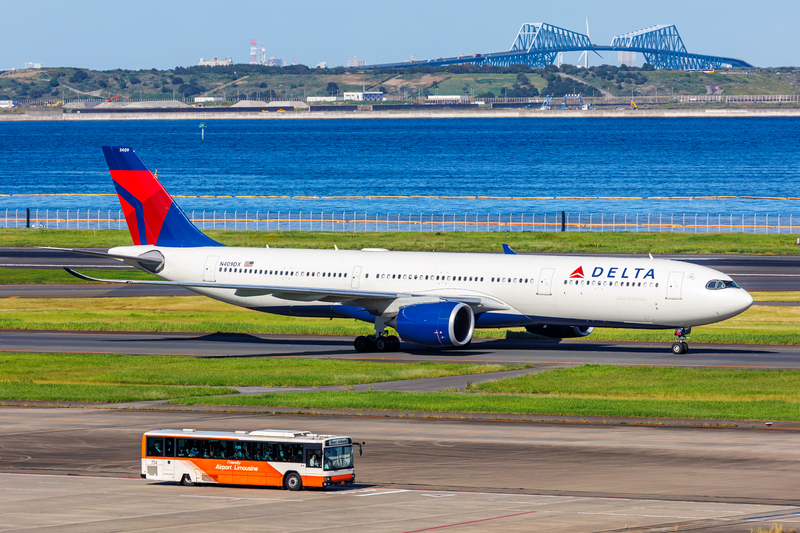
The XWA–MSP route began in November 2012, when air travel demand in the Williston region was still being shaped by the Bakken energy boom. The route has been interrupted before, most notably during the COVID-19 period, but it has remained an important part of the airport’s network for more than a decade.
That changes on September 7, when Delta Connection’s Williston (XWA)–Minneapolis (MSP) service is scheduled to conclude.
For affected passengers, Delta says it will contact customers directly with alternate options. In practical terms, travelers who previously used Delta through Minneapolis (MSP) will need to look at other routings, including United’s Denver (DEN) service from Williston (XWA), driving to larger airports, or adjusting itineraries through another connecting point.
United Airlines will remain at XWA with daily service to Denver International Airport (DEN), also operated by SkyWest. That preserves access to a major hub, but it changes the map for travelers who preferred Delta, needed MSP specifically, or relied on Minneapolis connections for business, medical, leisure, or family travel.

Why The Route Became Difficult To Sustain
Regional airline routes live and die by a narrow set of economics: local demand, average fares, aircraft availability, operating cost, crew resources, and the value of the aircraft elsewhere in the network.
Williston (XWA)–Minneapolis (MSP) had local importance, but local importance alone does not keep an airline route operating. Airlines need enough passengers at sustainable fares, and they need the route to compete for aircraft time against other markets that may produce stronger returns.
That is especially true for regional jets. A route that uses 50 to 70 seats per departure does not have much room for demand weakness. A few empty rows can make a major difference, particularly when operating costs, crew costs, maintenance expenses, airport fees, and fuel all remain fixed regardless of how many passengers are onboard.
Williston and Williams County had already moved to support the route. In late 2025, local officials approved up to $2.7 million in financial support for SkyWest’s Minneapolis service in 2026. That agreement reflected the value the community placed on the MSP link, but it also showed that the route was no longer standing entirely on its own commercial performance.
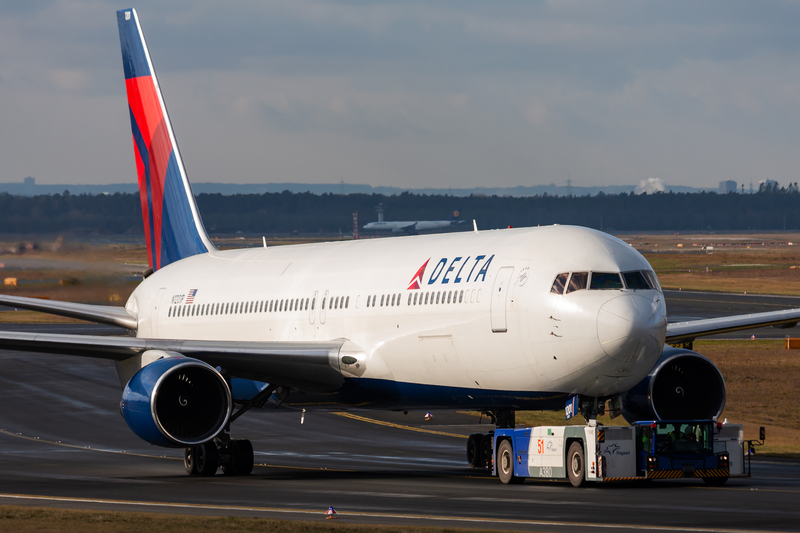
That is the uncomfortable truth of regional aviation. Some routes matter deeply to communities, but airlines ultimately evaluate them against network-wide opportunities.
The Aircraft: Delta Connection’s CRJ-550
Recent Delta Connection service in the Williston market has involved SkyWest-operated Bombardier regional jets, including the 50-seat CRJ-550.
The Bombardier CRJ-550 is an unusual aircraft. It is based on the CRJ-700 airframe but configured with only 50 seats. Delta’s version has 10 seats in Delta First, 20 in Delta Comfort+, and 20 in Main Cabin. It is operated by SkyWest Airlines for Delta Connection.
That cabin is relatively premium for a 50-seat regional jet. Compared with older 50-seat CRJ200 aircraft, the CRJ-550 offers a much better passenger experience, with a real First Class cabin, Comfort+ seating, and more space per passenger because the aircraft uses a larger airframe with fewer seats.
But the economics are complicated. A 50-seat aircraft gives a route less revenue potential than a 65-seat CRJ-700, 70-seat CRJ-900, or 76-seat Embraer E175. It may improve the onboard experience, but it does not solve the core problem if the market cannot consistently produce enough passengers and yield.
The XWA–MSP sector is roughly 550 miles, which is a logical mission for a regional jet. The problem is not range. The problem is whether the route can produce enough revenue to justify the aircraft when Delta and SkyWest have other places to use limited regional capacity.
Why Minneapolis Mattered So Much
Losing Minneapolis–St. Paul (MSP) is different from losing a point-to-point leisure route.
MSP is a major Delta hub. It gives passengers access to hundreds of daily Delta departures and a broad connecting network across the Upper Midwest, East Coast, West Coast, Mountain West, Southeast, Canada, Europe, and selected long-haul international markets.
For Williston travelers, MSP was especially useful because it aligned with regional travel patterns. Minneapolis is a natural connecting point for North Dakota, and many travelers in the state already think of MSP as a primary gateway to the national air system.
That is why the end of the route will be felt beyond the nonstop city pair. Passengers were not only flying to Minneapolis. They were using MSP to reach cities such as New York (JFK/LGA), Boston (BOS), Washington (DCA/IAD), Atlanta (ATL), Orlando (MCO), Seattle (SEA), Los Angeles (LAX), Phoenix (PHX), and international destinations over Delta’s network.
United’s Denver (DEN) service will continue to offer broad connectivity, but the geography is different. DEN is excellent for the Mountain West, West Coast, Southwest, and many domestic connections. MSP can be more convenient for Upper Midwest, Great Lakes, Northeast, and some Delta-specific itineraries.
For frequent Delta customers in the Williston region, the loss is therefore both practical and loyalty-related.
A Route Born From The Bakken Boom
The Williston market cannot be understood without the Bakken oil boom.
During the 2010s, western North Dakota saw dramatic growth tied to energy production, workforce movement, construction, and business travel. That demand helped support air service that might have been difficult to justify in a smaller, more stable rural market.
Williston’s old airport, Sloulin Field International Airport (ISN), struggled with infrastructure limitations, expansion constraints, and the rapid increase in passenger traffic. The region eventually built Williston Basin International Airport (XWA), a modern facility that opened in 2019 and was designed to support larger commercial aircraft and future growth.
The new airport was a major investment in the region’s aviation future. It has a modern terminal, jet bridges, and infrastructure that is far more capable than the facility it replaced. But airport infrastructure and airline demand are not the same thing.
The energy market has changed since the boom years. Travel demand remains important, but it is not always as strong, consistent, or high-yielding as it was during the peak of the Bakken expansion. Airlines notice that quickly.
The Broader Regional Aviation Problem
Delta’s Williston exit fits a larger pattern across regional aviation in the United States.
Small and mid-sized communities want frequent service to major hubs, but airlines have fewer incentives to maintain marginal routes than they once did. Regional pilot supply, crew costs, aircraft retirements, scope-clause limits, maintenance costs, and higher-value route opportunities all affect where regional aircraft are deployed.
The economics are especially difficult in markets that require subsidies or local incentives to maintain service. Those programs can help preserve connectivity, but they do not always create long-term sustainability. If passenger demand remains below target levels, airlines may eventually redeploy capacity despite local support.
SkyWest is central to this story because it operates flights for multiple major airlines, including Delta, United, American, and Alaska. The company carries tens of millions of passengers annually and operates one of the largest regional fleets in North America. That scale gives SkyWest flexibility, but it also means aircraft can move to markets where partner airlines see stronger demand or better economics.
For airports like Williston (XWA), the challenge is clear: keeping air service requires not just community support, but consistent usage.
What Remains At Williston
Williston is not losing all commercial air service.
United Express service between Williston (XWA) and Denver (DEN) will continue, operated by SkyWest. That route remains crucial because Denver is one of United’s most important hubs and offers strong connectivity across the western United States, central U.S., and beyond.
Sun Country has also served Williston with seasonal leisure flying to Las Vegas (LAS), giving the airport a different kind of travel option. Those flights are not a substitute for daily hub service, but they show that XWA still has travel demand beyond business and oilfield-related traffic.
The key question now is whether Williston can attract another carrier, restore Delta in the future, or strengthen remaining service enough to preserve competitive options.
Airports often respond to route losses by gathering leakage data, surveying passengers, working with chambers of commerce, pursuing federal or state air-service grants, and showing airlines how much traffic is driving to other airports. That work will likely matter at XWA, especially if local leaders want to rebuild a second hub connection.
The Passenger Impact
For passengers, the change will be straightforward but inconvenient.
Travelers who used Delta through Minneapolis (MSP) will need to rebook through other routes after September 7. Some will use United through Denver (DEN). Others may drive to Minot (MOT), Bismarck (BIS), Fargo (FAR), Billings (BIL), or other airports depending on destination, fare, schedule, and loyalty preference.
The loss may be especially painful for business travelers and passengers with medical, family, or time-sensitive trips. Regional air service is often most valuable when alternatives are inconvenient. Western North Dakota is geographically large, and driving to another airport can add hours before the trip even begins.
That is why airport officials are right to call the news disappointing. The route may not have been commercially strong enough for Delta, but it still served a real transportation need.
Bottom Line
Delta’s decision to end Williston (XWA)–Minneapolis (MSP) service is a local setback, but it is also a clear example of the pressure facing regional air service across the United States.
The route gave western North Dakota a direct link into Delta’s MSP hub and had been part of the Williston market since 2012. But airport officials acknowledged that demand had not consistently reached the level needed to sustain the service, even after local financial support was approved to help preserve it.
The aircraft economics make the challenge even clearer. SkyWest’s Delta Connection CRJ-550 offers a strong 50-seat regional product, with First Class and Comfort+ onboard. But a comfortable regional jet still has to earn its place in the network.
Williston will retain United service to Denver (DEN), preserving access to a major hub. Still, the loss of Delta’s MSP connection reduces airline choice and removes an important eastbound gateway for the region.
For XWA, the next task is not just replacing a route. It is proving that the market can support enough consistent, high-quality demand to attract and keep hub service in an airline environment where every regional jet has to justify where it flies.
Keep reading FlyMag
Get the Daily Brief in the morning or the Route Watch weekly recap on Fridays. Or both.