American Eyes Naples Return As APF’s 75,000-Pound Limit Shapes Charlotte Route
American Airlines is moving toward a return to Naples, Florida, with a proposed new link between Naples Airport (APF) and Charlotte Douglas International Airport (CLT), a route that would restore the carrier’s presence at APF for the first time in roughly 25 years.

The proposal is significant for Southwest Florida, but the most interesting part of the story is not simply that American Airlines wants to fly to Naples again. It is how the airline would need to do it.
Naples Airport (APF), also known by its ICAO code KAPF, is not a conventional commercial airport built around large scheduled airline operations. It is primarily a general aviation and business aviation airport with a strict 75,000-pound aircraft weight limit, a noise-sensitive operating environment, and a customer base that has long relied on nearby Southwest Florida International Airport (RSW) in Fort Myers for most scheduled airline service.
Read our stories in your inbox
Two aviation newsletters. Zero fluff.
That makes American’s proposed APF–CLT route a highly specific aircraft-and-airport planning exercise. The route appears built around one aircraft that can make the business case work while staying inside the airport’s operating limits: the Bombardier CRJ-700.
American’s Proposed Naples–Charlotte Service
American’s plan calls for service between Naples Airport (APF) and Charlotte Douglas International Airport (CLT), with a proposed start date of December 2, 2026.
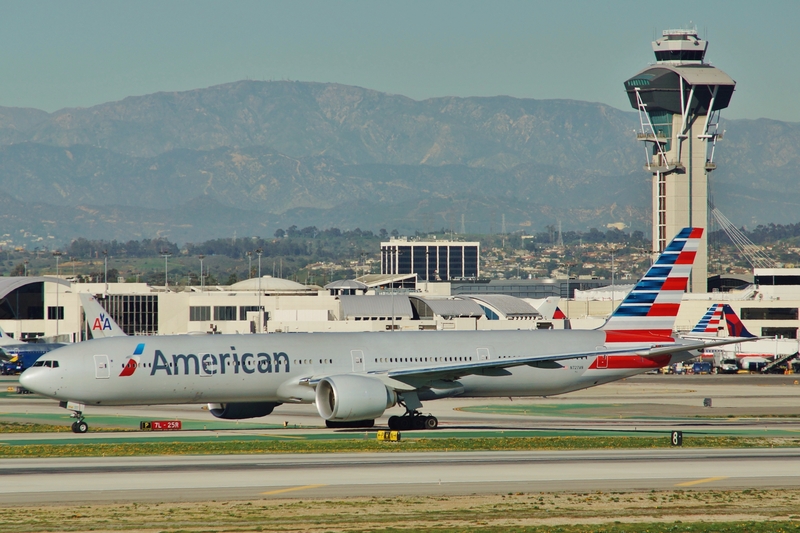
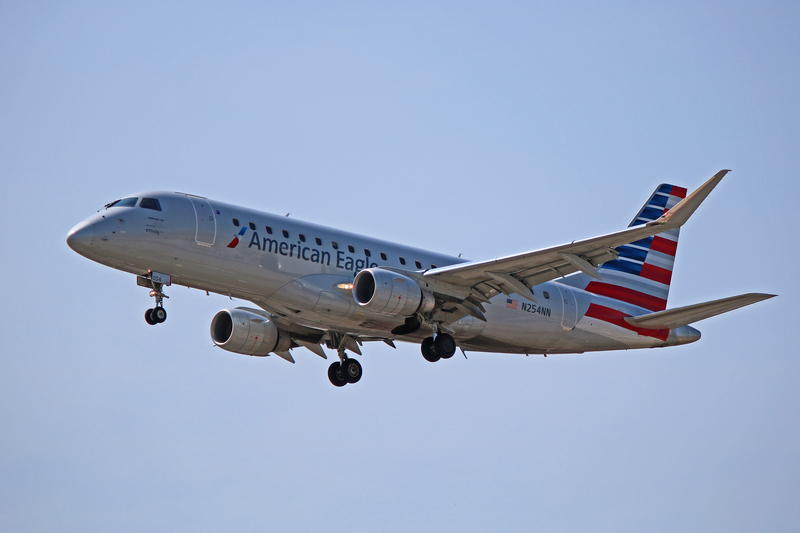
The operation would be flown by PSA Airlines, one of American’s wholly owned regional carriers, under the American Eagle brand. Airport materials describe the proposed schedule as up to three daily round trips, which would mean three daily arrivals and three daily departures at APF.
That is a meaningful amount of service for an airport that has not had regular airline operations in years. It would not make APF a large commercial airport, but it would put Naples back on the scheduled airline map with a direct link into one of American’s most important hubs.
Charlotte (CLT) is the key to the entire proposal. American and its regional partners operate more than 670 peak-day departures from CLT and serve more than 170 destinations from the hub, including dozens of international markets. For Naples travelers, a short regional-jet flight to Charlotte could open one-stop access to much of American’s domestic and international network.
That is a very different proposition from American’s former Naples service to Miami (MIA), which ended in 2001. Miami remains American’s primary Latin America and Caribbean gateway, but Charlotte is a better all-purpose connecting hub for Naples-originating passengers headed across the U.S. and beyond.
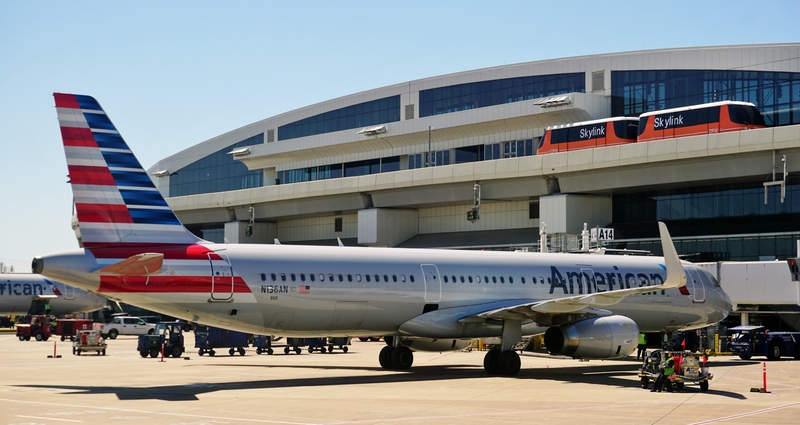
Why The CRJ-700 Is Central To The Proposal
The aircraft expected for the route is the Bombardier CRJ-700, operated by PSA Airlines.
PSA’s CRJ-700s seat 65 passengers in a three-cabin layout: 9 seats in First Class, 12 in Main Cabin Extra, and 44 in Main Cabin. That gives American a small but premium-capable regional jet for a market where convenience may matter more than raw capacity.
The CRJ-700 is not the newest regional jet in the U.S. market, and it does not have the same passenger-friendly cabin reputation as the Embraer E175. Its cabin is narrower, overhead bin space is more limited, and standard roller bags often need to be valet-checked. But at Naples (APF), the CRJ-700 has one decisive advantage: it fits the airport’s published weight limit.
That is why the aircraft discussion matters so much. A larger CRJ900 would bring more seats, but the type’s maximum takeoff weight can exceed 84,000 pounds, putting it above APF’s 75,000-pound limit. The Embraer E175 is also a better passenger aircraft in many ways, with a wider cabin, larger bins, and a no-middle-seat 2-2 layout, but its published maximum takeoff weight is also above the Naples limit.
The CRJ-700 is the aircraft that makes the proposal practical. It is small enough to fit the airport’s constraints, large enough to offer a real network-carrier product, and premium enough to support a high-yield market such as Naples.
The 75,000-Pound Rule Is More Than A Technical Detail
Naples Airport’s 75,000-pound aircraft weight limit is not a minor footnote. It is the defining operational constraint for scheduled airline service at APF.
The airport says aircraft exceeding 75,000 pounds maximum gross weight are prohibited from operating at APF because of runway pavement limitations. Exceptions are limited to certain government, law enforcement, public agency, or emergency operations.
For a network airline, that creates a very narrow aircraft pool. Many modern regional and small mainline aircraft exceed 75,000 pounds on paper, even if they could physically operate from APF’s runway length. The airport’s longest paved runway, 05/23, is 6,600 feet long, while runway 14/32 is roughly 5,001 feet. Those dimensions are workable for many regional jets, but runway length is only one piece of the equation. Pavement strength, declared distances, weight limits, noise, safety margins, and regulatory obligations all matter.
That is why the story is not simply “American wants to return to Naples.” It is “American wants to return to Naples using the only kind of regional jet that realistically fits the airport’s operating environment.”
If American were trying to use a CRJ900, Embraer E175, Airbus A220, Airbus A319, Boeing 737, or any larger narrowbody, the discussion would look very different. Those aircraft would either exceed the APF weight limit, bring more noise and community concern, or simply be too much capacity for the market.
Why Charlotte Works Better Than Miami This Time
American’s old Naples service connected APF with Miami International Airport (MIA), but the proposed return uses Charlotte (CLT). That is a smarter modern network choice.
Miami (MIA) is a powerful hub, especially for Latin America, the Caribbean, and South Florida. But Naples passengers already have road access to larger commercial airports, including Southwest Florida International Airport (RSW), Fort Lauderdale-Hollywood International Airport (FLL), and Miami (MIA). To persuade travelers to use APF, American needs to offer a connection point that is broad, efficient, and useful for many trip types.
Charlotte does that.
From CLT, American can connect Naples passengers to major business markets, leisure destinations, transcontinental flights, smaller East Coast and Midwest cities, and international services to Europe, the Caribbean, and Latin America. For travelers based in Naples, Marco Island, Bonita Springs, or southern Collier County, the ability to avoid the drive to RSW and connect through CLT could be highly attractive.
The route would also work in the opposite direction. Naples is an affluent leisure and seasonal-resident market. A CLT–APF nonstop gives American’s broader network a direct path into one of Florida’s wealthiest travel markets without forcing passengers through Fort Myers (RSW).
APF Is Not A Normal Airline Airport
Naples Airport is one of the more unusual airports in Florida.
It sits close to downtown Naples and the Gulf Coast, making it extremely convenient for private aircraft users, seasonal residents, business travelers, and high-income leisure visitors. But that convenience also places the airport near noise-sensitive residential areas.
APF has long been shaped by general aviation, business jets, flight schools, charter operators, aircraft services, public safety aviation, and U.S. Customs activity. It is busy, but not in the same way as Southwest Florida International Airport (RSW), Tampa (TPA), Fort Lauderdale (FLL), or Miami (MIA).
The airport recorded 125,926 takeoffs and landings in 2025, according to Naples Airport Authority materials. That is a substantial level of activity, especially for an airport without routine scheduled airline service. The difference is that much of APF’s traffic is smaller aircraft, business jets, training flights, and charter activity rather than scheduled airline departures.
Commercial airline service would therefore be a small percentage of total operations, but it would be highly visible. A scheduled American Eagle CRJ-700 arriving several times a day is different from a private Gulfstream, a turboprop, or a flight-school aircraft. It brings TSA screening, passenger processing, airline branding, ground handling, baggage activity, and a different public perception.
That is why the proposal has generated such strong local interest.
Community Support Is Real, But So Are Noise Concerns
Naples Airport commissioned a commercial airline service survey after American submitted its letter of intent, and the results showed strong local support.
More than 80% of respondents viewed the return of daily commercial airline service favorably, and roughly three-quarters said they would be likely to consider American’s proposed service from APF. That gives the airport and airline a meaningful data point: there appears to be real local demand.
The reasons are obvious. Many Naples-area travelers currently drive to Southwest Florida International Airport (RSW), which can be convenient for some parts of the region but less convenient for passengers closer to Naples, Marco Island, or southern Collier County. Flying from APF could reduce drive time, parking complexity, and the stress of using a larger airport.
But support is not universal. Naples has a long-running aircraft-noise debate, and residents near flight paths already complain about the volume and sound of existing aircraft activity. Adding scheduled airline service, even with only 65-seat CRJ-700s, raises concerns about traffic, terminal activity, security infrastructure, and whether one carrier’s return could eventually encourage others to follow.
Naples Airport’s voluntary curfew from 10 p.m. to 7 a.m. is central to that discussion. The airport cannot simply impose a mandatory curfew without federal approval, but it does promote the voluntary quiet-hours program aggressively. American’s proposal is designed to comply with that curfew, which helps reduce one of the most obvious community concerns.
The Passenger Experience Will Be Convenient, Not Luxurious
For passengers, the appeal of APF–CLT will be convenience.
A PSA CRJ-700 is not a premium transcontinental aircraft and will not feel like a mainline Airbus or Boeing narrowbody. The cabin is compact, and carry-on space is limited compared with an Embraer E175 or a larger mainline aircraft. Many passengers will likely need to gate-check larger roller bags.
Still, the CRJ-700 is not a bare-bones commuter aircraft. PSA’s 65-seat configuration includes First Class and Main Cabin Extra, giving American the ability to serve AAdvantage elites, business travelers, and higher-yield leisure passengers with a product that fits into the broader American Airlines system.
For many Naples travelers, the tradeoff will be easy. A short flight from APF to CLT on a CRJ-700 may be far preferable to driving north to RSW, parking at a larger airport, and then connecting through Charlotte, Dallas/Fort Worth (DFW), Philadelphia (PHL), Chicago O’Hare (ORD), or another hub anyway.
That is the core commercial logic. The aircraft may not be glamorous, but the airport convenience could be powerful.
The Route Would Be Small But Strategically Important
At three daily round trips, the proposed APF–CLT operation would be modest in network size. With 65 seats per flight, American would offer fewer than 400 one-way seats per day across both directions.
For Naples, however, that is substantial.
The route would give APF a direct link to a major global airline hub, restore American’s presence after more than two decades, and test whether the Naples market can support scheduled network-carrier service within strict airport limits.
For American, the route would provide a unique local advantage. Southwest Florida is a strong travel region, but most airline competition is concentrated at RSW. By serving APF, American could capture high-value passengers who are willing to pay for convenience and who may already be loyal to AAdvantage.
That is especially important in a market like Naples, where the customer base includes affluent residents, seasonal homeowners, business travelers, golf and resort visitors, and retirees with frequent travel patterns. A small regional jet to a large hub can make sense if the fare environment is strong enough.
The Bigger Question: Does APF Want Scheduled Airline Service Again?
Even if the CRJ-700 fits the technical requirements, the broader question is whether scheduled airline service fits Naples Airport’s long-term identity.
APF has a commercial terminal and the necessary certification framework, but its business model and community role have evolved around general aviation. Bringing back scheduled airline service would not instantly transform the airport into RSW, but it would change the public conversation around APF.
There would be operational questions: terminal modifications, TSA screening, baggage handling, ground-service equipment, parking, curb flow, airport staffing, lease arrangements, security procedures, and coordination with American and PSA.
There would also be community questions: whether the service stays limited to one route, whether additional airlines could apply later, how noise monitoring would be handled, and whether scheduled service creates pressure for future infrastructure changes.
That does not mean the proposal is a bad fit. It means APF is different from most airports where American adds a regional route. At Naples, the regulatory, political, and community environment is as important as the schedule filing.
Bottom Line
American Airlines’ proposed return to Naples Airport (APF) is one of the more interesting small-market air service stories in Florida because it sits at the intersection of network planning, aircraft performance, local politics, and airport restrictions.
The route itself is straightforward: Naples (APF) to Charlotte (CLT), operated by PSA Airlines under the American Eagle brand, using 65-seat Bombardier CRJ-700 regional jets. The network logic is strong. Charlotte gives Naples travelers access to one of American’s most powerful hubs, while APF gives American a highly convenient airport in an affluent Southwest Florida market.
The aircraft choice is the key. The CRJ-700 is not being selected because it is the most modern or most comfortable regional jet available. It is being selected because it can operate within Naples Airport’s 75,000-pound weight limit. Larger regional aircraft such as the CRJ900 or Embraer E175 may offer more seats or a better passenger experience, but they do not fit APF’s published constraints in the same way.
If the service moves forward, it would mark American’s first Naples operation since 2001 and the airport’s first scheduled commercial service since 2017. It would also test whether APF can support daily airline service while preserving the operating limits and community expectations that make Naples Airport such a unique facility.
For passengers, the benefit is simple: a much easier way to reach American’s global network without driving to Fort Myers (RSW). For American, the opportunity is a premium local market with limited direct competition. For Naples, the decision is more complicated — but potentially transformative.
Keep reading FlyMag
Get the Daily Brief in the morning or the Route Watch weekly recap on Fridays. Or both.