Vietnam Airlines Moves Closer To 737 MAX Fleet Shift With $2.9 Billion EXIM Backing
Vietnam Airlines has secured a preliminary commitment from the Export-Import Bank of the United States for up to $2.9 billion in guaranteed aircraft financing, supporting the carrier’s planned acquisition of 50 Boeing 737-8 aircraft.

The financing package is tied to Vietnam Airlines’ February 2026 agreement with Boeing for 50 737 MAX aircraft, with deliveries expected between 2030 and 2032. The aircraft will support the airline’s domestic and regional network growth from key Vietnamese gateways including Hanoi Noi Bai International Airport (HAN), Ho Chi Minh City Tan Son Nhat International Airport (SGN), and Da Nang International Airport (DAD).
The headline number is large, but the structure matters. This is not simply a cash loan handed to Vietnam Airlines. It is preliminary U.S. export-credit support that gives the airline a stronger platform to arrange long-term delivery financing with international lenders.
Read our stories in your inbox
Two aviation newsletters. Zero fluff.
For Vietnam Airlines, the commitment is another step toward one of the most important narrowbody fleet transitions in the carrier’s history.
A Preliminary Commitment, Not A Completed Drawdown
The most important detail is that the $2.9 billion figure represents preliminary support from EXIM Bank, the U.S. government’s export-credit agency.
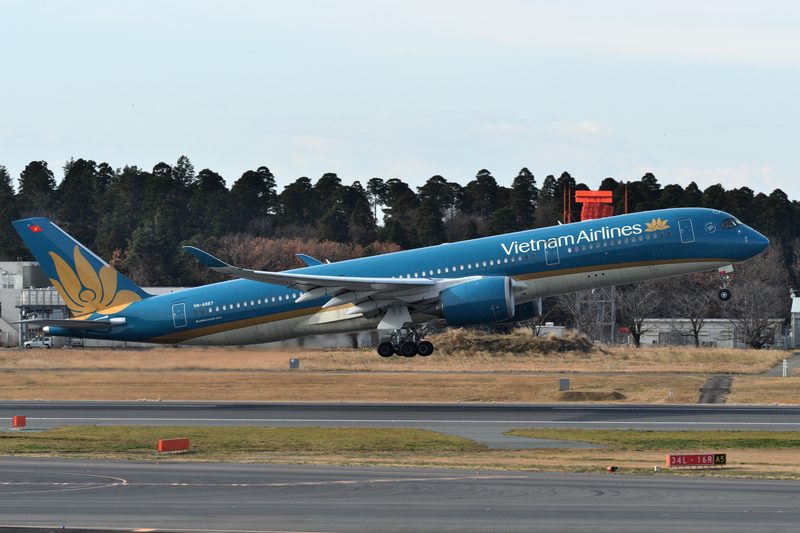
EXIM does not function like a normal commercial lender in this type of transaction. Its role is to support foreign purchases of U.S.-manufactured goods, including commercial aircraft, by providing loan guarantees, direct loans, or insurance. In aircraft deals, that support can help airlines secure financing on more attractive terms because lenders have additional credit protection.
That distinction matters because the funding is still part of a larger delivery-financing process. Vietnam Airlines will need to continue working with banks, lessors, Boeing, and other financial institutions before each aircraft is delivered. Aircraft financing is typically arranged in tranches, with pre-delivery payments made ahead of handover and long-term financing finalized closer to delivery.
The EXIM commitment gives Vietnam Airlines more certainty as it prepares for a major fleet investment. It also sends a signal to the market that the aircraft program has U.S. government-backed financing support behind it.
The Aircraft: Boeing 737-8
The 50 aircraft are Boeing 737-8s, more commonly referred to as 737 MAX 8s.
The 737-8 is the core variant of the 737 MAX family and is designed for short- and medium-haul markets. Boeing lists the aircraft with a range of up to 3,500 nautical miles, or 6,480 kilometers, and typical two-class seating of 160 to 180 passengers. In high-density layouts, the aircraft can seat more, although full-service carriers usually configure it with fewer seats to preserve cabin comfort and premium product space.
For Vietnam Airlines, the 737-8 gives the carrier a new-generation narrowbody with lower fuel burn, improved range, and more capacity than many older-generation single-aisle aircraft. Boeing says the 737 MAX family offers roughly 20% lower fuel use and CO2 emissions compared with the aircraft it replaces, while the 737-8 also has a significantly smaller noise footprint than the 737-800.
The aircraft is powered by CFM International LEAP-1B engines and uses Boeing’s Advanced Technology winglets. Those features are central to the MAX’s operating economics, particularly on longer regional sectors where fuel efficiency matters more.
Vietnam Airlines’ First Boeing Single-Aisle Order
This order is especially significant because Vietnam Airlines has historically relied on Airbus aircraft for much of its narrowbody flying.
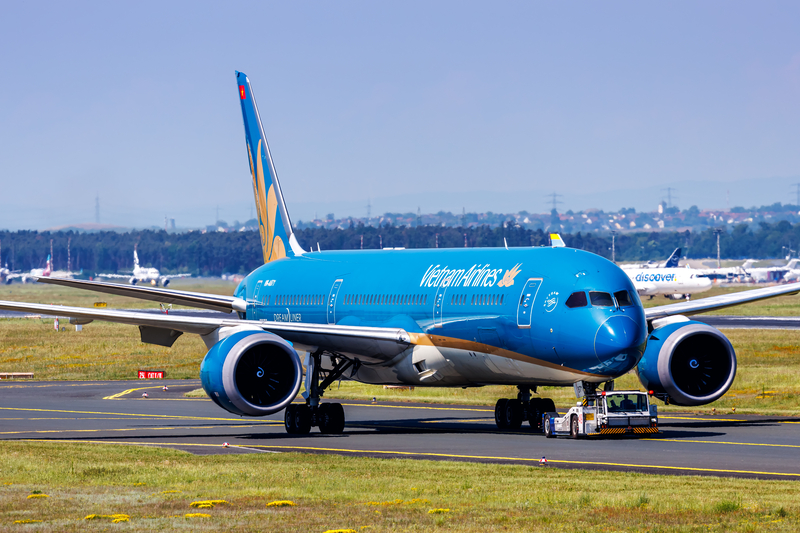
The airline’s current fleet includes Airbus A321s, Airbus A320neos, Airbus A350-900s, and Boeing 787 Dreamliners. The 787 has already made Boeing an important part of Vietnam Airlines’ long-haul operation, but the 737-8 will introduce Boeing into the carrier’s single-aisle fleet in a much more substantial way.
Boeing described the February 2026 agreement as Vietnam Airlines’ first Boeing single-aisle order. That makes the deal a clear strategic shift. Once deliveries begin, Vietnam Airlines will be operating Boeing aircraft across both long-haul and short-to-medium-haul missions.
For a full-service carrier, adding a new narrowbody fleet type is not a casual decision. It affects pilot training, maintenance, spare parts, ground handling, cabin crew procedures, simulator planning, dispatch reliability, and long-term fleet scheduling. The decision suggests Vietnam Airlines sees enough long-term value in the 737-8 to justify the added complexity.
Why Vietnam Airlines Needs New Narrowbodies
Vietnam Airlines needs narrowbody capacity for the markets that matter most to its network: domestic Vietnam, Southeast Asia, Northeast Asia, and selected medium-haul international routes.
Domestic travel between Hanoi (HAN), Ho Chi Minh City (SGN), Da Nang (DAD), Nha Trang/Cam Ranh (CXR), Phu Quoc (PQC), Hue (HUI), and other Vietnamese cities remains central to the airline’s business. Vietnam is a long, narrow country with strong north-south travel flows, and aviation plays a major role in connecting its largest cities.
Regional international markets are equally important. From Hanoi (HAN) and Ho Chi Minh City (SGN), Vietnam Airlines can use narrowbodies to serve destinations across Thailand, Singapore, Malaysia, Cambodia, Laos, China, South Korea, Japan, Taiwan, and other nearby markets.
The 737-8’s range gives the airline flexibility across that network. It can operate short domestic trunk routes, regional business routes, leisure markets, and longer medium-haul sectors without requiring a widebody aircraft.
That flexibility is valuable as Vietnam Airlines competes with Vietjet, Bamboo Airways’ remaining network, foreign low-cost carriers, and full-service airlines across Asia.
Fleet Modernization And Replacement Pressure
The 737-8 program is not only about growth. It is also about fleet renewal.
Vietnam Airlines has a large Airbus A321 operation, including older A321ceo aircraft that will be well into their economic life by the time the Boeing deliveries arrive between 2030 and 2032. The airline will need to replace aging aircraft while also expanding capacity to meet rising demand.
That is where the timing becomes important. Deliveries beginning in 2030 give Vietnam Airlines several years to plan pilot training, maintenance readiness, financing, route deployment, and cabin configuration. The 2030–2032 window also aligns with the broader need to modernize narrowbody fleets across Asia as airlines replace older aircraft with more efficient models.
Aircraft availability is another factor. Both Airbus and Boeing have sold out much of their narrowbody production for years ahead. By locking in 737-8 delivery positions, Vietnam Airlines gives itself more certainty in a market where delivery slots are valuable and difficult to obtain.
The Financing Structure Helps De-Risk A Large Fleet Move
A 50-aircraft order is a major financial commitment for any airline, especially a state-linked flag carrier balancing growth, debt, profitability, and national connectivity obligations.
EXIM-backed financing can help reduce execution risk. Export-credit support may allow Vietnam Airlines to secure longer-term funding at more competitive costs, diversify its financing sources, and avoid relying entirely on domestic banks or commercial leasing channels.
EXIM’s aircraft-finance framework generally supports loans for foreign buyers of U.S.-made aircraft and related equipment. For new aircraft, EXIM financing can cover up to 85% of the U.S. contract price, subject to transaction specifics and risk assessment. That does not mean every dollar of the Vietnam Airlines order is automatically covered, but it explains why EXIM support can be meaningful in a deal of this size.
For lenders, a U.S. government-backed guarantee can make the financing more attractive. For Vietnam Airlines, it strengthens the credibility of the delivery plan. For Boeing, it helps convert a major order into financed deliveries.
A Trade And Diplomacy Angle
This deal also sits inside a broader U.S.–Vietnam aviation and trade relationship.
Vietnam is one of Southeast Asia’s fastest-growing aviation markets, and aircraft purchases are a visible part of the country’s economic relationship with the United States. Boeing has long seen Vietnam as an important market, not only for aircraft sales but also for supply-chain development, training, engineering support, and aviation infrastructure.
Vietnam Airlines’ 737-8 order follows years of deeper aviation cooperation between the two countries. Boeing already supplies the airline’s 787 Dreamliner fleet, which Vietnam Airlines uses on long-haul and high-capacity international routes. Adding the 737-8 extends that relationship into the single-aisle segment.
For Vietnam, large U.S. aircraft purchases can also carry trade-policy significance. Commercial aircraft are among the highest-value U.S. exports, and deals of this scale can help balance trade flows while supporting Vietnam’s aviation growth.
How The 737-8 Could Fit The Network
The 737-8 is likely to be deployed across a mix of domestic trunk routes and regional international services.
Domestically, the aircraft could be used on high-demand sectors such as Hanoi (HAN)–Ho Chi Minh City (SGN), Hanoi (HAN)–Da Nang (DAD), Ho Chi Minh City (SGN)–Da Nang (DAD), and routes to major leisure destinations such as Phu Quoc (PQC), Cam Ranh/Nha Trang (CXR), and Da Lat (DLI).
Regionally, the aircraft could support services from Hanoi (HAN) and Ho Chi Minh City (SGN) to Bangkok (BKK), Singapore (SIN), Kuala Lumpur (KUL), Phnom Penh (PNH), Siem Reap (SAI), Vientiane (VTE), Taipei (TPE), Seoul Incheon (ICN), Osaka Kansai (KIX), Tokyo Narita (NRT), and other Asian markets.
The range of the 737-8 also gives Vietnam Airlines optionality on thinner routes that may not justify the Airbus A350 or Boeing 787 but still need more range or comfort than a smaller narrowbody can provide.
The key will be configuration. Vietnam Airlines has not yet publicly detailed the final 737-8 cabin layout. A full-service configuration with business class and economy would make sense, especially if the aircraft is used on longer regional routes. A denser layout would improve seat-mile costs but could weaken the airline’s premium positioning.
Competition With Vietjet And Regional Carriers
Vietnam Airlines’ narrowbody renewal also has to be viewed through competition.
Vietjet has reshaped Vietnam’s domestic and regional aviation market with a low-cost model, high utilization, aggressive pricing, and a large narrowbody fleet. Foreign low-cost carriers also compete heavily in markets linking Vietnam with Thailand, Singapore, Malaysia, South Korea, Taiwan, and Japan.
Vietnam Airlines cannot respond only with brand heritage. It needs aircraft that support competitive operating costs while preserving the service advantages of a full-service airline.
The 737-8 helps on that front. Lower fuel burn, modern cabin features, improved range, and strong dispatch economics can help Vietnam Airlines defend its position on routes where fares are competitive and margins are pressured.
At the same time, Vietnam Airlines has a different role from a pure low-cost carrier. It operates as the national flag carrier, supports international connectivity, feeds long-haul flights, serves business passengers, and carries cargo. The 737-8 must therefore fit a broader network strategy, not just chase the lowest unit cost.
What It Means For Boeing
For Boeing, the order is strategically important.
Vietnam Airlines already operates the Boeing 787, but securing the airline’s single-aisle business gives Boeing a deeper position at one of Southeast Asia’s most important flag carriers. The deal also gives Boeing another high-profile 737 MAX customer in a region where Airbus A320-family aircraft have a very strong installed base.
The timing is useful for Boeing as well. The manufacturer has been working through production, certification, and delivery challenges, and large long-term orders help support the 737 MAX backlog into the next decade.
Vietnam Airlines’ 737-8 deliveries are not scheduled until 2030–2032, so this is not near-term capacity for Boeing or the airline. It is a long-range fleet decision. But that is exactly why it matters. Narrowbody fleet choices made now will shape airline networks well into the 2040s.
A Long-Term Bet On Vietnam’s Aviation Growth
Vietnam Airlines says the 737-8 fleet will support growth in passenger and cargo demand, particularly across domestic and regional markets. The airline has also linked the investment to its broader development plan, including sustained growth over the next five years and higher passenger and cargo volumes.
That growth outlook is credible. Vietnam’s economy, tourism sector, manufacturing base, and outbound travel market have all expanded significantly over the last decade. The country’s geography also supports strong aviation demand because many major city pairs are far enough apart that air travel is more practical than rail or road.
Airport infrastructure will be a major variable. Ho Chi Minh City (SGN) remains capacity-constrained, and Vietnam’s broader airport system will need continued investment to support long-term airline growth. New aircraft alone cannot solve slot constraints, terminal congestion, or airspace limitations.
Still, fleet renewal is one of the pieces Vietnam Airlines can control. By securing aircraft and financing support early, the airline is positioning itself for the next decade of regional competition.
Bottom Line
Vietnam Airlines’ $2.9 billion EXIM preliminary commitment is an important step in financing the airline’s 50-aircraft Boeing 737-8 program.
The agreement does not mean the full loan has already been drawn. It gives Vietnam Airlines U.S. export-credit backing that can support delivery financing as the aircraft arrive between 2030 and 2032. That distinction matters, but it does not reduce the strategic importance of the deal.
The 737-8 will bring Boeing into Vietnam Airlines’ narrowbody fleet for the first time, complementing the carrier’s existing Boeing 787 widebody operation and giving it a modern single-aisle aircraft for domestic and regional growth.
For Vietnam Airlines, the aircraft are about efficiency, replacement, and network flexibility. For Boeing, the deal strengthens its position in Southeast Asia. For Vietnam’s aviation market, it is another sign that the next decade of growth will be shaped not only by demand, but by which airlines can secure aircraft, financing, and delivery slots early enough to keep up.
Keep reading FlyMag
Get the Daily Brief in the morning or the Route Watch weekly recap on Fridays. Or both.