euroAtlantic Airways Shifts Toward Long-Term Widebody ACMI As A330 Fleet Grows
euroAtlantic Airways is reshaping its business around longer-term ACMI partnerships, moving away from the short-notice wet-lease work that has historically defined much of the widebody charter market.
The Portuguese carrier, based at Lisbon Airport (LIS), has long specialized in ACMI, wet lease, charter and ad-hoc operations. Now, under CEO Pauls Calitis, the airline wants a more stable base of long-term airline contracts.
That shift matters.
Airlines around the world are still dealing with aircraft delivery delays, engine problems, pilot shortages and uneven demand recovery. For carriers that need extra long-haul capacity without committing to new aircraft, a specialist operator such as euroAtlantic can become a strategic partner rather than a last-minute backup.
From Ad-Hoc Flying To Strategic ACMI
ACMI stands for aircraft, crew, maintenance and insurance.

Under this model, the lessor provides the aircraft, crew, maintenance support and aircraft insurance. The customer airline then uses that capacity inside its own network, often covering fuel, airport handling, catering and other operating costs.
euroAtlantic describes its ACMI and wet-lease services as a way for airlines to secure aircraft ready to operate for their specific needs.
That can cover several situations.
An airline may need temporary capacity during peak season. It may need a replacement aircraft while one of its own jets is in maintenance. It may want to open a new route before committing its own fleet. It may also need extra widebody lift because aircraft deliveries are late.

Historically, euroAtlantic worked heavily in short-term and ad-hoc ACMI. That business will not disappear. But the airline now wants more long-term partnerships that give it better visibility and steadier aircraft utilization.
Why Long-Term ACMI Is More Attractive
Short-term ACMI can be profitable, but it is also volatile.
Aircraft may be busy during peak seasons and quiet during weaker periods. Last-minute work can be operationally complex. It can also make crew planning, maintenance and commercial forecasting harder.
Longer-term ACMI contracts are different.
They give the operator more predictable flying. They also help customer airlines plan their schedules with more confidence.
For euroAtlantic, this is a more mature business model.
Instead of waiting for urgent requests, the airline can place aircraft with partners for longer periods. That improves planning and reduces reliance on seasonal spikes.
It also fits the current market.
Many airlines want flexibility, but they do not want the financial risk of adding owned widebodies too quickly.
A Fleet Built Around Widebody Flexibility
euroAtlantic currently operates a small but useful widebody fleet.
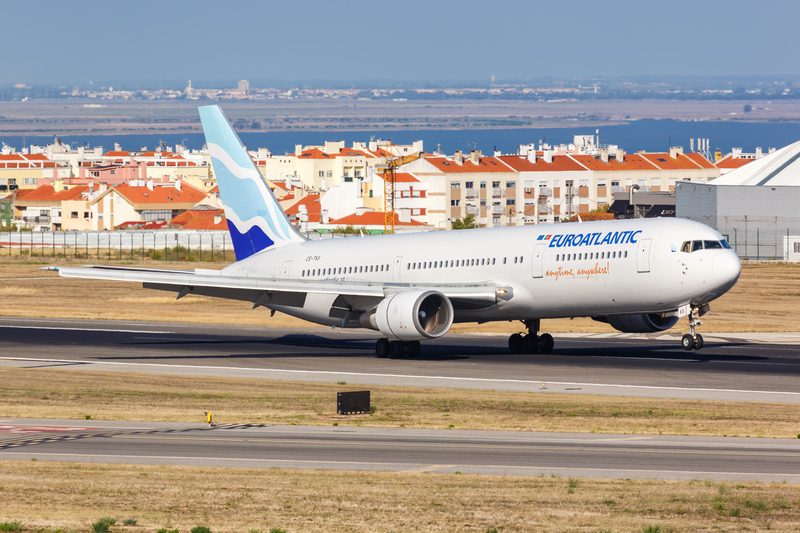
The airline’s fleet page lists the Boeing 767-300ER, Boeing 777-200ER and Airbus A330-200. Current fleet data cited by ch-aviation shows six aircraft: one Airbus A330-200, three Boeing 767-300ERs and two Boeing 777-200ERs.
That mix is unusual.
Many ACMI operators focus on one aircraft family to reduce complexity. euroAtlantic is taking a different approach. It wants a broad widebody offering that can match different customer needs.
The Boeing 767-300ER gives the airline a smaller long-haul widebody. The Boeing 777-200ER provides more capacity and range. The Airbus A330 adds another popular long-haul platform with broad global airline familiarity.
That flexibility is central to the strategy.
Two More A330s Are Being Added
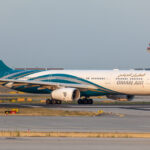
The most important near-term fleet move is the addition of two more Airbus A330 aircraft.
Calitis told Aviation Week that both aircraft are in the induction process. They are part of a fleet-renewal plan that will eventually replace the Boeing 767s.
That is a logical direction.
The Airbus A330-200 remains one of the most widely used long-haul widebodies in the world. Airbus lists the type with range of up to 7,250 nautical miles and typical capacity between 210 and 250 passengers, depending on layout.
For an ACMI operator, the A330 is attractive because many airlines already know the type.
Pilots, maintenance teams, spare-parts suppliers and airport handlers are familiar with it. That reduces some of the friction when placing aircraft with customer airlines.
It is also a twin-engine widebody, which gives it better fuel economics than older four-engine aircraft and a more modern operating profile than the 767 in many markets.
The 767 Is Useful, But It Is Aging
The Boeing 767-300ER has been one of the great workhorses of long-haul aviation.
For decades, airlines used it across the Atlantic, to leisure markets, on thinner long-haul routes and for charter flying. It is still useful because it offers widebody capability without the seat count of a larger 777 or A330-300.
euroAtlantic’s 767-300ERs remain valuable aircraft for certain missions.
The airline’s own fleet page shows three 767-300ERs, with one high-density 309-seat layout and two aircraft configured with 16 business-class seats and 251 economy seats.
That gives euroAtlantic options.
However, the 767 is an older platform. It is less efficient than newer widebodies and is becoming more difficult to support as passenger operators retire the type.
Replacing the 767s over time with A330s gives euroAtlantic a more sustainable long-term platform.
The 777-200ER Gives euroAtlantic Heavier Lift
The Boeing 777-200ER gives euroAtlantic a larger widebody option.
The airline’s two 777-200ERs are configured with 30 business-class seats, 24 premium seats and 239 economy seats. That makes them useful for higher-capacity ACMI and charter missions.
The 777-200ER also has strong range.
That allows euroAtlantic to serve long-haul missions that may be beyond the most efficient scope of the 767. It also gives customer airlines access to a larger aircraft when they need more seats or cargo capacity.
This is important in ACMI.
One customer may need a smaller long-haul aircraft for a seasonal route. Another may need a larger widebody for pilgrimage flying, long-haul charters or temporary fleet cover. euroAtlantic can address both needs.
Boeing And Airbus In One Widebody Fleet
Calitis has described euroAtlantic’s ability to operate both Boeing and Airbus widebodies as a distinctive advantage.
That claim makes sense.
A customer airline may prefer an Airbus A330 because it already operates A330s. Another may prefer a Boeing 777 because it needs more capacity or has existing 777 ground-support procedures.
euroAtlantic can now offer both.
That does add complexity. Mixed fleets mean more training, more spares, more maintenance planning and more operational variation.
But for an ACMI specialist, complexity can also be a selling point.
The goal is not to run a simple scheduled airline network. The goal is to solve capacity problems for other airlines.
A wider fleet mix gives euroAtlantic more tools to do that.
A Plan To Double The Fleet
euroAtlantic is targeting “smart and controlled growth.”
The airline aims to grow to around 12 aircraft within three years, roughly double its current fleet. It is also focusing on midlife aircraft rather than new-build widebodies.
That approach is practical.
New widebody aircraft are expensive and difficult to obtain quickly. Delivery delays are common. Long lead times make them less useful for an operator that wants flexible growth.
Midlife aircraft are different.
They can be acquired faster, often at lower capital cost. They also make sense for ACMI operators if the aircraft have enough remaining life, strong maintenance support and attractive lease or purchase economics.
The key is discipline.
Growing too quickly can be dangerous in ACMI. Aircraft need contracts, crews, maintenance support and capital. euroAtlantic appears to be trying to avoid overexpansion while still taking advantage of strong demand.
The 777-300 Could Be A Future Option
euroAtlantic is also open to adding Boeing 777-300 aircraft in the future.
That would be a significant move.
The 777-300 and 777-300ER offer more seats and cargo capacity than the 777-200ER. They are useful for dense long-haul routes, high-demand charter missions and large-scale wet-lease operations.
For ACMI work, the 777-300 family could appeal to airlines needing temporary high-capacity lift.
However, bigger aircraft also bring bigger risk.
A 777-300 must be kept busy. It has higher trip costs and needs strong demand to justify the capacity. For euroAtlantic, adding the type would make sense only if it has the right customer contracts behind it.
That is why the airline’s controlled-growth message is important.
Why Widebody ACMI Is Healthier Than Narrowbody ACMI
Calitis has said the widebody ACMI market remains structurally healthier than the narrowbody ACMI sector.
That is an important point.
The narrowbody ACMI market has become crowded. Many operators can provide Airbus A320 or Boeing 737 capacity. That creates price pressure, especially when supply rises faster than demand.
Widebody ACMI is different.
There are fewer providers. The aircraft are more expensive. The technical requirements are higher. Long-haul operations require more specialized crew planning, maintenance, dispatch and route support.
That makes widebody ACMI harder to enter.
It also gives established operators more pricing power when demand is strong.
For euroAtlantic, this is the niche it wants to own.
Fuel Volatility Has Limited Direct Impact
Fuel prices are always important in long-haul aviation. But in ACMI, the exposure can be different.
Calitis noted that fuel price volatility has limited direct impact on euroAtlantic because customers typically bear fuel and other operating costs.
That fits the ACMI structure.
The ACMI provider supplies aircraft, crew, maintenance and insurance. The customer airline often covers fuel, ground handling, airport charges and other variable operating costs tied to the route.
This does not make fuel irrelevant.
High fuel prices can still affect customer demand for ACMI. They can also influence whether an airline wants to operate a route at all.
But it does mean euroAtlantic is less directly exposed to fuel swings than a scheduled airline selling tickets on its own network.
Delivery Delays Are Creating Opportunity
The timing is favorable for widebody ACMI providers.
Airlines are waiting longer for new aircraft. Supply-chain issues continue to affect manufacturers. Engine availability remains a problem in several parts of the industry.
That creates capacity gaps.
A carrier may want to grow but not have the aircraft. Another may need to cover delayed deliveries. Another may be short of pilots or maintenance capacity.
ACMI can solve those problems quickly.
This is where euroAtlantic’s strategy fits the market. If it can offer reliable widebody aircraft on longer contracts, it can become a useful bridge for airlines that need capacity before their own fleet plans catch up.
The Lisbon Base Still Matters
euroAtlantic is headquartered in Portugal and based in Lisbon.
That location gives it access to Europe, Africa, the Americas and the Atlantic market. The airline’s own history page says it operates across the North Atlantic, Caribbean, Central and South America, Africa, the Middle East, the Pacific, Australia and Oceania.
That global range is important for an ACMI specialist.
The aircraft may be based in Lisbon, but the work can be anywhere. A euroAtlantic aircraft may operate for a European airline one season, a carrier in Africa the next, or a long-haul charter program elsewhere.
That is the nature of ACMI.
The airline’s home base matters, but the real product is mobile capacity.
Njord Partners Has Backed The Turnaround
euroAtlantic’s current phase also reflects new ownership and management.
Njord Partners became the airline’s majority owner in 2024. Since then, the carrier has moved through restructuring, fleet renewal and renewed commercial expansion.
The first A330-200 arrived in 2025. The next two A330s are now part of the next phase.
Pauls Calitis became CEO in May 2026, bringing operational and ACMI experience from airBaltic.
That leadership change gives the airline a clear mandate: grow the fleet, improve operational performance and secure long-term contracts with airline customers.
The Risk: Growth Must Be Matched By Contracts
The opportunity is clear, but the risks are real.
Widebody aircraft are expensive to own, lease and maintain. They also require experienced crews, training pipelines, spare parts and strong technical oversight.
A fleet of 12 aircraft would be a major increase for euroAtlantic.
That growth must be matched by contracts. Otherwise, the airline could end up with aircraft sitting idle between projects.
This is why long-term ACMI is so important.
If euroAtlantic can secure multi-season or multi-year agreements, fleet growth becomes more manageable. If it depends too much on last-minute work, the risk rises.
The strategy is therefore not only about adding aircraft. It is about changing the quality of revenue.
Bottom Line
euroAtlantic Airways is moving into a new phase.
The Lisbon-based widebody ACMI and charter specialist is shifting away from short-term, ad-hoc wet leases and toward longer-term airline partnerships. At the same time, it is adding two more Airbus A330s and planning a gradual replacement of its Boeing 767 fleet.
The strategy is well timed.
Airlines need flexible widebody capacity because of delivery delays, pilot shortages, maintenance pressure and uneven demand. euroAtlantic can meet that need with a fleet that includes the Airbus A330-200, Boeing 767-300ER and Boeing 777-200ER.
The goal is controlled growth to around 12 aircraft within three years.
That is ambitious for a specialist operator, but the logic is sound. Widebody ACMI is less crowded than narrowbody wet leasing, and long-term contracts can give euroAtlantic more stable revenue than short-notice charter work.
For airline customers, euroAtlantic offers flexibility. For euroAtlantic, the challenge is execution.
If it can add A330s, keep reliability high and secure the right long-term partners, the Portuguese carrier could become a much more important player in the global widebody ACMI market.