Egypt’s World Cup campaign has become a major aviation and logistics story after the national team was denied permission to move directly from Vancouver to Seattle ahead of its final Group G match.
The team had just recorded a historic 3-1 win over New Zealand at BC Place in Vancouver. It was Egypt’s first victory at a FIFA World Cup finals.
After the match, Egypt wanted to travel directly from Vancouver to Seattle to prepare for its June 26 match against Iran at Lumen Field. Instead, local security authorities declined the request, according to the Egyptian Football Association.
Read our stories in your inbox
Two aviation newsletters. Zero fluff.
That decision forced the team to return to its official training base in Spokane, Washington.
For aviation professionals, the incident is a reminder that major sports tournaments are not only about stadiums. They also depend on aircraft, airports, security permissions, customs processing, hotel plans and tightly controlled team movements.
Egypt Wanted To Go Straight To Seattle
Egypt’s request was simple.
After playing New Zealand in Vancouver, the team wanted to move directly to Seattle. That would have reduced travel and given the squad more time near the site of its final group-stage match.
The plan was denied.
Reuters reported that Egyptian manager Hossam Hassan said security authorities refused the team’s request to stay in Seattle after the New Zealand match. As a result, the delegation returned to Spokane.
That created an awkward situation.
Seattle and Vancouver are close by World Cup standards. The two cities are separated by a short flight or a few hours by road. Spokane, by contrast, is much farther inland.
Egypt’s base camp is roughly 280 miles east of Seattle. That means the squad now has an extra travel leg before facing Iran.
Spokane Is Egypt’s Official Base Camp
Egypt is not randomly based in Spokane.
The City of Spokane and Gonzaga University were selected as Egypt’s official Team Base Camp Training Site for the 2026 FIFA World Cup.
That means the team’s headquarters, training facilities, recovery setup and staff operations are centered in Spokane.
Gonzaga described the base camp as a “home away from home” for the Egyptian delegation. The team uses the university’s athletic facilities, including Luger Field, as part of its tournament preparation.
Egypt’s Group G schedule also makes Spokane a logical base.
The team opened against Belgium in Seattle, then played New Zealand in Vancouver, and returns to Seattle to face Iran. All three matches are in the Pacific Northwest.
In normal circumstances, that would be a relatively compact travel plan. The Seattle denial makes it more complicated.
The Airport Logistics: GEG, YVR And Seattle
Egypt’s travel pattern involves several airports.
The team’s base is near Spokane International Airport (GEG). Its second group-stage match was in Vancouver, served by Vancouver International Airport (YVR). Its final group-stage match is in Seattle, where the main commercial gateway is Seattle-Tacoma International Airport (SEA).
A direct Vancouver (YVR)–Seattle (SEA) move would have been simple by distance. The route is short and operationally straightforward for a charter aircraft.
The issue was not aircraft range or airport capability. It was permission.
That distinction matters.
The aircraft could fly the mission. The team wanted the mission. But security authorities did not allow the stay in Seattle at that time.
For tournament logistics, that is the kind of non-aviation constraint that can reshape an entire travel plan.
Charter Flights Are Central To World Cup Team Movement
National teams at the 2026 World Cup are using dedicated charter flights for many tournament movements.
That makes sense.
The tournament is spread across the United States, Canada and Mexico. Team schedules involve different countries, different airports and short recovery windows. Regular commercial service is not flexible enough for most national-team operations.
Egypt has reportedly used charter aircraft for its match travel.
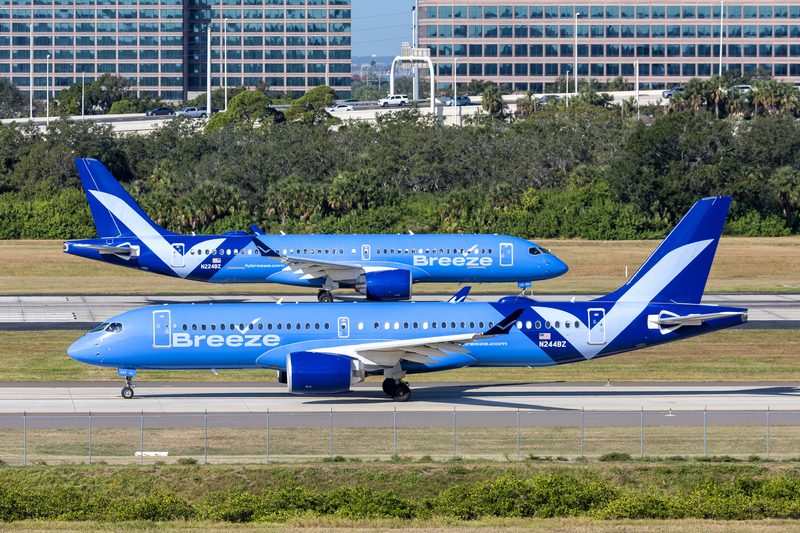
Aviation tracking reports cited the team’s Spokane (GEG)–Vancouver (YVR) movement on a Breeze Airways Airbus A220-300. The aircraft type is a modern single-aisle jet built by Airbus and optimized for shorter and medium-range routes.
Breeze’s Airbus A220-300 cabin includes 12 Breeze Ascent seats with 39 inches of pitch and 20.5-inch-wide seats, along with extra-legroom and standard economy seating.
That makes it a practical aircraft for a team charter.
It offers enough range for regional North American movements, a comfortable forward cabin for players and staff, and enough total capacity for a national-team delegation.
Air Canada A320 Reported For The Return
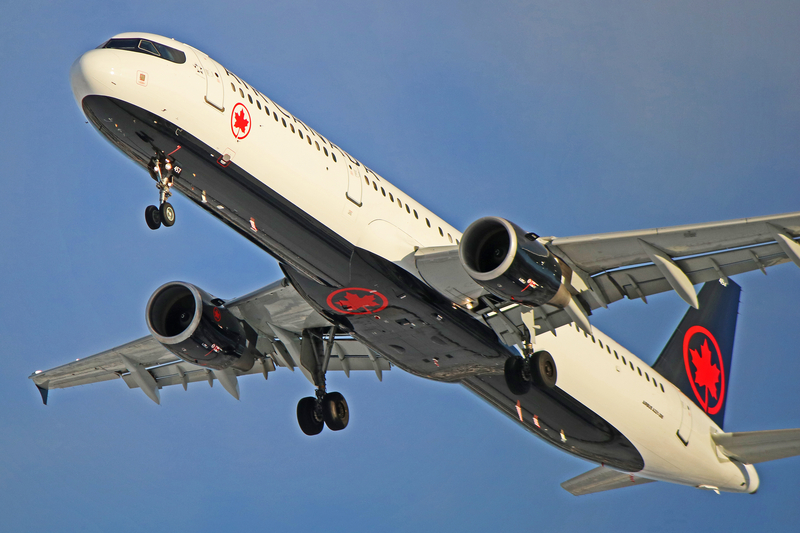
Reports also indicated that Egypt’s return to Spokane was scheduled on an Air Canada Airbus A320 charter.
The Airbus A320 is one of the world’s most widely used short- and medium-haul aircraft families. It is well suited to a short route such as Vancouver (YVR)–Spokane (GEG).
Air Canada’s A320 fleet is normally used across North American and regional markets. The aircraft family offers a two-class narrowbody product on many routes, with a forward premium cabin and economy behind it.
For a team movement, the A320 is a logical choice.
It has enough seats for players, coaches, staff, equipment personnel and support members. It can operate the short sector efficiently. It also fits easily into the airport infrastructure at both Vancouver and Spokane.
Again, the aircraft was not the problem.
The problem was the security decision that prevented Egypt from moving directly to Seattle.
Why The Extra Travel Matters
From the outside, an extra flight or bus trip may not sound dramatic.
For a World Cup squad, it can matter.
Tournament preparation is built around recovery. Players need sleep, treatment, controlled meals, training sessions, tactical meetings and predictable routines.
A denied travel plan disrupts that rhythm.
Instead of moving directly from Vancouver to Seattle, Egypt had to return to Spokane. The team must then travel again to Seattle before facing Iran.
That adds another movement, another airport process, another security plan and another transfer day.
At this level, small details matter. Travel fatigue can affect training intensity, player recovery and preparation time.
That is why Egypt’s staff wanted to avoid the extra movement.
The Iran Match Is A High-Stakes Fixture
The timing makes the disruption more important.
Egypt faces Iran in Seattle on June 26. It is the team’s final Group G match.
After beating New Zealand 3-1, Egypt moved into a strong position in the group. Reuters reported that Mohamed Salah scored as Egypt came from behind to claim the historic victory.
That win changed the stakes of the Seattle match.
Egypt now has a real chance to advance from the group. The team is also trying to build on one of the biggest moments in its World Cup history.
A smoother move to Seattle would have helped.
Instead, the squad must manage another travel disruption before one of the most important matches it has played in decades.
Iran Faces Even More Complex Travel Restrictions
Egypt’s problem is serious, but its opponent has faced even more unusual logistics.
Iran’s national team has been based in Tijuana, Mexico, because U.S. authorities declined to host the team in the United States for the full tournament period.
Reuters reported in May that Iran would sleep in Mexico and travel to the U.S. on match days. Mexico’s president said FIFA approached her government after U.S. authorities said they did not want Iran staying in the country throughout the tournament.
That has created an extraordinary operating pattern.
Iran has had to travel from Mexico into the United States for its matches, then return to its base. The team’s staff has complained about the effect on preparation and recovery.
This gives the Egypt–Iran match a very unusual off-field context.
Both teams are dealing with travel and security restrictions before a decisive group-stage game.
A World Cup Spread Across Three Countries Creates New Challenges
The 2026 World Cup is the largest edition of the tournament.
It is co-hosted by the United States, Canada and Mexico. That creates a massive aviation footprint.
Teams, officials, broadcasters, sponsors and supporters are moving across borders throughout the group stage. That means immigration, customs, airport slots, security escorts, charter permits and local policing all play a role.
For most teams, base camps are designed to reduce that complexity.
But base camps do not eliminate it.
When a team plays in one country and then needs to move to another, even a short regional trip can become complicated. That is especially true when security authorities impose restrictions or deny a requested stay.
Egypt’s case shows how quickly a simple move from Vancouver to Seattle can become a multi-leg logistics issue.
Security Overrides Convenience
From an aviation perspective, this case is important because it shows how hierarchy works.
Aircraft availability is one factor. Airport capability is another. Team preference is another. But security approval can override all of them.
If local authorities do not approve a team’s plan, the flight plan may become irrelevant.
That can be frustrating for teams and fans. However, it is part of major-event security.
World Cup movements involve national delegations, high-profile athletes, large crowds and sensitive public venues. Local authorities must manage risk around airports, hotels, training grounds and stadiums.
That does not mean every denial will be popular. It does mean that teams must build flexibility into their travel plans.
What This Means For Seattle And Spokane
The decision also puts attention back on Spokane.
The city was selected as Egypt’s base camp for a reason. It gives the team a quieter training environment away from the busiest host-city pressure.
Spokane also has enough airport infrastructure to support team charters through GEG. That has made it a useful base for a Pacific Northwest group schedule.
Seattle, meanwhile, remains the match site.
The challenge is that a base camp and a match city are not the same thing. Teams often want to move closer to the match city before kickoff. When that move is blocked, the base camp becomes more than a training home. It becomes the enforced return point.
That is exactly what happened here.
The Aviation Lesson
This incident is a useful case study in sports charter operations.
A team flight is not just a flight. It is one part of a larger controlled movement.
The aircraft must be available. The airport must be ready. Ground handlers must be prepared. Security escorts must be coordinated. Border rules must be satisfied. Hotels and training sites must be approved.
If any one part fails, the plan changes.
For Egypt, the aircraft could have moved the team from Vancouver to Seattle. The distance was short. The timing made sense. The team wanted the move.
But the authorization was not there.
That turned a short post-match repositioning flight into a return to Spokane and a second trip later in the week.
Bottom Line
Egypt’s denied Seattle travel plan has turned a World Cup football story into an aviation logistics story.
After beating New Zealand 3-1 in Vancouver, the Egyptian national team wanted to fly directly from Vancouver (YVR) to Seattle ahead of its June 26 match against Iran at Lumen Field. Local security authorities refused the request, forcing the team to return to its official base camp in Spokane.
The result is more travel, less convenience and a disrupted preparation window before a decisive Group G match.
From an airline and airport perspective, the case shows how complex World Cup team movements can be. Even short charter flights depend on security permissions, airport coordination and host-city approvals.
For Egypt, the focus now shifts back to football. But the travel issue matters.
At a tournament where recovery windows are tight and margins are small, an extra trip across Washington is more than an inconvenience. It is another obstacle before one of the biggest matches in Egypt’s modern World Cup history.