Body Found In Air Arabia Maroc A320 Landing Gear At Gatwick After Tangier Flight
A man’s body was found in the landing gear area of an Air Arabia Maroc Airbus A320 after the aircraft arrived at London Gatwick Airport (LGW) from Morocco.

The aircraft had operated Air Arabia Maroc flight 3O102 from Tangier Ibn Battouta Airport (TNG) to Gatwick (LGW) on June 16, 2026.
Emergency services were called after the aircraft arrived in London. Sussex Police later confirmed that officers were investigating and that a report would be prepared for HM Coroner.
The identity of the man has not been released.
For the aviation industry, the incident raises serious questions about airfield security, aircraft access and the extreme danger of wheel-well stowaway attempts.
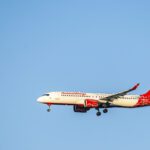
The Aircraft Arrived From Tangier
The aircraft was operating a scheduled international service from Tangier (TNG) to London Gatwick (LGW).
The flight is a regular Air Arabia Maroc route linking northern Morocco with the London market. Air Arabia sells the route through its own Tangier to London booking page.
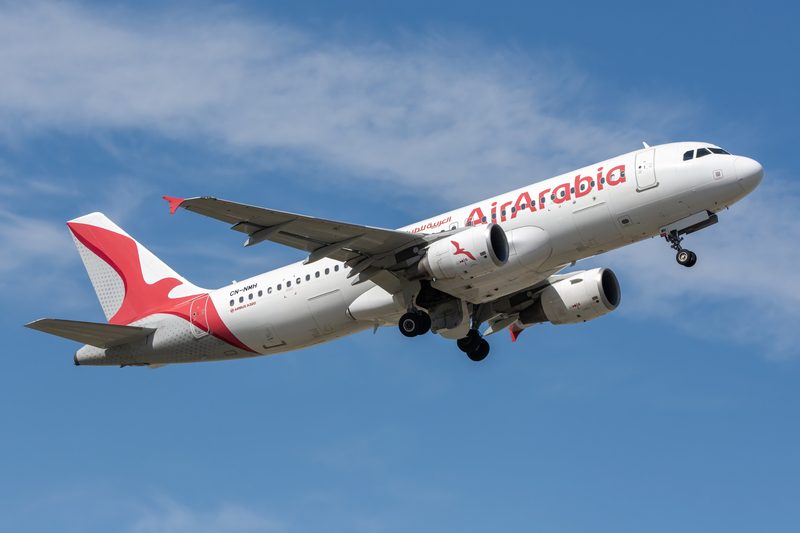
Flight-tracking data identifies the aircraft involved as CN-NMH, an Airbus A320-214 operated by Air Arabia Maroc.
The A320 is the core narrowbody aircraft used across the wider Air Arabia group. The airline says its Airbus A320 aircraft carry up to 174 passengers, while its A321 aircraft carry up to 215.
The return flight to Tangier was delayed after the discovery.
That delay is normal in this type of situation. Once a body is found on an aircraft, the scene becomes part of an investigation. Police, airport teams, airline representatives and the coroner’s process all become involved.
Gatwick And Police Responded After Arrival
The incident was identified after the aircraft reached Gatwick (LGW).
London Gatwick said its emergency services attended the Air Arabia aircraft shortly after 11:30 a.m. local time on June 16.
Sussex Police said the body was found in the undercarriage of an aircraft that had arrived from Tangier. The force said an investigation was underway.
Air Arabia Maroc also said the relevant authorities were immediately notified after the incident was identified on arrival.
At this stage, officials have not publicly explained how the man entered the landing gear area. They have also not released his identity or nationality.
That is important. While many reports describe the case as a suspected stowaway incident, the formal investigation is still determining the full circumstances.
Why Wheel-Well Stowaway Attempts Are So Dangerous
A landing gear bay is not a survivable space on a commercial jet.
It is outside the pressurized cabin. It is not heated for human occupancy. It is also filled with moving mechanical components linked to the landing gear system.
Shortly after takeoff, the landing gear retracts into the aircraft structure. That creates an immediate crushing risk for anyone hiding in the wheel well.
The danger continues during climb and cruise.
Passenger aircraft often cruise between 30,000 and 40,000 feet. At those altitudes, oxygen levels are too low for normal human function. Temperatures outside the aircraft can fall far below freezing.
That creates two major physiological threats: hypoxia and hypothermia.
Hypoxia occurs when the body does not get enough oxygen. It can cause confusion, impaired judgment, loss of consciousness and death. Hypothermia occurs when the body loses heat faster than it can produce it.
In a wheel well, both can happen at the same time.
The Airbus A320 Was Never Designed For This
The Airbus A320 family is one of the most successful commercial aircraft families ever built.
By the end of May 2026, Airbus listed more than 20,000 A320-family orders and 12,670 deliveries. The type has become a backbone of short- and medium-haul aviation worldwide.
However, like all modern passenger jets, the A320 is designed around a controlled cabin environment.
Passengers and crew travel in pressurized, temperature-controlled areas. The landing gear bays are different. They are part of the aircraft’s mechanical structure and are not intended for people.
This distinction matters.
The cabin is engineered for human survival. The wheel well is engineered to house wheels, struts, brakes, hydraulic components and structural systems during flight.
The fact that someone can physically access that area from outside the aircraft does not mean it is safe.
A Serious Airport Security Question
Wheel-well incidents almost always trigger a security review at the departure airport.
Investigators will need to determine how the man may have entered a restricted airside area at Tangier (TNG). They will also need to understand how he reached the aircraft and accessed the landing gear area before departure.
That review may include perimeter security, apron access, camera coverage, patrol activity, ground-handling procedures and aircraft turnaround controls.
Airports rely on multiple layers of protection.
Those layers include fences, access cards, patrols, CCTV, screening points, staff checks and restricted-zone procedures. However, even a single gap can create risk.
In this case, the most important question is not only how the individual reached the aircraft. It is whether any part of the airport security system failed to detect him before pushback and departure.
A Human Tragedy And An Aviation Risk
This kind of case should not be treated only as an operational failure.
It is also a human tragedy.
People who attempt to hide in aircraft wheel wells are often desperate. Many are trying to escape poverty, conflict, lack of opportunity or personal danger. That does not reduce the security concern, but it explains why some individuals take risks that are almost impossible to survive.
For airlines and airports, the challenge is difficult.
They must protect aircraft from unauthorized access. They must also protect vulnerable people from entering areas where they are likely to die.
That requires strong airport security, trained ground staff and quick reporting of suspicious movement near parked aircraft.
It also requires attention to areas around airports where people may try to breach perimeter barriers.
Gatwick Has Seen A Similar Case Before
Gatwick (LGW) has dealt with a similar tragedy in the past.
In December 2022, a man’s body was found in the undercarriage of a TUI Airways aircraft that had arrived at Gatwick from Banjul in The Gambia.
That case also raised questions about how the individual accessed the aircraft before departure.
Other UK incidents have involved bodies falling from aircraft landing gear during approach to London airports. These cases are rare compared with the volume of global flights, but they remain among the most serious forms of unauthorized aircraft access.
They also show why stowaway prevention is both a security issue and a safety issue.
Why These Incidents Still Happen
Modern airports are heavily controlled, but they are also large and complex.
Aircraft sit on open aprons. Ground equipment moves around them. Catering, cleaning, fueling, baggage and maintenance teams all need access. At busy airports, hundreds or thousands of people may work airside each day.
That creates opportunity for mistakes or breaches.
A determined person may try to hide near airport perimeters, slip through a weak point, follow vehicles, or approach aircraft during busy ground operations.
The challenge is greater at airports where perimeter areas are close to public roads, informal settlements or poorly secured land.
That is why airfield security is not only about the terminal. It is also about the wider airport boundary and the movement of people around parked aircraft.
What Investigators Will Likely Examine
The investigation will likely focus on several areas.
The first is airport perimeter access at Tangier (TNG). Investigators will want to know whether the individual entered through a fence, gate, service road or another restricted access point.
The second is apron surveillance. Security teams will likely review cameras, patrol logs and aircraft turnaround records.
The third is aircraft access. The landing gear bay is outside the cabin and can only be reached from outside the aircraft. Investigators will need to determine when and where the man entered that area.
The fourth is communication between agencies. If the man was seen near restricted areas before departure, investigators will want to know whether that information reached airport security, ground handlers or the airline.
These questions matter because the same vulnerability could be used for other unlawful interference, not only stowaway attempts.
The Operational Impact On Airlines
For airlines, wheel-well incidents are rare but serious.
They can delay aircraft, disrupt schedules, trigger police involvement and require technical inspections before the aircraft returns to service.
An aircraft may need to be checked for contamination, damage or interference with landing gear components. Even if no technical issue is found, the aircraft cannot simply depart again until authorities and the airline are satisfied.
The reputational issue can also be significant.
The airline operating the flight may not be at fault. However, its name becomes tied to the incident because the body was found on its aircraft.
That is why airlines depend so heavily on secure airport environments at every station they serve.
Air Arabia Maroc’s A320 Operation
Air Arabia Maroc is a Moroccan low-cost carrier and part of the wider Air Arabia group.
Its operation relies heavily on Airbus A320-family aircraft, which are well suited to short- and medium-haul routes between Morocco, Europe and other regional markets.
The A320-214 involved in this incident is a conventional single-aisle aircraft. It belongs to the earlier A320ceo generation, before the newer A320neo family entered service.
The type is used globally because it offers strong economics, reliable performance and enough range for routes such as Tangier (TNG)–London Gatwick (LGW).
For Air Arabia Maroc, the aircraft is a practical tool for point-to-point flying between Moroccan cities and European markets.
That makes the security issue even more important. These are high-frequency regional operations, often involving quick turnarounds and busy apron activity.
Bottom Line
The discovery of a man’s body in the landing gear area of an Air Arabia Maroc Airbus A320 at London Gatwick (LGW) is a tragic and serious aviation-security incident.
The aircraft had arrived from Tangier (TNG) as flight 3O102 on June 16, 2026. Police are investigating, and a report will be prepared for HM Coroner.
There is no indication that passengers inside the aircraft cabin were at risk. The issue appears to involve unauthorized access to the aircraft’s undercarriage before departure.
Still, the case raises major questions for airport security.
Investigators will need to determine how the man reached the aircraft, how he entered the landing gear area and whether any airport security layers failed before the flight left Morocco.
Wheel-well stowaway attempts are extremely dangerous and often fatal. They also expose a hard truth for aviation: every aircraft is only as secure as the airport environment around it.
For Gatwick, Air Arabia Maroc and Tangier, the incident now becomes a matter of investigation, accountability and prevention.