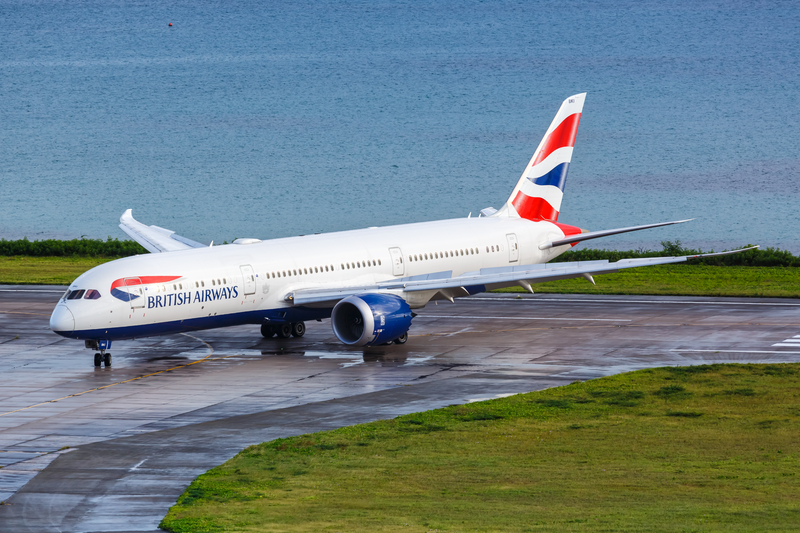
A British Airways Boeing 787-9 landed safely in Las Vegas after a cellphone caught fire in the cabin during a flight from London.
The aircraft was operating flight BA271 from London Heathrow Airport (LHR) to Harry Reid International Airport (LAS) on June 15, 2026.
The flight did not divert. It continued to Las Vegas and landed safely.
Read our stories in your inbox
Two aviation newsletters. Zero fluff.
The crew reported the fire before arrival and requested assistance on the ground. Emergency responders met the aircraft after landing.
No injuries were reported.
Cellphone Fire Reported Before Landing
The incident happened near the end of the long transatlantic flight.
According to CBS News, the flight crew told air traffic control that a mobile phone had caught fire and scorched part of the cabin interior.
The crew also said the fire was under control.
That distinction matters.
A cabin fire is always serious. But in this case, the crew contained the problem and the aircraft was able to continue to Las Vegas (LAS).
A British Airways spokesperson said the safety of customers and crew was the airline’s highest priority. The airline also said the flight landed safely and passengers disembarked normally.
Emergency Crews Met The Aircraft
The response at Las Vegas was precautionary but appropriate.
KTNV Las Vegas reported that Clark County Fire Department units were dispatched to Harry Reid Airport after British Airways called in an alert.
An airport spokesperson said the fire was extinguished before the aircraft reached the gate.
The aircraft landed safely and taxied normally.
That is an important point for readers. This was not a runway evacuation, rejected landing, or diversion. It was a contained onboard fire followed by a normal arrival.
The Aircraft Was A Boeing 787-9
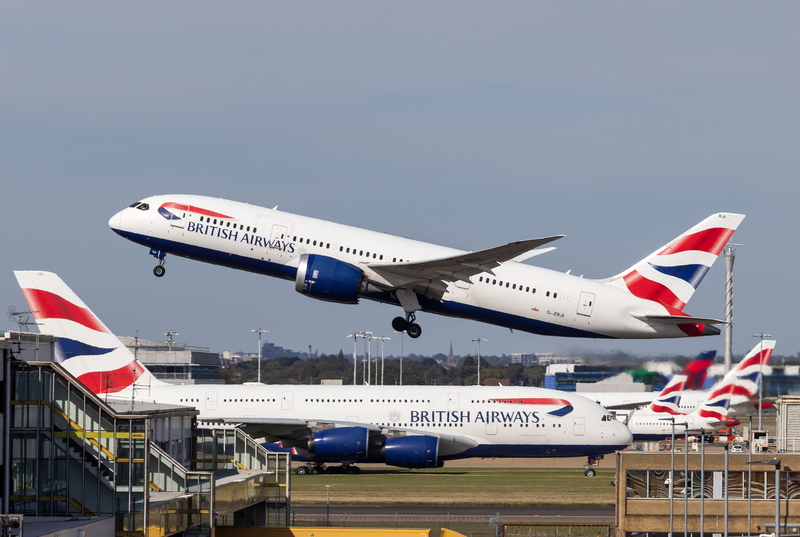
The aircraft involved was a Boeing 787-9 Dreamliner, registered G-ZBKH.
Flight-tracking data shows the aircraft operated BA271 from London Heathrow (LHR) to Las Vegas (LAS) on June 15.
It departed Heathrow at 12:57 p.m. local time and landed in Las Vegas at 2:26 p.m. local time. That was ahead of the scheduled 2:55 p.m. arrival.
British Airways lists its Boeing 787-9 with 216 seats across four cabins: First, Club World, World Traveller Plus, and World Traveller.
The aircraft is powered by two Rolls-Royce Trent 1000 engines and has a listed range of 15,400 km.
A Long-Haul Route With Heavy Leisure Demand
BA271 is one of British Airways’ regular London–Las Vegas flights.
The route links Heathrow (LHR), British Airways’ main hub, with one of the strongest leisure markets in the United States.
British Airways often operates two daily London Heathrow–Las Vegas flights during busy periods.
The route uses a mix of widebody aircraft, including the Boeing 787-9 and Airbus A350-1000.
That widebody capacity is important. Las Vegas draws strong leisure, conference, and premium traffic from the United Kingdom.
Why Lithium Battery Fires Matter
Cellphones are safe to carry on aircraft when used properly.
However, phones and other rechargeable devices use lithium-ion batteries. These batteries can overheat if they are damaged, defective, crushed, exposed to water, or poorly packed.
The Federal Aviation Administration warns that lithium-ion batteries can produce heavy smoke and fire if they overheat.
This process is known as thermal runaway.
Once thermal runaway begins, a battery can become very hot very quickly. It can also release smoke, flame, and toxic gases.
That is why cabin crew are trained to respond fast.
Why Devices Stay In The Cabin
Lithium battery rules can confuse passengers.
The reason many rechargeable devices must travel in carry-on baggage is simple: crews can reach them in the cabin.
A fire in the passenger cabin is dangerous, but it can be seen and managed quickly.
A fire in the cargo hold is harder to detect and harder to access.
That is why phones, laptops, tablets, power banks, cameras, and e-cigarettes are treated carefully under aviation safety rules.
Passengers should never pack loose spare lithium batteries or power banks in checked bags.
Cabin Crew Training Is Critical
This incident shows why cabin crew training matters.
A cellphone fire can escalate quickly if it is not handled correctly.
Crew members may use a halon extinguisher to knock down flames. They may then cool the device with water or place it in a containment bag if available.
The goal is to stop the fire, cool the battery, and prevent reignition.
This is different from fighting a normal cabin trash fire.
A lithium battery can reignite if it remains hot. That makes cooling and monitoring essential.
The FAA Will Investigate
The FAA said it will investigate the BA271 incident.
That does not mean the airline or crew did anything wrong.
The FAA commonly reviews lithium battery events to understand what happened, what device was involved, and whether safety rules were followed.
Investigators may examine the device type, battery condition, passenger handling, crew response, and any aircraft damage.
The airline may also inspect the cabin area where the fire occurred before the aircraft returns to normal service.
Cabin Damage Appears To Have Been Limited
The most dramatic detail is the reported scorching inside the cabin.
That sounds alarming, and it is serious. But available reporting suggests the damage did not stop the aircraft from landing normally.
There were no reported injuries.
There was also no reported diversion.
The aircraft reached Las Vegas, taxied to the gate, and passengers disembarked normally.
Even so, any scorched cabin area would require maintenance review. Engineers would need to inspect panels, seat materials, wiring, oxygen-system areas, and nearby interior fittings.
A long-haul aircraft cannot simply ignore heat or smoke damage.
A Reminder For Passengers
Passengers can reduce the risk of onboard battery incidents.
They should keep phones and power banks visible and accessible. They should not crush devices in reclining seats. They should avoid using damaged charging cables.
If a phone falls into a seat mechanism, passengers should not move the seat aggressively. They should call a crew member instead.
Seat mechanisms can crush a device and damage the battery.
That is one of the scenarios airlines worry about most.
The Bigger Industry Issue
Lithium battery events have become a growing concern across aviation.
Phones, laptops, tablets, power banks, headphones, cameras, vapes, and smart bags are now part of normal travel.
That means millions of lithium batteries fly every day.
Most do so safely.
But even a small number of failures can create serious cabin events.
For airlines, the challenge is not banning everyday electronics. That is not realistic. The challenge is training crews, educating passengers, and keeping risky batteries out of checked baggage.
Bottom Line
British Airways flight BA271 from London Heathrow (LHR) to Las Vegas (LAS) landed safely after a cellphone caught fire in the cabin.
The Boeing 787-9, registered G-ZBKH, continued to Las Vegas and arrived ahead of schedule. Emergency crews met the aircraft after landing, but passengers disembarked normally and no injuries were reported.
The fire was contained, but the crew reportedly told air traffic control that the phone had scorched part of the cabin interior.
The FAA will investigate the incident.
For passengers, the event is a reminder that lithium battery safety matters. Phones and other rechargeable devices are part of modern travel, but they need to be kept accessible, protected from damage, and handled carefully if they overheat.
For British Airways, the key result was safe containment. The aircraft landed normally, the passengers got off safely, and the incident will now move into the inspection and investigation phase.
Keep reading FlyMag
Get the Daily Brief in the morning or the Route Watch weekly recap on Fridays. Or both.