Riyadh Air Gains U.S. Approval As Saudi Startup Prepares For North American Growth
Riyadh Air has cleared an important regulatory step in its push toward North America.
The Saudi startup has received U.S. Department of Transportation authority to operate flights to and from the United States. The approval gives Riyadh Air a legal pathway to begin scheduled and charter service between Saudi Arabia and the U.S., although the airline has not yet announced its first American destination.
The decision comes just days after Riyadh Air moved into public commercial operations on its flagship Riyadh–London route. That service links King Khalid International Airport (RUH) with London Heathrow Airport (LHR) using the airline’s new Boeing 787-9 Dreamliner.
Read our stories in your inbox
Two aviation newsletters. Zero fluff.
For Riyadh Air, the U.S. clearance is more than paperwork. It is an early signal that the airline’s long-haul growth plan is moving from launch rhetoric into real network building.
What The U.S. Approval Means
Foreign airlines cannot simply start flying to the United States when aircraft become available.
They need economic authority from the U.S. Department of Transportation. They also need separate safety authority from the Federal Aviation Administration, along with the required security and border-clearance approvals.
Riyadh Air applied for a foreign air carrier permit and exemption authority in May. The DOT has now granted exemption authority and given tentative approval for the foreign air carrier permit.
That distinction matters.
The exemption gives Riyadh Air a near-term regulatory bridge. The foreign air carrier permit is the longer-term authority. In practice, the decision means Riyadh Air can prepare for U.S. operations while the final permit process continues.
However, this is not the same as announcing a route. Riyadh Air still needs aircraft, schedules, airport arrangements, sales plans and operational approvals before passengers can book a U.S. flight.
No U.S. Gateway Has Been Named Yet
Riyadh Air has not announced its first U.S. city.
That is the key commercial question.
A U.S. launch could eventually involve major long-haul gateways with strong premium demand, Saudi business ties, government traffic, or partner connectivity. However, the airline has not publicly confirmed whether it will choose New York, Washington, Los Angeles, Atlanta, Chicago, or another U.S. airport.
For now, the regulatory approval gives Riyadh Air flexibility. It does not lock the airline into one airport or one launch date.
That is useful for a startup still building its fleet. Riyadh Air can now plan U.S. service around aircraft deliveries, commercial demand and partner strategy rather than waiting for the basic DOT authority.
The London Launch Comes First
Riyadh Air’s first major public operation is the Riyadh (RUH)–London Heathrow (LHR) route.
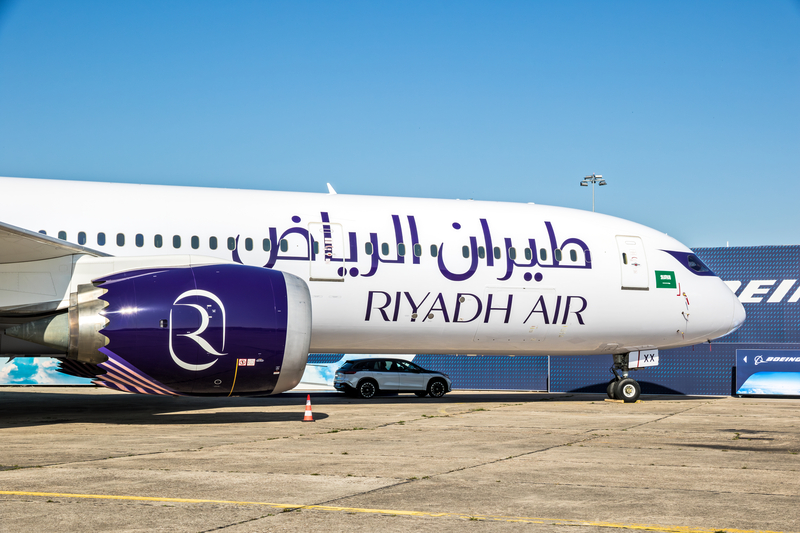
The airline’s Boeing 787-9 service to London marks the commercial debut of its own custom-built aircraft. Riyadh Air had been operating a controlled readiness phase before that, but the June 2026 launch put its new aircraft and onboard product into regular public service.
The London route is a logical starting point. Heathrow is one of the world’s most important premium airports. It also gives Riyadh Air immediate visibility in a market where Gulf carriers, European network airlines and premium long-haul operators all compete aggressively.
At London Heathrow (LHR), Riyadh Air uses Terminal 4. The carrier’s schedule links Riyadh (RUH) and London (LHR) with flight numbers RX401 and RX402.
For an airline trying to establish credibility quickly, Heathrow is a valuable proving ground.
ID 391435798 © VanderWolfImages | Dreamstime.com
The Boeing 787-9 Is The Initial Long-Haul Workhorse
Riyadh Air’s first long-haul fleet is built around the Boeing 787-9 Dreamliner.
The aircraft is well suited to the airline’s early network. The 787-9 has the range to connect Riyadh (RUH) with Europe, Asia, Africa and North America. Boeing lists the 787-9 with a range of up to 8,300 nautical miles, depending on configuration.
That range makes U.S. service technically realistic from Riyadh.
Riyadh (RUH) to the U.S. East Coast sits well within 787-9 capability. Longer West Coast routes are more demanding, but the aircraft was designed for exactly this type of long, thin, premium international market.
The Dreamliner also gives Riyadh Air a modern cabin platform. The aircraft’s composite structure, larger windows, lower cabin altitude and improved humidity system are all important on long-haul sectors.
That matters because U.S.–Saudi flights would be long. A nonstop Riyadh (RUH)–New York-area flight would likely run around 13 hours westbound. A West Coast route would be significantly longer.
For Riyadh Air, the onboard product will need to be strong enough to compete with established Gulf, European and U.S. carriers.
Delta Partnership Gives Riyadh Air A North America Strategy
The most important U.S. relationship for Riyadh Air is its partnership with Delta Air Lines.
Delta and Riyadh Air signed a strategic cooperation agreement in 2024. Under that agreement, Delta is expected to serve as Riyadh Air’s exclusive partner in North America, while Riyadh Air is expected to support Delta in Riyadh and beyond.
That gives Riyadh Air a major advantage before it even launches its own U.S. flights.
A new airline entering the U.S. market needs more than a nonstop flight. It needs access to customers beyond the first gateway. Delta can provide that through its domestic network, corporate relationships and loyalty base.
Delta also plans to launch its own nonstop service between Hartsfield-Jackson Atlanta International Airport (ATL) and Riyadh (RUH) on October 23, 2026. The route will operate with the Airbus A350-900, giving Delta a long-range widebody product into Saudi Arabia.
That creates an interesting setup.
Delta may be the first carrier in the partnership to fly between the U.S. and Riyadh. Riyadh Air now has the authority to follow with its own metal when the airline is ready.
Why U.S. Access Matters For Riyadh Air
North America is essential if Riyadh Air wants to become a true global airline.
The carrier has said it aims to serve more than 100 destinations by 2030. A network that large cannot avoid the United States.
The U.S. market brings several types of demand. It includes business travel, government traffic, tourism, visiting-friends-and-relatives traffic, religious travel, university travel and high-value cargo.
It also supports connections beyond Riyadh.
Saudi Arabia is working to turn Riyadh into a larger international hub. That is part of the country’s broader Vision 2030 strategy, which includes tourism, logistics and aviation growth.
Riyadh Air is one of the most visible pieces of that plan.
The airline is not being built only to serve Saudi outbound travelers. It is designed to make Riyadh (RUH) a stronger connecting point between North America, the Middle East, Africa, South Asia and Southeast Asia.
The U.S.–Saudi Market Is Changing
The U.S.–Saudi air market has historically been limited.
Saudia has long carried much of the nonstop traffic between the two countries. U.S. carriers have had a smaller role, although that is now changing with Delta’s planned Atlanta (ATL)–Riyadh (RUH) service.
Riyadh Air adds another layer.
The United States and Saudi Arabia already have an Open Skies air transport agreement. That framework allows broad air service by airlines of both countries, but individual carriers still need the proper permits and operational approvals.
Riyadh Air now has an important piece of that regulatory puzzle.
The next step is commercial. The airline must decide where a U.S. route best fits its fleet plan, brand strategy and Delta partnership.
A Fleet Built For Fast Expansion
Riyadh Air’s growth plan is unusually ambitious.
The airline has ordered up to 72 Boeing 787-9 Dreamliners. That includes 39 firm aircraft and options for 33 more.
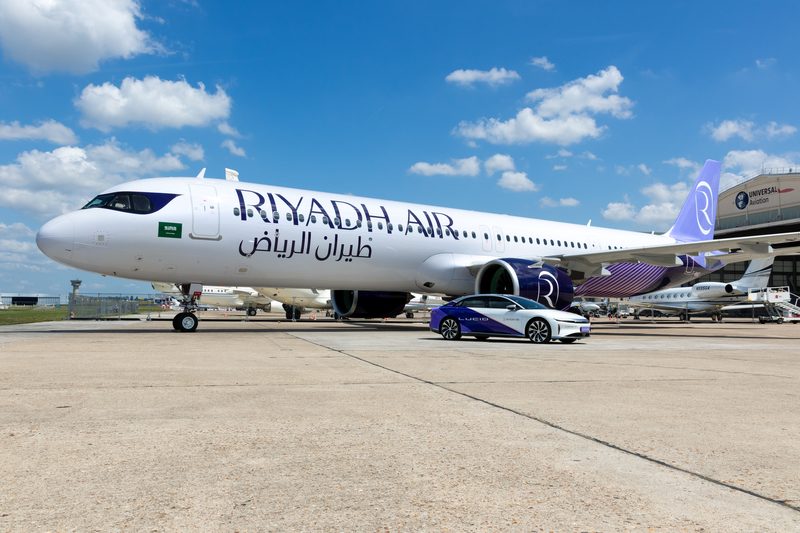
It has also ordered 60 Airbus A321neo family aircraft. Those narrowbodies will be important for regional and medium-haul flying from Riyadh (RUH).
In 2025, Riyadh Air also placed a firm order for 25 Airbus A350-1000 aircraft, with the agreement potentially increasing to 50 aircraft.
That future fleet mix is important.
The 787-9 gives Riyadh Air a flexible long-haul aircraft for early expansion. The A321neo can build frequency and feed across the region. The A350-1000 can later support larger, longer or higher-demand intercontinental routes.
For U.S. service, the 787-9 is the natural first aircraft. Over time, the A350-1000 could also become relevant if Riyadh Air builds enough demand on heavier North American routes.
The Startup Challenge Is Still Huge
Regulatory approval does not remove the hard part.
Riyadh Air still has to scale from a young startup into a reliable global airline. That means training crews, building maintenance support, growing sales channels, opening outstations and proving schedule reliability.
The U.S. market is especially demanding.
Airlines must handle long sectors, strict security requirements, customer-service expectations, irregular operations, winter weather, cargo compliance and complex airport costs. They must also compete for premium travelers against established carriers with deep loyalty programs.
Riyadh Air has the funding, aircraft orders and brand ambition to enter that market. But execution will determine whether the airline can turn regulatory approval into a profitable North American network.
That is why the DOT decision matters, but does not settle the story.
It gives Riyadh Air permission to move forward. It does not guarantee success.
Bottom Line
Riyadh Air has taken a major step toward U.S. service.
The U.S. Department of Transportation has granted the Saudi startup authority to operate scheduled and charter flights to the United States, while tentatively approving its foreign air carrier permit.
The airline has not yet announced its first U.S. destination. Still, the timing is significant. Riyadh Air has just launched public operations with its own Boeing 787-9 Dreamliners on Riyadh (RUH)–London Heathrow (LHR), and it is preparing for rapid international growth.
The U.S. market will be central to that plan.
With a large 787-9 order, future A321neo and A350-1000 fleets, and a strategic partnership with Delta, Riyadh Air now has the regulatory foundation to build a North American presence. The next question is where it chooses to fly first.
Keep reading FlyMag
Get the Daily Brief in the morning or the Route Watch weekly recap on Fridays. Or both.