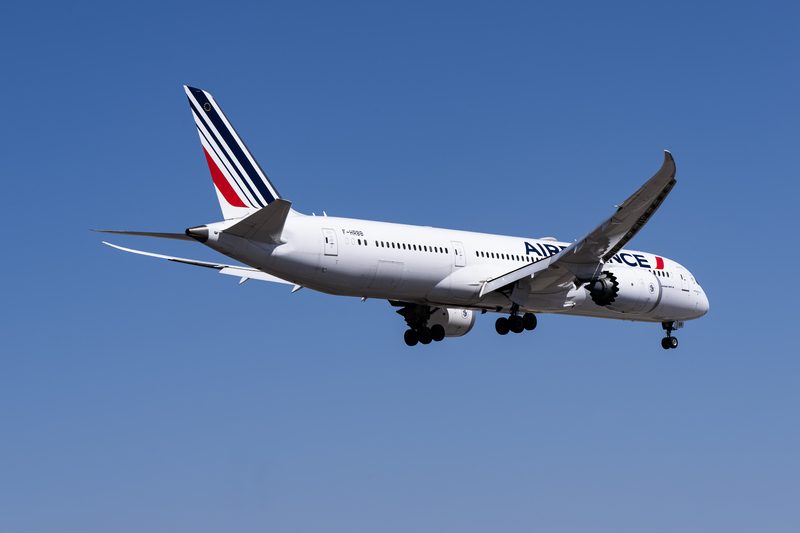
Air France is temporarily suspending its nonstop flights between Paris Charles de Gaulle (CDG) and Havana José Martí (HAV) as Cuba’s aviation fuel crisis deepens—an operational problem that’s become impossible to paper over with workarounds once used to keep the route flying.

The carrier plans to halt service starting March 28, 2026, with an expected restart on June 15 if conditions on the island stabilize. For a route that normally sits comfortably within Air France’s long-haul network planning, the decision highlights how quickly fuel availability at the destination can become the single point of failure—regardless of aircraft type, crew readiness, or demand.
Why this route is different from “short-haul fuel shortages”
Fuel disruptions are not new in aviation. What’s different in Cuba right now is the scale and the duration—and the way it collides with the physics of long-haul flying.
Read our stories in your inbox
Two aviation newsletters. Zero fluff.
Cuban authorities warned airlines in early February that Jet A-1 availability would be severely constrained at multiple airports, including Havana (HAV). In practical terms, that means inbound airlines can’t reliably plan a normal turnaround where the aircraft refuels in Cuba for the next sector.
On shorter routes—say, Florida to Havana—some airlines can sometimes “tanker” enough fuel from the origin to fly both legs without buying meaningful fuel at HAV. But that option collapses on intercontinental sectors like CDG–HAV. The distance, payload, and required reserves simply make a round-trip fuel load impossible to carry in one go without unacceptable performance penalties.
Air France A320 Diverts To Amsterdam After Smoke Smell Triggers Precautionary Landing
That’s why Air France’s workaround was a classic one used worldwide when a destination can’t reliably supply fuel: operate the inbound leg normally, then add a technical refueling stop on the return.
The Bahamas stopover workaround—and why Air France still couldn’t keep it going
In recent weeks, Air France had already been refueling in the Bahamas on return trips rather than relying on uplift at HAV. On paper, a tech stop is straightforward. In real operations, it’s a mess of second-order consequences:
-
Extra flight cycle and additional landing fees on every rotation
-
More crew duty-time exposure, particularly if the stopover airport becomes congested
-
Higher disruption sensitivity: any delay compounds across two departure events instead of one
-
Tighter maintenance planning for a long-haul widebody that now needs extra cycles and more complex scheduling
-
Passenger experience risk if the stopover extends the day significantly or disrupts connections at CDG

For a three-times-weekly long-haul rotation, those costs and reliability risks add up quickly—especially if the fuel situation doesn’t show a clear, near-term path to normalization. At that point, a planned suspension becomes the more controlled option compared with operating a fragile schedule that could fail unpredictably at the outstation.
The aircraft: Boeing 787 service on a route built around efficiency
Air France currently operates the CDG–HAV service with the Boeing 787 Dreamliner, a type designed for long-haul efficiency and right-sized capacity. The 787’s economics are generally well suited to a leisure-and-VFR-heavy market like Havana, where you want a modern widebody without the trip-cost burden of larger aircraft.
But even an efficient long-haul platform can’t solve a hard constraint like no reliable refueling at HAV. Widebody efficiency improves the baseline. It doesn’t eliminate the need for fuel at the destination—or the operational chain reaction when that fuel is absent.
Passenger handling: rebooking, vouchers, refunds—and why airlines prefer “planned” suspensions
Air France says passengers affected by the suspension will be contacted and offered standard disruption remedies, including:
-
Rebooking (where inventory and routings exist)
-
Vouchers
-
Full refunds
From an airline operations standpoint, this is one reason carriers will sometimes choose a defined suspension window rather than flying day-by-day through uncertainty. A planned schedule pause allows customer care, airport staffing, and aircraft routing to be rebuilt intentionally—rather than reacting to last-minute cancellations when fuel simply isn’t there.
Why this hits harder than it looks for Havana (HAV) and Cuba’s tourism sector
Havana’s air links are not just tourism capacity—they’re economic infrastructure. When a European flag carrier pulls down a long-haul route, the impact shows up immediately:
-
fewer inbound seats during a period when the island is already under strain
-
reduced connectivity for travelers who rely on Havana as the gateway
-
a chilling effect on tour operators and package sellers who need schedule reliability
-
weaker cargo and mail flows that often ride in the belly hold of passenger widebodies
There’s also a structural travel reality: for many Cuba-bound travelers, direct European links matter because routing via the United States is not a workable option for a significant share of passengers. When CDG–HAV goes away, the alternatives often become longer, more expensive, and more fragile—exactly the opposite of what a destination needs during a tourism downturn.
What to watch next: June 15 is a target, not a guarantee
Air France’s planned return on June 15 signals that the airline believes the issue may improve by early summer. But in fuel crises, restoration dates tend to move with supply chains and geopolitics, not airline schedules.
The key operational indicators that will decide whether CDG–HAV returns on time are simple:
-
consistent Jet A-1 availability at HAV (not just “some fuel,” but reliable uplift for long-haul turns)
-
stable logistics for storage, trucking, and airport supply procedures
-
confidence that the airline can operate the route without repeat technical stops
Until those pieces lock in, any long-haul schedule touching Havana remains vulnerable—no matter how strong demand looks in the booking data.
Bottom Line
Air France’s suspension of Paris (CDG)–Havana (HAV) from March 28 to June 15 is a textbook example of how destination fuel supply can break long-haul economics. The airline managed the situation with Bahamas refueling stops on return legs, but the compounding costs and operational fragility of “two-stage” flying became unsustainable as Cuba’s jet fuel shortage dragged on.
For travelers, it means fewer nonstop options to Havana and a likely shift toward more complex routings. For the industry, it’s another reminder that in long-haul operations, fuel availability at the destination is not a detail—it’s the foundation.
Keep reading FlyMag
Get the Daily Brief in the morning or the Route Watch weekly recap on Fridays. Or both.