Air France is closing its local office in Bamako, formally ending its remaining on-the-ground presence in Mali after nearly three years without flights to the country.

The French flag carrier informed local partners in a June 15 letter that its Bamako office will cease operations on June 30, 2026. The decision follows the long suspension of Air France flights between Paris Charles de Gaulle Airport (CDG) and Modibo Keita International Airport (BKO) in Bamako.
Air France has not operated to Mali since August 2023, when it suspended flights to Bamako (BKO), Ouagadougou and Niamey after the closure of Niger’s airspace and the wider deterioration of the security and political situation in the Sahel.
Read our stories in your inbox
Two aviation newsletters. Zero fluff.
The closure is therefore not a sudden flight cancellation. It is the final administrative step in a withdrawal that has been developing for years.
A Local Office Closure, Not A New Route Suspension
The important distinction is that Air France had already stopped flying to Mali.

The airline’s Bamako office remained open after the flights were suspended, but its role had been reduced. Local support and travel-agency assistance will now be handled through remote Air France-KLM group channels rather than a physical office in Mali.
That matters because the office closure signals that Air France no longer expects a near-term operational return to Bamako (BKO).
In airline terms, this is deeper than simply removing a flight from the schedule. A station office supports sales, agency relationships, local administration and sometimes operational coordination. Closing it makes a restart more difficult, even if not impossible.
For Mali, the move removes one of the most recognizable European airline brands from the local commercial market.
Air France Once Operated Daily Bamako Flights
Before the 2023 suspension, Air France was a major carrier on the France–Mali market.
Reports from the region indicate that Air France had operated seven weekly flights to Bamako before the August 2023 disruption. That made the route one of the most important direct air links between Mali and Europe.
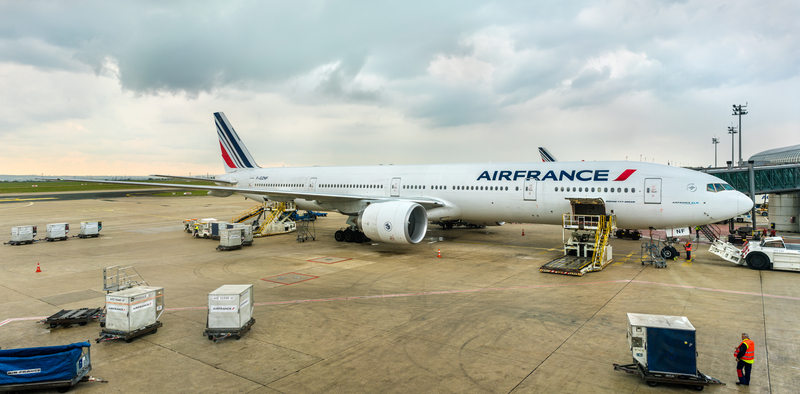
The airline had used the Boeing 777-200ER on Paris (CDG)–Bamako (BKO) services during previous operations. Air France-KLM lists the 777-200ER with 280 to 312 seats, depending on configuration.
That was a large amount of capacity for the market.
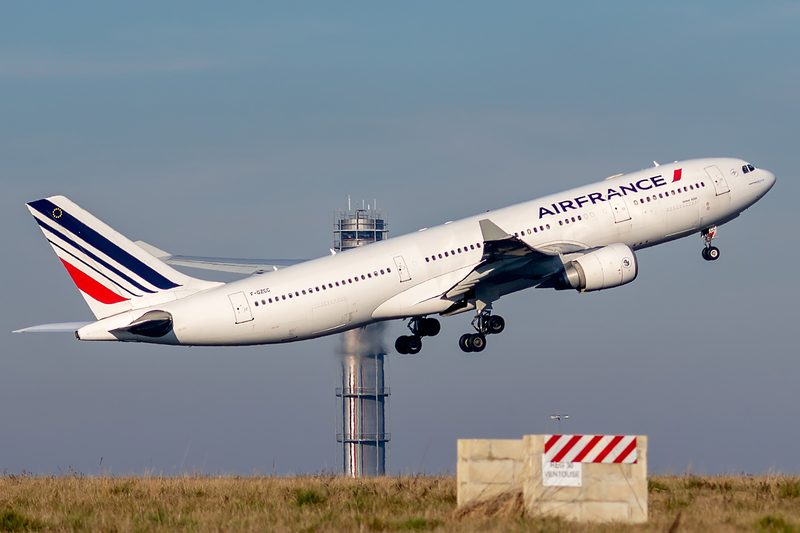
A daily 777 operation could provide more than 1,900 one-way seats per week, depending on the aircraft layout. It also offered significant belly-cargo space, which matters on routes linking Europe with West Africa.
The aircraft choice showed the route’s importance. Bamako was not a small regional add-on for Air France. It was a long-haul African service with passenger, cargo, diplomatic, business and visiting-friends-and-relatives demand.
The 2023 Suspension Never Recovered
Air France suspended Bamako service in August 2023 after Niger closed its airspace following the coup there.
That closure affected many Europe–Africa routings. It also forced carriers to review operations across the Sahel, including Mali and Burkina Faso.
Air France later attempted to restart Bamako service. Reuters reported in October 2023 that the airline postponed a planned resumption after Malian authorities said the carrier had not yet received authorization to restart flights.
That moment was critical.
In normal airline operations, a temporary suspension can be reversed when conditions improve. In this case, the suspension became prolonged. The route never returned, and the local office was left with little core activity.
The June 2026 closure now confirms that the temporary disruption has effectively become a long-term exit.
Why The Mali Market Became So Difficult
The Paris–Bamako market sits inside a much larger political and security problem.
France and Mali have experienced a sharp deterioration in relations since Mali’s military coups in 2020 and 2021. French military forces withdrew, diplomatic ties weakened, and Mali shifted closer to other security partners.
At the same time, jihadist activity across the Sahel has continued to create serious operational and security challenges.
For airlines, that combination is difficult.
They must assess airspace safety, crew security, insurance, ground operations, airport access and political risk. Even if passenger demand remains strong, the route has to be operationally and legally viable.
Air France’s decision to close the Bamako office suggests the airline no longer sees those conditions aligning in the near term.
Corsair Is Also Paused
The France–Mali direct market has narrowed further because Corsair has also suspended its Bamako service.
Corsair had been the only French carrier still operating direct flights between France and Mali. Its flight-information page states that flights to and from Bamako are suspended until June 26, 2026 inclusive because of the current geopolitical situation in Mali.
Corsair normally links Paris Orly Airport (ORY) with Bamako (BKO).
That means the direct France–Mali market is now extremely fragile.
Air France has closed its local office after years without service. Corsair has paused its own flights. For passengers, the practical result is fewer direct options and more reliance on indirect routings.
Passengers Will Rely More On Connecting Hubs
With Air France out of the market, travelers between France and Mali are more dependent on one-stop itineraries.
Current Bamako (BKO) connectivity includes links through hubs such as Casablanca, Addis Ababa and other West African or North African gateways. Carriers such as Royal Air Maroc, Ethiopian Airlines, Air Côte d’Ivoire and regional operators play a larger role when nonstop France service is limited.
That changes the passenger experience.
A direct Paris–Bamako flight is simple. A one-stop itinerary adds time, complexity and connection risk. It can also affect baggage handling, family travel and passengers carrying large amounts of checked luggage.
For diaspora traffic, this matters.
France and Mali have deep personal, cultural and family connections. When nonstop flights disappear, the impact is felt well beyond business travelers.
Bamako Airport Loses A Major European Brand
Modibo Keita International Airport (BKO), historically also known as Bamako-Sénou, is Mali’s main international airport.
The airport is the primary gateway for the capital and the country’s most important international aviation link. Losing Air France’s local office further reduces the visible presence of a carrier that had served the market for decades.
From an airport-network perspective, that is significant.
A long-haul airline office is not just a sales room. It represents a commercial relationship between the airline, travel agencies, airport authorities, corporate clients and local institutions.
Once that office closes, rebuilding the relationship takes more work.
If Air France ever returns to Bamako (BKO), it would likely need to recreate local commercial and operational support from a much smaller base.
The Wider Sahel Pattern
Air France’s Mali exit fits a wider pattern across the Sahel.
The airline also suspended service to Ouagadougou and Niamey in 2023. Those routes have remained disrupted as France’s relations with military-led governments in the region deteriorated.
This has reshaped European connectivity across parts of West Africa.
Traditional French links have weakened. Other carriers have moved into the gap. Turkish Airlines, Royal Air Maroc, Ethiopian Airlines and regional African airlines have become more important in connecting Sahel capitals with Europe, the Middle East and Africa.
That shift is not only commercial.
It reflects deeper political realignment in the region. Aviation often follows diplomacy, security relationships and economic ties. When those relationships change, route maps change too.
Why Air France’s Exit Matters Strategically
Air France has long had one of the strongest African networks among European airlines.
Its Paris hub is built around deep historical, commercial and cultural links across francophone Africa. Bamako was part of that broader structure.
Leaving Mali is therefore symbolically important.
It shows how even long-established airline relationships can break down when political and security risk becomes too high.
It also weakens Paris (CDG) as a direct gateway for Mali-bound traffic. Passengers may still reach Mali through France, but they are more likely to connect onward through another airline or another hub.
That reduces Air France’s control over the passenger journey.
A Route Return Is Now Harder
Could Air France return to Mali one day? In theory, yes.
Airlines can reopen routes when conditions improve. Political relations can change. Security conditions can stabilize. Demand may still exist.
But the office closure makes a near-term restart less likely.
Air France would need regulatory approval, acceptable security conditions, insurance coverage, crew procedures, airport handling, aircraft availability and local commercial support. It would also need confidence that the route could operate reliably.
That is a high bar.
Until those conditions change, Bamako is likely to remain outside Air France’s network.
What It Means For The Market
For the France–Mali air market, the immediate impact is more uncertainty.
Corsair’s suspension leaves direct service limited or unavailable, depending on the exact operating date and whether its pause is extended. Air France’s local office closure removes the possibility of a quick commercial comeback from the larger French flag carrier.
That pushes more passengers into indirect options.
It may also create pricing pressure. When direct capacity disappears, connecting carriers can capture more demand. Fares may rise if supply tightens, especially during peak travel periods.
The strongest passenger flows will remain. Family travel, business links, official travel and diaspora demand are not disappearing.
But the way passengers move between France and Mali is changing.
Bottom Line
Air France’s decision to close its Bamako office on June 30, 2026 marks the effective end of its remaining local presence in Mali.
The airline had already suspended Paris (CDG)–Bamako (BKO) flights in August 2023 and never returned. What remained was a local representation office with reduced activity. That office is now closing as well.
For Air France, the move reflects the reality that a near-term Mali restart is unlikely.
For Bamako, it means the loss of a historic European airline presence. For passengers, it increases reliance on Corsair if it resumes, or on connecting itineraries through other African, North African and Middle Eastern hubs.
This is not just a route story. It is a sign of how politics, security and airspace access can reshape airline networks.
Air France once operated daily widebody flights to Bamako. Three years later, it is closing the office.