JetBlue Trims Newark Transcon Flying As Fort Lauderdale Mint Growth Accelerates
JetBlue Airways is making another notable shift in its network strategy.

The airline is reducing parts of its operation at Newark Liberty International Airport (EWR) and LaGuardia Airport (LGA). At the same time, it is moving more premium transcontinental capacity to Fort Lauderdale-Hollywood International Airport (FLL).
The changes affect two Newark transcontinental routes. JetBlue has ended Newark (EWR) service to Las Vegas Harry Reid International Airport (LAS). It will also end Newark (EWR) service to Los Angeles International Airport (LAX) after the holiday period.
Read our stories in your inbox
Two aviation newsletters. Zero fluff.
In exchange, JetBlue is bringing back Fort Lauderdale (FLL)–San Diego International Airport (SAN) service. The route returns on November 19, 2026, with daily Mint service.
For JetBlue, this is not just a route swap. It shows how the airline is moving aircraft, crews and premium capacity toward markets where it sees stronger long-term returns.
Newark Loses More Transcontinental Mint Flying
JetBlue’s Newark (EWR)–Las Vegas (LAS) Mint service ended on June 10, 2026.
The route was always scheduled as seasonal flying. JetBlue had previously announced it as a twice-daily Mint service operating from January 5 through June 10, 2026. The flights used Mint-equipped Airbus A321 aircraft.
That aircraft choice made sense. JetBlue’s Airbus A321 Classic with Mint has 159 seats, including 16 Mint seats. It gives the airline a lie-flat premium cabin without the cost of a widebody aircraft.
However, the economics of Newark (EWR) have become harder for JetBlue. The airline still serves the airport, but it has been more selective with routes that need premium yields to work.
Los Angeles will last longer. JetBlue is still flying between Newark (EWR) and Los Angeles (LAX), but the route is scheduled to disappear after January 4, 2027.
That marks another pause for a market JetBlue has repeatedly tested. Newark–Los Angeles can attract premium traffic, but it also faces heavy competition across the New York area.
JetBlue is stronger at New York John F. Kennedy International Airport (JFK), where it has a much larger base and a deeper transcontinental franchise.

ID 300366292 © Ritu Jethani | Dreamstime.com
Why Newark Is Harder For JetBlue
Newark (EWR) gives JetBlue access to the New Jersey side of the New York market. That is valuable. However, it is not the same as having scale.
JetBlue’s New York-area operation is heavily centered on JFK. Newark and LaGuardia remain part of the network, but they are smaller and more expensive places for the airline to grow.
That matters on long transcontinental routes. A premium route such as Newark (EWR)–Los Angeles (LAX) needs strong fares, good aircraft utilization and reliable operational performance.
If the aircraft can earn more money elsewhere, JetBlue has little reason to keep it at Newark.
That appears to be the logic behind this move. JetBlue is not leaving Newark. Instead, it is reducing flying that does not fit its current network priorities.
Fort Lauderdale Gets The Capacity Instead
The clearest winner is Fort Lauderdale (FLL).
JetBlue has made South Florida one of its most important growth markets. The airline is now expanding premium flying from FLL to the West Coast, including San Diego (SAN), Los Angeles (LAX) and San Francisco International Airport (SFO).
The new Fort Lauderdale (FLL)–San Diego (SAN) route begins on November 19, 2026. JetBlue says it will operate daily.
The schedule is built for a full transcontinental day. Flight B6 529 will depart Fort Lauderdale (FLL) at 7:00 a.m. and arrive in San Diego (SAN) at 9:39 a.m. The return, B6 532, will leave San Diego (SAN) at 11:00 a.m. and arrive back in Fort Lauderdale (FLL) at 6:55 p.m.
That schedule works well for both local traffic and connections. It also gives JetBlue a premium nonstop product in a market with limited direct competition.
JetBlue says it will offer the only business class option between Fort Lauderdale and San Diego.
Mint Returns To FLL–SAN After A Long Gap
JetBlue last flew Fort Lauderdale (FLL)–San Diego (SAN) in January 2025.
Its return after nearly two years is important. The route is not just coming back as a basic domestic flight. It is returning as a Mint route.
JetBlue’s Mint product remains one of the most recognizable premium products in the U.S. transcontinental market. It includes fully lie-flat seats, upgraded dining, free Wi-Fi and a more polished service flow than a standard domestic first class cabin.
For a route as long as Fort Lauderdale (FLL)–San Diego (SAN), that product can matter.
The westbound flight is scheduled at 5 hours and 39 minutes. The eastbound flight is scheduled at 4 hours and 55 minutes. Those are long enough sectors for lie-flat seating to make a real difference.
It also gives JetBlue a product separation point. Many airlines can sell a nonstop seat. Fewer can sell a true lie-flat domestic business class cabin on this city pair.
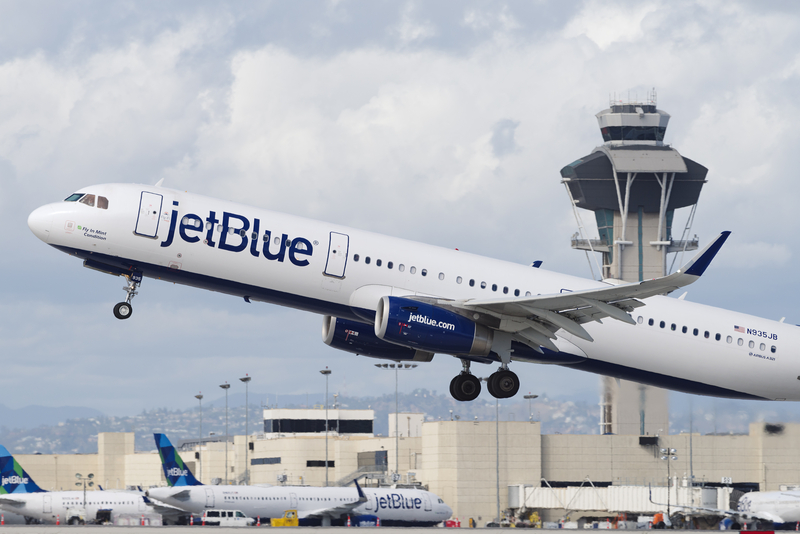
ID 112212154 | Airport © Ajdibilio | Dreamstime.com
The Airbus A321 Is Central To The Plan
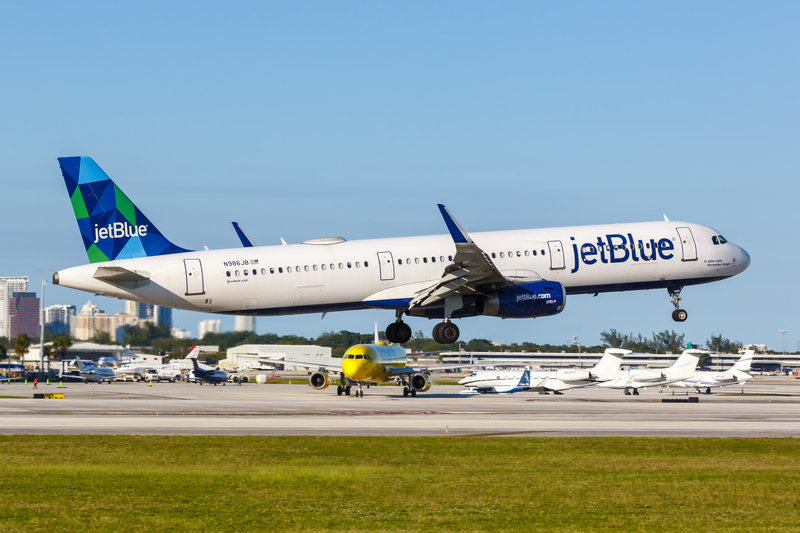
JetBlue’s Mint strategy depends heavily on the Airbus A321.
The A321 gives JetBlue the range and capacity needed for coast-to-coast routes. It also gives the airline enough cabin space to install Mint while keeping a meaningful number of economy seats.
That is why the aircraft has become so important to JetBlue’s premium network. It can fly long domestic sectors such as FLL–SAN, FLL–LAX, FLL–SFO and New York–West Coast routes. Yet it avoids the cost and complexity of operating widebody aircraft.
The A321 also fits JetBlue’s brand. The airline can offer seatback entertainment, free Wi-Fi, a premium cabin and a comfortable coach product on one aircraft type.
For airline planners, that flexibility matters. JetBlue can move the aircraft between premium leisure, business and transcontinental markets as demand changes.
South Florida Becomes A Bigger Priority
JetBlue’s Fort Lauderdale push comes after a major change in the South Florida market.
Following Spirit Airlines’ shutdown, JetBlue moved quickly to expand at FLL. The airline announced 11 new destinations from Fort Lauderdale and added more frequencies on existing routes.
That was not a small adjustment. It was a major opportunity.
Spirit had been deeply tied to Fort Lauderdale. Its exit created room for another carrier to add capacity, win customers and build a stronger local position.
JetBlue was already one of the largest airlines at FLL. Therefore, it had the brand, gates, crews and customer base needed to respond quickly.
Now the airline is adding another layer: more premium flying.
JetBlue says it has increased daily departures from Fort Lauderdale by more than 75% this year. By winter, the airline expects to operate about 150 daily flights from FLL.
That would be JetBlue’s largest Fort Lauderdale schedule in its history.
Newark And LaGuardia Bases Will Close
The network shift also includes staffing and maintenance changes.
JetBlue plans to close its flight attendant base at Newark (EWR). It will also close technical operations bases at Newark (EWR) and LaGuardia (LGA) this fall.
The airline has said the changes are not expected to result in job losses. Affected employees will be able to bid or transfer to other bases.
That is an important detail. JetBlue is reducing its operational footprint at EWR and LGA, but it is not presenting the move as a workforce exit.
Instead, the airline is aligning staff and maintenance support with the airports where it expects more future flying.
This type of base decision often says more than a route cut. Airlines can add or remove a flight quickly. Closing a crew or maintenance base shows a deeper change in how the carrier views an airport.
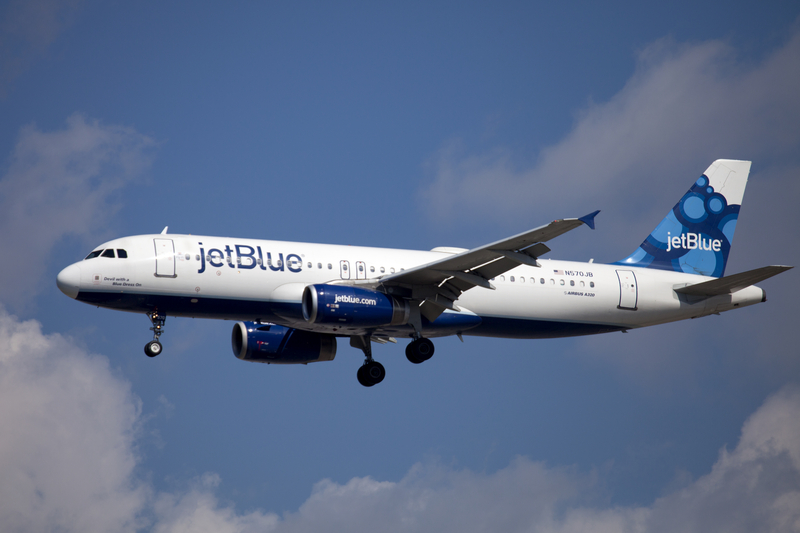
ID 72042136 | Airport © Anthony Aneese Totah Jr | Dreamstime.com
A More Disciplined JetBlue Network
JetBlue has spent the last few years trying to become more disciplined with its network.
That means cutting routes that do not produce enough revenue. It also means putting aircraft into markets where the airline has a clearer advantage.
Fort Lauderdale now offers that opportunity.
JetBlue has local strength at FLL. It also has a chance to capture displaced demand after Spirit’s exit. In addition, South Florida supports both leisure and premium traffic.
Newark is different. It is a valuable airport, but JetBlue lacks the same level of scale there. It also faces high costs and intense competition from larger carriers.
That makes the Newark transcontinental reductions easier to understand.
JetBlue is not simply chasing growth. It is trying to grow where the network math looks better.
What It Means For Passengers
For Newark-area travelers, the cuts reduce JetBlue’s West Coast options.
Passengers near EWR will lose JetBlue’s Las Vegas (LAS) Mint option and, later, the Los Angeles (LAX) route. However, JetBlue will still offer transcontinental flying from JFK, where the airline has a much larger operation.
For South Florida travelers, the picture is different.
Fort Lauderdale (FLL) is gaining more premium West Coast service. The return of San Diego (SAN) gives JetBlue another long-haul domestic market from FLL. Added Mint flying to Los Angeles (LAX) and San Francisco (SFO) also strengthens the airport’s role in JetBlue’s network.
The change should appeal to customers who want a premium product without connecting through another hub.
It also gives JetBlue a clearer identity in South Florida. The airline is not just replacing Spirit capacity with low fares. It is also building a stronger premium schedule.
Bottom Line
JetBlue’s Newark and Fort Lauderdale moves show a clear change in priorities.
The airline is ending seasonal Newark (EWR) service to Las Vegas (LAS), dropping Newark (EWR)–Los Angeles (LAX) after the holiday period, and closing crew and technical operations bases at EWR and LaGuardia (LGA).
At the same time, it is expanding Mint flying from Fort Lauderdale (FLL). The most notable addition is the return of daily Fort Lauderdale (FLL)–San Diego (SAN) service on November 19, 2026.
For JetBlue, the message is clear. Newark remains part of the network, but Fort Lauderdale is becoming a bigger growth engine. The airline is moving premium aircraft and operational focus to the markets where it believes the returns are stronger.
Keep reading FlyMag
Get the Daily Brief in the morning or the Route Watch weekly recap on Fridays. Or both.