Wizz Air Bets On Starlink As Low-Cost Inflight Connectivity Moves Into A New Era
Wizz Air is preparing to bring high-speed satellite internet to its aircraft, marking one of the most significant onboard product changes yet from a European ultra-low-cost carrier.

The airline announced on June 8 that it plans to roll out Starlink connectivity across its fleet from 2027. The move will bring satellite-based, low-latency inflight Wi-Fi to Wizz Air’s all-Airbus narrowbody operation, potentially changing passenger expectations on short- and medium-haul low-cost flights across Europe, the Middle East, North Africa, and Central Asia.
For Wizz Air, this is more than a technology upgrade. It is a strategic attempt to reposition onboard connectivity as a standard feature of affordable air travel rather than a premium product reserved for full-service carriers or long-haul cabins.
Read our stories in your inbox
Two aviation newsletters. Zero fluff.
The airline has not disclosed the financial terms of the Starlink agreement, nor has it confirmed whether the service will be free, paid, bundled with fare products, or offered through Wizz Air’s existing ancillary-sales model. That detail will matter. Wizz Air’s customer base is highly price-sensitive, and any connectivity rollout will need to fit the airline’s ultra-low-cost economics.
Still, the announcement is important because it places Wizz Air ahead of many European low-cost rivals in one of the most visible passenger-experience battlegrounds in aviation.
A Major Shift For A No-Frills Carrier
Inflight Wi-Fi has long been inconsistent across Europe’s short-haul market.
Many full-service airlines have offered some form of onboard connectivity, but the experience has often been slow, expensive, limited to messaging, or unavailable on large parts of the fleet. Among ultra-low-cost carriers, Wi-Fi has been even less common. The economics have been difficult to justify on short sectors where aircraft utilization, low fares, and fast turnarounds dominate the operating model.
That is what makes Wizz Air’s decision notable.
The airline is not a premium carrier trying to enhance an already high-touch onboard product. Wizz Air is one of Europe’s most aggressive low-cost operators, built around high-density Airbus A320-family aircraft, unbundled fares, direct sales, ancillary revenue, and tight cost control. Its core proposition has traditionally been simple: low fares, dense seating, and a large point-to-point network.
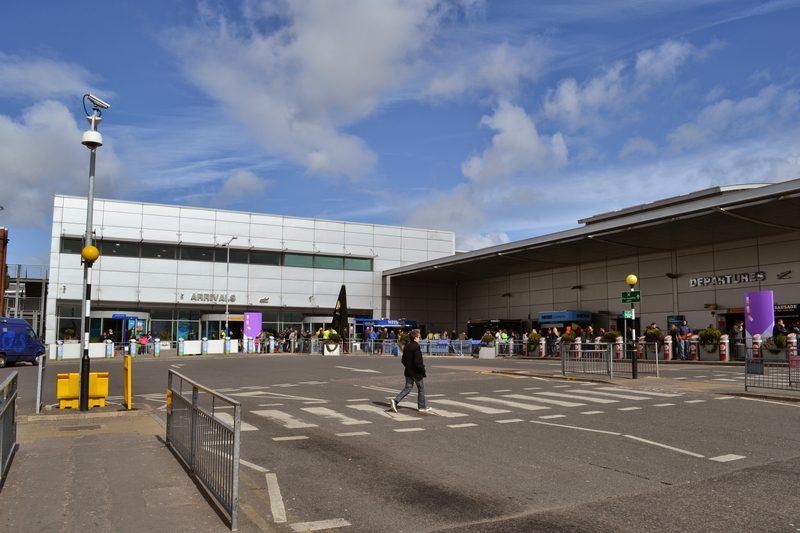
Adding Starlink does not change that model, but it does add a new dimension to it. Connectivity is becoming less of a luxury and more of a passenger expectation. Travelers want to message, work, stream, browse, and stay connected even on flights of two to four hours. Wizz Air appears to be betting that onboard internet can improve the passenger experience without undermining its low-cost structure.
Starlink Changes The Connectivity Equation
Starlink is different from many older inflight Wi-Fi systems because it uses a low-Earth-orbit satellite network rather than relying only on higher-orbit satellite systems or air-to-ground networks.
Low-Earth-orbit satellites fly much closer to Earth than traditional geostationary satellites. That can reduce latency, improve responsiveness, and make the experience feel closer to using internet service on the ground. For passengers, the practical difference is not just faster download speeds. It is the ability to use applications that are sensitive to delay, including messaging apps, cloud work tools, video calls where permitted, live services, and streaming platforms.
That is why airlines have increasingly turned to Starlink. The system has already been selected by several major carriers around the world, including American Airlines, United Airlines, Southwest Airlines, Alaska Airlines, Singapore Airlines, and Emirates. In Europe, more carriers are also moving toward low-Earth-orbit connectivity as passengers become less willing to accept unreliable or expensive inflight internet.
Wizz Air’s announcement brings that trend directly into the ultra-low-cost space.
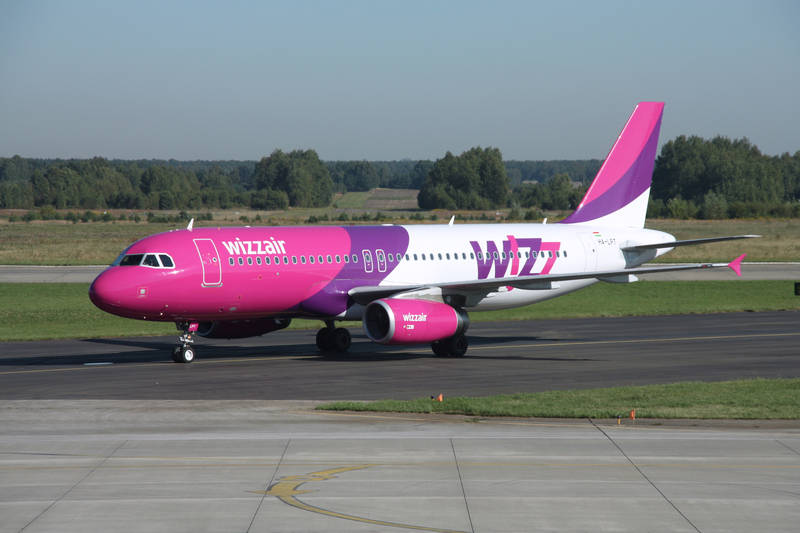
ID 11055666 © Tupungato | Dreamstime.com
What Passengers Can Expect
Once installed and activated, Starlink should allow Wizz Air passengers to remain connected during flight using onboard Wi-Fi.
That could mean access to messaging, email, browsing, streaming, live services, and work applications, depending on how Wizz Air configures the service and what usage rules it applies. The airline has framed the move as the beginning of the end of the traditional “offline” flight experience.
There is an important distinction, however. Starlink does not necessarily mean passengers will stop using airplane mode in the technical or regulatory sense. On many airlines, passengers are still required to disable cellular transmission while Wi-Fi and Bluetooth remain enabled. A more accurate way to describe the change is that Wizz Air passengers should no longer be cut off from the internet simply because they are airborne.
That may sound like a small distinction, but it matters. The aircraft is not becoming a flying cell tower. It is becoming a connected Wi-Fi environment.
For passengers, the value will depend on three things: whether the service is free or paid, how reliable it is on busy flights, and whether Wizz Air makes the connection process simple. A fast satellite system can still feel frustrating if access is buried behind a complicated login page, restrictive payment flow, or unclear usage policy.
The Fleet Challenge Is Significant
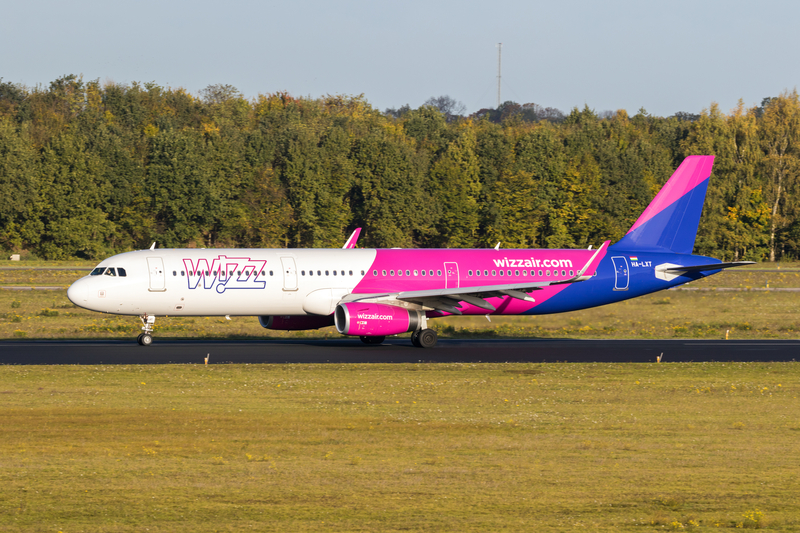
Wizz Air operates an all-Airbus A320-family fleet, including A320ceo, A320neo, A321ceo, A321neo, and A321XLR aircraft. The A321neo is especially important to the airline’s strategy because it offers high seat density and lower unit costs. Wizz Air’s A321neo aircraft are configured with 239 seats, making them among the densest narrowbody aircraft flying in Europe.
Installing Starlink across that kind of fleet is a major operational project.
Each aircraft will require hardware installation, certification work, maintenance planning, downtime scheduling, software integration, and cabin-system coordination. For a high-utilization low-cost carrier, taking aircraft out of service is never simple. Every retrofit has to be planned around seasonal demand, maintenance windows, route schedules, and aircraft availability.
That challenge is even more relevant for Wizz Air because the airline has been dealing with Pratt & Whitney GTF engine-related disruption across part of its A320neo-family fleet. Grounded aircraft and engine inspection schedules have already created capacity pressure for the carrier. Adding a fleetwide connectivity retrofit will require careful planning so the Wi-Fi program does not create additional operational strain.
The rollout starting in 2027 gives Wizz Air time to coordinate installations with scheduled maintenance and future aircraft deliveries. New-generation aircraft can be delivered with the system installed or prepared for activation, while existing aircraft can be modified over time.
Why This Matters For The A321neo Network
The A321neo is the aircraft where Starlink may have the biggest passenger impact.
Wizz Air uses the A321neo on many of its longer and higher-density routes. With 239 seats in a single-class cabin, the aircraft gives Wizz Air extremely low unit costs, but it also means a large number of passengers are sharing the same onboard environment. On longer flights, especially sectors pushing three, four, or more hours, connectivity can become a meaningful part of the experience.
That is even more true as Wizz Air uses Airbus narrowbodies deeper into the Middle East, Central Asia, North Africa, and longer leisure markets. A flight from London Luton (LTN), Budapest (BUD), Vienna (VIE), Rome Fiumicino (FCO), Milan Malpensa (MXP), or Abu Dhabi-style regional markets may not be long-haul in the traditional widebody sense, but it can still be long enough for passengers to value internet access.
Wizz Air’s A321XLR operation also makes the connectivity decision more relevant. The A321XLR is designed for longer single-aisle missions, and Wizz Air has used the type as part of its longer-range low-cost strategy. On aircraft designed to push the outer limits of narrowbody flying, reliable onboard Wi-Fi becomes more than a nice extra. It becomes part of making a long single-aisle flight feel more tolerable.
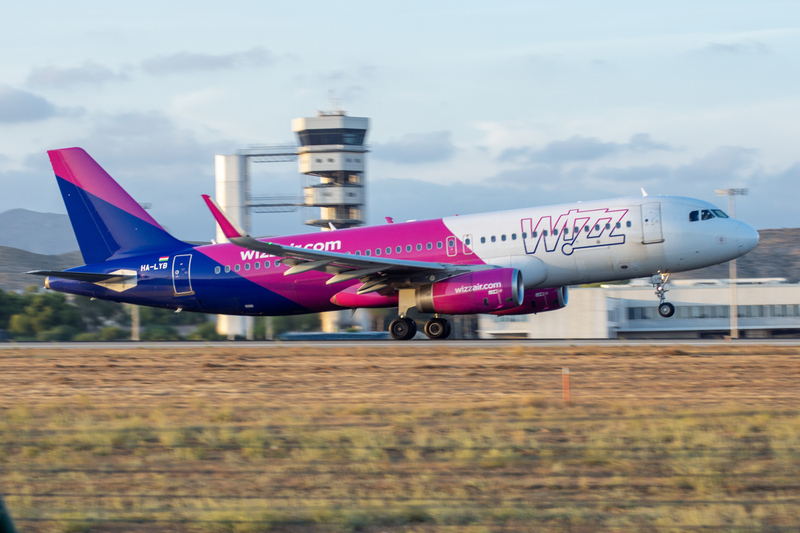
ID 332138974 © Alfonso Sacristan M | Dreamstime.com
A Competitive Signal To Ryanair And easyJet
The announcement also puts pressure on Wizz Air’s closest low-cost competitors.
Ryanair and easyJet have historically been cautious about inflight Wi-Fi. The reasoning is straightforward. Wi-Fi systems add cost, weight, complexity, and maintenance requirements. On very short flights, the commercial return can be difficult to justify, especially if customers are unwilling to pay much for access.
Ryanair has been particularly skeptical of the economics, including the cost of installation, drag, fuel burn, and the limited time passengers would have to use the service on short sectors. easyJet has also taken a careful approach, weighing passenger demand against operating cost and complexity.
Wizz Air is now taking the opposite route. It is effectively saying that connectivity has become important enough to justify fleetwide investment, even in the ultra-low-cost segment.
That does not mean Ryanair and easyJet will immediately follow. Their business models, average stage lengths, fleet strategies, and cost structures differ. But Wizz Air’s decision changes the competitive conversation. If passengers begin to associate Wizz Air with reliable onboard internet, rivals may face more pressure to explain why similar connectivity is absent.
The Business Case Is Not Just Passenger Comfort
The passenger-facing benefit is obvious, but the business case may go deeper.
Inflight connectivity can support ancillary revenue, advertising, loyalty engagement, onboard retailing, real-time disruption communication, and digital customer-service tools. For an airline like Wizz Air, which already relies heavily on ancillary revenue, a connected cabin could become a new commercial platform.
If Wizz Air chooses to charge for Wi-Fi, the service could become a direct revenue product. If it offers some connectivity for free, it could use the platform to support paid upgrades, destination offers, partner advertising, or app-based customer engagement. If it bundles Wi-Fi with higher fare products, it could strengthen the value proposition for passengers buying beyond the lowest fare.
There are operational benefits as well. A connected aircraft can improve crew communications, real-time maintenance reporting, onboard payment reliability, and disruption messaging. Those benefits are less visible to passengers, but they can matter in a high-utilization operation.
The question is how Wizz Air balances connectivity with simplicity. Ultra-low-cost carriers succeed by keeping the operation efficient. A Wi-Fi product that creates boarding confusion, payment problems, support issues, or slow cabin processes could undermine the benefit. A clean, easy-to-use system could become a meaningful differentiator.
The Cost Question Remains Open
The biggest unanswered question is cost.
Wizz Air has not said whether Starlink will be free for all passengers, free for some fare bundles, or sold as an add-on. That decision will shape how the market receives the rollout.
A free Wi-Fi proposition would be the most powerful passenger-experience statement, but also the most expensive. A paid model would be more consistent with Wizz Air’s unbundled approach, but it may limit adoption if passengers view the price as too high for short flights. A hybrid model may be the most likely outcome: basic messaging or limited access included in some fare types, with higher-speed or full-session access sold separately.
Wizz Air also has to consider competitive positioning. If the airline markets the rollout as ending the “offline era,” passengers may expect the service to be widely usable and not hidden behind excessive charges. The airline will need to manage that expectation carefully.
There is also the technical cost of the system itself. Starlink hardware adds weight and requires installation, certification, and maintenance. Even small changes in aircraft weight and drag matter to low-cost carriers because fuel burn and utilization are central to the model.
That is why this announcement is not just a customer-service story. It is an operational and financial bet.
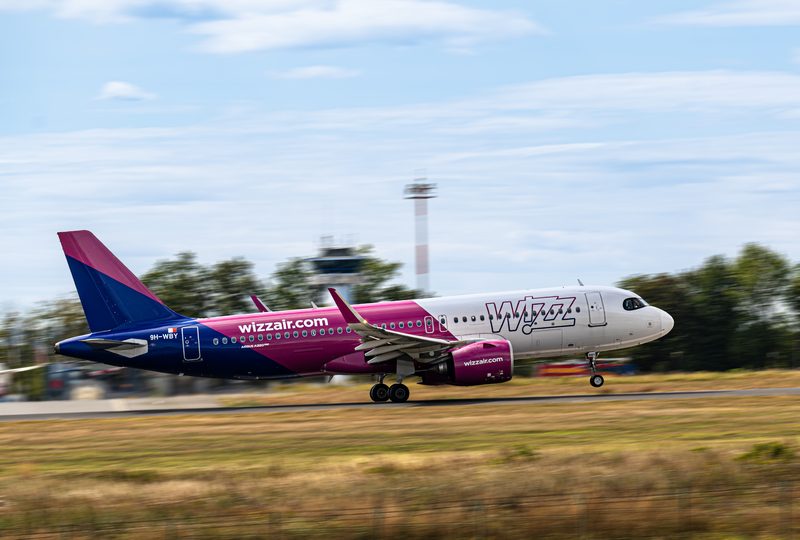
ID 407827508 | Airlines © Adrian Lupascu | Dreamstime.com
A Sign Of Where Short-Haul Flying Is Heading
The broader industry message is clear: inflight connectivity is moving from premium novelty to expected infrastructure.
For years, airlines treated Wi-Fi as a differentiator. Some offered it only on long-haul aircraft. Others charged high prices for slow connections. Many low-cost carriers ignored it entirely. That model is now changing as satellite technology improves and passengers become more digitally dependent.
The same trend has already reshaped long-haul aviation. Full-service carriers now compete not only on seat design, catering, lounges, and loyalty benefits, but also on whether passengers can remain connected reliably. That competition is moving into the narrowbody market, including aircraft such as the Airbus A321neo, Boeing 737 MAX 8, and Airbus A321XLR.
Wizz Air’s decision is important because it brings that shift into a segment where every added cost is scrutinized. If an ultra-low-cost airline can make fleetwide satellite Wi-Fi work, it will be harder for other carriers to argue that short-haul passengers do not need connectivity.
Bottom Line
Wizz Air’s decision to roll out Starlink across its fleet from 2027 is a major step for European low-cost aviation.
The airline operates a dense, all-Airbus A320-family fleet, including high-capacity A321neo aircraft with 239 seats, and its business model is built around low fares, high utilization, and ancillary revenue. Adding Starlink to that environment is not a minor cabin upgrade. It is a strategic bet that passengers increasingly expect to stay connected, even on low-cost short- and medium-haul flights.
The rollout will not literally remove all airplane-mode requirements, and Wizz Air has not yet said whether the service will be free or paid. Those details matter. But the direction is clear: the “offline flight” is becoming harder to defend as technology improves and more airlines adopt low-Earth-orbit satellite connectivity.
For Wizz Air, Starlink could become a passenger-experience differentiator, a new ancillary platform, and a useful tool for longer narrowbody routes. For the wider European market, it raises a bigger question: if one of the region’s most cost-focused airlines is willing to connect its entire fleet, how long can the rest of the low-cost sector afford to stay offline?
Keep reading FlyMag
Get the Daily Brief in the morning or the Route Watch weekly recap on Fridays. Or both.