LATAM Restores Brussels Latin America Link With New São Paulo Dreamliner Service
LATAM Airlines has inaugurated nonstop service between São Paulo/Guarulhos International Airport (GRU) and Brussels Airport (BRU), restoring direct passenger flights between Belgium and Latin America for the first time in more than 25 years.

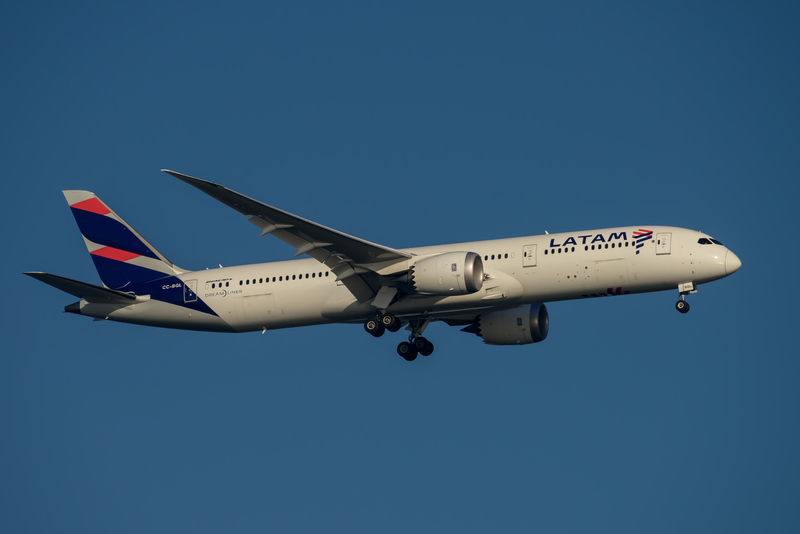
The new route gives Brussels (BRU) its only nonstop passenger connection to Brazil and makes LATAM the only airline operating directly between Belgium and Brazil. The service runs three times weekly using Boeing 787-9 Dreamliner aircraft configured with 300 seats, including 30 Premium Business seats and 270 Economy seats.
For Brussels Airport, this is a major intercontinental milestone. The airport last had direct passenger service to Latin America in 2000, and the return of a nonstop São Paulo link fills one of the most visible gaps in its long-haul network. For LATAM, the route adds a new European capital and strengthens São Paulo (GRU) as the airline group’s primary South American hub.
Read our stories in your inbox
Two aviation newsletters. Zero fluff.
This is not simply a Brazil–Belgium point-to-point route. It is a two-way network play: Brussels becomes a new European entry point for Brazilian travelers, while São Paulo opens LATAM’s broad South American network to passengers from Belgium and beyond.
Three Weekly Flights Between São Paulo And Brussels
LATAM operates the new São Paulo (GRU)–Brussels (BRU) service three times weekly.
The eastbound flight from São Paulo/Guarulhos (GRU) operates on Mondays, Wednesdays, and Saturdays, departing Brazil at 6:10 p.m. and arriving in Brussels (BRU) at 10:50 a.m. the following day.
The return flight from Brussels (BRU) operates on Tuesdays, Thursdays, and Sundays, departing at 1:10 p.m. and arriving back in São Paulo (GRU) at 8:25 p.m. local time.
That schedule is commercially useful. The evening departure from São Paulo (GRU) supports connections from LATAM’s domestic and regional network before the overnight transatlantic crossing. The late-morning arrival in Brussels (BRU) gives passengers enough time for onward European connections.
In the other direction, the early-afternoon Brussels (BRU) departure allows European-origin travelers to begin their trip without an extremely early start, while the evening arrival in São Paulo (GRU) supports onward travel across Brazil and South America the following morning.
The flight time is roughly 12 hours, placing the route squarely in long-haul widebody territory.
The Boeing 787-9 Is The Right Aircraft For The Route
LATAM is using the Boeing 787-9 Dreamliner on the Brussels route, a logical aircraft choice for a long transatlantic sector of this type.
The 787-9 gives LATAM the range to connect Brazil with Northern Europe while offering a modern passenger product and meaningful belly cargo capacity. The aircraft’s 300-seat configuration is balanced for the market: enough capacity to support business, leisure, visiting-friends-and-relatives, and connecting traffic, but not so large that LATAM has to overfill the route from day one.
The 30-seat Premium Business cabin is especially important. São Paulo (GRU) to Brussels (BRU) is a corporate-heavy route with demand tied to pharmaceuticals, chemicals, finance, government, technology, trade, and multinational business travel. A full lie-flat premium cabin gives LATAM a stronger product for high-yield travelers who might otherwise connect over Lisbon (LIS), Madrid (MAD), Paris Charles de Gaulle (CDG), Frankfurt (FRA), London Heathrow (LHR), or Amsterdam (AMS).
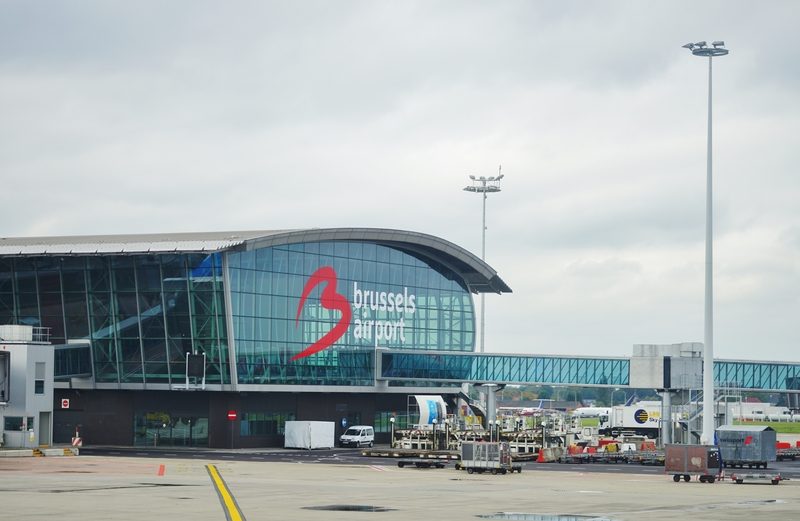
Brussels Airport Hit By Four-Hour Queues As EU Border System Strains Passport Control
In Economy, the Dreamliner gives passengers a more modern long-haul experience than older-generation widebodies, with a quieter cabin, larger windows, improved cabin pressure, and better humidity levels. Those details matter on a 12-hour flight.
Brussels Regains A Direct Latin America Link
For Brussels Airport (BRU), the route is strategically significant because it restores a direct Latin America passenger link after more than two decades.
Brussels has strong long-haul service to North America, Africa, the Middle East, and parts of Asia, but Latin America had been absent from its direct passenger network since 2000. That gap was unusual for a European capital airport with major diplomatic, corporate, pharmaceutical, and cargo importance.
São Paulo (GRU) is the right market to restore the link. It is Brazil’s largest city, Latin America’s largest metropolitan economy, and one of the most important business centers in the Southern Hemisphere. It is also LATAM’s most important Brazilian hub.
For Belgium, the route supports several types of traffic. Business travelers gain a nonstop connection to Brazil’s commercial capital. Tourists gain easier access to Brazil and onward South American destinations. The Brazilian community in Belgium gains a more convenient option for visiting friends and relatives. Cargo operators gain additional widebody capacity on a strategically useful corridor.
That combination gives the route a stronger foundation than a purely leisure-driven long-haul service.
São Paulo Opens LATAM’s South American Network
The Brussels route is valuable because São Paulo/Guarulhos (GRU) is not just a destination. It is LATAM’s largest hub and one of the most important connecting airports in South America.
From São Paulo (GRU), travelers from Brussels (BRU) can connect onward across Brazil and the broader LATAM network. That includes domestic Brazilian markets such as Rio de Janeiro (GIG/SDU), Brasília (BSB), Salvador (SSA), Recife (REC), Fortaleza (FOR), Porto Alegre (POA), Curitiba (CWB), Florianópolis (FLN), Belo Horizonte (CNF), and many more.
Beyond Brazil, São Paulo also supports connections to Chile, Peru, Colombia, Argentina, Uruguay, Ecuador, Paraguay, and other regional markets. LATAM says passengers can access more than 135 destinations through its South American network.
That makes Brussels (BRU) a new European gateway into LATAM’s system. A traveler from Belgium can now fly nonstop to São Paulo and connect onward to destinations across the continent without first routing through Iberia, Air France-KLM, Lufthansa Group, TAP Air Portugal, or another European hub airline.
For LATAM, that is a meaningful network advantage.
Brussels Airlines Codeshare Adds European Feed
LATAM’s new Brussels service is also supported by a codeshare agreement with Brussels Airlines.
That partnership gives LATAM passengers access to 17 onward European destinations via Brussels (BRU), including cities in Germany, France, the United Kingdom, Scandinavia, Switzerland, and Central Europe. The list includes Berlin (BER), Frankfurt (FRA), Hamburg (HAM), Munich (MUC), Lyon (LYS), Marseille (MRS), Toulouse (TLS), Manchester (MAN), Copenhagen (CPH), Oslo (OSL), Stockholm (ARN), Gothenburg (GOT), Geneva (GVA), Zurich (ZRH), Krakow (KRK), Prague (PRG), and Warsaw (WAW).
This is important because Brussels (BRU) is not only an origin-and-destination market. It can also function as a European gateway for LATAM’s Brazil-origin traffic.
Brussels Airlines brings local feed, European connectivity, and Star Alliance-adjacent network relevance, even though LATAM itself is not part of Star Alliance. For passengers, the value is simpler: single-ticket itineraries, smoother connections, unified check-in, and through-checked baggage.
That gives the São Paulo–Brussels route a better chance of maturing beyond local Brazil–Belgium demand.
Cargo Is A Major Part Of The Business Case
The new route also has a significant cargo component.
LATAM says the service adds more than 100 tonnes of weekly freight capacity between Brazil and Belgium. On a three-weekly Boeing 787-9 operation, that belly cargo space can be commercially important, especially because Brussels is one of Europe’s leading pharmaceutical logistics hubs.
In the Europe-to-Brazil direction, the route is expected to support pharmaceutical products and other high-value cargo. That is a natural fit for Brussels (BRU), which has built a strong position in temperature-controlled and life-sciences logistics.
In the Brazil-to-Europe direction, the route opens another direct flow into Western and Northern Europe. São Paulo (GRU) is already a major cargo gateway, and LATAM Cargo has been active at Brussels for several years. The passenger flight adds belly capacity on top of LATAM’s existing cargo presence.
For airline economics, cargo can be a crucial support on long-haul routes. Passenger demand may be seasonal or directional, but cargo revenue can help stabilize route performance and improve overall profitability.
Brussels Becomes LATAM’s 10th European Destination From Brazil
With Brussels (BRU), LATAM now operates direct flights from Brazil to 10 European destinations.
The list includes Amsterdam (AMS), Barcelona (BCN), Brussels (BRU), Frankfurt (FRA), Lisbon (LIS), London (LHR), Madrid (MAD), Milan (MXP), Paris (CDG), and Rome (FCO).
That European footprint is significant. LATAM is not simply relying on a few traditional Iberian gateways. It is building broader coverage across Western and Southern Europe, with a growing emphasis on corporate and premium markets.
Brussels fits that strategy well. It is the capital of Belgium, home to the European Union institutions, a major diplomatic center, and an important corporate and logistics market. It also has geographic value: Brussels is centrally located between France, the Netherlands, Germany, Luxembourg, and the UK, making it useful for both point-to-point and connecting traffic.
The route also complements LATAM’s recent European expansion from Brazil, including Amsterdam (AMS), while giving the group a stronger position against European carriers that have historically dominated Brazil–Europe traffic.
Why This Route Matters For Brazil–Europe Competition
The Brazil–Europe market is highly competitive.
European airlines such as TAP Air Portugal, Iberia, Air France, KLM, Lufthansa, British Airways, ITA Airways, and others already provide extensive one-stop options between Brazil and Europe. Many passengers from Belgium previously connected through Lisbon (LIS), Madrid (MAD), Paris (CDG), Amsterdam (AMS), Frankfurt (FRA), or London (LHR) to reach Brazil.
LATAM’s nonstop Brussels service changes that equation.
It gives passengers in Belgium a direct option to São Paulo (GRU), and it gives Brazilian travelers a new entry point into the heart of Europe. It also reduces reliance on competing European hubs for traffic that LATAM can now carry itself.
That matters strategically. The more nonstop European gateways LATAM serves from São Paulo (GRU), the more control it has over its long-haul traffic flows. Instead of feeding passengers into rival networks, LATAM can use its own widebodies to connect Brazil with major European markets and then rely on targeted partnerships for onward distribution.
The Brussels Airlines codeshare is a good example of that model.
A Route With Business, VFR And Tourism Demand
The route’s demand base is unusually broad.
Business travel is an important pillar. Belgium and Brazil have trade, industrial, chemical, pharmaceutical, logistics, and financial links. Brussels’ role as a European institutional center also creates diplomatic and government-related travel demand.
Visiting-friends-and-relatives traffic is another component. Belgium has a Brazilian community, and Brazil has long-standing cultural and family ties with Europe. A nonstop flight simplifies those journeys and can stimulate demand among travelers who previously faced inconvenient routings.
Tourism also matters in both directions. Belgian travelers gain easier access to São Paulo, Rio de Janeiro, the Brazilian coast, the Amazon, Iguazu Falls, and onward South American itineraries. Brazilian travelers gain direct access to Belgium, Brussels, Bruges, Ghent, Antwerp, and broader European city-break and rail connections.
That traffic mix is exactly what a three-weekly long-haul route needs. It does not have to rely on one segment alone.
A Milestone For Brussels Airport
For Brussels Airport, the LATAM launch strengthens the airport’s long-haul credibility.
Brussels welcomed 24.4 million passengers in 2025 and handled 795,000 tonnes of cargo, according to airport data. It is a major European airport but not one of the continent’s largest global hubs. That means every new intercontinental route has strategic weight.
Adding São Paulo (GRU) fills a long-standing geographic gap. It gives Brussels (BRU) a direct link to Latin America, strengthens the airport’s cargo platform, and supports its ambition to diversify beyond intra-European and traditional long-haul markets.
It also improves the airport’s competitive position against nearby hubs. Passengers in Belgium and surrounding regions often use Amsterdam (AMS), Paris (CDG), Frankfurt (FRA), or London Heathrow (LHR) for long-haul flights. A nonstop São Paulo route gives Brussels a stronger claim to Brazil-bound traffic that might otherwise leak to those larger airports.
For the airport, that is a significant win.
Bottom Line
LATAM’s new São Paulo (GRU)–Brussels (BRU) service restores direct passenger flights between Belgium and Latin America for the first time since 2000.
The route operates three times weekly with Boeing 787-9 Dreamliner aircraft configured with 30 Premium Business seats and 270 Economy seats. Flights from São Paulo (GRU) operate on Mondays, Wednesdays, and Saturdays, while return flights from Brussels (BRU) operate on Tuesdays, Thursdays, and Sundays.
For LATAM, Brussels becomes its 10th European destination from Brazil and a new gateway supported by Brussels Airlines codeshare connectivity. For Brussels Airport, the route fills a major gap in its intercontinental network and reconnects Belgium directly with South America.
The passenger case is strong, but cargo may be just as important. With more than 100 tonnes of weekly freight capacity and strong demand for pharmaceutical and high-value cargo, the route has both commercial and logistics relevance.
This is a meaningful long-haul addition: a nonstop bridge between Belgium and Brazil, a new European gateway for LATAM, and a long-awaited return of Latin America to the Brussels Airport route map.
Keep reading FlyMag
Get the Daily Brief in the morning or the Route Watch weekly recap on Fridays. Or both.