Qatar Airways Cargo Reopens Iraq, Bringing Freighters Back Before Full Passenger Recovery
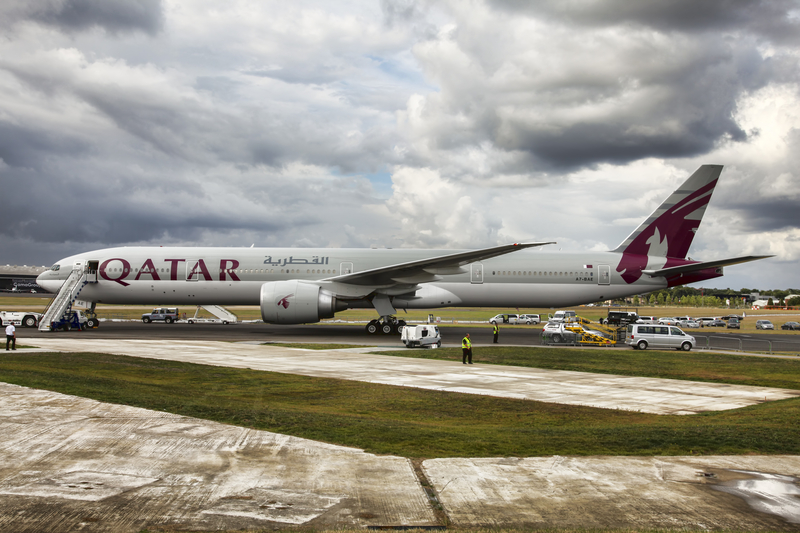
Qatar Airways Cargo is restoring service to Iraq, bringing back both dedicated freighter lift and belly-hold capacity after nearly two months of suspension during the regional airspace crisis.
The restart begins with cargo first, followed by passenger flying shortly afterward. That sequence matters. It shows Qatar Airways is rebuilding the market in a controlled way, using freight as the first step before the wider passenger network fully resumes.
For aviation readers, this is more than a routine route restart. Iraq is an important market for trade, logistics, and regional connectivity, and the return of service marks a meaningful recovery in a corridor that had effectively gone dark.
Baghdad Gets The Freighter First
The first phase of the restart is a weekly Boeing 777 freighter service to Baghdad International Airport (BGW) beginning on May 7.
That is an important detail because it makes clear that cargo is leading the recovery. Rather than waiting for a full passenger schedule to return, Qatar Airways is re-establishing freight capacity first, which is often the more practical way to reopen a disrupted market.
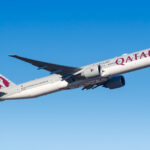
A Boeing 777 freighter brings immediate heavy-lift capability and gives the airline a way to restore commercial relevance in Baghdad even before the broader passenger network is fully back.
Passenger Flights Return On May 10
The second phase begins on May 10, when Qatar Airways resumes passenger operations to Baghdad (BGW), Basra (BSR), and Erbil (EBL).
That matters because passenger flights do more than restore traveler access. They also bring back belly-hold cargo space, which is often crucial in rebuilding overall market capacity. Once those flights return, Iraq is no longer being served only by a single freighter route. It becomes part of the wider Qatar Airways network again.
That is a much more meaningful recovery step.

Baghdad Will Regain More Than 115 Tonnes Of Weekly Capacity
Qatar Airways Cargo says that once both the freighter and passenger services are operating, it will offer more than 115 tonnes of combined weekly cargo capacity from Doha to Baghdad.
That figure matters because it shows the restart is not symbolic. This is a meaningful amount of capacity being put back into the market. For shippers and freight forwarders, that is the practical measure of the restart’s importance.
It means space is back, not just the route name.
Iraq Is Part Of A Bigger Recovery Push
The Iraq reopening also fits inside a much wider network rebuild.
Qatar Airways Cargo says its freighter network has already expanded back to more than 60 destinations, while the airline’s broader passenger and belly-hold network is expected to exceed 150 destinations from mid-June. That makes Iraq part of a much larger recovery pattern rather than an isolated exception.
For the airline, this is not just about restoring one suspended market. It is about rebuilding confidence and reconnecting key trade lanes across a much broader system.
Cargo Often Leads These Recoveries
One of the more interesting aspects of the restart is what it says about aviation recovery more generally.
In politically sensitive or operationally fragile markets, cargo often returns before passenger confidence does. Freight demand can remain urgent even when passenger demand is slower to recover, and airlines can use freighter services to re-establish presence and prove operational viability before restoring a full passenger schedule.
That is exactly what Qatar Airways appears to be doing here.
It is a logical recovery strategy, and one that often works well in markets where demand is real but confidence is still rebuilding.
Bottom Line
Qatar Airways Cargo’s return to Iraq is a meaningful reopening, with a weekly Boeing 777 freighter to Baghdad from May 7 followed by the return of passenger flights to Baghdad, Basra, and Erbil from May 10. Together, these flights restore both dedicated freight capacity and belly-hold space to a market that has been suspended for nearly two months.
For Qatar Airways, this is part of a wider network recovery. For Iraq, it is a practical reconnection to one of the Gulf’s most important cargo and passenger systems. And for the industry, it is another example of how route recovery in fragile regions often begins with cargo first.