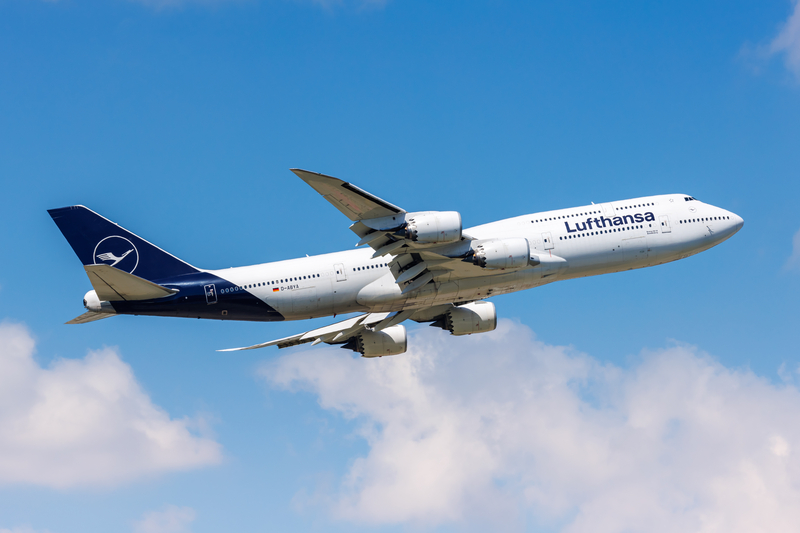
The U.S. Air Force’s decision to acquire two Boeing 747-8 passenger aircraft from Lufthansa is less about prestige than practicality.

At a time when the long-delayed VC-25B program continues to slip, the Pentagon needs a way to bridge the gap between today’s aging VC-25A fleet and tomorrow’s still-unfinished presidential aircraft. That is where Lufthansa’s former Boeing 747-8Is enter the picture. The deal, valued at about $400 million, gives the Air Force two relatively young, well-maintained examples of the exact aircraft family that will underpin the next Air Force One fleet.
For aviation professionals, the logic is straightforward. The Air Force is not buying these aircraft to become frontline presidential transports. It is buying them to support training, transition, and sustainment for a platform that is no longer in production and is already proving difficult to field on time.
Read our stories in your inbox
Two aviation newsletters. Zero fluff.
The Core Problem Is The VC-25B Delay
Everything about this acquisition starts with one uncomfortable fact: the replacement for Air Force One is late.
Boeing’s VC-25B program, based on the Boeing 747-8I, has been plagued by schedule overruns, engineering complexity, and mounting costs. The original contract was fixed at roughly $3.9 billion in 2018, but the wider cost picture has risen substantially as the program has slipped years behind its earlier target. Current public timelines point to the first VC-25B arriving no earlier than mid-2028, with some U.S. officials having warned that 2029 remains possible.
That delay creates a real operational problem. The existing VC-25A fleet, based on the far older Boeing 747-200B, entered service in 1990. These aircraft remain highly capable, but they are increasingly expensive and demanding to maintain. The Air Force therefore needs more than just patience. It needs infrastructure around the 747-8 platform before the actual presidential aircraft arrive.
That is what the Lufthansa deal is really about.
These Lufthansa 747-8s Are Not The New Air Force One
This is the most important distinction in the story.
The two former Lufthansa Boeing 747-8Is are not being turned into the next Air Force One aircraft. Those are separate airframes already deep inside the VC-25B modification program. The Lufthansa jets are being acquired to support that transition, not replace it.
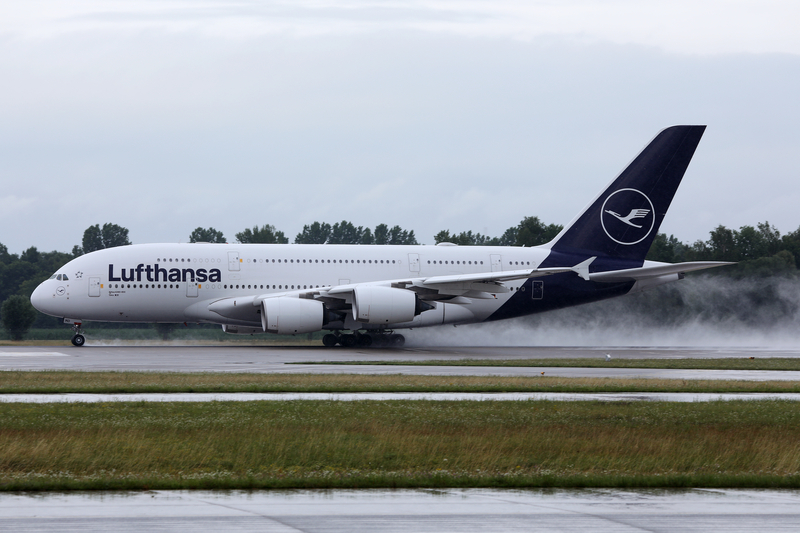
The Air Force has described the purpose clearly: training and spares.
That makes the purchase far more logical than some of the more dramatic commentary surrounding it. A presidential fleet transition is not just about waiting for two finished aircraft to arrive. It also requires crews, engineers, maintainers, and logistics planners to become proficient on the 747-8 ecosystem before the new VC-25Bs enter service. Since the 747-8I is out of production, securing real airframes now is a practical way to reduce risk later.
Why Lufthansa Was The Logical Seller
Lufthansa was always one of the most plausible sources.
The airline has long been the world’s largest passenger operator of the Boeing 747-8I, and its fleet standards are among the most respected in commercial aviation. In operational terms, Lufthansa offered the Air Force something increasingly rare: high-quality, passenger-configured 747-8Is with known maintenance histories and direct relevance to the future VC-25B fleet.
That matters because the global pool of available 747-8I aircraft is extremely small. The passenger variant has only a handful of operators left, and most are not in a position to release airframes easily. In that environment, sourcing from Lufthansa was not just convenient. It was one of the few genuinely realistic options.
The reported aircraft, previously registered as D-ABYD and D-ABYG, are valuable not because they are luxurious, but because they are technically aligned with the aircraft family the Air Force is trying to field.
One Aircraft Will Help Train, The Other Will Support Sustainment
The two jets are expected to serve different but complementary purposes.
One is intended to remain flyable and support training for pilots and maintainers transitioning to the 747-8 platform. That is a major step. The VC-25A fleet and the future VC-25B fleet may both carry the 747 name, but they are separated by a major generational gap in avionics, systems, powerplant technology, and overall aircraft architecture.
The second aircraft is expected to serve largely as a parts source and sustainment asset. That may sound less glamorous, but it could be just as important. Since the 747-8I is no longer being built, spare-part planning becomes a strategic issue. Having a dedicated donor aircraft gives the Air Force a much stronger base for long-term support, especially if future supply chains become tighter.
In other words, one aircraft helps teach the platform, and the other helps keep it alive.
This Is A Transition Strategy, Not A Luxury Purchase
It is easy to frame any 747 story in symbolic terms, especially when the aircraft is tied to a presidential mission. But the Lufthansa acquisition is really a logistics decision.
The Air Force is trying to manage a difficult transition from an aging 747-200-based fleet to a much newer 747-8-based one while the main replacement program remains delayed. Training crews directly on 747-8 hardware reduces reliance on outside providers and gives the Presidential Airlift Group more control over how it prepares for the changeover. At the same time, holding dedicated spares airframes reduces dependence on a shrinking commercial aftermarket.
This is not about adding glamour to the fleet. It is about reducing technical and operational vulnerability.
The 747-8 Matters Because The Mission Still Demands It
The story also says something bigger about the future of high-security state transport.
Most commercial aviation has moved decisively toward efficient twin-engine widebodies such as the Boeing 787 and Airbus A350. But the U.S. presidential airlift mission remains one of the few roles in the world where the 747’s size, internal volume, and modification potential still make strategic sense.
The Air Force is not preserving the 747-8 because it is nostalgic. It is preserving it because the mission set around the VC-25B requires a very specific combination of range, redundancy, physical space, and systems integration. That makes the pool of compatible aircraft unusually valuable.
Once Boeing ended 747 production in 2022, every suitable passenger 747-8I became more important. In that sense, the secondary market is no longer just commercial. It has become part of national security planning.
This Also Protects The VC-25B Program From More Delay Risk
The Lufthansa acquisition does not solve the VC-25B program’s problems, but it does give the Air Force a buffer.
If the main program slips again, the service will at least have real 747-8 airframes available for training and sustainment rather than waiting idly for the first completed presidential aircraft. That matters because every hour flown on a training platform is an hour not consumed on a one-of-a-kind operational asset. Every part harvested or studied from a support airframe is one less supply-chain surprise later.
For a program already under intense schedule and budget pressure, that kind of hedge has obvious value.
What This Means For Lufthansa
From Lufthansa’s perspective, the sale closes an unusual chapter in the life of the 747-8I.
The aircraft will leave one of the world’s most visible passenger 747 fleets and move into one of the most specialized government aviation roles imaginable. That transition also reflects a broader truth about the 747’s final era: even as it recedes from commercial passenger service, it still retains unique value in missions that require size, presence, and technical adaptability.
For Lufthansa, the sale is a fleet-management decision. For the U.S. Air Force, it is a platform-preservation decision.
Those are not the same thing, but they intersect neatly here.
Bottom Line
The Air Force is not buying Lufthansa’s Boeing 747-8s to create a shadow Air Force One fleet. It is buying them because the actual Air Force One replacement program is late, the existing VC-25A fleet is aging, and the 747-8 passenger model is no longer in production.
One former Lufthansa jet is expected to support training, while the other will help sustain the fleet through parts and technical support. That makes the deal a practical bridge between the old presidential fleet and the delayed VC-25B era.
For all the symbolism attached to the Boeing 747, this deal is fundamentally about something more basic: making sure the United States is ready to operate and support the next presidential aircraft before those aircraft finally arrive.
Keep reading FlyMag
Get the Daily Brief in the morning or the Route Watch weekly recap on Fridays. Or both.