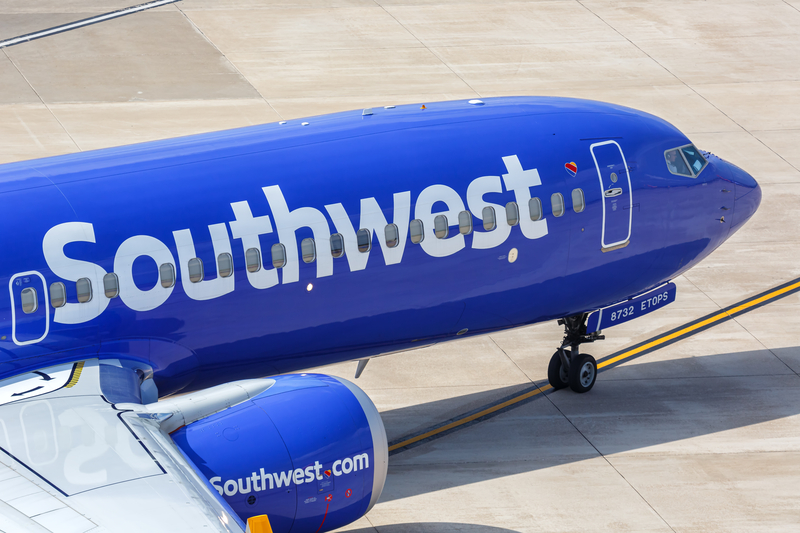
Southwest Airlines (WN) doesn’t usually grow in big, splashy leaps. At its scale—one of the largest domestic operators in the world—network changes tend to be iterative, with new routes trickling in as aircraft and crews rotate through the system.

That’s what makes the first week of March 2026 so notable. Between March 2 and March 8, 2026, Southwest is scheduled to light up 31 additional airport pairs—a dense cluster of openings that spans short “connector” hops, strategic hub-feed links, and six international routes that push the carrier deeper into leisure-heavy sun markets.
The timing is no accident: early March is when Southwest traditionally pivots into spring-break flying. What’s unusual this year is the concentration—a route-launch wave large enough to materially reshape connectivity at several of the airline’s fastest-growing stations.
Read our stories in your inbox
Two aviation newsletters. Zero fluff.
The headline: six international routes, five of them brand new for Southwest
Southwest’s international additions are concentrated in Mexico, the Caribbean, and Central America—markets where schedule convenience sells, and where nonstop service can quickly stimulate demand.
The six international routes beginning in this launch window are:

-
Nashville (BNA) – San José, Costa Rica (SJO)
-
San Diego (SAN) – Puerto Vallarta (PVR) (a returning route; last flown pre-pandemic)
Two of these are particularly significant from a network-development perspective: IND and MCI are entering Southwest’s international map in a meaningful way. That matters because international flying is operationally different—customs staffing, ground handling complexity, longer turn times, and a higher sensitivity to irregular operations. Southwest doesn’t take new international stations lightly.
Also worth noting: SAN–PVR is less about “new route buzz” and more about competitive posture. Puerto Vallarta (PVR) is a high-demand leisure market, and San Diego (SAN) is a battlefield airport where Southwest increasingly fights for relevance against Alaska Airlines (AS) and other West Coast competitors.
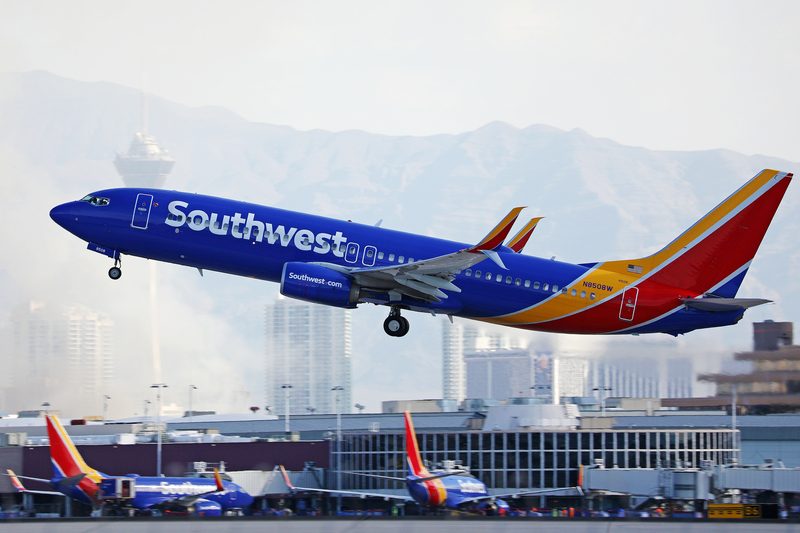
From First to Last Among Major U.S. Airlines: Southwest’s On-Time Rate Falls to 64.9%
Nashville (BNA) and San Diego (SAN): the two big winners this week
If you want to understand why Southwest is launching so many routes at once, focus on the airports where the carrier has built something that looks increasingly like a hub—without calling it one.
Nashville (BNA): short hops plus international sun = connectivity play
Nashville (BNA) picks up five routes in this window, and the mix tells the story:
-
BNA–Knoxville (TYS) is ultra-short and not built for heavy local traffic. It exists because Southwest wants to widen the funnel into Nashville’s departure banks—turning a two-hour drive market into a feeder for one-stop access across the system.
-
BNA–Little Rock (LIT) and BNA–Montrose (MTJ) add regional diversity and seasonal leisure pull.
-
BNA–MBJ and BNA–SJO are the “reward” routes—longer, higher-yield leisure flying that benefits from BNA’s growing connecting flows.
This is classic Southwest network logic: add short spokes that don’t look glamorous, because they help fill the aircraft that are glamorous.
San Diego (SAN): an Alaska-heavy market Southwest is leaning into
San Diego (SAN) also gains five routes during the same period: Bozeman (BZN), Kahului/Maui (OGG), Puerto Vallarta (PVR), Seattle (SEA), and Spokane (GEG).
What’s striking is that none of these are exotic one-offs; they’re “network muscle” routes. With SEA and the Pacific Northwest in the mix, Southwest is clearly aiming at markets where Alaska has historically enjoyed strength—and where schedule frequency and connectivity matter as much as price.
The short-hop story: four additions that are almost “too short to be real”
Among the 31 routes, four stand out for their stage length. They are short enough that few passengers will fly them purely end-to-end. They exist because they improve the network’s connective tissue.
The short additions include:
-
Dallas Love Field (DAL) – Oklahoma City (OKC)
-
Nashville (BNA) – Knoxville (TYS)
Of these, MDW–MKE is the one airline professionals will watch most closely. At roughly 70 nautical miles, it becomes Southwest’s second-shortest route systemwide, behind Denver (DEN) – Colorado Springs (COS). Southwest has filed it with a double-daily pattern at launch, typically using the Boeing 737-700—often a 137-seat configuration in Southwest’s current layout strategy.
In other words: this is less a “Milwaukee-to-Chicago” flight and more a connector designed to plug passengers from Wisconsin into Midway’s much larger network footprint.
Aircraft and operational reality: this is still a 737 airline doing 737 work
Southwest’s March launch wave is built almost entirely around the Boeing 737 family. That brings consistency—common training, common parts pools, and predictable dispatch behavior—but it also means Southwest has to be disciplined about how it uses aircraft time.
With an average route length in this batch around 850 nautical miles (long legs like MCI–PUJ and SAN–OGG pull the number up), Southwest is balancing two competing goals:
-
Keep aircraft utilization high through spring break demand.
-
Avoid over-stretching the operation with too many long, disruption-sensitive sectors in one bank.
That’s part of why so many of the domestic adds are short or medium-haul: they help keep the system flexible when weather or ATC constraints hit.
Why launch 31 routes in one week?
The easy answer is spring break.
The better answer is that Southwest is actively shaping several airports—particularly BNA, PHX, MDW, and DAL—into stronger connection engines. You can see it in the route choices. Ultra-short flights like PHX–TUS and BNA–TYS don’t exist to win local market share. They exist to widen Southwest’s catchment area and increase the number of same-day itineraries the carrier can sell through its busiest stations.
That strategy also helps explain why Southwest can add routes even when overall year-over-year capacity growth is muted. Network optimization isn’t always about “more seats.” Sometimes it’s about more useful seats—placed where they create more itinerary options and capture demand that would otherwise connect over someone else’s hub.
Bottom Line
Southwest’s first-week-of-March 2026 schedule is a rare, concentrated route burst: 31 new airport pairs launching March 2–8, including six international routes and a heavy emphasis on strengthening connectivity through airports like Nashville (BNA) and San Diego (SAN).
The most telling additions aren’t the beach routes—they’re the tiny connectors, like Chicago Midway (MDW)–Milwaukee (MKE) and Phoenix (PHX)–Tucson (TUS). Those flights signal where Southwest is building its next layer of network strength: not by declaring hubs, but by quietly making more of its system connectable.
Keep reading FlyMag
Get the Daily Brief in the morning or the Route Watch weekly recap on Fridays. Or both.