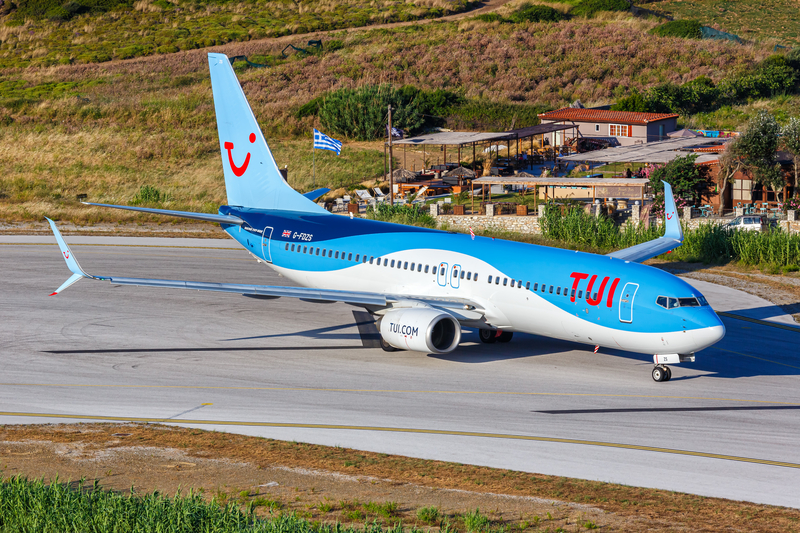
Smartwings and TUI have renewed their air transport agreement for another three years, extending a long-running relationship built around vacation flying from Central and Eastern Europe.


Under the renewed agreement announced by Smartwings, the airline will carry TUI customers to dozens of destinations in the Mediterranean, Turkey and Egypt. The contract covers both summer and winter operations, giving the two companies a multi-season framework rather than a single program of peak-period capacity.
Neither company disclosed the contract’s financial value or a planned number of flights. The commitment is nevertheless significant for Smartwings because it secures recurring tour-operator business across three years, while TUI retains access to an established narrowbody operator in the markets covered by TUI Eastern Europe.
Read our stories in your inbox
Two aviation newsletters. Zero fluff.
Summer Mediterranean Flying and Winter Egypt Capacity
The summer program will concentrate primarily on Mediterranean vacation destinations. That aligns with Smartwings’ established charter operation, which moves substantial seasonal capacity from the Czech Republic, Poland, Slovakia and Hungary to resorts in southern Europe and the eastern Mediterranean.
During winter, the partnership will include flights from Prague (PRG) to Hurghada (HRG) and Marsa Alam (RMF). Both Egyptian Red Sea markets provide tour operators with warm-weather demand after the European summer program contracts, helping keep aircraft productive beyond the main Mediterranean season.
The seasonal split is operationally complementary. Mediterranean flying creates dense demand through the summer peak, while Egypt supports winter utilization without requiring Smartwings to move all of the associated capacity into unrelated wet-lease markets. The three-year term also gives TUI more continuity when assembling packages that combine contracted hotel inventory with direct air service.
Smartwings Chief Commercial Officer Michal Váňa described the renewal as a vote of confidence from one of Europe’s largest tourism groups. Marcin Dymnicki, chief executive of TUI Eastern Europe, said Smartwings’ direct-flight portfolio and established service had made it a trusted long-term partner.
A Contract Suited to Smartwings’ 737 Fleet
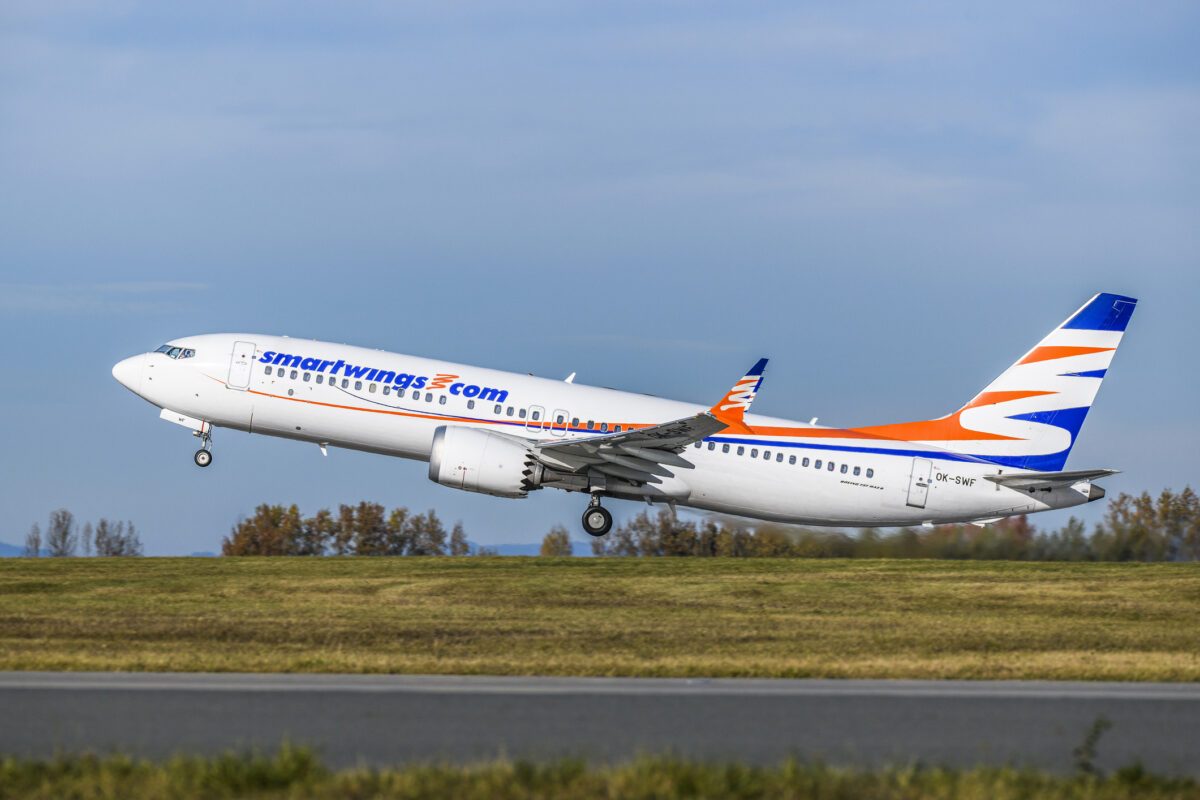
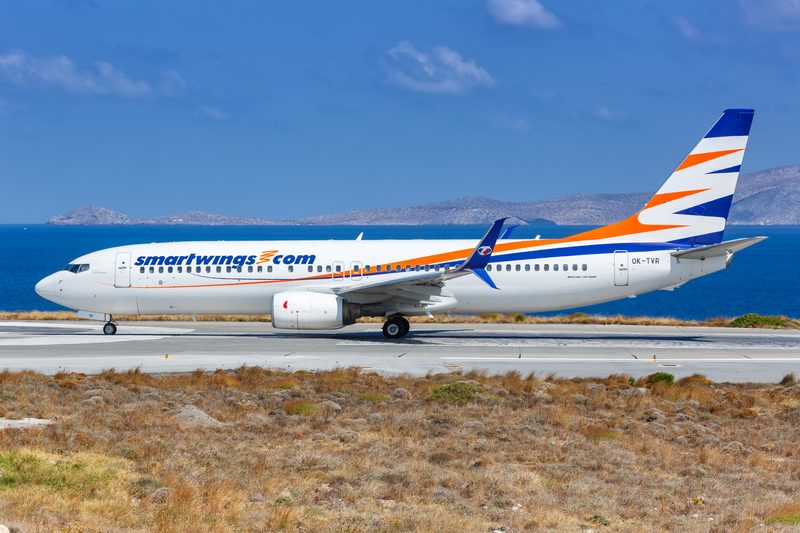
Smartwings operates a 49-aircraft fleet centered on the Boeing 737. Its two main variants are the Boeing 737-800, of which it has 23, and the Boeing 737 MAX 8, of which it has 14. Together, those aircraft provide a 37-jet pool suited to the combination of high-volume Mediterranean sectors and longer missions to Egypt and other winter-sun markets.
The airline’s latest published fleet breakdown says its Boeing 737 MAX 8 aircraft operate in two layouts. The higher-density version carries 189 economy passengers, while the two-class configuration has eight business-class seats and 168 economy seats.
That flexibility lets Smartwings match the aircraft to different commercial programs. The 189-seat configuration maximizes capacity for tour-operator flying, where a large share of the cabin may be sold as part of vacation packages. The 176-seat layout gives the airline a premium option for scheduled services and selected markets without introducing another narrowbody type.
Boeing lists the 737-8 with a range of up to 3,500 nautical miles, comfortably covering the routes contemplated by the TUI agreement. The range also gives Smartwings room to use the aircraft on longer winter sectors, while its commonality with the earlier 737 generation supports a fleet model built around high seasonal utilization.
The 737-800 remains equally important to the operation. Its large installed base gives Smartwings the depth needed for a broad charter schedule, including recovery options when disruptions affect a tightly programmed peak-season fleet. For a tour operator, that scale matters as much as individual aircraft performance: vacation programs depend on consistent rotations across multiple origin airports and destination regions.
Third-Party Capacity Remains Part of TUI’s Model
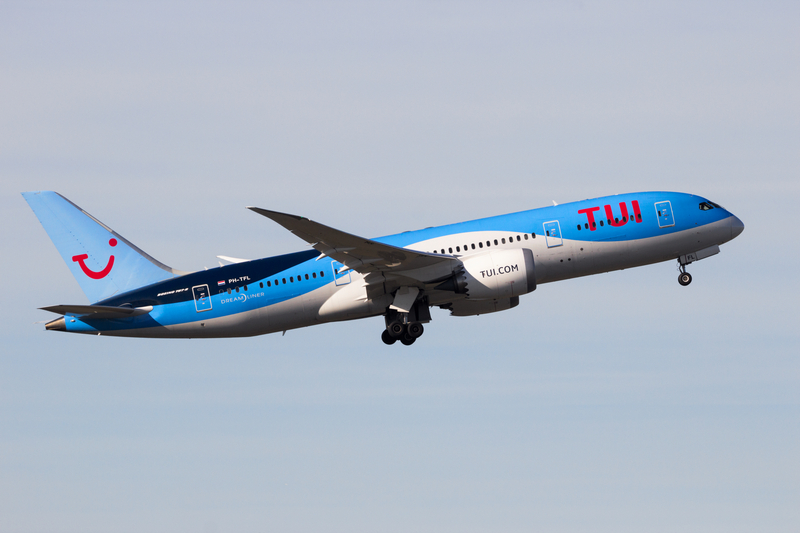
TUI owns several airlines, but its tourism business does not rely exclusively on aircraft within the group. In its description of the Markets + Airline business, TUI says it combines group-owned aircraft with third-party capacity to tailor programs for individual source markets and respond to changes in customer demand.
TUI Activates Middle East Repatriation Flights as Gulf Hubs Reopen in “Recovery Mode”
The Smartwings agreement is an example of that model in practice. Contracting an airline with operating companies in the Czech Republic, Poland, Slovakia and Hungary gives TUI access to locally based crews, aircraft and operational infrastructure without having to replicate its own airline platform in every Eastern European market.
For Smartwings, the work complements its scheduled network and other charter and wet-lease activity. The airline offers direct service to 80 destinations and uses its fleet across several business lines, allowing capacity to be shifted between scheduled flights, tour-operator programs and aircraft leases as seasonal demand changes.
That diversification has become a defining part of the carrier’s operation. In 2024, Smartwings carried more than 6.5 million passengers on its own scheduled and charter flights and another 1.85 million while operating on behalf of other airlines. The company reported 53,338 flights for the year, illustrating the scale behind its role as both a retail airline and a capacity provider.
Bottom Line
The renewal gives Smartwings something especially valuable in the European leisure market: forward visibility across several operating seasons. A three-year tour-operator commitment supports fleet and crew planning well beyond the next summer peak, while balancing Mediterranean demand with winter flying to Egypt. That should help the airline keep more of its core 737 fleet working within its home region instead of depending entirely on short-term overseas placements during the winter.
TUI gains a proven source of third-party capacity in markets where establishing or expanding a group airline would require considerably more capital and organizational complexity. The agreement also demonstrates why independent charter operators remain relevant even as Europe’s largest tourism groups maintain their own airlines. Local scale, flexible deployment and an established narrowbody fleet can be more useful than forcing every source market into one vertically integrated template.
The next measure of the partnership will be how broadly TUI deploys Smartwings beyond the confirmed Prague-Egypt winter program. Growth in origin airports, flight volumes or the share of Boeing 737 MAX 8 flying would indicate that the renewal is developing into a larger capacity commitment rather than simply preserving the existing operation.