Scandinavian Airlines’ return to India did not get the debut it wanted.

SAS Flight SK969, operating from Copenhagen Airport (CPH) to Mumbai Chhatrapati Shivaji Maharaj International Airport (BOM), turned back over Azerbaijan after the final regulatory approval needed for the flight to continue to India was not issued as expected. The Airbus A330 was already several hours into the journey when the crew was instructed to return to Denmark.
The flight landed safely back in Copenhagen (CPH), but the result was an embarrassing false start for one of SAS’ most important new long-haul routes. Mumbai (BOM) was supposed to mark the airline’s return to India after a 17-year absence and a high-profile step in its post-restructuring long-haul strategy.
Read our stories in your inbox
Two aviation newsletters. Zero fluff.
Instead, passengers spent hours onboard only to arrive back where they started.
SK969 Turns Back Over Azerbaijan
SAS had planned to launch its new Copenhagen (CPH)–Mumbai (BOM) service on June 2, 2026. The route is scheduled to operate five times weekly using Airbus A330 widebody aircraft, with the outbound flight operating as SK969 and the return from Mumbai as SK970.
The inaugural flight departed Copenhagen (CPH) but did not reach India. While the aircraft was over Azerbaijan, the crew was informed that the required final approval from Indian authorities had not been completed. Without that approval, the aircraft could not continue to Mumbai (BOM).
The decision was then made to turn back to Copenhagen (CPH).
This was not a mechanical diversion, weather diversion, or inflight safety emergency in the conventional sense. The aircraft was airworthy, the flight continued safely, and there were no immediate public reports of injuries. The problem was regulatory: SAS did not have the final clearance it needed to complete the operation into India.
That distinction is important. In airline operations, a route launch is not just a commercial event. It depends on a chain of regulatory permissions, operating authorizations, airport coordination, ground handling, slot arrangements, security clearances, and bilateral aviation procedures. If one of those pieces is missing, even a fully boarded and airborne flight can become unworkable.
Mumbai Was Ready For An Arrival That Never Came
The aborted flight was especially visible because Mumbai (BOM) was expecting an inaugural arrival.
A ground team was reportedly prepared at Chhatrapati Shivaji Maharaj International Airport (BOM), with a water cannon salute standing by to welcome SAS’ return. That ceremony never happened. Instead, the aircraft reversed course before entering the final portion of the eastbound journey.
For an airline, that is a particularly awkward failure mode. New routes are carefully choreographed. Airports plan ceremonies, media coverage, speeches, gate events, photography, and operational support. Airlines coordinate aircraft, crews, catering, passengers, commercial partners, and connecting itineraries. When an inaugural flight turns back over a missing approval, the reputational damage can be larger than the immediate operating cost.
SAS said it had completed necessary operational and regulatory preparations following months of planning and coordination. The airline also said it had expected the remaining formal approval to be finalized while the flight was en route.
That explanation may be accurate, but it still leaves the obvious question: why dispatch the inaugural flight before the approval was fully secured?
A Regulatory Problem, Not A Route-Demand Problem
The incident should not be confused with weak demand or a route failure.
Copenhagen (CPH)–Mumbai (BOM) remains a strategically sensible market for SAS. Mumbai is India’s financial capital and one of the most important long-haul air markets in South Asia. For SAS, the route links Scandinavia with India while also supporting connecting flows between India, Northern Europe, and North America through Copenhagen.
The planned schedule was built around that logic. SAS announced five weekly flights, with departures from Copenhagen (CPH) on Tuesday, Thursday, Friday, Saturday, and Sunday. The return from Mumbai (BOM) was scheduled for Monday, Wednesday, Friday, Saturday, and Sunday.
The timing was designed for connections. Passengers from Sweden, Norway, Denmark, Finland, and other European points could connect over Copenhagen (CPH), while Mumbai-origin travelers could use SAS’ network to reach Scandinavia, Europe, and North America.
This is exactly the type of long-haul flying SAS has been trying to rebuild after restructuring: focused, hub-supportive, and tied to markets with strong business and diaspora demand.
The route did not fail commercially on day one. It failed procedurally.
The Aircraft: SAS Airbus A330-300
The aircraft type involved is central to the route.
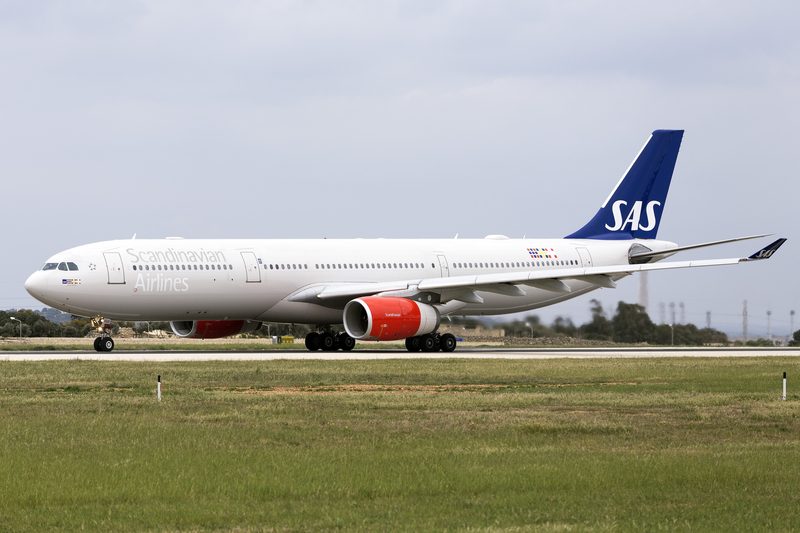
SAS is using the Airbus A330-300 for Copenhagen (CPH)–Mumbai (BOM). The aircraft reported on the aborted inaugural was A330-300 LN-RKM.
The A330-300 is SAS’ smaller long-haul widebody compared with the airline’s Airbus A350-900. SAS lists the A330-300 with 266 seats and a range of 10,100 kilometers. The aircraft is powered by Rolls-Royce Trent 772B engines and has long been used by the airline on intercontinental routes to North America and Asia.
The A330-300 is a logical aircraft for a new Mumbai route. It gives SAS widebody range and a three-class long-haul product without the larger capacity commitment of the A350-900, which SAS lists with 300 seats and substantially longer range.
On a new route, that matters. SAS needs enough capacity to support business, premium leisure, and connecting traffic, but not so much capacity that it overwhelms a market still being developed. The A330-300 provides a measured entry point.
It also allows SAS to preserve its A350 fleet for higher-demand or longer-range missions where the newer aircraft’s range and efficiency are more valuable.
A330 Economics And The Cost Of A Flight To Nowhere
An aborted long-haul flight is expensive, even without a technical problem.
Fuel is the most obvious cost. A Copenhagen (CPH)–Mumbai (BOM) flight is a long sector, and SK969 had already flown several hours before turning back. The aircraft then had to fly several more hours back to Denmark. That means the airline incurred much of the fuel burn and crew cost of a long-haul flight without carrying passengers to the destination.
There are also passenger costs. SAS had to support affected travelers, provide rebooking options, and manage missed connections and onward itineraries. Some passengers may have had domestic flights within India, rail bookings, hotel reservations, business meetings, tours, or family plans connected to their arrival in Mumbai.
The airline’s direct responsibility depends on ticketing, regulations, delay rules, and individual circumstances. But from a customer-experience standpoint, the disruption was severe. Passengers did not merely arrive late. They spent a long period onboard and returned to the origin airport.
For a route launch, that is a damaging first impression.
SAS Is Returning To India After 17 Years
The route remains important because it marks SAS’ return to India after 17 years.
SAS withdrew from India in 2009, during a period when the airline was under financial pressure and the global financial crisis was reshaping long-haul demand. The carrier’s network became more focused, and India disappeared from the timetable.
The 2026 Mumbai launch reflects a very different SAS.
The airline has emerged from restructuring, shifted into the SkyTeam alliance, and is rebuilding its long-haul network around Copenhagen (CPH). Its new ownership and commercial partnerships give it a different strategic platform from the old Star Alliance-era SAS.
Mumbai (BOM) fits that repositioning. It is a major business city, a technology and financial center, a gateway for western India, and one of the world’s largest long-haul demand pools. India’s aviation market continues to grow rapidly, and European airlines are competing aggressively for traffic between India, Europe, and North America.
For SAS, the Mumbai route is not just about Denmark and India. It is about making Copenhagen (CPH) more relevant as a connecting hub.
Not The First Copenhagen–Mumbai Service
One point needs careful handling: SAS is returning to India, but the Copenhagen–Mumbai airport pair is not entirely unserved.
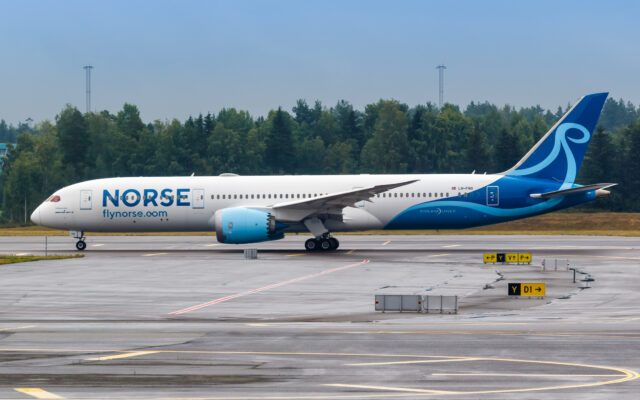
IndiGo had already launched Mumbai (BOM)–Copenhagen (CPH) service in October 2025, using Boeing 787-9 aircraft leased from Norse Atlantic Airways. That means SAS is not the first airline to operate the city pair in the current market.
What SAS is launching is its own first India service in 17 years and its first scheduled Copenhagen (CPH)–Mumbai (BOM) operation.
That distinction matters for accuracy. The SAS route is historically important for the airline and for Scandinavian connectivity, but it is not the only nonstop link between Copenhagen and Mumbai.
It also means SAS will face direct competition from IndiGo, which has been expanding into Europe and using widebody capacity to accelerate its long-haul ambitions. That competitive dynamic makes the SAS launch even more interesting. Copenhagen (CPH) is no longer just receiving a single new India route; it is becoming a contested India–Scandinavia market.
Why Mumbai Makes Sense For SAS
Mumbai (BOM) is a logical India re-entry point for SAS.
Delhi (DEL) already has a broader set of long-haul European links, including service from Air India and major European network carriers. Mumbai, by contrast, offers a powerful blend of business, premium leisure, diaspora, entertainment, finance, and connecting demand.
For Scandinavian companies, India is an increasingly important market. Sectors such as technology, pharmaceuticals, shipping, renewable energy, design, logistics, and advanced manufacturing all create travel demand between Northern Europe and India. Mumbai also attracts outbound Indian travelers heading to Scandinavia, Europe, and North America.
Copenhagen (CPH) gives SAS a hub that can serve all of that traffic. The route can feed passengers from Stockholm (ARN), Oslo (OSL), Gothenburg (GOT), Bergen (BGO), Helsinki (HEL), and other northern European cities, while also connecting to SAS’ North American network.
That is the commercial reason the route exists.
A Post-Restructuring Test Case
The Mumbai launch is also a test of the new SAS.
After completing its restructuring, SAS has been trying to position itself as a leaner, more focused carrier with stronger alliance partnerships and a more disciplined long-haul strategy. It joined SkyTeam in 2024, aligning more closely with Air France-KLM and other alliance partners.
That shift changes the context for India.
SAS no longer needs to think only in terms of its old Star Alliance flows. It can build around SkyTeam connectivity, Copenhagen hub strength, and partnerships that may eventually support traffic beyond what SAS alone can carry.
But operational execution must match strategy. A route launch to India is not a simple schedule addition. It requires close coordination between the airline, regulators, airports, handlers, security agencies, slot coordinators, local authorities, and commercial partners.
The SK969 turnaround shows how fragile that chain can be.
What Happens Next
SAS has said it is supporting affected passengers and working to secure the remaining approval needed to commence service as soon as possible.
The airline has also indicated that it remains ready to operate the route once the formal approval is issued. That suggests SAS views the issue as a short-term regulatory delay rather than a fundamental route problem.
Still, the immediate operational picture may remain fluid until approvals are fully resolved. Passengers booked on early flights should monitor SAS flight status closely and check for rebooking options if schedules change.
For the airline, the priority is clear: obtain the missing authorization, operate the first completed Copenhagen (CPH)–Mumbai (BOM) flight, and stabilize the schedule before passenger confidence is damaged further.
New routes are always vulnerable in their first weeks. A regulatory stumble on the first flight adds pressure, but it does not necessarily define the route’s future.
The Lesson For Airlines
The lesson is simple but uncomfortable: final approval means final approval.
International route launches often involve overlapping regulatory processes. Airlines may have strong indications that approvals are coming, and in most cases, paperwork is completed before it becomes a public problem. But once passengers are onboard and an aircraft is airborne, assumptions become risky.
A long-haul inaugural flight is not the place to test whether a missing approval will arrive in time.
For airline professionals, SK969 is a reminder that regulatory readiness is as important as aircraft readiness. The A330 was available. The crew was available. The passengers were onboard. Mumbai (BOM) was prepared. The route was commercially announced. But one unfinished approval was enough to stop the flight in mid-journey.
That is aviation at its most procedural: if the authority is not granted, the flight cannot proceed.
Bottom Line
SAS’ return to India began with a highly visible misstep.
Flight SK969 from Copenhagen (CPH) to Mumbai (BOM) turned back over Azerbaijan after the final approval required for the operation into India was not issued as expected. The Airbus A330-300 returned safely to Copenhagen, but passengers spent hours onboard without reaching their destination.
The route remains strategically important. SAS is returning to India after 17 years, using a 266-seat Airbus A330-300 to operate five weekly flights between Copenhagen and Mumbai. The service is designed to strengthen Copenhagen (CPH) as a long-haul hub and connect India with Scandinavia, Europe, and North America.
But the launch failure is a serious embarrassment. It was not caused by weather, aircraft performance, or route demand. It was caused by incomplete regulatory approval.
SAS can recover from this quickly if it secures the outstanding authorization and stabilizes the schedule. The Mumbai route still makes sense. The first attempt, however, will be remembered for the wrong reason: a new India service that got as far as Azerbaijan before the paperwork caught up with it.
Keep reading FlyMag
Get the Daily Brief in the morning or the Route Watch weekly recap on Fridays. Or both.