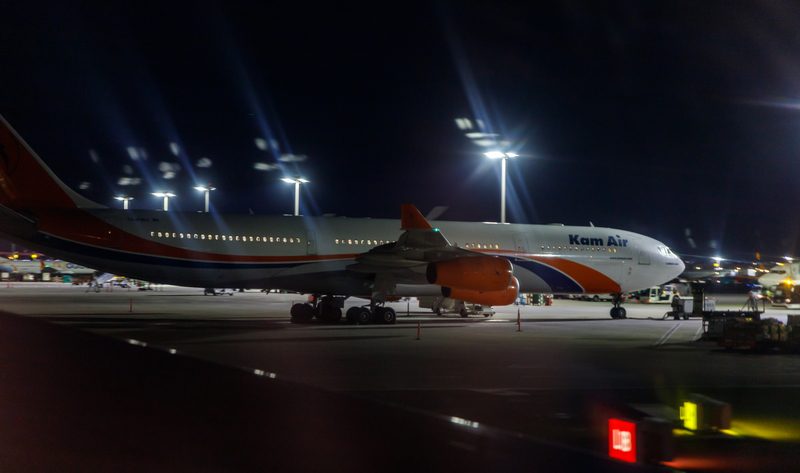
A reported Pakistani airstrike on fuel infrastructure linked to Kam Air near Kandahar International Airport (KDH) has turned an already dangerous Afghanistan–Pakistan escalation into a direct aviation story.

According to Afghan authorities, the strike hit fuel reserves used by Kam Air, the largest private airline in Afghanistan, near Kandahar Airport. Pakistan, for its part, said its operation targeted “terrorist support infrastructure,” not civilian aviation. That leaves an important gap between what is alleged and what is independently confirmed. The United Nations and Reuters have confirmed that Pakistani strikes took place in Afghanistan, but the specific claim that Kam Air’s fuel depot was hit has so far come from Afghan officials and local reporting rather than a neutral technical investigation.
That distinction matters. But even at this stage, the implications for aviation are serious.
Read our stories in your inbox
Two aviation newsletters. Zero fluff.
Why This Matters Beyond One Fuel Site
If the reported target was indeed Kam Air fuel infrastructure near KDH, this is not a marginal logistics issue. Fuel storage is among the most sensitive pieces of any airline’s ground support chain, especially in a country where supply reliability is already fragile.
Kam Air is not just another carrier on the Afghan market. It is one of the central pillars of the country’s remaining scheduled aviation system, operating domestic and international flights from Kabul International Airport (KBL) and other Afghan cities. Fuel disruption affects far more than one day’s operations. It can impact schedule planning, aircraft rotations, charter activity, humanitarian logistics, and the confidence of other operators that rely on local support capability.
Afghan officials have also said the fuel site served not only Kam Air flights, but other airlines and United Nations operations as well. If that is accurate, then the strike’s significance broadens from airline infrastructure damage to a wider disruption of civil and aid-linked aviation support.
Kandahar Is Not Kabul — And That Is Important
One of the first things that needs to be cleaned up in coverage of this story is geography.
Some summaries have inaccurately described the strike as being on “the Afghan capital,” but the aviation-related site in question was reported near Kandahar International Airport (KDH), not Kabul. That matters because Kandahar is a very different operating environment. It is strategically important, tied closely to southern Afghanistan’s political and military geography, and more exposed to cross-border conflict patterns than Kabul often is in aviation reporting.
For airlines, location always matters. A fuel depot near KDH being struck is not the same operational story as one near KBL. Kandahar’s role is narrower than Kabul’s, but it is still highly consequential because of its regional relevance, military sensitivity, and support role in Afghan air operations.

Fuel Infrastructure Is A Soft Target With Hard Consequences
Airline fuel depots are inherently vulnerable.
Unlike aircraft shelters, terminals, or runways, fuel storage sites are fixed, highly visible, and difficult to harden completely. In conflict environments, they are also particularly disruptive targets because damaging them can create operational paralysis without directly attacking aircraft in motion or passengers in a terminal.
That is why this alleged strike is so concerning from an aviation-security perspective.
Taking out fuel support, or even forcing operators to question whether that support is secure, can affect dispatch reliability, route economics, and airport functionality almost immediately. In a market like Afghanistan, where civil aviation already operates with tighter margins, weaker redundancy, and heavier dependence on workarounds, the loss of fuel infrastructure is not easy to absorb.

Kam Air’s Role Makes The Report Especially Sensitive
Kam Air is one of the few Afghan carriers with meaningful commercial scale. It serves domestic points and a range of regional international markets, and it has remained a critical player in keeping Afghanistan connected despite years of political upheaval, sanctions complications, insurance concerns, and infrastructure constraints.
That is why any reported strike on Kam Air-linked assets resonates beyond the immediate damage.
This is not just about one company’s inventory. It is about whether Afghanistan’s already limited civil aviation ecosystem is now being pulled more directly into a bilateral military confrontation. Once an airline’s ground fuel stocks become part of the conflict narrative, every operator at or near the affected airport has to reassess operational exposure.
Pakistan’s Framing And Afghanistan’s Framing Are Not The Same
Pakistan says its strikes were aimed at militant or “terrorist support infrastructure.” Afghan officials say civilian-linked targets were hit, including the fuel depot associated with Kam Air near KDH.
Those are very different narratives, and at the moment they cannot both be taken at face value without qualification.
For aviation readers, the right approach is not to flatten the dispute into certainty. It is to separate what is confirmed from what is claimed. The cross-border strikes are confirmed. The allegation that Kam Air’s fuel depot was hit is repeated by Afghan authorities and reported by Reuters and others as their claim. The precise technical assessment of damage, ownership, and operational consequence is still not independently documented in a way that settles the matter fully.
That does not make the allegation minor. It makes careful wording essential.
The Bigger Risk Is Civil Aviation Spillover
Even if Pakistan intended to strike only what it views as hostile or support-linked infrastructure, the incident shows how easily civil aviation assets can become entangled in regional conflict.
Airports and airlines in fragile states often sit physically close to dual-use infrastructure, security facilities, or politically sensitive areas. That makes clean separation difficult. Once military logic enters the airport perimeter or nearby support zone, the distinction between civilian enabler and collateral impact can become dangerously thin.
That is the real aviation takeaway here.
Aviation systems do not need to be the primary target to suffer serious consequences. A strike near an airport, near fuel storage, or near service infrastructure can be enough to disrupt operations, alter insurance assumptions, and reduce the willingness of international partners to engage.
UN And Aid Operations Add Another Layer
One reason this case may attract broader scrutiny is the reported connection to UN-linked fuel support.
Afghan officials have said the site supplied not only Kam Air, but also UN aircraft. If that is borne out, the strike risks drawing in an even wider set of stakeholders. It would no longer be viewed only as a bilateral military incident with indirect aviation effects. It would become a case of conflict damage potentially touching internationally supported civil and humanitarian air operations.
That would raise the profile of the incident considerably, both diplomatically and operationally.
What To Watch Next
The next question is not just who said what. It is what changes operationally.
If Kam Air or other operators begin adjusting schedules, rerouting fuel supply, limiting Kandahar activity, or leaning more heavily on Kabul and other stations, that will tell the real story. Aviation impact is often clearest not in the first headline, but in the flight program that follows.
The second issue is independent verification. Images, technical assessments, airport notices, and any changes in ground handling or fuel availability at KDH will matter far more than political talking points in establishing how severe the hit actually was.
Bottom Line
The reported Pakistani strike on Kam Air-linked fuel infrastructure near Kandahar International Airport (KDH) is significant even before every detail is independently pinned down.
The strikes themselves are confirmed. What remains contested is the precise nature of the target and the extent of the aviation damage. Afghan officials say Kam Air’s fuel depot near KDH was hit; Pakistan says it targeted terrorist support infrastructure. If the Afghan account is accurate, then a core piece of civilian aviation support infrastructure has been pulled directly into the Afghanistan–Pakistan conflict.
For aviation professionals, that is the core issue. Aircraft do not need to be shot at for civil aviation to be endangered. Hitting fuel, ground support, or airport-adjacent logistics can be just as disruptive in practice.
Keep reading FlyMag
Get the Daily Brief in the morning or the Route Watch weekly recap on Fridays. Or both.