New York John F. Kennedy International Airport (JFK) is about to gain one of its most unusual new long-haul airlines in years.
Uzbek carrier Qanot Sharq is planning to launch nonstop service between Tashkent International Airport (TAS) and JFK from early May 2026, giving the route a second operator alongside Uzbekistan Airways. For most travelers outside Central Asia, Qanot Sharq is barely known. But that is exactly why the launch is so notable. JFK is used to seeing global airline giants arrive. It is far less common for a small seven-aircraft carrier to enter the market on a 12-to-13-hour transatlantic sector.
That alone makes this a route worth watching.
Read our stories in your inbox
Two aviation newsletters. Zero fluff.
This Is A Small Airline Making A Big Move
Qanot Sharq’s planned New York service is not just another incremental network addition.
The airline is relatively small, with a fleet of only seven aircraft, yet it is preparing to enter one of the most competitive and high-profile long-haul markets in the world. That is a bold step for any carrier, especially one whose brand recognition outside its home region remains limited.
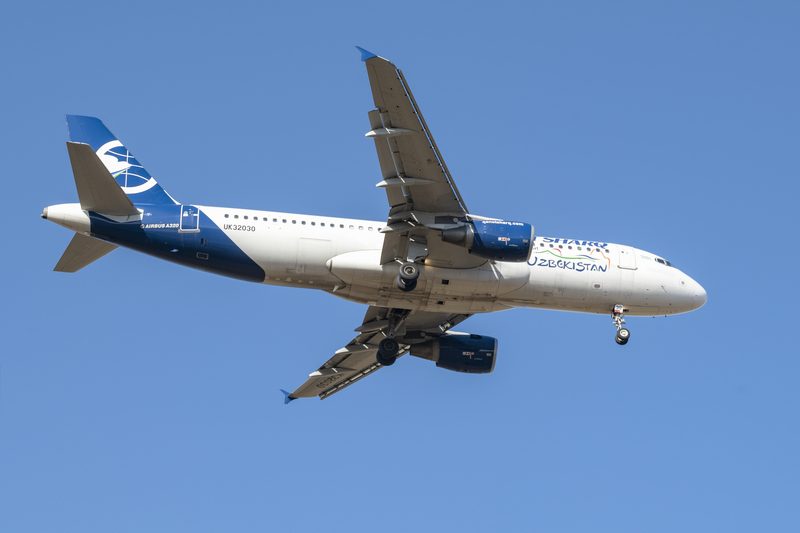
The schedule filing shows twice-weekly service between Tashkent (TAS) and New York JFK (JFK), with flights set to operate on Wednesdays and Sundays using the Airbus A330-200. The westbound leg is scheduled at around 13 hours 10 minutes, with the return closer to 12 hours.
That is serious long-haul flying by any standard. It is also a major statement of intent.
JFK Is Not The First Long-Haul Test For Qanot Sharq — But It Is Easily The Biggest
Qanot Sharq is not entering widebody flying from scratch.
The carrier already uses its Airbus A330-200 fleet on longer-haul markets such as Phuket (HKT), Istanbul (IST), Moscow, and Medina (MED). But New York JFK is clearly different. It is a flagship market, a prestige market, and a market where a small airline has to prove not only that it can operate the flight technically, but that it can support it commercially and operationally over time.
That is what makes JFK more than just another destination on the route map. It is a credibility route.
The Aircraft Choice Makes Sense
The Airbus A330-200 is the natural tool for this launch.
Qanot Sharq’s A330-200 gives it enough range and seat count to serve TAS–JFK without the enormous risk that would come with a larger widebody. In a two-class layout, the aircraft is configured for around 266 passengers, which is large enough to matter but still relatively disciplined for a route entering an unproven competitive environment.
That is the kind of aircraft choice aviation readers should like. It is ambitious, but not reckless.
It also gives the airline a full-service look in the market. The A330 may not be the newest widebody in the world, but it remains a highly capable long-haul aircraft, and in this case it allows Qanot Sharq to enter JFK with a proper premium cabin and enough scale to compete without overcommitting.
Tashkent–New York Is Already Proven — But Not By A Private Carrier
One reason this route has a credible foundation is that Tashkent (TAS)–New York JFK (JFK) is already an established market.
Uzbekistan Airways already serves the city pair, which means Qanot Sharq is not trying to create a nonstop route out of thin air. It is entering a market that has already shown it can support nonstop service between Uzbekistan and the New York area.
That matters because the airline is not just making a speculative leap into the United States. It is competing head-to-head on a route where there is already some demonstrated demand.
Still, there is an important distinction. Qanot Sharq is not the state carrier. If the service launches as planned, it will mark a much more significant moment symbolically: a private Uzbek airline taking on a true transatlantic route to one of the most globally visible airports in the world.
Qanot Sharq’s Story Makes The Launch Even More Unusual
The airline’s backstory adds to the interest.
Qanot Sharq originally launched in 1998 as a cargo operator before ceasing operations in 2012. It was reborn in 2021, this time with a modern Airbus narrowbody fleet and a much more clearly defined passenger strategy. Since then, it has built service from Tashkent (TAS) and Samarkand (SKD) to a mix of destinations across Europe, the Middle East, and Asia.
That kind of relaunch-to-JFK trajectory is unusual. Most airlines that enter New York on a route this long do so after building much larger fleets and much broader brand recognition. Qanot Sharq is doing it while still looking, by global standards, like a very small airline.
That is what makes the move stand out so sharply.
The Bigger Strategic Question Is What Comes Next
The New York route is interesting in its own right, but it also raises a bigger question about where Qanot Sharq wants to go.
The airline has been building out a newer-generation Airbus fleet, including Airbus A321neo-family aircraft, and that points to an ambitious growth plan that extends well beyond traditional regional flying. In that context, JFK does not look like a one-off curiosity. It looks like part of a broader attempt to position Qanot Sharq as a more serious international player.
Of course, ambition and sustainability are not the same thing. A schedule filing is not the same as a fully matured, profitable route. Reservations were reportedly not available when the route was first filed, which is a reminder that the service should still be viewed as planned rather than fully established.
But the direction of travel is unmistakable.
Why JFK Is A Good Fit
New York JFK is a demanding airport, but it is also the right kind of airport for a route like this.
The New York metropolitan area has one of the largest and most internationally diverse populations in the world, and it remains the obvious U.S. entry point for a carrier trying to connect Central Asia to North America. There is diaspora traffic, business demand, visiting-friends-and-relatives traffic, and enough market visibility to make a small airline’s arrival immediately noticeable.
For Uzbekistan, which remains a double-landlocked country with a population of roughly 38 million, a second TAS–JFK operator also has symbolic importance. It suggests a market that is becoming more open, more competitive, and more internationally confident.
Bottom Line
Qanot Sharq’s planned nonstop launch between Tashkent (TAS) and New York JFK (JFK) is one of the more unusual long-haul route developments of the year.
It is not unusual because the city pair lacks logic. Quite the opposite — Uzbekistan Airways has already shown the market can work. It is unusual because the new entrant is such a small airline. With just seven aircraft and two Airbus A330-200s, Qanot Sharq is stepping onto one of the world’s most visible aviation stages and doing so with a true long-haul product.
For aviation readers, that is the real appeal here. JFK gets new airlines all the time. It does not often get one this small making a move this ambitious.
Keep reading FlyMag
Get the Daily Brief in the morning or the Route Watch weekly recap on Fridays. Or both.