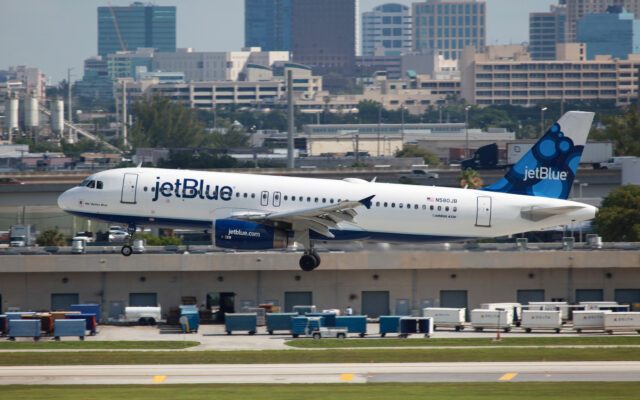
David Neeleman’s latest assessment of JetBlue is striking not because it comes from inside the airline, but because it puts a hard edge on a risk that has been building in plain sight. The JetBlue founder, now running Breeze Airways, argued that if jet fuel stays near today’s crisis levels, JetBlue could be pushed into a bankruptcy scenario in 2026.

That does not mean JetBlue is on the verge of collapse. It is still operating normally, still has liquidity, and still says its JetForward turnaround plan is the right path back to profitability. But Neeleman’s warning matters because it cuts to the core of JetBlue’s problem: this is an airline trying to execute a multi-year recovery in an environment that has suddenly become much more expensive.
Fuel is the stress point
The arithmetic is not hard to understand. JetBlue finished 2025 with $9.1 billion in operating revenue and $2.5 billion in liquidity, but it still posted a net loss of $602 million in a year when average fuel was only $2.49 per gallon. If fuel jumps toward the $4.50 range discussed in recent industry stress tests, the entire profit-and-loss framework changes.
Read our stories in your inbox
Two aviation newsletters. Zero fluff.
That is why Neeleman’s remark resonates. JetBlue is not being judged against an ideal market. It is being judged against a market where one of its largest cost lines has moved violently higher in a matter of weeks. For a carrier that was already unprofitable before the latest fuel surge, that is not a routine headwind. It is a structural threat.
JetForward still matters — but it is a slower solution than a fuel shock
JetBlue’s management is not standing still. The carrier has spent the last year pushing JetForward, its broad turnaround program designed to improve reliability, reshape the network, cut costs, and lift revenue quality. The airline has also been trying to move the product slightly upmarket, with stronger premium positioning, a new lounge at New York John F. Kennedy International Airport (JFK), deeper loyalty ties with United, and a domestic first-class rollout that is meant to give it more pricing flexibility over time.

Those are sensible moves. They may even be necessary ones. But they are medium-term tools, not instant protection against a fuel spike.
That is the central tension in JetBlue’s current moment. Management is pursuing a long rebuild while the market is imposing a short, sharp cost shock. If fuel had stayed near the level JetBlue was using in its 2026 assumptions, JetForward might have had the room to mature. At crisis-era fuel pricing, the turnaround has to work faster than planned.
A simpler fleet helps, but it does not change the basic risk
JetBlue has also been trying to simplify and modernize its fleet, and that part of the strategy is easy to understand. The airline is increasingly centered on Airbus narrowbodies, especially the Airbus A220-300 and the Airbus A321 family, while it has moved to sell off the last of its Embraer 190 fleet. In theory, that should produce better economics, a cleaner maintenance structure, and a more efficient operation.
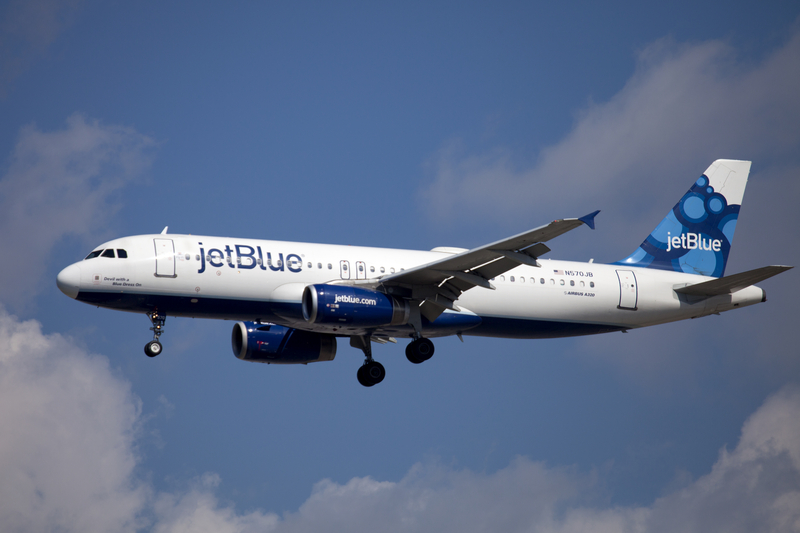
But fleet modernization has limits. More efficient aircraft help on the margin. They do not erase the impact of fuel when fuel becomes the story. Even a better fleet cannot fully defend a balance sheet if the airline is still losing money and still trying to climb back toward breakeven.
That is why Neeleman’s comment landed so forcefully. He is not arguing that JetBlue lacks a brand or a franchise. He is arguing that the cost environment may be moving faster than the turnaround.
The sale talk matters because it shows how narrow the option set has become
The other reason the bankruptcy question is getting so much attention is that JetBlue has already been linked to strategic alternatives. Reports in late March said the airline had brought in advisers to explore whether a sale to another carrier could be viable. JetBlue publicly kept to its usual line that it remains focused on JetForward, but the fact that a sale was even being evaluated was revealing.
In healthier conditions, a company can explore a sale from a position of strength. In a stressed environment, the same process looks more like contingency planning.
Neeleman’s own skepticism about potential buyers adds another layer. Whether or not his view proves right, the logic is clear enough: JetBlue’s debt load and uncertain near-term earnings profile make it harder to imagine a rival stepping in enthusiastically, especially when regulators have already shown how hostile they are to airline consolidation.
The franchise is not worthless. The timing is the problem.
It is important not to overcorrect into a collapse narrative. JetBlue still has meaningful strengths. Its positions at JFK, Boston Logan International Airport (BOS), Fort Lauderdale-Hollywood International Airport (FLL), Orlando International Airport (MCO), and San Juan Luis Muñoz Marín International Airport (SJU) are not trivial. Its product remains stronger than many low-cost peers. And its management still believes the airline can get to breakeven or better on an operating basis.
But timing matters in aviation, and timing is what makes this moment uncomfortable. Turnarounds need stability. Fuel shocks destroy stability. JetBlue may still have the right broad strategy, yet still be caught in a market that gives it too little time to make that strategy pay off.
Bottom Line
Neeleman’s warning should not be read as a bankruptcy prediction carved in stone. It should be read as a blunt assessment of how exposed JetBlue remains if fuel stays at crisis levels.
The airline is not out of moves. It has liquidity, a live turnaround plan, a simpler future fleet, and a still-relevant network. But it also has thin margins, no easy margin for error, and a cost surge that hits precisely where low-cost and value-focused carriers are most vulnerable.
For industry readers, that is the real takeaway. The question is not whether JetBlue has a strategy. It is whether the market will give that strategy enough runway.
Keep reading FlyMag
Get the Daily Brief in the morning or the Route Watch weekly recap on Fridays. Or both.