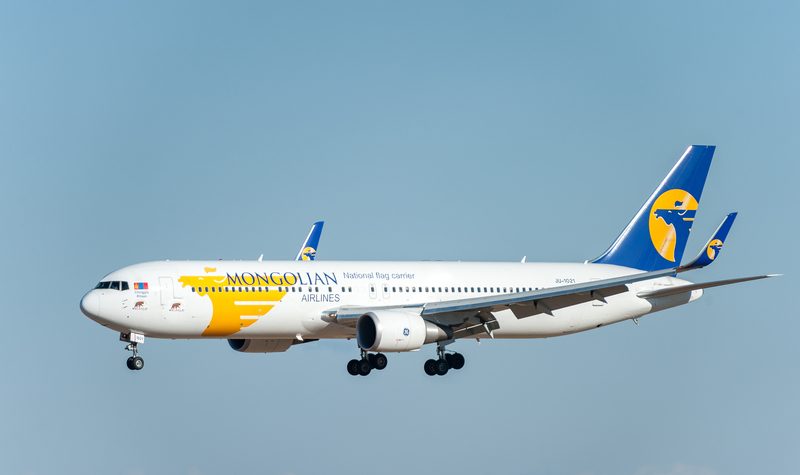
MIAT Mongolian Airlines is considering the acquisition of 10 Airbus aircraft, a move that could reshape the flag carrier’s fleet strategy and mark the airline’s first return to Airbus equipment in more than a decade.

The proposal was disclosed by Mongolia’s Minister of Roads and Transport, Borkhuu Delgersaikhan, who said the government-backed carrier wants to reduce its heavy reliance on leased aircraft. According to the minister, nine of MIAT’s 10 aircraft are currently leased, creating a cost burden that limits the airline’s ability to generate stronger returns from both domestic and international flying.
No Airbus type has been selected, and MIAT has not announced a firm order. That distinction matters. This is not yet an aircraft purchase agreement with Airbus. It is a fleet-acquisition plan under discussion, with financing structures still being explored.
Read our stories in your inbox
Two aviation newsletters. Zero fluff.
Even so, the plan is significant. For a small national airline based at Chinggis Khaan International Airport (UBN) in Ulaanbaatar, a 10-aircraft Airbus acquisition would be a major strategic decision.
MIAT Wants More Control Over Its Fleet
The core issue is not simply fleet age or aircraft type. It is control.

Leasing aircraft gives airlines flexibility, especially when demand is uncertain or when a carrier does not want to commit large amounts of capital upfront. But leasing also creates recurring costs, maintenance-reserve obligations, return-condition requirements, and exposure to market lease rates.
For MIAT, that has become a structural challenge. Delgersaikhan said the airline is carrying both international and domestic passengers, but high lease payments are preventing the carrier from generating sufficient returns. That helps explain why the government is exploring long-term finance leases or other financing arrangements rather than continuing to rely so heavily on operating leases.
A finance lease or similar structure could give MIAT more of the economic benefits of ownership while still spreading payments over time. For a national carrier in a relatively small market, that balance can be important. Full ownership may be capital-intensive, but excessive operating-lease dependence can leave the airline with high monthly costs and limited long-term flexibility.
The Ministry of Roads and Transport is reportedly in discussions with two financial institutions. One is the Trade and Development Bank of Mongolia, which is prepared to provide financing guarantees. The other is an undisclosed French party, a detail that naturally stands out given Airbus’ European industrial base.
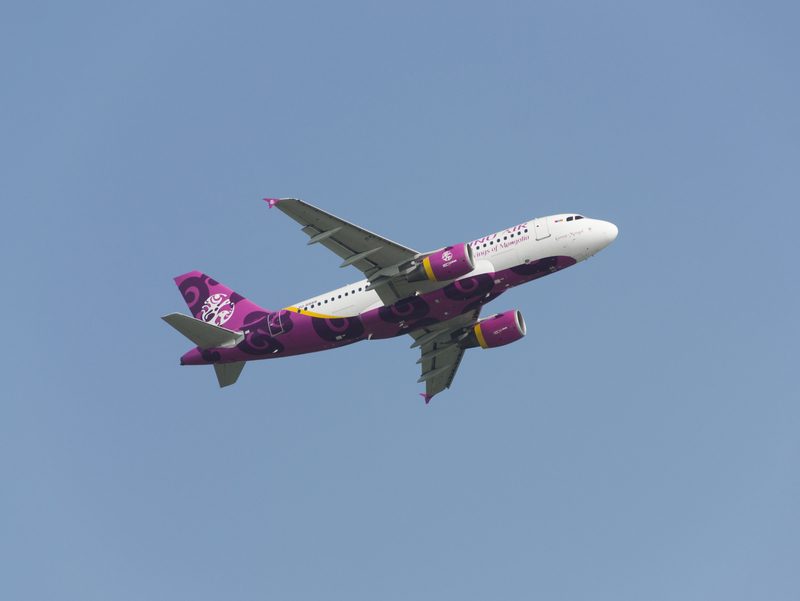
The Airbus Type Has Not Been Chosen
The biggest open question is which Airbus aircraft MIAT would actually acquire.
The minister said Mongolia intends to select the Airbus type best suited to MIAT’s operational needs. That leaves several possibilities, ranging from the Airbus A220 to the Airbus A320neo family, or even a widebody such as the Airbus A330neo if the airline wanted to expand long-haul capacity.
The most logical discussion starts with the A320neo family. MIAT’s existing narrowbody operation is built around Boeing 737 aircraft, including the Boeing 737-800 and Boeing 737-8/MAX 8. If the goal is to reduce leasing exposure while renewing short- and medium-haul capacity, Airbus’ A319neo, A320neo, A321neo, and A321XLR would be the closest alternatives.
The A321XLR is especially interesting in theory because Airbus markets it with up to 4,700 nautical miles of range. For an airline based in Ulaanbaatar (UBN), that kind of single-aisle reach could open thinner long-range markets that do not need a widebody. But it would be premature to say MIAT is considering the A321XLR specifically. The airline has not named it.
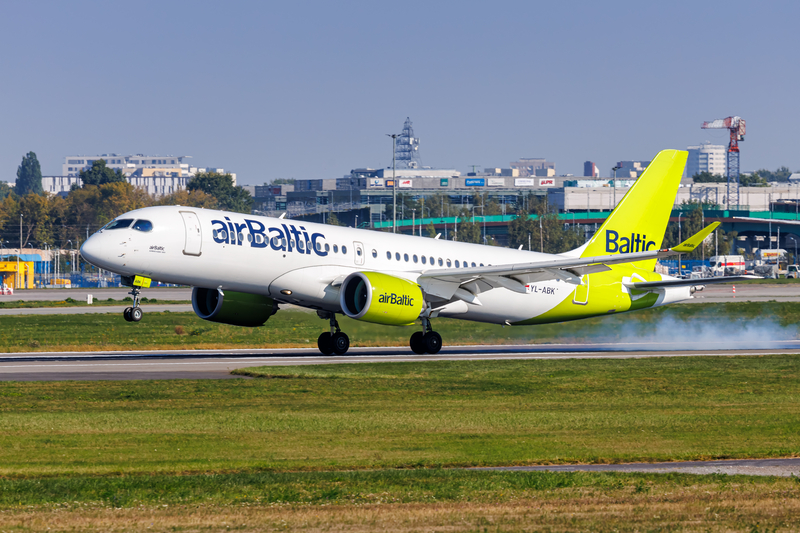
That caution is important. “Airbus aircraft” could mean several very different fleet strategies.
Why The A320neo Family Would Be The Natural Starting Point
If MIAT is looking to replace or supplement Boeing 737-family aircraft, the A320neo family is the cleanest Airbus comparison.
The A320neo would fit many of MIAT’s regional missions from Ulaanbaatar (UBN), including flights to Northeast Asia, China, Korea, Japan, Southeast Asia, and parts of Central Asia, subject to traffic rights and operational planning. The larger A321neo would provide more capacity, while the A321XLR would add range for longer routes with lower risk than a widebody.
For a carrier of MIAT’s size, that flexibility matters. Mongolia’s geography creates an unusual network problem. Ulaanbaatar (UBN) is not surrounded by a dense field of large nearby domestic markets. Many international routes require either a capable narrowbody or a widebody, and demand can be highly seasonal.
A modern Airbus narrowbody could help MIAT right-size routes where the Boeing 787-9 is too large but where a smaller regional aircraft lacks range or capacity. That is the strategic gap Airbus would likely try to fill.
At the same time, adding Airbus narrowbodies would increase complexity. MIAT already operates Boeing 737s, Boeing 787-9s, a Boeing 767-300ER, a Boeing 757-200 freighter, and CRJ700 regional jets. A new Airbus subfleet would require pilot training, simulator access, spare parts, maintenance procedures, dispatch integration, cabin crew training, and technical support.
Ten aircraft is enough to justify a new type if the economics are strong. It is also enough to create real complexity if the aircraft are not carefully matched to the network.
A Boeing-Heavy Fleet Today
MIAT’s current fleet is heavily Boeing-oriented.
The airline operates one Boeing 737-8/MAX 8, three Boeing 737-800s, one Boeing 757-200 passenger-to-freighter conversion, one Boeing 767-300ER, two Boeing 787-9 Dreamliners, and two Bombardier CRJ700s. That gives MIAT a wide spread of capabilities, but also a wide spread of fleet complexity for a relatively small operator.
The Boeing 787-9 is MIAT’s flagship long-haul aircraft and is used to support longer international missions from Ulaanbaatar (UBN). The Boeing 737 fleet handles shorter regional flying, while the CRJ700s provide smaller-gauge capacity. The 757 freighter gives the airline dedicated cargo capability, which is strategically useful for a landlocked country with long supply lines.
The Airbus proposal would therefore need to solve a specific problem. It could replace older leased narrowbodies. It could support expansion. It could help MIAT reduce lease costs. It could create a longer-range single-aisle platform. Or it could do some combination of all four.
The final aircraft type will reveal the real strategy.
MIAT’s Last Airbus Era Ended With The A310
MIAT has operated Airbus aircraft before, but not recently.
The airline last flew an Airbus type with the A310-300, a widebody twinjet that served MIAT for 13 years before being retired in 2011. The A310 belonged to a very different generation of aircraft, when smaller widebodies were used by national carriers that needed international reach but did not require the capacity of larger jets.
A return to Airbus today would look very different. Modern Airbus aircraft offer better fuel efficiency, newer cabins, stronger support ecosystems, and more flexible fleet planning options than the A310 era could provide.
That makes the Airbus discussion more than a nostalgic return. It would be a modern fleet reset.
If MIAT chooses an A320neo-family aircraft, the airline would be entering one of the most widely supported narrowbody ecosystems in the world. If it chooses an A220, it would be selecting a smaller, highly efficient aircraft for thinner routes. If it chooses an A330neo, it would be making a larger long-haul and medium-haul widebody move that would interact directly with its Boeing 787-9 strategy.
Each option says something different about MIAT’s future.
Mongolia’s Geography Makes Aircraft Choice Critical
Aircraft selection is especially important for Mongolia because the country’s aviation geography is unusual.
Ulaanbaatar (UBN) sits between major aviation regions but is not located inside a dense short-haul market like airlines in Europe, Southeast Asia, or the Gulf. Routes from Mongolia often require meaningful range, but demand may not always justify a large aircraft.
MIAT already flies or has been associated with routes to major Asian and European points including Frankfurt (FRA), Istanbul (IST), Tokyo Narita (NRT), Seoul Incheon (ICN), Beijing (PEK), and other regional markets. Some of these are widebody-appropriate. Others are better suited to narrowbodies.
The right Airbus type could help MIAT build more frequency without adding too much capacity. That is especially important at Chinggis Khaan International Airport (UBN), where international connectivity matters not only for tourism, but also for mining, government travel, business links, cargo, education, and Mongolia’s broader economic access to the world.
A fleet that is too large can create weak load factors. A fleet that is too small or range-limited can block network development. MIAT needs the middle ground.
Chinggis Khaan Airport Gives MIAT A Modern Base
MIAT’s main base, Chinggis Khaan International Airport (UBN), gives the airline better infrastructure than it had at the older Ulaanbaatar airport.
UBN has a 3,600-meter runway, modern passenger facilities, cargo infrastructure, and the operational capability to support long-haul and regional flying. That matters because fleet modernization only works if the airport system can handle the aircraft and passenger flows that come with it.
For MIAT, the airport is not just a base. It is the platform for Mongolia’s air transport strategy. If the country wants to increase inbound tourism, strengthen cargo access, and support more reliable international links, MIAT needs aircraft that can use UBN effectively.
The Airbus proposal therefore fits into a wider national aviation plan. Delgersaikhan described the acquisition as an important milestone for Mongolia, not only for MIAT. That language reflects the role national carriers still play in smaller and geographically isolated markets.
Financing May Decide Whether The Plan Moves Forward
The aircraft choice will be important, but financing may decide whether the plan becomes real.
Aircraft acquisitions require more than a political statement or airline preference. MIAT will need bankable financing, delivery slots, manufacturer agreement, maintenance support, crew planning, and a transition plan for existing leased aircraft.
The reported involvement of the Trade and Development Bank of Mongolia is important because guarantees can lower financing risk and make aircraft acquisition more achievable. The French-party involvement is also worth watching, especially if export-credit support, European bank financing, or Airbus-linked commercial structures become part of the deal.
Still, until there is a signed agreement, this remains a proposal.
That is why the correct wording is that MIAT is considering or planning an Airbus acquisition, not that it has ordered 10 Airbus aircraft.
A Mixed Fleet Could Help Or Hurt
A mixed Airbus-Boeing fleet can be a strength if each aircraft type has a clear role. It can become a burden if the airline adds complexity without enough scale.
For MIAT, the risk is real. A 10-aircraft Airbus order would be large enough to create operational scale within the airline, but MIAT is still a relatively small carrier. Adding a new manufacturer means separate training pipelines, maintenance tooling, parts inventory, manuals, engineering expertise, and scheduling considerations.
The benefit is that Airbus may offer a better match for certain missions than MIAT’s current aircraft. It may also provide more favorable financing, delivery timing, or long-term ownership economics than continuing with leased aircraft.
That is the tradeoff the airline and government need to evaluate. Fleet commonality saves money. The right aircraft saves money. The best decision is the one that balances both.
The Boeing 737 MAX Factor
MIAT already operates the Boeing 737-8/MAX 8, which makes the Airbus plan more intriguing.
On the surface, adding Airbus narrowbodies would move the airline away from a simple Boeing 737 replacement path. But MIAT may be thinking beyond manufacturer loyalty. The minister’s comments suggest the main problem is lease economics, not dissatisfaction with Boeing aircraft performance.
If the Airbus aircraft are acquired through a structure that reduces long-term costs, MIAT may accept the added complexity. If the selected type offers a range or capacity advantage that the airline cannot achieve with its current fleet, the argument becomes even stronger.
The Boeing 737 MAX 8 remains a capable aircraft for MIAT’s regional network. The question is whether Airbus can offer a better combination of financing, availability, range, and route flexibility.
Bottom Line
MIAT Mongolian Airlines’ possible 10-aircraft Airbus acquisition is a potentially major fleet shift, but it is still at the planning stage.
The Mongolian government has confirmed that MIAT wants to acquire 10 Airbus aircraft and reduce its heavy reliance on leased jets. Financing discussions are underway, including talks involving the Trade and Development Bank of Mongolia and an undisclosed French party. However, no Airbus model has been selected publicly, and there is no firm order yet.
The decision matters because MIAT is a small national carrier with a complex mission. From Ulaanbaatar (UBN), it must support domestic connectivity, regional Asian flying, European long-haul links, cargo needs, and Mongolia’s broader economic access to the world.
The Airbus A320neo family is the most logical aircraft family to discuss, especially because it could replace or supplement MIAT’s Boeing 737 fleet. The A321XLR would be particularly interesting for longer thin routes, but that remains speculation until MIAT names a type.
If executed well, an Airbus fleet move could lower MIAT’s long-term aircraft costs and give the airline more flexibility. If handled poorly, it could add complexity to an already varied fleet.
The next announcement to watch is simple: not whether MIAT wants Airbus aircraft, but which Airbus aircraft it chooses.
Keep reading FlyMag
Get the Daily Brief in the morning or the Route Watch weekly recap on Fridays. Or both.