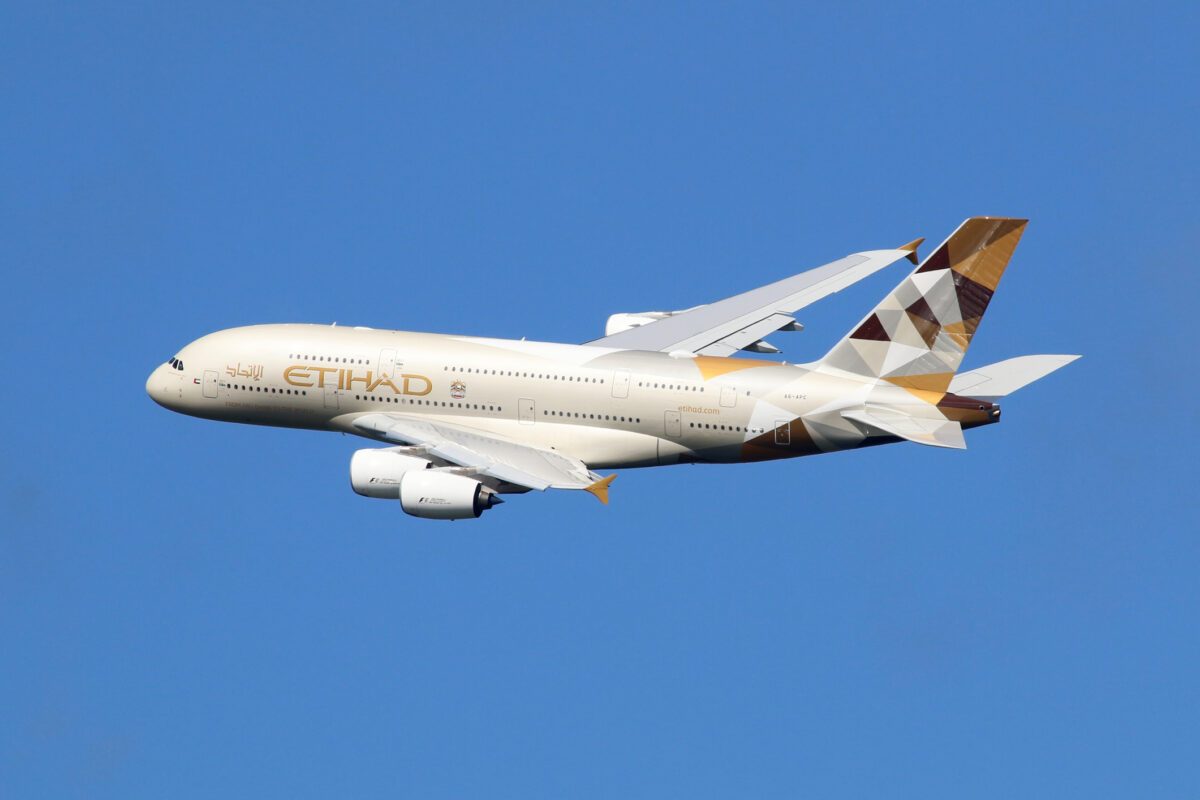
Etihad Airways has confirmed that Flight EY22 from Toronto Pearson (YYZ) to Abu Dhabi (AUH) diverted to Amman (AMM) after a passenger required immediate medical treatment.

The airline listed the diversion against the flight’s Oct. 17 departure date in a travel update on its flight-status page. The long-haul service was operating Etihad’s Airbus A380 route between Canada and the United Arab Emirates.
Etihad attributed the unscheduled landing specifically to the medical case. The carrier’s notice separates the event from the regional disruption affecting some of its other Middle Eastern services over the same weekend.
Read our stories in your inbox
Two aviation newsletters. Zero fluff.
Amman Offered an Online Diversion Point
Queen Alia International is Jordan’s principal international gateway and is located about 22 miles south of central Amman. Its operator, Airport International Group, describes the airport as a regional link for business, leisure and medical travel.

Amman is also an online station for Etihad. The carrier sells scheduled service between AMM and Abu Dhabi, giving it access to established local handling, passenger-support and station arrangements. That can simplify the response to a diversion compared with landing at an airport where the airline has no regular presence.
An A380 diversion nevertheless creates a larger ground-handling task than an unscheduled stop by a narrowbody. The airport and airline must coordinate a suitable parking position, medical access, ground power and any required passenger servicing while managing an aircraft with two full-length passenger decks.
For a medical diversion, the immediate objective is to place the passenger in the care of local responders. The subsequent departure depends on the time required for that handoff, aircraft servicing and operational checks, as well as the remaining duty time available to the flight and cabin crews.
EY22 Is Etihad’s Daily Toronto A380 Service
Etihad introduced the A380 on Toronto in June 2025, replacing smaller equipment on a route the airline identified as requiring more capacity. Its Toronto launch schedule showed EY21 and EY22 operating daily, with the westbound flight leaving Abu Dhabi in the early morning and the return departing Toronto in the afternoon.
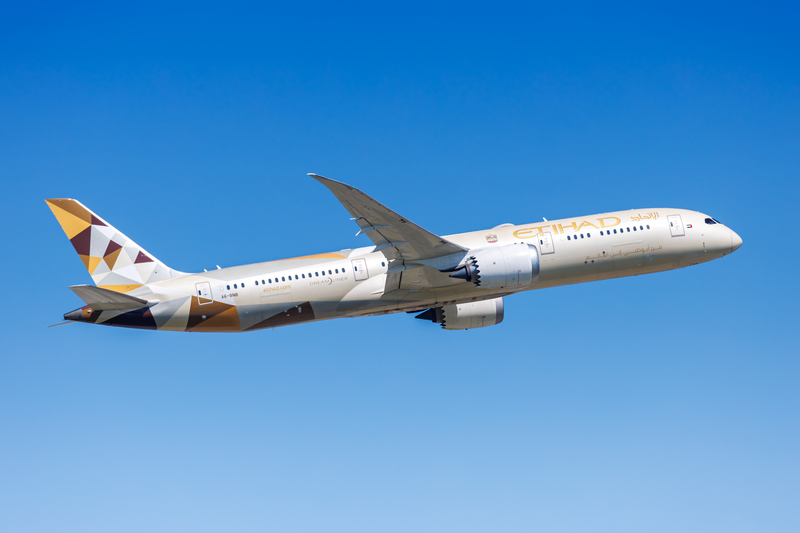
The scheduled Toronto-to-Abu Dhabi sector takes more than 13 hours. That makes the route a natural assignment for Etihad’s highest-capacity aircraft, combining nonstop range with a large premium cabin and substantial economy capacity.
Etihad’s Toronto-configured A380 has 405 economy seats, including 68 extra-legroom positions, along with 70 Business Studios and nine First Apartments. The upper deck also contains The Residence, the airline’s three-room accommodation with a living area, bedroom and private bathroom.
The result is an unusually broad passenger mix on a single flight. EY22 carries point-to-point traffic between Canada and the UAE alongside passengers connecting at Abu Dhabi to destinations across the Gulf, the Indian subcontinent, Asia and Africa. A diversion late in the inbound journey can therefore affect more than the arrival time at AUH, particularly for passengers booked onto the next connection bank.
The A380 Remains Central to Etihad’s Capacity Strategy
Etihad returned the A380 to passenger service in 2023 after grounding the type during the pandemic. The airline initially committed four aircraft to the comeback, saying stronger demand had again made the superjumbo financially viable.
The carrier has since expanded the A380 beyond its initial London assignment. Its current A380 destination list includes Toronto alongside London, Paris, Singapore and Tokyo, concentrating the aircraft on long-haul markets where additional seats and the flagship premium product can support the economics of the four-engine jet.
Airbus lists the A380 with a range of about 8,000 nautical miles and a maximum certified capacity of 853 passengers, although airline layouts are normally far less dense. Etihad’s cabin emphasizes premium space rather than maximum seating, while still providing considerably more capacity than the twin-engine widebodies that form most of its long-haul fleet.
That combination makes the aircraft well suited to constrained or heavily traveled trunk routes, but it also raises the operational consequences of an interruption. More passengers may require assistance or rebooking, and a relatively small active A380 fleet gives an airline fewer like-for-like substitution options if an aircraft falls out of rotation.
Bottom Line
The Amman diversion shows the value of retaining suitable online stations beneath a long-haul network. Etihad already has a local operation at AMM, while Queen Alia can support a large widebody and provide rapid access to medical care. Those factors matter when a crew must balance the passenger’s immediate needs against the complexity of recovering an A380 service.
For Etihad, the stated medical cause distinguishes the event from a technical interruption involving the aircraft. The operational issue is instead how quickly the airline can restore the A380 to its planned sequence and protect onward itineraries at Abu Dhabi. With the type assigned to a select group of high-capacity routes, even a routine diversion can create a sizable passenger-recovery exercise and place pressure on the following rotation.
Keep reading FlyMag
Get the Daily Brief in the morning or the Route Watch weekly recap on Fridays. Or both.