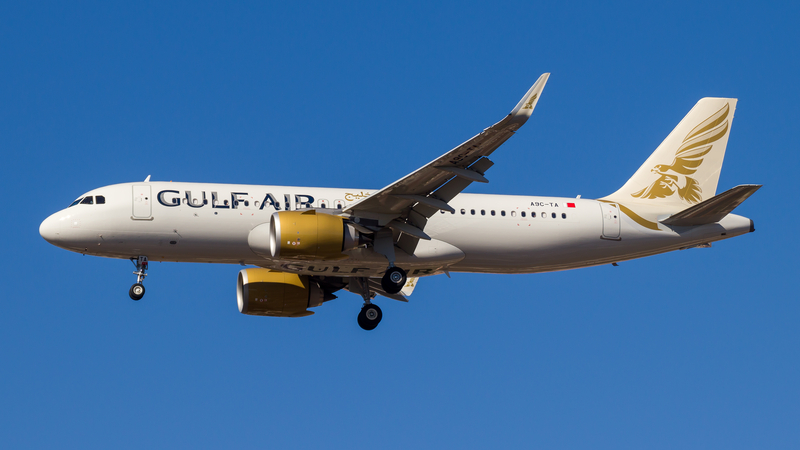
Gulf Air is leaning further into seasonal leisure flying for Summer 2026, rolling out two twice-weekly routes from Bahrain International Airport (BAH) to Málaga Airport (AGP) in Spain and El Alamein International Airport (DBB) in Egypt. Both additions are designed around the peak Mediterranean travel window, giving Bahrain-originating passengers and GCC connect traffic more nonstop options to sun-and-sea markets that typically surge from mid-June through late summer.
For Gulf Air, the timing is deliberate. Summer schedules are when leisure demand can outperform shoulder-season business flows, and when airlines with strong regional feed can “right-size” capacity with narrowbody aircraft while still offering a premium product.
Route snapshot: dates, frequency, and what’s actually new
Gulf Air is keeping the structure simple: both routes operate twice weekly via its hub at BAH.
Read our stories in your inbox
Two aviation newsletters. Zero fluff.
-
BAH–AGP (Málaga): operates 17 June to 25 September 2026 (seasonal)
-
BAH–DBB (El Alamein): operates 18 June to 30 August 2026 (seasonal)
Bookings are already open across Gulf Air sales channels, signaling these aren’t placeholder filings—they’re intended to sell and perform within the heart of the summer peak.
Why Málaga (AGP) makes network sense from Bahrain (BAH)
Málaga (AGP) is one of the strongest leisure gateways in southern Europe, functioning as the front door to Spain’s Costa del Sol. For an airline like Gulf Air, AGP checks several boxes that matter operationally and commercially:
First, it’s a high-volume leisure market with consistent summer demand patterns, which makes it easier to plan aircraft utilization and crew resources around predictable peaks.
Second, it pairs well with a hub like BAH, where Gulf Air can blend:
-
Local Bahrain-origin demand
-
Short-connection feed from the wider Gulf and nearby markets
-
Visiting friends and relatives (VFR) flows during school holiday periods
Third, AGP is a market that tends to reward nonstop convenience. Many passengers will pay a premium (or at least choose the nonstop) to avoid backtracking connections through larger European hubs in the middle of summer congestion.
From an airline-professional perspective, this is the kind of route that can quietly deliver strong unit revenues if the airline gets the schedule right—especially around weekend leisure patterns and hotel changeover days.
El Alamein (DBB): short-haul leisure demand with a strategic twist
El Alamein (DBB) is a different play. While Málaga is an established European leisure magnet, DBB is about direct access to Egypt’s Mediterranean coast during the high-summer period, when travelers often want beach destinations that are closer-in, lower-risk on travel time, and easier to plan as a short break.
Operationally, DBB is the type of route that fits neatly into a narrowbody schedule because it can be flown with high dispatch reliability, minimal payload complexity, and a quick turn profile—exactly what you want for seasonal flying where the goal is to maximize aircraft productivity while demand is hottest.
It also broadens Gulf Air’s Egypt portfolio beyond the “usual suspects,” giving the airline another leisure lever without needing long-haul assets.
Aircraft strategy: why the A320-family is the natural tool for these missions
Gulf Air hasn’t positioned these as widebody routes—and that’s consistent with how most airlines now treat Mediterranean leisure flying from the Gulf: right aircraft size, high frequency discipline, and flexible redeployment when the season ends.
For DBB, Gulf Air has previously indicated El Alamein flying will be operated by the Airbus A320—a strong fit for a short-to-medium sector where trip cost control and turn efficiency matter. The A320 family remains a workhorse for this kind of flying because it can deliver solid economics without forcing the airline to “manufacture” demand just to fill a larger gauge.
For the wider Summer 2026 Europe leisure buildout, Gulf Air has also confirmed Airbus A321neo operations on its seasonal European services to Geneva (GVA) and Nice (NCE), both operating via Milan Malpensa (MXP). The A321neo is the modern sweet spot for medium-haul missions: more seats and range flexibility than an A320, with lower trip cost than a widebody, and strong performance for longer stage lengths where fuel burn and payload capability start to matter more.
In short: Gulf Air is aligning aircraft choice with seasonality—keeping widebodies available for long-haul and high-density trunk routes, while letting narrowbodies do the seasonal leisure heavy lifting.
How this fits into Gulf Air’s broader Summer 2026 Europe plan
The Málaga (AGP) and El Alamein (DBB) additions don’t sit in isolation—they extend a clear Summer 2026 theme: add leisure destinations that sell hard in peak season, then exit cleanly when the demand curve drops.
They also complement Gulf Air’s previously announced seasonal services:
-
BAH–MXP–GVA (Geneva): operates 5 June to 11 September 2026, twice weekly
-
BAH–MXP–NCE (Nice): operates 24 May to 27 September 2026, twice weekly
That “via Milan (MXP)” structure is notable. It can improve aircraft utilization, broaden the addressable market, and provide additional traffic opportunities, while still offering customers access to premium European leisure points.
Bottom Line
Gulf Air’s Summer 2026 expansion is a textbook example of modern seasonal network design: keep it narrowbody, keep it twice-weekly (at least at launch), and target leisure markets where nonstop convenience wins during the peak demand window. With BAH–AGP running into late September and BAH–DBB covering the core summer holiday stretch, Gulf Air is building a Mediterranean leisure layer that’s commercially logical, operationally manageable, and easy to unwind when the season ends.
Keep reading FlyMag
Get the Daily Brief in the morning or the Route Watch weekly recap on Fridays. Or both.