British Airways has unveiled five notable long-haul additions for late 2026 and early 2027, and while the headline suggests major network growth, the real picture is more nuanced. Two of the routes are genuinely new destinations for the airline, while others are airport switches within existing markets. Yet even those airport changes matter, because at the airport level they alter connectivity, competition, and hub strategy in meaningful ways.

That is why this latest expansion deserves a closer look. British Airways is not simply adding five more long-haul lines to the map. It is reworking how it serves several important leisure and visiting-friends-and-relatives markets from London, while also making a much more symbolic return to Australia.
The five long-haul additions are:
Read our stories in your inbox
Two aviation newsletters. Zero fluff.
-
London Gatwick (LGW)–Bridgetown, Barbados (BGI), with onward service replacing the previous routing pattern
-
London Heathrow (LHR)–San José, Costa Rica (SJO)
-
London Heathrow (LHR)–Tampa (TPA)
The Most Important Route Is Clearly Melbourne
British Airways’ return to Melbourne Airport (MEL) is the standout move by a wide margin.
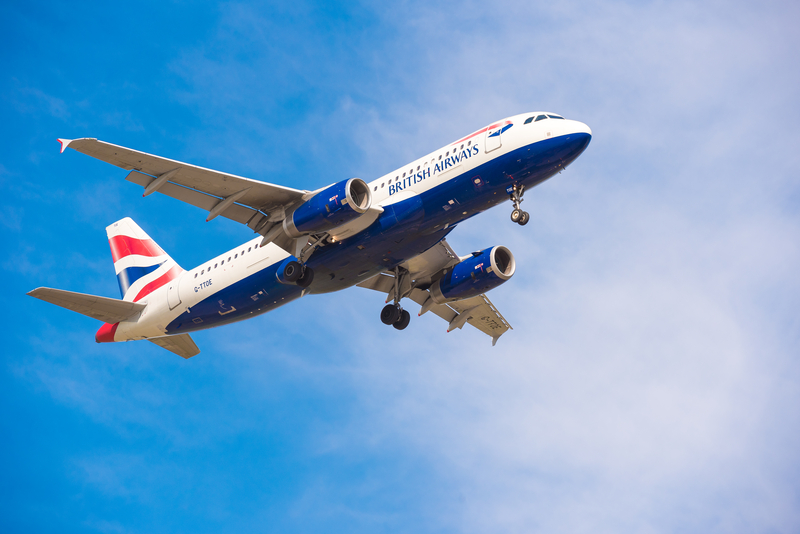
The carrier will launch daily flights from London Heathrow (LHR) to Melbourne via Kuala Lumpur (KUL) from January 2027 using the Boeing 787-9. This will mark BA’s return to Melbourne after around 20 years, with its last operation having ended in 2006 when the airline still served the city via Singapore aboard the Boeing 747-400.
For British Airways, this is a strategically important restoration rather than a simple novelty launch. Melbourne is one of Australia’s strongest premium, corporate, and VFR markets, and it gives BA a second Australian destination alongside Sydney Kingsford Smith Airport (SYD). That alone matters. For years, British Airways has had only one Australian endpoint, relying on its London Heathrow (LHR)–Singapore Changi (SIN)–Sydney service to anchor its presence in the market.
Now it is widening that footprint again.
The route is especially notable because it will be BA’s second-longest service by distance, and because it arrives at a time when many travelers have become more sensitive to Middle East routings and hub exposure. British Airways has not explicitly framed Melbourne as a geopolitical response route, and the long lead time suggests the service was planned well before the latest escalation in the region. Still, the timing makes the launch look especially shrewd.

Colombo Is A Genuine New-Old Market
The other truly eye-catching addition is Colombo Bandaranaike International Airport (CMB).
British Airways will return to Sri Lanka from London Gatwick (LGW) in October 2026, operating three times weekly with the Boeing 777-200ER. Colombo has been absent from BA’s network since 2015, so this is not just a seasonal tweak. It is the restoration of a market that had disappeared from the airline’s system for more than a decade.
That makes the route more significant than its modest initial frequency might suggest.
Sri Lanka has long had strong appeal for both leisure travelers and VFR traffic, and Gatwick is the obvious platform for that demand profile. This is not a Heathrow-style corporate route. It is a leisure-led, mixed-demand service, and Gatwick remains BA’s natural home for that kind of long-haul flying.
The Heathrow Shifts Are Not New Cities — But They Still Matter
The Tampa (TPA) and San José (SJO) changes are more subtle, but still strategically important.
Neither market is brand new to British Airways. What is new is the London airport.
San José Juan Santamaría International Airport (SJO) in Costa Rica will move from London Gatwick (LGW) to London Heathrow (LHR), becoming the first time Costa Rica has been served from Heathrow. British Airways will operate the route five times weekly with the Boeing 787-8.
That is a meaningful change because Heathrow transforms the market’s role. At Gatwick, Costa Rica functions mainly as a point-to-point leisure route. At Heathrow, it gains much deeper long-haul and European connectivity, giving BA the chance to support the route with a broader mix of transfer traffic and premium demand. The airport shift is therefore not cosmetic. It changes the economics of the service.
Tampa International Airport (TPA) is moving in the same direction.
British Airways has served Tampa from Gatwick for years, but from October 2026 the Florida route will shift to Heathrow and operate five times weekly with the Boeing 787-10. That immediately creates a very different competitive picture, because BA will now face Virgin Atlantic head-to-head from Heathrow rather than competing from a different London airport.
That matters for two reasons. First, Heathrow gives BA stronger feeder traffic than Gatwick ever could. Second, Tampa has historically not been one of BA’s strongest U.S. performers, so the airport switch looks like an attempt to improve the route’s commercial mix rather than simply keep it alive in its old form.
Barbados Returns To Gatwick In A Different Shape
Bridgetown Grantley Adams International Airport (BGI) is also returning to London Gatwick (LGW), but again, the detail matters.
British Airways will operate daily Boeing 777-200ER service from Gatwick, restoring a route pattern it had reduced after shifting much of its Barbados flying to Heathrow in 2020. The Barbados operation from Gatwick is not just about point-to-point service, either. It will continue onward to other Caribbean points, with the new routing replacing St. Lucia as the stopover structure.
That makes the move more of a Caribbean network redesign than a simple Barbados relaunch.
Gatwick remains BA’s natural base for much of its leisure-oriented Caribbean flying, so the return fits neatly with the carrier’s broader division between Heathrow’s hub-and-premium role and Gatwick’s volume leisure focus.
The Fleet Choices Tell The Real Story
One of the clearest signals in this expansion lies in the aircraft assignments.
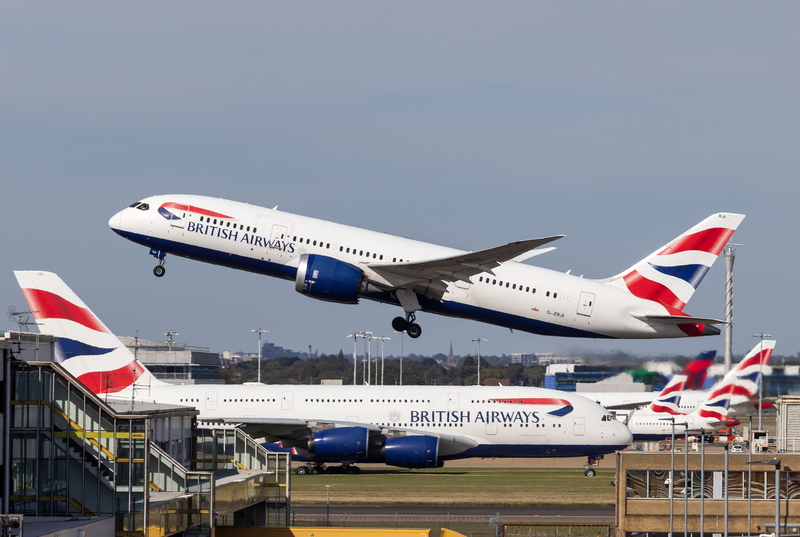
The Boeing 787 family is doing most of the strategic work. The 787-8 is being used on Heathrow–San José, the 787-10 on Heathrow–Tampa, and the 787-9 on Heathrow–Kuala Lumpur–Melbourne. That makes sense. These are all long-haul markets where gauge discipline matters, and the 787 gives British Airways a way to add or reposition service without forcing oversized capacity into the schedule.
The Boeing 777-200ER, meanwhile, continues to anchor the leisure-heavy markets, namely Gatwick–Colombo and Gatwick–Barbados. That split is telling. British Airways is still using the 777 where density and leisure economics fit, while the 787 family is increasingly the tool of choice where flexibility, network support, and long-range efficiency matter most.
For airline professionals, that is often where the real strategy reveals itself.
So Are These Really “Five New Routes”?
Not exactly.
Two of them are genuine market returns in the strongest sense: Melbourne (MEL) and Colombo (CMB). The others are better understood as airport-level relaunches or strategic transfers: San José (SJO) and Tampa (TPA) from Gatwick to Heathrow, plus a reworked Gatwick–Barbados (BGI) operation.
But that does not make them less important.
Airport-level changes can matter as much as city additions because they alter demand mix, connectivity, slot value, and competition. Heathrow–Tampa is a different proposition from Gatwick–Tampa. Heathrow–San José is a different proposition from Gatwick–San José. In network planning terms, those are major decisions even if the city names themselves are familiar.
Bottom Line
British Airways’ five long-haul additions are more sophisticated than the headline suggests.
The return to Melbourne Airport (MEL) via Kuala Lumpur (KUL) is the biggest move, restoring BA’s second Australian destination and giving the airline a meaningful long-haul statement route. Colombo (CMB) is another genuine re-entry, bringing Sri Lanka back to the network from London Gatwick (LGW). Meanwhile, the shifts of San José (SJO) and Tampa (TPA) from Gatwick to London Heathrow (LHR), along with the reworked Gatwick–Barbados (BGI) operation, show BA reshaping where and how it deploys long-haul capacity rather than simply adding cities for the sake of growth.
For a professional audience, that is the real takeaway. British Airways is not just expanding. It is repositioning its long-haul network more deliberately between Heathrow’s connectivity strengths and Gatwick’s leisure platform.
Keep reading FlyMag
Get the Daily Brief in the morning or the Route Watch weekly recap on Fridays. Or both.