Air Serbia will open nonstop service between Belgrade (BEG) and Miami (MIA) on May 20, 2027, adding the longest sector in its scheduled network and a third United States destination.

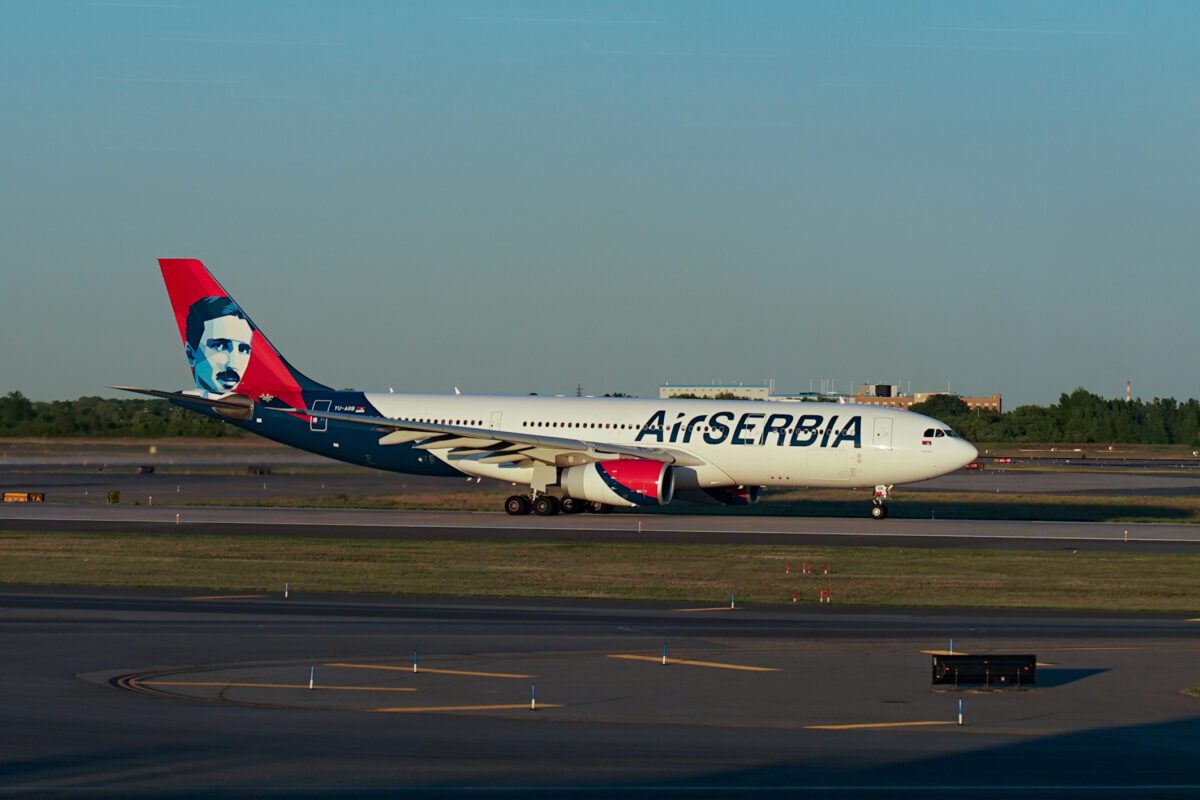
The airline has placed the route on sale and will operate it twice weekly with the Airbus A330-200. The Miami launch is part of a six-destination expansion for 2027, alongside new or returning service from Belgrade to Yerevan, Helsinki, Cluj-Napoca, Chisinau and Mahon.
At approximately 5,470 miles, or 4,750 nautical miles, the Florida route will be longer than Air Serbia’s services to Shanghai and Guangzhou. It also extends the carrier’s transatlantic footprint beyond New York, Chicago and Toronto.
Read our stories in your inbox
Two aviation newsletters. Zero fluff.
Miami Extends Air Serbia’s North American Buildout
The addition gives Air Serbia three destinations in the United States: New York, Chicago and Miami. Toronto, launched in May 2026, remains its only Canadian point.

That network has developed in stages. New York became the foundation of Air Serbia’s restored long-haul operation in 2016, followed by Chicago in 2023 and Toronto in 2026. The airline said in June 2026 that more than 750,000 passengers had used its New York service during its first decade.
Miami broadens the geographic coverage of that network. While New York, Chicago and Toronto have substantial Serbian and wider Balkan communities, South Florida combines local demand with domestic, Caribbean and Latin American connecting traffic.
Air Serbia described Miami as an important step in developing its intercontinental network and said the route would improve access between its regional network and Latin America and the Caribbean. Chief executive Jiří Marek also pointed to expected demand from both Serbia and passengers originating elsewhere in the region, according to the announcement published by Serbia’s national tourism organization.
MIA provides considerable scope for that connecting strategy. The airport handled flights to 155 nonstop passenger destinations during fiscal 2025, including 66 points across the Caribbean, Central America and South America. American Airlines accounted for more than half of passengers using the airport, according to Miami-Dade Aviation Department’s fiscal 2025 report.
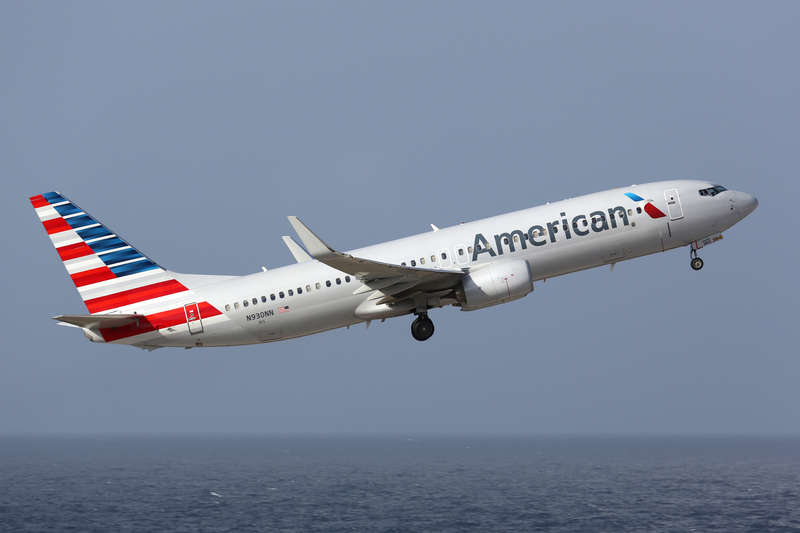
Air Serbia already has an interline relationship with American. The carriers expanded that arrangement in 2023 when Air Serbia prepared to launch Chicago, building on connections previously offered through New York. Miami gives the partnership another potential gateway, although the value of individual connections will depend on how the twice-weekly schedule is integrated with American’s banks at MIA.
The A330-200 Remains Central to Long-Haul Growth
Air Serbia will use the Airbus A330-200 on the new route, maintaining a single-type widebody operation across its intercontinental network. The carrier has four aircraft of the type.
The two most recent additions, YU-ARD and YU-ARE, were manufactured in 2014 and have 262 seats: 22 in business class and 240 in economy. YU-ARD arrived in October 2024, while YU-ARE joined the fleet in February 2025. Both carry Expo 2027 branding.
Miami is well within the A330-200’s design capability. Airbus lists a typical capacity of 210 to 250 passengers and a range of about 7,250 nautical miles for the variant, although an airline’s usable range depends on aircraft weight, configuration, weather and operating conditions. The manufacturer describes the shorter A330 model as particularly suited to long-range routes requiring less capacity than larger widebodies.

That profile fits Air Serbia’s network. Twice-weekly frequencies allow the carrier to enter long-haul markets without committing the capacity of a daily operation, while Belgrade feed can aggregate traffic from multiple smaller origins. The trade-off is a schedule with fewer recovery options when an aircraft is unavailable, particularly as the same four-aircraft fleet covers North America and China.
The airline’s widebody growth has accelerated since 2024. Guangzhou opened in September of that year, followed by Shanghai in January 2025 and Toronto in May 2026. Air Serbia said it had carried one million long-haul passengers since 2016 by late May 2026.
Miami will push the network to seven intercontinental destinations when it opens: New York, Chicago, Toronto, Shanghai, Guangzhou and Miami, alongside the carrier’s other scheduled long-haul flying at that time. It will also become the airline’s longest route by great-circle distance, modestly exceeding the two Chinese sectors.
Launch Timed With Expo 2027
The inaugural flight is scheduled five days after Expo 2027 opens in Belgrade. The specialized exhibition will run from May 15 through August 15, placing the first months of Miami service within the event’s operating period.
Air Serbia is a platinum partner of the exhibition and has said it will increase capacity on important markets as part of its support. The airline’s Expo partnership includes promoting the event across its network, while two of its A330-200s carry dedicated Expo liveries.
The timing should provide an initial demand stimulus, but Miami’s longer-term case extends beyond the exhibition. The route adds the southeastern United States to Air Serbia’s map, gives its Balkan network direct access to a major leisure and cruise market, and opens a gateway with unusually broad connectivity across the Americas.
Bottom Line
Miami is a more ambitious addition than another diaspora-focused North American point. It asks Air Serbia to combine traffic from Serbia and neighboring markets with leisure demand and connecting passengers moving between Southeast Europe, Florida, Latin America and the Caribbean. Belgrade’s regional feed and MIA’s extensive network make that proposition credible, but a twice-weekly service leaves little room for poorly timed connections.
The route also shows how much Air Serbia now expects from a four-aircraft A330-200 fleet. Miami joins a long-haul schedule that has added three Chinese or North American destinations in four years. The A330-200 has the range and an appropriate capacity level, but operational resilience will become increasingly important as utilization rises across routes with long stage lengths and limited weekly frequencies.
The next indicators will be whether Miami gains additional frequencies after its first season and how Air Serbia develops connecting partnerships at MIA. A move beyond two weekly flights would suggest the route is attracting more than Expo-related and peak-season demand; deeper feed at the Florida end would make it a broader network play rather than simply another nonstop from Belgrade.
Keep reading FlyMag
Get the Daily Brief in the morning or the Route Watch weekly recap on Fridays. Or both.