Air France is heading into summer 2026 with a broader network, a stronger long-haul schedule to the Americas, and a more concentrated Paris hub strategy centered on Paris Charles de Gaulle Airport (CDG).

The airline says it will serve close to 170 destinations in 73 countries during the summer season, with long-haul capacity up 2% year over year. That growth is being driven mainly by North and South America, while parts of the Middle East remain suspended and capacity is being shifted toward Asia instead.
That mix says a lot about where Air France sees opportunity right now. This is not just a schedule refresh. It is a clear rebalancing of the network.
Read our stories in your inbox
Two aviation newsletters. Zero fluff.
The Americas Are Driving The Long-Haul Growth
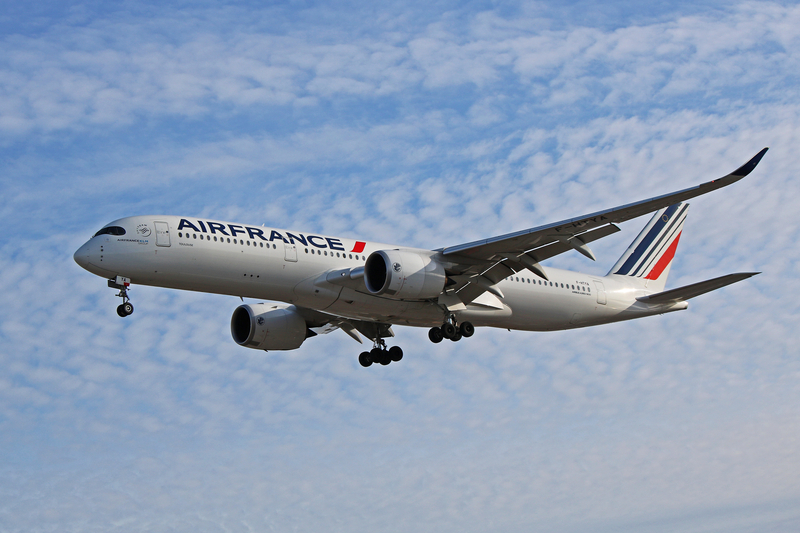
The most visible long-haul addition is Las Vegas Harry Reid International Airport (LAS), which joins the map from Paris Charles de Gaulle (CDG) on April 15 with three weekly Airbus A350-900 flights.
Las Vegas is a smart addition. It is a strong leisure and convention market, it broadens Air France’s U.S. offering, and it fits the airline’s larger strategy of adding destinations where premium leisure and business demand can coexist.
New York is also getting a major boost. Air France is adding a second daily service to Newark Liberty International Airport (EWR) from June, which means the airline and its Delta Air Lines joint venture will offer up to 11 daily flights between Paris (CDG) and the New York market across JFK and Newark.
That is a significant transatlantic statement. It reinforces how central New York remains to Air France’s North American strategy and underlines the importance of the Delta partnership in maintaining very high-frequency coverage on one of the world’s most competitive long-haul corridors.
Middle East Suspensions Are Reshaping The Schedule
The biggest geopolitical drag on the network remains the Middle East.
Air France says flights to Tel Aviv Ben Gurion Airport (TLV), Beirut Rafic Hariri International Airport (BEY), Dubai International Airport (DXB), and King Khalid International Airport (RUH) remain suspended for now because of the ongoing security situation and airspace constraints.

That matters because it is not just a matter of routes disappearing temporarily. It also changes where aircraft and capacity can be used more productively. Air France has clearly chosen to redirect some of that flying toward stronger Asian demand.
Asia Is Benefiting From The Reallocation
Rather than simply park capacity, Air France is using the disruption to strengthen parts of its Asian network.
The airline says it is adding flights and using larger aircraft on routes such as Bangkok Suvarnabhumi Airport (BKK), Singapore Changi Airport (SIN), Tokyo Haneda Airport (HND), Delhi Indira Gandhi International Airport (DEL), Mumbai Chhatrapati Shivaji Maharaj International Airport (BOM), Bengaluru Kempegowda International Airport (BLR), and Osaka Kansai International Airport (KIX).
That tells you the demand is there.
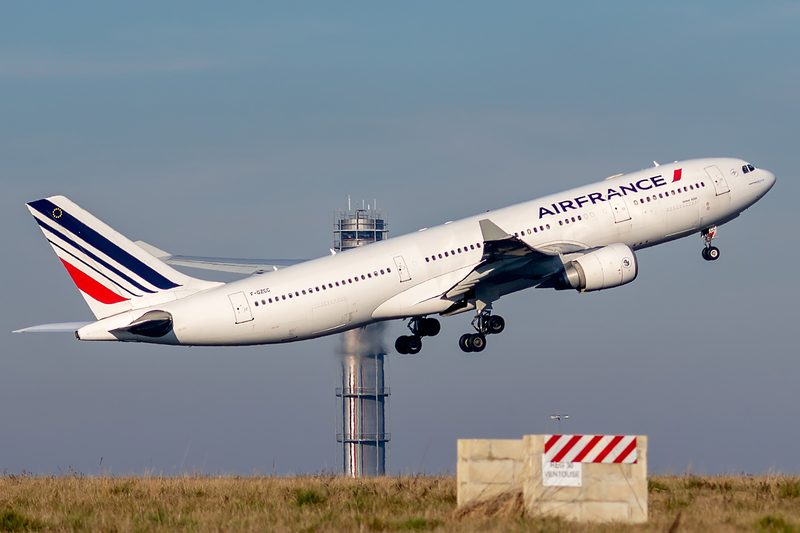
It also shows how flexible long-haul network planning has to be right now. When one region becomes unstable, airlines do not simply shrink. They move capacity into markets where yields, demand, and operational predictability look stronger.
Paris Charles de Gaulle Is Becoming Even More Central
One of the most important changes in the whole summer 2026 plan is the restructuring of Air France’s Paris operation.
The airline is consolidating its domestic and overseas flying at Paris Charles de Gaulle (CDG), with routes such as Toulouse Blagnac Airport (TLS), Nice Côte d’Azur Airport (NCE), Marseille Provence Airport (MRS), Pointe-à-Pitre Le Raizet Airport (PTP), Fort-de-France Aimé Césaire Airport (FDF), Saint-Denis Roland Garros Airport (RUN), and Cayenne Félix Éboué Airport (CAY) all operating from CDG.
That is a major structural decision.
It strengthens hub connectivity by concentrating more feed into the airport that matters most for Air France’s long-haul operation. In practical terms, it makes it easier for passengers from French regional cities and overseas territories to connect onward to the carrier’s international network. For an airline built around hub efficiency, that is a meaningful gain.
Short- and Medium-Haul Growth Supports The Hub Logic
Air France’s short- and medium-haul network is also being adjusted to better support this broader Paris strategy.
The airline says it will operate up to 630 daily flights to more than 90 destinations on short- and medium-haul routes this summer. Among the notable changes are stronger schedules to cities such as Dublin Airport (DUB), Marrakech Menara Airport (RAK), Rabat-Salé Airport (RBA), Naples International Airport (NAP), Seville Airport (SVQ), and Porto Airport (OPO), as well as a new route to London Gatwick Airport (LGW).
These are not random additions. They are part of the same logic: denser short-haul coverage feeding a more efficient Paris long-haul hub.
The Premium Push Continues
The network changes are also supported by continued product investment.
Air France is still rolling out its new La Première suite and says free high-speed Wi-Fi deployment is continuing across the fleet. For the summer 2026 season, the new La Première product is already available on routes such as New York John F. Kennedy Airport (JFK), Los Angeles International Airport (LAX), Miami International Airport (MIA), Singapore Changi Airport (SIN), and Tokyo Haneda Airport (HND), with further expansion planned to Abidjan Félix Houphouët-Boigny International Airport (ABJ) and San Francisco International Airport (SFO).
That matters because the airline is not just growing capacity. It is continuing to push the network upmarket at the same time.
Transavia France Is Taking A Bigger Role At Orly
While Air France consolidates around CDG, Transavia France is becoming even more important at Paris-Orly Airport (ORY).
The low-cost subsidiary will operate 230 routes to 109 destinations in 33 countries this summer, making it the group’s clear growth platform from Orly. That gives the Air France-KLM group a cleaner division of labor in Paris: Air France focused more heavily on CDG as the premium hub, Transavia increasingly leading point-to-point and leisure flying from ORY.
That separation makes strategic sense. It simplifies the role of each airport and gives the group a more coherent Paris structure overall.
Bottom Line
Air France’s summer 2026 network plan is about much more than adding Las Vegas (LAS) or boosting New York.
The airline is increasing long-haul capacity by 2%, mainly by strengthening the Americas, while shifting resources away from suspended Middle East markets and into high-demand Asian routes. At the same time, it is reshaping the Paris system by concentrating more operations at Charles de Gaulle (CDG), where domestic, overseas, and international connectivity can be tied together more efficiently.
For aviation readers, that is the real takeaway: Air France is not just expanding for summer 2026. It is sharpening the structure of its network.
Keep reading FlyMag
Get the Daily Brief in the morning or the Route Watch weekly recap on Fridays. Or both.