American 737 Diverts for Fuel, Then Waits Four Hours to Complete a 29-Minute Flight
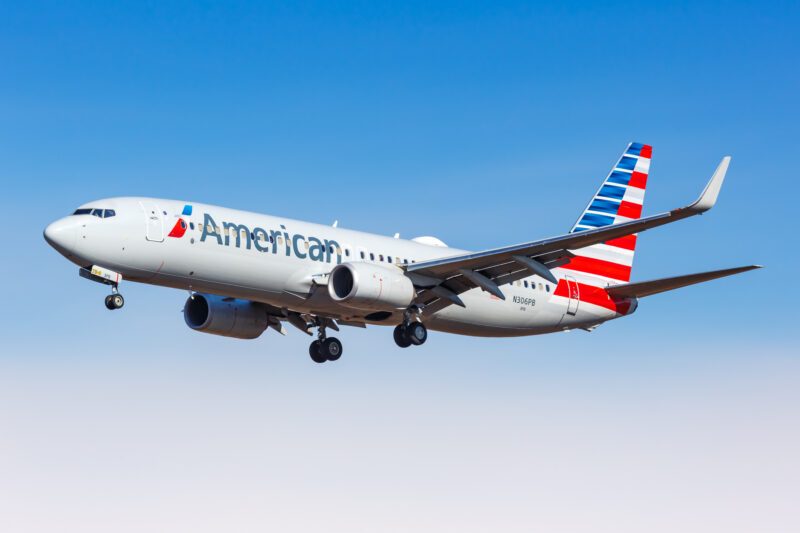
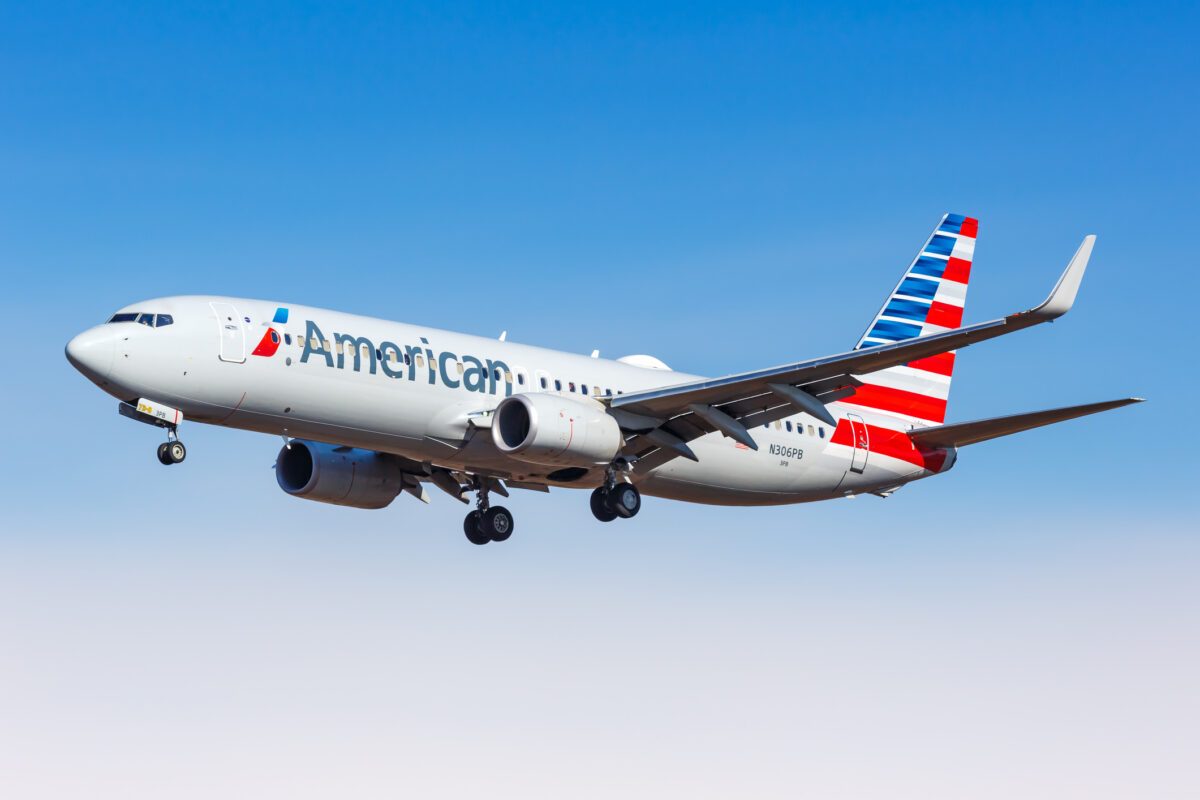
An American Airlines Boeing 737-800 flying from Dallas/Fort Worth International Airport (DFW) to New York John F. Kennedy International Airport (JFK) diverted to Philadelphia International Airport (PHL) after the crew reportedly determined that its remaining fuel no longer provided sufficient flexibility to continue waiting for New York.

The decision brought American Airlines flight AA1049 safely onto the ground at Philadelphia, but what passengers initially expected to be a short refueling stop became a lengthy operational recovery involving crew-duty limits, checked baggage, changing instructions, and difficulty securing another flight crew.
The aircraft eventually departed Philadelphia International Airport (PHL) at 10:57 p.m. and landed at New York John F. Kennedy International Airport (JFK) at 11:26 p.m. The final segment took only 29 minutes, according to flight-tracking records for AA1049.
Read our stories in your inbox
Two aviation newsletters. Zero fluff.
The diversion itself was handled conservatively and without incident. The greater disruption developed after landing, when the original crew could no longer complete the trip and American had to find qualified replacements for one of the shortest remaining flights in its network that evening.
American Airlines Flight AA1049
AA1049 Diverted After Reaching the New York Area
Flight AA1049 was scheduled to depart Dallas/Fort Worth International Airport (DFW) at 1:10 p.m. Central time and arrive at New York John F. Kennedy International Airport (JFK) at 5:56 p.m. Eastern time.
The flight operated with a Boeing 737-800 and traveled northeast toward the New York metropolitan area before turning away from JFK and heading southwest to Philadelphia International Airport (PHL).
A passenger aboard the flight said the captain explained that the aircraft needed additional fuel and would make a brief stop in Philadelphia before continuing to New York. American Airlines has not released the aircraft’s fuel figures or provided a detailed public account of the diversion.
The airline also has not confirmed whether the crew declared minimum fuel, requested priority handling, or formally declared a fuel emergency.
Those distinctions are important. A diversion made because the crew has exhausted its ability to accept additional delay is not the same as an aircraft being moments away from running out of fuel.
The Philadelphia–JFK Continuation Was Delayed by Hours
American scheduled the continuation from Philadelphia International Airport (PHL) to New York John F. Kennedy International Airport (JFK) for 6:56 p.m., with arrival expected at 7:53 p.m.
The Boeing did not leave Philadelphia until 10:57 p.m.
| Event | Time |
|---|---|
| Scheduled departure from Dallas/Fort Worth (DFW) | 1:10 p.m. CDT |
| Scheduled arrival at New York-JFK (JFK) | 5:56 p.m. EDT |
| Scheduled departure from Philadelphia (PHL) | 6:56 p.m. EDT |
| Actual departure from Philadelphia (PHL) | 10:57 p.m. EDT |
| Actual landing at New York-JFK (JFK) | 11:26 p.m. EDT |
| PHL–JFK airborne time | 29 minutes |
The aircraft landed at JFK approximately five-and-a-half hours after its original scheduled arrival.
The lengthy delay was not caused by the distance between Philadelphia and New York. The two airports are separated by approximately 80 nautical miles, making the final flight shorter than many routine domestic sectors.
The problem became one of crew availability rather than aircraft range or fuel.
Passenger Reports Point to a Preventive Fuel Diversion
According to the passenger account, the captain initially expected the aircraft to receive fuel at a remote position and return to the air within approximately an hour.
The crew reportedly advised passengers that a prompt departure would allow the original pilots to complete the flight before reaching their maximum permitted duty time.
As the refueling and ground process continued, that option disappeared.
Passengers were then informed that a replacement crew was expected from Chicago. Additional delays followed, and travelers reportedly received conflicting instructions about whether they could leave the aircraft and make their own way to New York.
American did not immediately provide a detailed explanation of the event when contacted by the original publication. The publicly available facts therefore combine verified flight-tracking information with announcements described by a passenger aboard AA1049.
There is no evidence that AA1049 suffered a fuel leak, engine problem, fuel-system malfunction, or other technical failure.
“Low Fuel” Does Not Mean the Tanks Were Nearly Empty
Descriptions of an airliner as “running low on fuel” can give readers the impression that the engines were close to shutting down.
Commercial airline fuel planning is designed to prevent an aircraft from reaching that position.
Under the FAA’s domestic airline fuel requirements, an aircraft cannot be dispatched or take off unless it has enough fuel to reach its destination, continue to the most distant required alternate airport, and then fly for another 45 minutes at normal cruising consumption.
The regulation establishes the minimum planning requirement. Airlines frequently carry additional fuel based on weather, congestion, expected routing, runway conditions, anticipated holding, or the captain’s and dispatcher’s assessment of the flight.
Fuel loaded in Dallas may have included several separate components:
Trip fuel to reach New York, contingency fuel for forecast uncertainty, fuel for an alternate airport when required, the federally mandated reserve, taxi fuel, and additional discretionary fuel.
A flight can consume more than expected because of a long taxi, indirect routing, stronger headwinds, thunderstorms, congestion, runway changes, air traffic vectors, or holding near the destination.
The safe response is to divert while sufficient options remain—not to continue until the reserve is almost depleted.
A Diversion Can Be Necessary Even Close to the Destination
AA1049 was reportedly around 30 minutes from landing when the decision was made to use Philadelphia International Airport (PHL).
That does not mean the airplane necessarily had enough fuel to continue safely to JFK.
The relevant calculation was not simply the direct flying time from the aircraft’s position to the runway. The pilots had to consider how long New York air traffic control might require them to wait, whether another approach delay could develop, and how much fuel would remain after landing.
An aircraft approaching a congested airport may receive additional vectors, a runway change, speed restrictions, or instructions to enter a holding pattern. Weather or traffic can also change faster than the flight crew’s remaining fuel margin.
Continuing toward JFK would gradually reduce the aircraft’s ability to reach another airport if conditions deteriorated.
Philadelphia offered a predictable landing, multiple runways, fuel, American Airlines ground support, maintenance capability, and replacement-crew possibilities. From a risk-management standpoint, it was a logical alternate even though the subsequent passenger recovery proved difficult.
Minimum Fuel Is Not an Emergency Declaration
The term “minimum fuel” has a specific meaning in U.S. aviation.
A crew may advise air traffic control of minimum fuel when the aircraft has reached a point where it can accept little or no additional delay upon arriving at its destination.
The FAA’s minimum-fuel guidance explains that this is an advisory condition rather than an emergency. It does not automatically give the aircraft priority over other traffic.
A low-fuel emergency is more serious.
If the remaining usable fuel means that priority handling is required to ensure a safe landing, the pilots should declare an emergency and report the fuel remaining in minutes.
No public information establishes that AA1049 did either.
The flight did not need to transmit an emergency code or be approaching fuel exhaustion for the captain to decide that continuing toward New York was no longer prudent. An airline crew can divert well before the situation meets the criteria for an emergency.
That is generally the preferable outcome.
The Crew-Duty Clock Continued Running
The captain reportedly warned passengers that the original crew could complete the Philadelphia–JFK segment only if the aircraft returned to the air quickly.
Airline pilots cannot continue working indefinitely because a diversion has left them only a short flight from the intended destination.
The FAA’s Part 117 flight and duty limitations restrict how long passenger-airline flight crews can remain on duty and how much rest they must receive. The maximum flight-duty period depends on the crew’s report time, the number of scheduled flight segments, circadian considerations, and other operational factors.
A pilot’s duty period begins before passengers board. It includes preflight preparation and continues through delays, flight operations, diversions, and time spent waiting for another departure.
By the time AA1049 reached Philadelphia, the pilots had already completed their preparation in Dallas, the ground movement at DFW, the flight toward New York, and the diversion to PHL.
Refueling and waiting in Philadelphia continued consuming their remaining duty time.
Once it became clear that the flight could not legally depart within the available window, American needed another Boeing 737-qualified crew.
The fact that the remaining flight would take only 29 minutes did not change the requirement. The new pilots needed enough legal duty time to complete boarding, taxiing, takeoff, the flight, arrival, and any additional delay that might occur.
Finding a Replacement Crew Is Not Always Simple
Philadelphia International Airport (PHL) is an important American Airlines hub, but the airline does not necessarily have unused Boeing 737 pilots waiting at the airport for an unexpected assignment.
A replacement crew must meet several conditions.
The pilots must be qualified and current on the Boeing 737, properly rested, available to begin another duty period, and able to reach the aircraft. Their assignment must also fit within the airline’s wider crew schedule without creating another uncovered flight elsewhere.
According to the passenger account, American initially expected to use a crew arriving from Chicago.
Passengers were later told that the newly assigned crew could not immediately be found, extending the delay.
That does not necessarily mean American literally lost track of its employees. The crew may have been delayed on another aircraft, completing required postflight duties, waiting for transportation between terminals, receiving a new assignment, or otherwise unavailable to board AA1049 immediately.
For travelers already several hours late and sitting less than 100 miles from New York, those operational details offered little comfort.
Checked Baggage Complicated Passenger Decisions
Some passengers reportedly wanted to abandon the final flight and travel from Philadelphia to New York by train or car.
That was a reasonable option for customers without connections at JFK or other reasons to retrieve something at the airport. Intercity rail service can move passengers from central Philadelphia to New York Penn Station in roughly the time AA1049 ultimately spent waiting for another crew.
The situation was more complicated for customers with checked luggage.
Passengers were initially told that those without checked bags might be permitted to leave, while those whose luggage remained aboard the aircraft would need to continue to JFK.
The guidance later changed, and all passengers were asked to deplane and wait in the terminal.
When a traveler decides not to use the final segment of a flight, American must update the passenger record and determine what will happen to any checked baggage. The bags may remain on the aircraft, require removal, or be sent to the original destination for later collection or delivery.
Removing selected bags from a fully loaded Boeing 737 can take time, particularly if they are buried beneath other luggage in the cargo compartment.
Passengers also needed to consider that a train would take them to Manhattan rather than New York John F. Kennedy International Airport (JFK). Anyone with a vehicle, checked bag, connecting flight, or family member waiting at JFK would still need transportation from Manhattan or Philadelphia to the airport.
The Boeing 737 Was N913AN
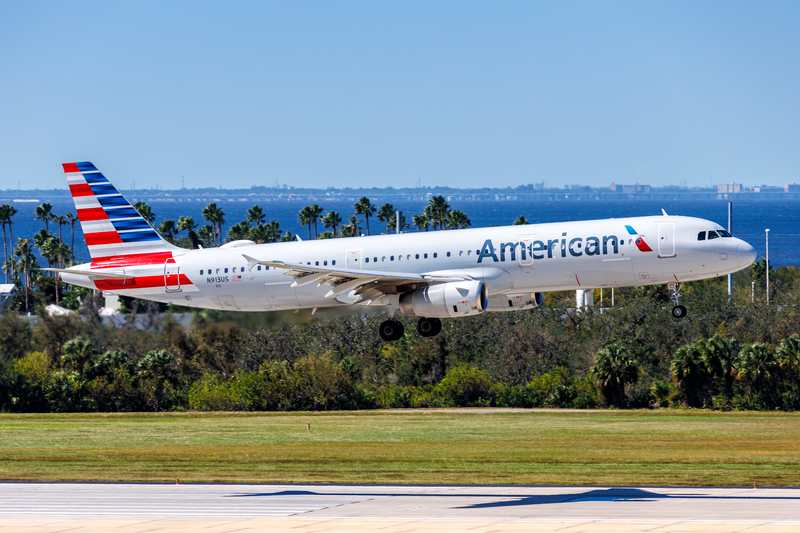
Flight AA1049 was operated by N913AN, a Boeing 737-823 with manufacturer serial number 29514.
The FAA aircraft registry identifies the airplane as a 1999-built Boeing 737-800 registered to American Airlines and powered by CFM International CFM56-series turbofan engines.
The “737-823” designation is Boeing’s historical customer-code version of the 737-800. It does not identify a separate major aircraft variant.
N913AN was approximately 27 years old at the time of the diversion. That makes it one of the older Boeing 737-800s in American’s fleet, but its age has no known connection to the fuel stop.
There is no indication that the aircraft consumed fuel abnormally or experienced a mechanical problem.
American configures its Boeing 737-800 fleet with 172 seats:
| Cabin | Seats |
| First Class | 16 |
| Main Cabin Extra | 24 |
| Main Cabin | 132 |
| Total | 172 |
The aircraft offers Wi-Fi, personal-device entertainment, and power connections. First Class has a published seat pitch of 37 inches, Main Cabin Extra provides approximately 34 inches, and standard Main Cabin seating offers approximately 30 inches.
The Boeing 737-800 is part of the 737 Next Generation family and should not be confused with the newer Boeing 737 MAX 8, even though American uses the same 172-seat configuration on both types.
Fuel Planning Is Shared by the Captain and Dispatcher
American Airlines flights operate under a dispatch system in which the captain and a licensed aircraft dispatcher share responsibility for the safe planning and monitoring of the flight.
Before departure, the dispatcher reviews weather, winds, expected routing, airport conditions, air traffic restrictions, notices to air missions, aircraft performance, alternate requirements, and fuel.
The captain reviews and accepts the dispatch release while retaining final authority over the operation of the aircraft.
After takeoff, the dispatcher continues monitoring the flight and can assist the crew with changing weather, alternate airports, rerouting, and operational decisions.
The decision to divert does not necessarily mean the airplane left Dallas with insufficient fuel. It may mean that actual conditions differed from the assumptions used when the flight was dispatched.
Determining exactly why AA1049’s fuel flexibility declined would require access to the operational flight plan, recorded air traffic communications, dispatch messages, actual taxi time, routing, weather conditions, and fuel readings from the cockpit.
None of those records has been released publicly.
Philadelphia Was Better Equipped Than Many Nearby Airports
The New York region is surrounded by several airports, but Philadelphia offered operational advantages for an American Airlines Boeing 737.
American maintains a significant presence at Philadelphia International Airport (PHL), including gates, ground crews, maintenance support, fueling contracts, baggage systems, and access to pilots and flight attendants.
A geographically closer airport might not have been able to refuel the aircraft quickly, support 172 passengers, provide maintenance if needed, or supply a replacement crew.
Philadelphia also gave American several recovery choices.
The airline could continue the aircraft to JFK, cancel the remaining segment and arrange ground transportation, move passengers to other flights, or allow some customers to leave and continue independently.
American ultimately chose to operate the aircraft to JFK, preserving the original destination for passengers and their checked baggage.
That decision required several additional hours on the ground but avoided terminating the flight in another city.
The Diversion and the Delay Were Separate Problems
It is useful to separate the two stages of the incident.
The diversion concerned fuel margins and the uncertainty surrounding the approach to New York John F. Kennedy International Airport (JFK). The pilots selected an airport where they could land safely before their options became more limited.
The extended delay developed after the aircraft was already on the ground.
Refueling may have been completed relatively quickly, but crew-duty limits prevented the original pilots from continuing. American then had to locate and assign a replacement crew while handling passengers who wanted different outcomes.
Some wanted to wait for the flight. Others preferred to take a train or arrange a car. Checked baggage prevented an immediate and simple solution for everyone.
The operationally safe decision and the poorly coordinated passenger experience can both be true.
Diverting to Philadelphia was prudent if the crew could not accept further delay near JFK. The changing announcements and four-hour wait indicate that American’s recovery plan was not ready to move at the same speed as the aircraft’s refueling.
Communication Became a Major Source of Frustration
Passengers can generally accept a disruption more easily when they understand the problem and receive a stable plan.
The reported sequence aboard AA1049 changed repeatedly.
Travelers were told that the stop would be brief. They were then warned that the original crew might time out. A replacement crew was reportedly coming from Chicago. Passengers without bags might be able to leave. Those with checked luggage needed to remain. Everyone was later asked to deplane. The replacement crew then could not immediately be located.
Each announcement may have been accurate when it was made. Taken together, they created the impression that American had no settled plan.
Airline irregular operations often evolve quickly. The station may be waiting for instructions from dispatch, crew scheduling, operations control, maintenance, baggage services, and airport personnel at the same time.
Passengers do not see those internal discussions. They experience only the delay and the latest announcement.
In this case, the lack of a consistent message became nearly as frustrating as the diversion itself.
Bottom Line
American Airlines flight AA1049 diverted from New York John F. Kennedy International Airport (JFK) to Philadelphia International Airport (PHL) after the crew reportedly determined that the Boeing 737-800’s remaining fuel did not provide enough flexibility to continue waiting for New York.
There is no evidence that the aircraft was close to exhausting its fuel or that it suffered a fuel-system malfunction.
American has not confirmed whether the pilots declared minimum fuel or a fuel emergency. The available information supports a preventive diversion made before the situation became critical.
The aircraft, 1999-built Boeing 737-800 N913AN, was refueled in Philadelphia. The original crew then reached the limits of its available duty period, requiring American to find replacement pilots.
Changing instructions involving checked baggage, passenger deplaning, ground transportation, and the replacement crew extended the stop to more than four hours.
AA1049 finally departed Philadelphia International Airport (PHL) at 10:57 p.m. and landed at New York John F. Kennedy International Airport (JFK) at 11:26 p.m. The remaining flight took only 29 minutes.
The incident illustrates how a sensible operational decision can produce a disproportionate passenger disruption. The pilots preserved their fuel options by diverting to a well-equipped American Airlines hub, but the carrier was not positioned to move the airplane, crew, baggage, and passengers onward quickly.
What began as a routine fuel stop less than 100 miles from New York ultimately became an all-evening delay—not because the Boeing could not complete the final flight, but because the airline’s crew and recovery system could not complete it on the original timetable.
Keep reading FlyMag
Get the Daily Brief in the morning or the Route Watch weekly recap on Fridays. Or both.