DHS Eyes a 24/7 Government-Owned Air Fleet Built Around Boeing 737-700s
The U.S. Department of Homeland Security is exploring the creation of a government-owned aircraft fleet that could operate around the clock for deportation flights, emergency response missions, medical evacuations, and senior-official transportation.
The proposal has been described as a possible DHS “airline,” but that term requires some qualification. DHS is not proposing a conventional passenger carrier staffed and operated by government pilots. Instead, the department is considering a government-owned, contractor-operated structure in which the aircraft would belong to the federal government while a private aviation company supplied the crews, maintenance, operational control, training, and logistical support.
According to a Bloomberg Law report, the contemplated fleet would consist of seven Boeing 737-700s or comparable aircraft and two C-37Bs or equivalent Gulfstream G650ERs. The aircraft would be available 24 hours a day, seven days a week, including for missions requiring deployment with little advance notice.
DHS Is Still Studying the Market
DHS formally outlined the concept in a federal sources-sought notice published on July 8, 2026. Responses from interested contractors are due July 22.
A sources-sought notice is a market-research tool rather than an aircraft operating contract. It allows an agency to determine which companies possess the personnel, regulatory authority, financial resources, maintenance infrastructure, and worldwide operating experience needed to carry out the proposed work.
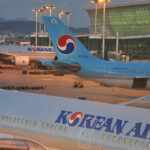
The federal procurement notice calls for what DHS describes as government-owned, contractor-operated, or GOCO, aircraft. The selected contractor would be responsible for the full operational lifecycle of the fleet, including aircraft reconstitution or modification, pilot and crew training, dispatch, maintenance, spare parts, mission planning, and worldwide logistical support.
DHS says the aircraft could be tasked with:
- Immigration removal and voluntary repatriation flights
- High-risk charter operations
- Emergency and crisis-response transportation
- Medical evacuation missions
- Movement of senior government officials
- Continuity-of-government and diplomatic operations
The proposed operator would need to support flights within the continental United States and to international destinations. The notice also anticipates operations at remote, austere, or minimally supported airfields, placing greater demands on flight planning, maintenance reliability, ground handling, and crew preparation.
No primary operating base or airport has been publicly selected. DHS is inviting companies to propose a single central hub, several regional hubs, or a hub-and-spoke structure.

The Proposed Nine-Aircraft Fleet
The aircraft types indicate that DHS is considering two substantially different mission profiles.
| Quantity | Proposed Aircraft | Likely Primary Role |
|---|---|---|
| 7 | Boeing 737-700 or comparable narrowbody | Deportation, repatriation, charter, medical, and crisis-response flights |
| 2 | C-37B or Gulfstream G650ER equivalent | Senior-official, diplomatic, continuity, and rapid-response transportation |
The Boeing 737-700s would provide the main passenger-carrying capacity. The smaller Gulfstream aircraft would be better suited to urgent missions carrying limited numbers of officials or specialized personnel over long distances.
Although the fleet would contain only nine aircraft, maintaining continuous worldwide availability would be operationally demanding. Aircraft would periodically be unavailable for inspections, heavy maintenance, modifications, or unscheduled repairs. A contractor would therefore need a robust spare-aircraft plan or another means of maintaining mission coverage when one of the government aircraft could not fly.
The C-37B Is Not a Gulfstream G650ER
The procurement language identifies “C-37B or equivalent Gulfstream G650ER” aircraft, but the two types should not be treated as versions of the same airplane.
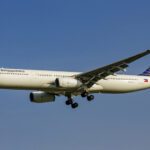
The U.S. Air Force C-37B is the military derivative of the Gulfstream G550. It was developed as a long-range command and executive transport capable of carrying senior government and military leaders.
The C-37B generally accommodates up to 12 passengers and a flight crew of approximately five, depending on the mission configuration. The aircraft has an estimated range of about 6,750 nautical miles and can operate at altitudes of up to 51,000 feet. Military examples may also carry secure communications equipment that allows officials to remain connected while airborne.
The Gulfstream G650ER, by comparison, is a newer and larger ultra-long-range business jet. Gulfstream lists a range of approximately 7,500 nautical miles at Mach 0.85 or 6,400 nautical miles at Mach 0.90. Its maximum operating speed is Mach 0.925.
Powered by two Rolls-Royce BR725 turbofans, the G650ER offers substantially greater speed and range than the G550-based C-37B. Its cabin can also be configured for larger delegations, sleeping areas, conference spaces, secure communications, or medical equipment.
DHS appears to be using the G650ER as a performance benchmark rather than suggesting that it is literally a C-37B. A contractor could potentially propose another aircraft if it meets the department’s range, payload, communications, reliability, and availability requirements.
Why DHS Is Targeting the Boeing 737-700
The Boeing 737-700 is a logical candidate for the larger portion of the fleet because it combines substantial passenger capacity with relatively broad airport compatibility.
Part of Boeing’s highly successful 737 Next Generation family, the 737-700 entered commercial service in the late 1990s. Passenger configurations typically range from approximately 126 seats in a conventional two-class layout to as many as 149 seats in a high-density, single-class cabin.
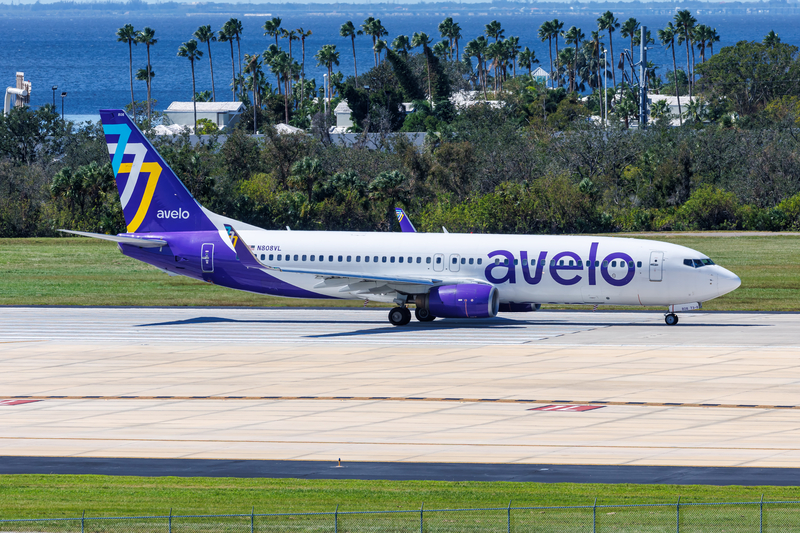
The former Avelo Airlines aircraft associated with DHS were operated in high-density configurations carrying as many as 149 passengers. The final government configuration has not been disclosed and could change if DHS installs specialized security equipment, medical provisions, additional lavatories, crew-rest facilities, or different seating.
The aircraft are powered by CFM International CFM56-7B turbofans, an engine family used extensively across the global 737 Next Generation fleet. The widespread availability of trained mechanics, spare parts, ground equipment, and qualified pilots could make the type easier to support than a less-common aircraft.
The 737-700 also offers better runway performance than larger variants such as the 737-800 or 737-900ER. That may prove useful when operating into secondary airports or destinations with limited infrastructure.
However, it is not an ultra-long-range aircraft. Missions from the United States to distant points in Africa, Asia, or parts of the Middle East could require fuel stops, crew changes, or a staged operating plan. DHS’s willingness to consider a multiple-hub or hub-and-spoke network may partly reflect that limitation. That is an operational inference based on the aircraft’s capabilities; DHS has not published a planned route map.
Six Former Avelo 737s Are Already Connected to DHS
The fleet plan did not begin with the July 2026 procurement notice.
In December 2025, DHS entered into an agreement valued at nearly $140 million with Virginia-based Daedalus Aviation Corp. for the acquisition of six Boeing 737 aircraft intended for immigration-removal operations. DHS said ownership could produce approximately $279 million in savings through more efficient use of the aircraft, although the department has not publicly released a complete lifecycle-cost comparison covering crews, maintenance, modifications, fuel, insurance, training, and long-term sustainment.
All six aircraft were formerly operated by Avelo Airlines and are Boeing 737-700s built between 2003 and 2008. Before their time at Avelo, several had flown for Southwest Airlines, while others had histories with Mexican operators.
Publicly available fleet and FAA information associates the following aircraft with the DHS program:
| DHS Registration | Manufacturer Serial Number | Variant | Public Registry Position |
| N474US | 36623 | Boeing 737-7H4 | Registered to DHS |
| N475US | 33789 | Boeing 737-752 | Registered to DHS |
| N476US | 36626 | Boeing 737-7H4 | Associated with former registration N703VL; transition not fully reflected across public records |
| N477US | 33785 | Boeing 737-752 | Registered to DHS |
| N478US | 30677 | Boeing 737-7H4 | DHS registration reserved while transfer from N708VL remained pending |
| N480US | 29843 | Boeing 737-7H4 | Registered to DHS |
The suffixes in designations such as 737-7H4 and 737-752 are Boeing customer codes. They identify the airline or leasing customer for which an aircraft was originally manufactured but do not indicate a major technical difference between the airplanes. All remain members of the 737-700 family.
As of mid-July 2026, FAA registry records clearly showed N474US, N475US, N477US, and N480US registered to the U.S. Department of Homeland Security, care of Daedalus Aviation. Other aircraft remained in varying stages of tail-number reservation or registry transition.
That distinction is important. The six-aircraft acquisition is well documented, but the assignment of a planned government registration does not necessarily mean that the aircraft has completed every modification, airworthiness, ownership, and operational-approval step required before entering regular service.
From Avelo Charters to Government Ownership
DHS and U.S. Immigration and Customs Enforcement have traditionally relied on charter companies rather than owning a dedicated fleet.
Under the charter model, the government purchases aircraft capacity, crews, and operating support from private carriers. That offers flexibility because the government does not need to own, maintain, or store aircraft when they are not required. It can also draw on multiple operators and aircraft types as demand changes.
The disadvantage is that aircraft may not always be immediately available. Charter pricing can rise during periods of high demand, and the government has less direct control over aircraft configuration, scheduling, positioning, and standby readiness.
Avelo Airlines had operated immigration-related charter flights, including missions from Phoenix-Mesa Gateway Airport (AZA), but withdrew from that work in January 2026. The airline said the program did not deliver enough predictable revenue to offset its cost and operational complexity.
Owning aircraft could give DHS more direct control over capacity without requiring the department to establish its own flight department. The contractor would still provide the aviation expertise, but the aircraft could remain dedicated to government missions rather than being drawn from an airline’s commercial or charter fleet.
Ownership Does Not Eliminate the Cost of Operating an Airline
Purchasing aircraft addresses only one part of the expense.
A nine-aircraft fleet operating worldwide on a 24/7 basis would require pilots, flight attendants, dispatchers, maintenance technicians, security personnel, medical support, schedulers, training programs, spare engines, replacement components, hangar access, fuel contracts, ground handlers, and international operating permits.
Older 737-700s can be economically attractive to acquire because their market values are considerably lower than those of new aircraft. Their economics become less straightforward when utilization is irregular or when airplanes must remain on standby for extended periods.
Airliners generate the greatest economic value when they fly consistently. A government mission fleet may instead be judged by availability. An aircraft that spends much of the week on the ground could still be considered valuable if it is capable of departing within hours during a crisis.
The contractor would also need to maintain regulatory authority to operate the aircraft. DHS has not publicly specified whether the eventual operation would be conducted under an existing Federal Aviation Administration certificate, a specialized government framework, or a combination of civil and public-aircraft rules depending on the mission.
That regulatory structure will help determine crew qualifications, maintenance standards, passenger-handling procedures, duty-time limitations, and the extent to which ordinary commercial aviation requirements apply.
Former Secretary Noem Championed the Concept
The aircraft-ownership initiative began taking shape during former DHS Secretary Kristi Noem’s tenure.
President Donald Trump dismissed Noem in March 2026. Former Oklahoma senator Markwayne Mullin was subsequently confirmed by the Senate and sworn in as the new secretary of homeland security on March 24. The department has continued examining the government-owned fleet concept under Mullin’s leadership.
The July market-research notice therefore suggests the program has moved beyond an idea associated with a single department leader. Nevertheless, it does not guarantee that DHS will award a fleetwide operating contract in its current form.
The department could alter the number or type of aircraft, divide the work among multiple contractors, continue using a mixture of owned and chartered airplanes, or decide that the proposed structure is too expensive or operationally complex.
Key Questions Remain Unanswered
DHS has not disclosed where the aircraft would be based, how frequently it expects them to fly, or whether all seven 737s would be operational simultaneously.
The six-aircraft Daedalus acquisition also leaves an obvious fleet-planning question: where will the seventh 737-700 or equivalent aircraft identified in the new notice come from?
Other unresolved issues include the final passenger configuration, the extent of medical and security modifications, the required number of spare aircraft, and whether the two long-range Gulfstreams would be newly acquired, leased, transferred from another government agency, or supplied by the contractor.
The cost comparison will also attract scrutiny. Government ownership may reduce per-mission charter expenses, but only if the savings exceed the fixed costs of maintaining aircraft, crews, infrastructure, and continuous availability.
Bottom Line
DHS is taking concrete steps toward creating a dedicated government-owned air fleet, but it has not yet established a conventional airline or selected the contractor that would operate the aircraft.
The proposed structure calls for seven Boeing 737-700s or comparable narrowbodies to perform deportation, repatriation, medical, and emergency missions, supported by two C-37B-class or Gulfstream G650ER-class business jets for long-range official transportation.
Six former Avelo 737-700s are already associated with the department, although public FAA records show that some registration changes remain in progress. The July 2026 procurement notice would expand that acquisition into a broader, continuously available aviation operation.
From an aviation standpoint, the plan’s success will depend less on purchasing the aircraft than on sustaining them. Worldwide dispatch reliability, crew availability, regulatory certification, maintenance coverage, spare-aircraft planning, and operating-base selection will determine whether DHS can achieve true 24-hour readiness—or simply replace variable charter expenses with the substantial fixed costs of running a dedicated government fleet.