Delta Moves Toward Daily Los Angeles-Manila A350 Flights for Summer 2027
Delta Air Lines is moving toward launching daily nonstop service between Los Angeles International Airport (LAX) and Ninoy Aquino International Airport in Manila (MNL) during the summer of 2027.

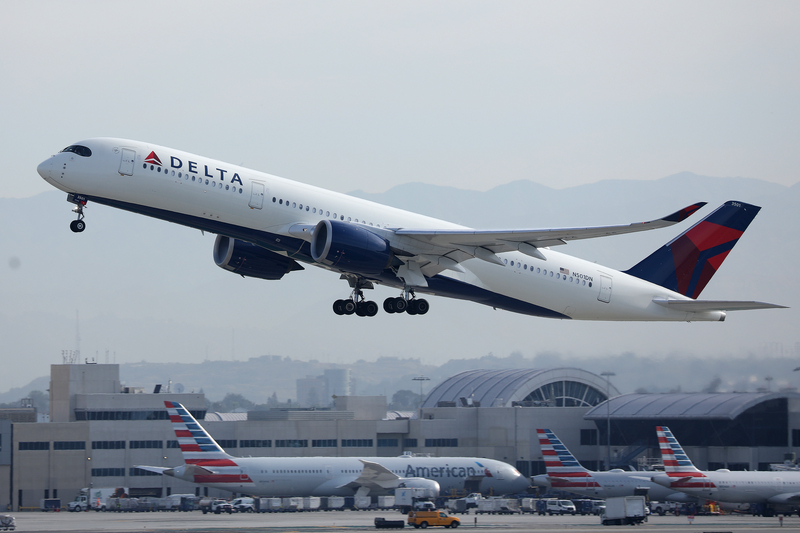
The proposed route would be operated by the Airbus A350-900, giving Delta its first nonstop service between the continental United States and the Philippines. It would also return Delta-operated aircraft to Manila (MNL) for the first time since the airline ended its Tokyo-Narita–Manila operation in March 2020.
Delta placed the plan into the public record in a March 11, 2026, filing with the U.S. Department of Transportation. A subsequent report based on internal employee communication said the airline has decided to move ahead with the service and is preparing a formal announcement.
At the time of publication, however, Delta had not issued a public route announcement, opened reservations, or published flight numbers and departure times. The service is considerably more than an industry rumor, but it is not yet a fully published and bookable route in Delta’s schedule.

Delta Disclosed the Manila Route in a Regulatory Filing
Delta revealed the Los Angeles (LAX)-Manila (MNL) plan while responding to Philippine Airlines’ application for authority to begin nonstop service between Manila (MNL) and Chicago O’Hare International Airport (ORD).
In its filing, Delta said it was “pursuing plans” to begin daily Airbus A350-900 service from Los Angeles (LAX) to Manila (MNL) in summer 2027. The airline said the flight would provide more competition, additional routing options, and expanded connectivity between the United States and the Philippines.
Delta was not simply announcing a route for marketing purposes. It was using the planned service to raise a broader bilateral-access issue.
The airline argued that U.S. carriers had encountered difficulty obtaining commercially viable slots, gates, and airport infrastructure at Manila (MNL). Delta asked the Department of Transportation to defer Philippine Airlines’ Chicago application until the Philippine government provided assurances that Delta could secure the access needed to operate its Los Angeles flight.
That regulatory context remains important. A daily long-haul flight requires more than general permission to serve an airport. Delta needs arrival and departure slots at times that align with its Los Angeles connecting network, available gates capable of handling the Airbus A350, and sufficient ground time to service and dispatch the aircraft reliably.
An unattractive middle-of-the-day slot at Manila (MNL), for example, could weaken connections, reduce aircraft utilization, or require an extended ground stop. Delta’s language suggests that the airline considers commercially useful airport access a central condition of the route rather than a minor administrative detail.
What Delta Has Confirmed—and What It Has Not
The public filing provides four firm elements of Delta’s plan:
| Route detail | Current status |
|---|---|
| Origin | Los Angeles International Airport (LAX) |
| Destination | Ninoy Aquino International Airport (MNL) |
| Planned frequency | Daily |
| Aircraft | Airbus A350-900 |
| Intended launch period | Summer 2027 |
| Exact launch date | Not announced |
| Flight numbers and times | Not announced |
| Cabin configuration | Not announced |
| Reservations opening date | Not announced |
Delta’s wording in the regulatory filing was intentionally careful. It said the airline was “pursuing plans,” rather than announcing a finalized schedule. The reported internal update indicates that planning has progressed since March, but Delta has not yet supplied enough public information to evaluate the final schedule or book the service.

The distinction matters because international routes can be delayed or adjusted before tickets go on sale. Airport slots, aircraft delivery schedules, crew planning, maintenance requirements, foreign approvals, and commercial agreements can all influence the final launch.
The A350-900 Is the Logical Aircraft for Manila
The approximately 7,300-mile journey between Los Angeles (LAX) and Manila (MNL) will be one of Delta’s longer transpacific missions. The westbound flight will generally face less favorable winds and require more time and fuel than the eastbound return to California.
Delta’s Airbus A350-900 fleet is designed for precisely this type of operation. The twin-engine widebody measures 219 feet, 2 inches long, has a wingspan of 212 feet, 5 inches, and is powered by Rolls-Royce Trent XWB-84 turbofans producing approximately 84,000 pounds of thrust each.
The A350’s airframe contains extensive composite and titanium construction, reducing weight while improving corrosion resistance and long-range efficiency. Its aerodynamic wing can alter its profile during flight to reduce drag, while the Trent XWB engines were developed specifically for the A350 family.
Delta currently publishes two A350-900 passenger layouts:
| Cabin | 306-seat A350 | 275-seat A350 |
|---|---|---|
| Delta One | 32 | 40 |
| Delta Premium Select | 48 | 40 |
| Delta Comfort | 36 | 36 |
| Main Cabin | 190 | 159 |
| Total | 306 | 275 |
The 275-seat aircraft is more premium-heavy and has a longer published operating range, while the 306-seat version provides greater economy and premium-economy capacity. Delta has not identified which configuration will operate to Manila (MNL).
That decision will reveal a great deal about Delta’s expectations for the route.
A 306-seat aircraft would give the airline more inventory for visiting-friends-and-relatives traffic and price-sensitive leisure passengers. The 275-seat version would reduce the number of economy seats while providing eight additional Delta One suites and greater payload-range flexibility.
Delta could also rotate both configurations through the route. Airlines frequently change individual aircraft assignments based on maintenance, seasonal demand, cargo requirements, and fleet availability.
Published range figures should not be treated as firm operating limits. Dispatch planners must consider passenger and baggage weight, cargo, forecast winds, airspace restrictions, alternate airports, reserve fuel, runway conditions, and the individual aircraft’s performance. The final cabin layout and scheduled block time will help indicate how conservatively Delta intends to plan the mission.
This Is an A350-900 Route, Not an A350-1000 Route
Delta is scheduled to begin receiving the larger Airbus A350-1000 in early 2027, close to the proposed Manila launch. That timing may lead to assumptions that the airline’s newest flagship will operate the route.
Delta’s filing specifically identifies the Airbus A350-900, not the A350-1000.
The airline has 20 A350-1000s on firm order. The longer aircraft will provide more premium seating, greater cargo volume, and higher total capacity than Delta’s A350-900s. It will also be powered by the more powerful Rolls-Royce Trent XWB-97 rather than the Trent XWB-84 used on the smaller model.
The A350-900 may nevertheless be the more appropriate aircraft for Los Angeles (LAX)-Manila (MNL). It offers sufficient range while carrying fewer seats and generating a lower total trip cost than the larger A350-1000.
That matters in a market where Delta will face an entrenched incumbent operating considerably more than one daily flight. The A350-900 allows Delta to enter with meaningful capacity without immediately committing one of its largest and newest aircraft.
Future use of the A350-1000 is possible, particularly during peak holiday periods, but no such deployment has been announced.
Why Los Angeles Is Delta’s Best Manila Gateway
Los Angeles International Airport (LAX) combines a large local market with an extensive Delta network capable of feeding passengers from across the United States.
Delta describes itself as the largest carrier at LAX, with approximately 166 peak-day departures to 61 destinations and 20 international routes operated by Delta and its partners. The airline has also made substantial investments in its terminals, premium check-in facilities, Delta Sky Club, and Delta One Lounge.
Those domestic flights will be essential to the Manila service.
Delta will not rely only on passengers beginning their journeys in Southern California. A well-timed flight could attract travelers from cities such as Phoenix (PHX), Denver (DEN), Las Vegas (LAS), Salt Lake City (SLC), Portland (PDX), San Diego (SAN), and numerous smaller markets that do not have nonstop service to the Philippines.
Los Angeles also has one of the country’s largest Filipino communities. Census-based estimates place the Filipino-origin population of Los Angeles County at more than 330,000, creating a substantial base of travelers visiting friends and relatives in the Philippines.
That local demand is valuable because it reduces Delta’s dependence on connecting traffic. Passengers beginning or ending their journeys in Los Angeles generally produce less operational complexity than connections and can be particularly important when disruptions threaten short connection windows.
LAX also fits Delta’s broader Pacific expansion. The airline launched daily nonstop Airbus A350-900 service between Los Angeles (LAX) and Hong Kong International Airport (HKG) in June 2026. Its recent growth has also included Melbourne Airport (MEL) and the restoration of service to Shanghai Pudong International Airport (PVG).
Manila would add another major Asian destination that can support both local Southern California demand and connections through Delta’s West Coast gateway.
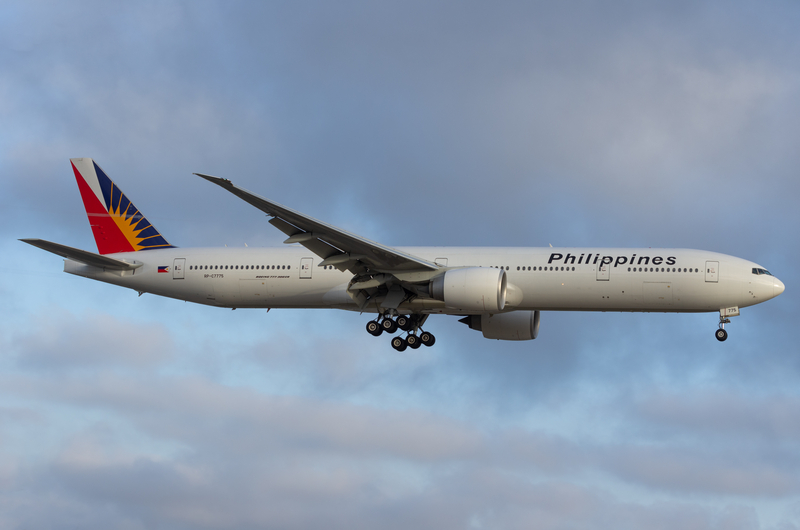
Use the credit line below then tell us where you used the image and get your free credit.
ID 240491625 © Ajdibilio | Dreamstime.com
Philippine Airlines Will Be a Formidable Competitor
Delta will not enter an underserved Los Angeles-Manila market.
Philippine Airlines increased its nonstop schedule between Manila (MNL) and Los Angeles (LAX) from 14 to 18 weekly flights beginning June 1, 2026. The carrier therefore offers two daily flights, with four additional weekly frequencies during high-demand periods.
If Philippine Airlines maintains 18 weekly flights and Delta adds a daily service, the market would grow to 25 weekly nonstop departures in each direction.
Philippine Airlines has several structural advantages. It is the national carrier of the Philippines, has decades of recognition within Filipino communities, and can connect passengers from Manila (MNL) to 29 domestic destinations. Its local network allows customers from cities such as Cebu (CEB), Davao (DVO), Iloilo (ILO), Bacolod (BCD), and Caticlan (MPH) to travel on one airline throughout the journey.
Delta has not announced a Philippine domestic partner in connection with the proposed route. Unless that changes, the airline may be strongest among passengers traveling to Metro Manila itself or those willing to arrange a separate domestic connection.
Philippine Airlines is also preparing to join the oneworld alliance. The carrier signed a memorandum of understanding in June 2026 and is expected to become the alliance’s 16th member. Once integration is complete, eligible passengers will be able to earn and redeem miles across oneworld carriers and receive reciprocal status benefits.
That will strengthen Philippine Airlines’ appeal to American Airlines, Alaska Airlines, Cathay Pacific, Japan Airlines, and other oneworld customers.
Delta will counter with its own advantages: the SkyMiles program, corporate contracts, American Express partnership, premium facilities at Los Angeles (LAX), and a substantial domestic network capable of delivering passengers to the flight.
United Has Already Expanded U.S.-Manila Flying
Delta will not be the only U.S. carrier operating nonstop to the Philippines.
United Airlines launched service between San Francisco International Airport (SFO) and Manila (MNL) in October 2023. It was the first nonstop flight between the continental United States and the Philippines operated by a U.S. airline.
United subsequently added a second daily San Francisco (SFO)-Manila (MNL) flight beginning October 25, 2025, further strengthening its position in the market.
United’s operation is built around its large San Francisco hub, which provides extensive connections throughout the western United States. The airline also has a longstanding presence in the western Pacific, including services from Guam (GUM), giving it a broader network position in the region than Delta.
Delta will not compete with United on the same nonstop city pair. Its direct competitor between Los Angeles (LAX) and Manila (MNL) will be Philippine Airlines.
The two U.S. carriers will still compete for passengers traveling between the Philippines and cities throughout the United States. A passenger from Denver, Chicago, Boston, or Washington may be able to choose between a United itinerary through San Francisco and a Delta itinerary through Los Angeles.
United’s decision to double San Francisco-Manila service demonstrates the depth of U.S.-Philippines demand. It does not guarantee that Delta will earn acceptable returns at LAX, but it provides evidence that a U.S. carrier can support substantial nonstop capacity to Manila.
Delta Is Moving Beyond Its Seoul Connection Model
For much of the past decade, Delta’s Asia strategy has centered on its joint venture with Korean Air at Incheon International Airport (ICN).
Delta and Korean Air connect more than 290 destinations in the Americas with approximately 80 destinations in Asia. The airlines say more than 2,000 connecting passengers travel through Seoul-Incheon (ICN) in each direction every day.
That partnership gives Delta access to a far larger Asian network than it could economically operate with its own aircraft. A passenger can fly Delta from the United States to Seoul (ICN) and connect to a Korean Air flight serving destinations throughout East and Southeast Asia.
The proposed Manila service does not represent a retreat from that strategy. Instead, it suggests Delta believes several Asian markets are large enough to support both nonstop service and connecting options through Seoul.
A nonstop Los Angeles (LAX)-Manila (MNL) flight would eliminate the additional connection at Incheon for passengers traveling to the Philippine capital. It would also give Delta direct control over the schedule, onboard product, revenue management, cargo capacity, and customer relationship throughout the transpacific journey.
The recent launch of Los Angeles (LAX)-Hong Kong (HKG) follows the same logic. Delta can continue using its Korean Air joint venture for broad regional coverage while operating its own aircraft to selected high-volume markets.
The Route Restores Delta Service to Manila After Seven Years
Delta’s relationship with Manila predates the current proposal by several decades through the network it inherited from Northwest Airlines.
Northwest operated a major hub at Tokyo Narita International Airport (NRT), connecting U.S. gateways with cities throughout Asia. Following the Delta-Northwest merger, Delta continued operating several intra-Asian routes from Narita, including Manila.
Delta’s final Narita (NRT)-Manila (MNL) service was scheduled to operate through March 27, 2020. The airline originally intended to replace it with service between Seoul-Incheon (ICN) and Manila (MNL), but the COVID-19 pandemic disrupted that transition.
The 2027 route would therefore return Delta-operated aircraft to Manila after an absence of approximately seven years.
The new service would be fundamentally different from the old operation. Narita-Manila was a shorter fifth-freedom sector connected to Delta’s former Tokyo hub. Los Angeles-Manila would be a full transpacific flight originating at a major U.S. gateway and designed around Delta’s domestic network.
Manila Airport Access Remains a Critical Issue
Ninoy Aquino International Airport (MNL) is the most important unresolved element in Delta’s plan.
Delta’s regulatory filing specifically cited difficulty obtaining suitable slots, gates, and supporting infrastructure. The airline did not merely request legal authority to fly to the Philippines; it requested assurances that it could operate at Manila under commercially viable conditions.
Long-haul schedule timing can determine whether a route succeeds.
At Los Angeles (LAX), Delta will want a departure that can receive passengers from domestic flights without requiring excessively long connections. The return from Manila (MNL) must arrive in California early enough for passengers to connect onward but not so early that customs, gates, and connecting schedules become impractical.
The airline must also use the A350 efficiently. A schedule that leaves the aircraft parked at Manila for much of the day raises the total cost of the route because a high-value widebody is not producing revenue.
Ground infrastructure is equally important. Delta needs a reliable widebody gate, adequate baggage facilities, premium check-in services, catering, maintenance support, crew transportation, and procedures capable of supporting a daily departure.
Until Delta publishes the final schedule, it is impossible to determine whether it secured the timings it originally sought.
Long-Haul Economics Will Be Closely Watched
Los Angeles-Manila has many qualities airlines look for in a long-haul route: a large local community, strong family ties, considerable baggage demand, year-round traffic, and limited nonstop competition beyond the incumbent flag carrier.
It also presents significant commercial risk.
Ultra-long transpacific flights consume large amounts of fuel and require multiple flight crews. The aircraft is committed to one rotation for more than a day, limiting opportunities to recover from maintenance delays or schedule disruptions.
The westbound flight from Los Angeles (LAX) can be particularly demanding during periods of strong winds. If payload restrictions are required, Delta may have to limit cargo or passenger baggage to remain within aircraft-performance requirements.
The passenger mix will also matter. Visiting-friends-and-relatives traffic can provide strong volume but is frequently price-sensitive. Delta will need sufficient Delta One, Premium Select, cargo, and loyalty-related revenue to support the economics of a daily A350 operation.
Philippine Airlines’ 18 weekly frequencies will place further pressure on fares. The incumbent can offer more departure choices and extensive domestic connections beyond Manila (MNL), while Delta must persuade passengers that its Los Angeles network, premium products, and loyalty ecosystem justify choosing the new entrant.
The Formal Schedule Will Reveal Delta’s Real Strategy
The announcement expected from Delta should answer several questions that cannot be resolved from the regulatory filing.
The most important will be the exact departure times. Those will show which domestic connections Delta intends to prioritize at Los Angeles (LAX) and whether the aircraft will remain at Manila (MNL) for a short turnaround or an extended daylight layover.
The cabin configuration will indicate whether Delta views the route primarily as a high-volume family and leisure market or as a premium-heavy long-haul opportunity.
A 306-seat aircraft would place more seats into direct competition with Philippine Airlines. A 275-seat A350 would represent a more conservative capacity decision while offering a larger Delta One cabin.
The initial operating season will also be important. “Summer 2027” could refer to the broader International Air Transport Association summer season beginning in late March, or to the traditional U.S. summer travel period beginning in May or June.
Until Delta publishes a date, flight numbers, and timetable, none of those possibilities should be presented as confirmed.
Bottom Line
Delta Air Lines has advanced plans to begin daily nonstop Airbus A350-900 service between Los Angeles International Airport (LAX) and Ninoy Aquino International Airport in Manila (MNL) during summer 2027.
The route is supported by a formal Department of Transportation filing, and a subsequent report says Delta has informed employees that the service is moving forward. However, Delta had not issued a public announcement or opened reservations at the time of publication.
What is confirmed is limited but significant: Los Angeles (LAX), Manila (MNL), daily frequency, summer 2027, and the Airbus A350-900.
The route would restore Delta-operated service to Manila after approximately seven years and become the airline’s first nonstop link between the continental United States and the Philippines. It would also expand Delta’s emerging strategy of operating directly to selected Asian cities rather than relying almost entirely on connections through Korean Air’s Seoul-Incheon hub.
Los Angeles is a logical gateway because of Southern California’s large Filipino community, Delta’s growing LAX network, and the availability of domestic connecting traffic. The airline will nevertheless face a formidable competitor in Philippine Airlines, which already operates 18 weekly flights on the route and offers extensive domestic connectivity beyond Manila.
Delta’s A350-900 has the range and cabin flexibility required for the mission, but the airline has not disclosed whether it will use its 275-seat or 306-seat configuration. Nor has it confirmed departure times, flight numbers, or a precise launch date.
The route should therefore be described as a firm plan awaiting a full commercial announcement—not yet as a published flight available for booking. Once Delta releases the schedule, the timing, aircraft configuration, and Manila slot allocation will reveal whether the airline is making a cautious strategic entry or mounting a full-scale challenge to Philippine Airlines in one of the most important transpacific markets from Los Angeles.