Sun Country Name Will Disappear as Allegiant Moves Toward a Single Airline
Sun Country Airlines’ 43-year run as an independent passenger brand is approaching its final chapter.

Allegiant plans to retire the Sun Country name after the two carriers complete their operational integration and begin flying under a single Federal Aviation Administration operating certificate. Until then, passengers will continue to encounter separate airlines, booking platforms, loyalty programs, flight numbers, aircraft liveries, and operating procedures.
Kristen Schilling-Gonzales, Allegiant’s vice president of network planning and charters, confirmed the branding decision during an interview with USA Today. Once the combined operation receives its single operating certificate, she said, “it will be the Allegiant brand going forward.”
Schilling-Gonzales estimated that obtaining the unified certificate could take 18 to 24 months. Based on that guidance, the Sun Country passenger brand could disappear sometime between early and mid-2028, although Allegiant has not announced a specific conversion date or a schedule for repainting the airline’s aircraft.
Allegiant Completed the Sun Country Acquisition in May
Allegiant completed its acquisition of Sun Country on May 13, 2026, four months after the companies announced the agreement.
The transaction valued Sun Country at approximately $1.5 billion, including about $400 million of net debt. Former Allegiant shareholders were expected to own approximately 67% of the combined company, with Sun Country shareholders holding the remaining 33%. Sun Country’s publicly traded shares ceased trading after the acquisition closed.
Legally, Sun Country is now part of Allegiant Travel Company. Operationally, however, the two airlines remain separate.
A passenger booking a Sun Country flight must still use Sun Country’s website, check-in system, customer service operation, and Sun Country Rewards account. Allegiant passengers continue using Allegiant’s corresponding systems and Allways Rewards program.
Existing reservations and schedules were not changed simply because the corporate transaction closed. Allegiant said both carriers would maintain their individual brands during the early integration period, with frontline employees remaining in their existing roles and current collective bargaining agreements continuing to apply.
What a Single Operating Certificate Actually Means
The branding change depends on a far more complicated process than repainting aircraft and changing airport signs.
Every U.S. airline operates under an FAA-issued air carrier certificate. Allegiant and Sun Country currently have separate certificates, meaning each airline maintains its own approved operating structure, manuals, training programs, maintenance procedures, management organization, dispatch system, and operational control.
The FAA’s airline merger process requires the combined carrier to demonstrate that it can safely function as one airline before a single operating certificate is issued.
That process includes aligning operating manuals, crew training, maintenance programs, dispatch procedures, safety-management systems, emergency-response plans, aircraft records, and regulatory oversight. The FAA must also be satisfied that a single management team has operational control over the entire airline.
The certificate therefore represents the point at which Allegiant and Sun Country cease operating as two separately controlled airlines for FAA purposes.
It is not merely a marketing milestone. The process determines who has operational authority over every aircraft, crew, maintenance decision, dispatch release, and safety-sensitive function throughout the combined organization.
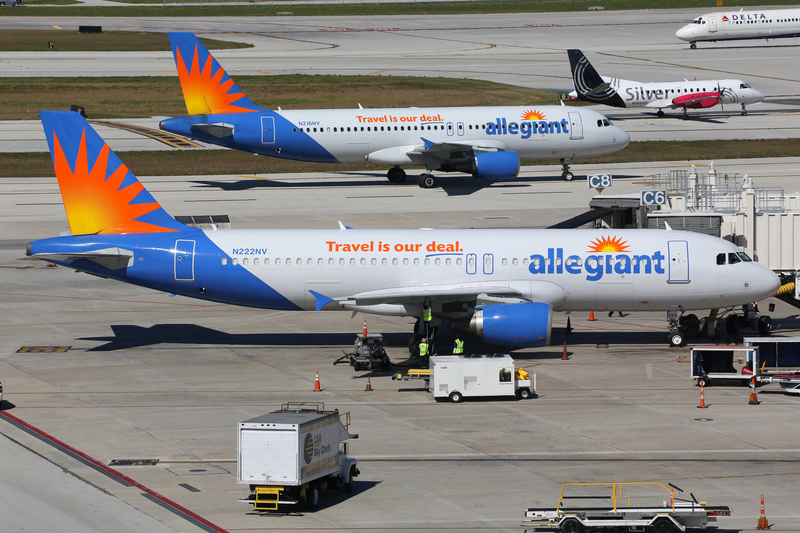
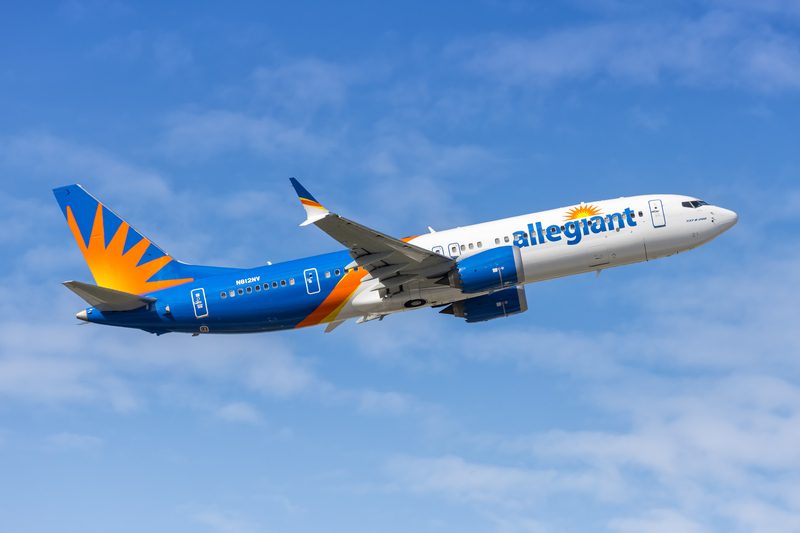
ID 82851385 | Allegiant © Boarding1now | Dreamstime.com
Labor Integration Could Be One of the Most Complicated Steps
Allegiant and Sun Country are also working toward unified labor agreements.
That process can be particularly complex for pilots, flight attendants, dispatchers, mechanics, and other employee groups whose compensation, work rules, bases, schedules, and seniority systems may differ between the two carriers.
Schilling-Gonzales confirmed that Allegiant is negotiating with employee working groups on single labor agreements. Until those agreements and related integration issues are resolved, employees will continue working under their existing arrangements.
Seniority integration is often one of the most sensitive components of an airline merger. Seniority can determine aircraft assignments, schedules, vacation selection, base transfers, promotions, furlough protection, and access to captain or lead positions.
The fleets also create different career structures. Sun Country pilots currently fly Boeing 737 Next Generation aircraft across scheduled passenger, charter, and Amazon cargo operations. Allegiant crews operate Airbus A319s and A320s alongside the airline’s growing Boeing 737 MAX fleet.
Creating a unified airline will require Allegiant to decide how those aircraft, crews, bases, and operating categories fit into one long-term structure.
Sun Country Aircraft Will Eventually Wear Allegiant Colors
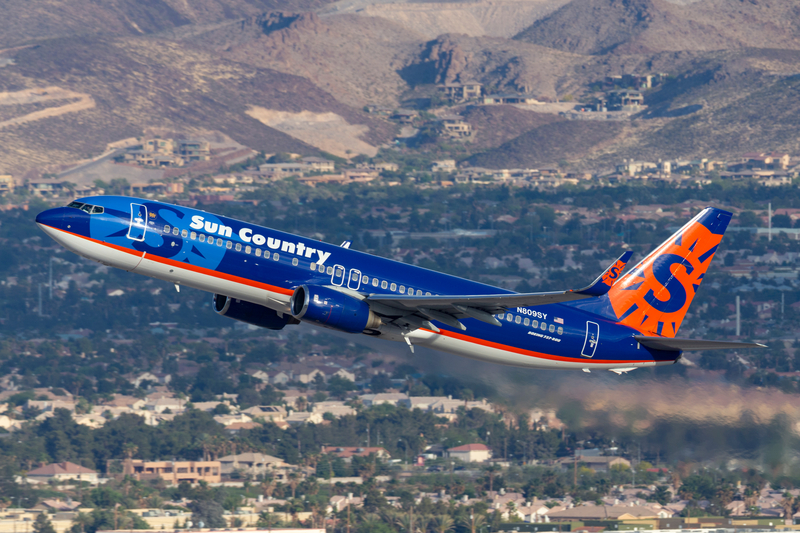
The disappearance of the Sun Country name will ultimately include the airline’s familiar orange, blue, and white aircraft livery.
Sun Country’s passenger fleet is built primarily around the Boeing 737-800, supplemented by Boeing 737-900ERs. The 737-800 has served as the backbone of the airline’s scheduled and charter businesses and is also the platform used for its Amazon cargo operation in converted freighter form.
The Boeing 737-800 belongs to the 737 Next Generation family and is powered by two CFM International CFM56-7B engines. Sun Country typically uses the aircraft for leisure routes from Minneapolis-Saint Paul International Airport (MSP), along with charter flying for professional and collegiate sports teams, casinos, the U.S. military, and other contracted customers.
The longer 737-900ER provides additional passenger capacity while retaining much of the operating commonality of the 737-800. Sun Country acquired five 737-900ERs, with two entering revenue passenger service in 2025 and the remaining aircraft expected to return from leases by the end of 2027.
Allegiant’s fleet currently includes Airbus A319s, Airbus A320s, and 190-seat Boeing 737-8200s, the high-capacity version of the 737 MAX 8. Its published aircraft information lists capacities of 156 seats for the A319, 177 or 180 seats for the A320, and 190 seats for its Boeing 737s.
The addition of Sun Country means Allegiant will eventually operate several distinct narrowbody groups:
| Aircraft family | Current operator | Primary role |
|---|---|---|
| Airbus A319 | Allegiant | Lower-density leisure routes |
| Airbus A320 | Allegiant | Core scheduled passenger network |
| Boeing 737-8200 MAX | Allegiant | New-generation passenger capacity |
| Boeing 737-800 | Sun Country | Scheduled service and charters |
| Boeing 737-900ER | Sun Country | Higher-capacity passenger service |
| Boeing 737-800BCF | Sun Country for Amazon | Dedicated cargo operations |
Allegiant has not disclosed the order in which Sun Country passenger aircraft will be repainted or whether some airplanes will temporarily operate in Sun Country colors after the single certificate is issued.
Airlines commonly coordinate repainting with scheduled heavy maintenance to avoid unnecessarily removing aircraft from service. As a result, the visible disappearance of the livery may take longer than the regulatory or reservation-system integration.
Sun Country’s Retro Jet May Have a Short-Lived Future
The decision is particularly notable because Sun Country unveiled a special retro-livery aircraft just one day before Allegiant completed the acquisition.
The design was inspired by Sun Country’s 1994 paint scheme and honored the airline’s Minnesota heritage, employees, customers, and late co-founder Jim Olsen. Sun Country described the aircraft as a bridge between the airline’s history and its future under Allegiant ownership.
Whether the retro aircraft will be preserved longer than the standard Sun Country fleet has not been announced.
Airlines occasionally retain heritage liveries after mergers, but Allegiant’s statement points toward a unified passenger identity rather than a permanent dual-brand strategy. The aircraft could therefore become one of the final visible reminders of the Sun Country name once the remaining fleet adopts Allegiant colors.
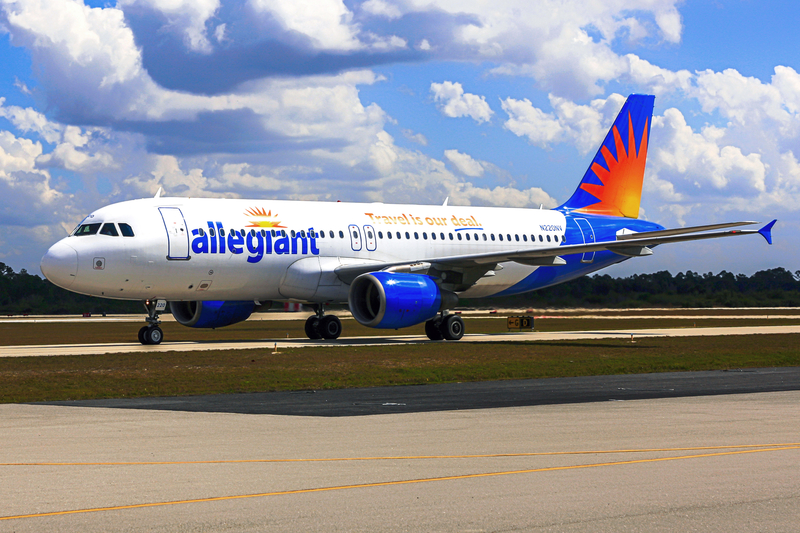
ID 221080172 © Christopher Smith | Dreamstime.com
Minneapolis Will Remain Central to the Combined Airline
Retiring the Sun Country brand does not mean Allegiant intends to abandon Minnesota or dismantle the airline’s operation at Minneapolis-Saint Paul International Airport (MSP).
Allegiant has repeatedly said Minneapolis will remain an important operating center for the combined company. Shortly before the acquisition closed, Sun Country went further and described MSP as the future airline’s largest hub.
That description is notable because Allegiant traditionally follows a point-to-point model rather than operating a conventional connecting hub. It links small and medium-sized communities directly with leisure destinations, often flying routes only several times per week.
Sun Country’s operation is different. Nearly 94% of its flights originate from or return to Minneapolis-Saint Paul (MSP), according to the airline. Its schedule expands and contracts around Minnesota leisure demand, including winter vacations, spring break, summer travel, the Minnesota Education Association weekend, and year-end holidays.
Sun Country has also developed a meaningful local following. The carrier says it is second only to Delta Air Lines in its share of passengers originating at MSP, with its local market share rising from approximately 12% in 2018 to 21%.
Replacing the Sun Country name with Allegiant could therefore be more sensitive in Minnesota than a routine airline rebranding. Sun Country is not simply another operator at MSP; it has marketed itself as “Minnesota’s Hometown Airline” and incorporated regional products and partnerships into its passenger experience.
Allegiant must preserve that customer loyalty while introducing a brand more closely associated with Las Vegas, Florida, and leisure routes from smaller U.S. airports.
The Route Networks Are More Complementary Than They First Appear
Allegiant and Sun Country both focus heavily on price-sensitive leisure passengers, but they reach those customers in different ways.
Allegiant primarily connects smaller and medium-sized cities with major vacation destinations. Its network is designed around nonstop service, limited weekly frequencies, low aircraft utilization during weaker periods, and aggressive scheduling during peak leisure days.
Sun Country concentrates much of its flying at Minneapolis-Saint Paul (MSP), where it carries Minnesota travelers to destinations across the United States, Canada, Mexico, Central America, and the Caribbean.
The original transaction announcement identified 551 Allegiant routes and 105 Sun Country routes. Together, the airlines expected to serve approximately 22 million passengers annually across nearly 175 cities and more than 650 routes. The combined fleet contained 195 aircraft when the acquisition closed.
The network overlap is relatively limited compared with combinations involving two conventional hub-and-spoke airlines.
Sun Country gives Allegiant a much stronger position at Minneapolis-Saint Paul (MSP), access to additional international destinations, and an established base for scheduled, charter, and cargo flying. Allegiant gives Sun Country access to a much broader collection of smaller U.S. cities.
The long-term opportunity is to connect more Allegiant communities with MSP and place additional vacation destinations within the combined network. That does not necessarily mean every route will operate through Minneapolis, but MSP gives Allegiant a large northern origin market that it did not previously control.
Sun Country’s Business Model Will Survive Its Brand
Although the passenger-facing Sun Country name will disappear, several of the airline’s most valuable operating capabilities are expected to remain.
Sun Country operates a diversified model consisting of scheduled passenger service, charters, and cargo. The airline estimates that approximately 70% of its revenue comes from scheduled flying, 20% from charters, and 10% from cargo.
Its charter customers have included Major League Soccer, collegiate athletic programs, casinos, and the Department of Defense. Charter flying allows the carrier to use aircraft and crews during periods when scheduled leisure demand is weaker.
The cargo operation is equally important. Sun Country operates 20 Boeing 737-800 converted freighters for Amazon under an asset-light crew, maintenance, and insurance arrangement.
Amazon provides the aircraft and pays many direct operating expenses, while Sun Country supplies the crews and manages the flights under its operating certificate. The current agreement runs through 2030 and contains options that could extend the relationship through 2037.
Allegiant specifically highlighted Sun Country’s Amazon cargo contract and charter customers as important parts of the acquisition. The combined company expects those businesses to provide more stable year-round revenue and employment than scheduled leisure flying alone.
The disappearance of the brand should therefore not be confused with the disappearance of the operation. Allegiant is acquiring Sun Country’s aircraft, contracts, employees, expertise, and network—not simply eliminating the carrier.
ID 437898045 | Air © Boarding1now | Dreamstime.com
Customers Will See a Gradual Transition
For the time being, Sun Country passengers should continue using the airline exactly as they did before the acquisition.
Reservations remain with the carrier that issued the ticket. Sun Country flights are still managed through Sun Country’s website and application, while Allegiant bookings remain within Allegiant’s system.
The two loyalty programs are also separate. Sun Country Rewards points and Allegiant Allways Rewards points retain their existing value, and no conversion ratio or combined-program launch date has been announced.
The eventual customer transition will probably require several coordinated changes:
- A unified booking and check-in platform
- A single loyalty program
- Common baggage and seating policies
- Consolidated airport counters and signage
- New flight numbers and schedule displays
- Reissued tickets for travel during the cutover
- Unified customer service and disruption handling
Allegiant has not released the sequence or timing of those changes.
A single operating certificate does not automatically require every commercial system to change on the same day. Previous airline mergers have sometimes reached the FAA certificate milestone before completing every reservation, loyalty, branding, or corporate integration task.
For passengers, the most visible change may therefore occur in stages rather than during one overnight conversion.
DOT Route Approval Is Separate From FAA Certification
The companies have already cleared another regulatory milestone involving Sun Country’s operating authorities.
In July, the U.S. Department of Transportation approved the transfer and reissuance of Sun Country’s domestic and international economic authorities following the acquisition. That action allows the route rights to remain available under Allegiant ownership.
DOT economic authority and FAA operating certification are related but separate.
The DOT determines whether an airline is economically authorized to provide interstate and international service. The FAA oversees operational safety and determines whether the combined carrier can function under one certificate.
Receiving the DOT route transfer does not mean the two airlines are ready to operate as one. Allegiant and Sun Country must still complete the much larger process of integrating their crews, aircraft, manuals, maintenance systems, dispatch operations, management structures, and safety programs.
A 43-Year Minnesota Airline Identity Nears Its End
Sun Country was founded in 1982 by a group of former Braniff International Airways pilots and flight attendants.
Its first flight operated on January 20, 1983, from Sioux Falls (FSD) to Las Vegas (LAS). During the following four decades, the airline survived economic downturns, ownership changes, bankruptcies, the September 11 attacks, intense competition from Northwest and Delta, and the COVID-19 pandemic.
The airline later transformed from a more traditional leisure carrier into a hybrid low-cost operator. It went public in 2021 and developed a model that uses the same pilot and operational resources across scheduled flights, charter flying, and cargo operations.
Sun Country now serves more than 100 routes and nearly 100 airports, with approximately 3,000 employees concentrated in the Twin Cities region.
That history explains why the branding decision carries more emotional weight than the retirement of an airline name with little regional identity.
For many Minnesota travelers, Sun Country has been the hometown alternative to Northwest Airlines and, later, Delta. Its orange-and-blue aircraft have been a familiar presence at Minneapolis-Saint Paul International Airport (MSP) for decades.
By early or mid-2028, those aircraft may be carrying the Allegiant name instead.
Why Allegiant Is Choosing One Brand
Maintaining two consumer brands would allow Allegiant to preserve Sun Country’s strong Minnesota identity, but it would also add considerable cost and complexity.
Separate brands can require duplicate advertising, websites, mobile applications, loyalty programs, airport signage, customer-service systems, policies, uniforms, onboard products, and technology infrastructure.
A single brand gives Allegiant one national identity and allows the company to market its full network through one platform.
Allegiant expects the acquisition to produce approximately $140 million in annual synergies within three years of closing. Those projected savings and revenue benefits are expected to come from network growth, purchasing scale, fleet optimization, and operating efficiencies.
Brand consolidation will likely contribute to that objective, although Allegiant has not publicly itemized how much of the projected savings will come directly from retiring Sun Country’s identity.
The strategic choice is clear: Allegiant sees greater long-term value in expanding its own name than in maintaining Sun Country as a regional sub-brand.
Bottom Line
Allegiant has confirmed that Sun Country Airlines will not survive as a permanent passenger brand after the two carriers complete their integration.
The acquisition closed on May 13, 2026, but Allegiant and Sun Country remain separate airlines for operational purposes. Each continues to use its own FAA certificate, reservations platform, loyalty program, labor agreements, procedures, and branding.
Allegiant expects the single-certificate process to take approximately 18 to 24 months, placing the likely transition to one airline in early or mid-2028. That timeline remains an estimate rather than a firm deadline.
Once the FAA is satisfied that the combined organization can operate safely under one management and operational-control structure, Allegiant intends to use its name across the passenger network.
The Sun Country livery, airport signage, website, loyalty program, and other customer-facing elements will eventually be retired or absorbed. Allegiant has not announced exactly how quickly those changes will follow the certificate approval.
What will remain is much of the business Allegiant acquired: a major operation at Minneapolis-Saint Paul International Airport (MSP), a fleet of Boeing 737-800s and 737-900ERs, international leisure routes, charter contracts, and a 20-aircraft Amazon cargo operation.
The Sun Country name may disappear, but its Minneapolis base, aircraft, employees, network, and diversified operating model are positioned to become major components of a much larger Allegiant.