Engine Damage and Cabin Decompression Force Ryanair 737 Back to Thessaloniki
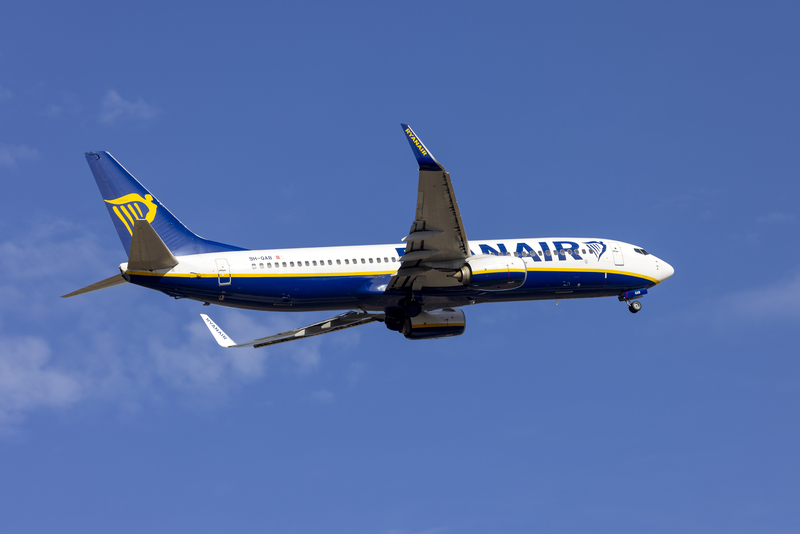
A Malta Air-operated Boeing 737-800 flying for Ryanair returned safely to Greece on Friday, July 10, after an apparent engine failure damaged a passenger window and caused the cabin to rapidly depressurize.

Ryanair flight FR1879 had departed Thessaloniki Airport “Makedonia” (SKG) for Memmingen Airport (FMM) in southern Germany when the emergency developed during the initial climb.
According to airport sources and passenger accounts, a man seated beside the damaged window was partially pulled through the opening before his seatbelt and nearby travelers prevented him from being drawn farther outside. Other passengers then helped bring him completely back into the cabin.
The aircraft stopped climbing at approximately 16,000 feet and returned to Thessaloniki (SKG), where it landed without further incident.
Ryanair Confirms Window Failure but Provides Few Technical Details
Ryanair confirmed that the flight returned to Thessaloniki (SKG) after what the airline described as a passenger window becoming dislodged in flight.
“The aircraft landed normally and passengers returned to the terminal,” the airline said. Ryanair added that one passenger requested and received medical assistance after landing.
That statement confirms the window failure and return to Thessaloniki (SKG), but it does not explain what caused the damage or confirm the more dramatic passenger accounts.
Reuters cited two airport sources who said a Serbian passenger was partially pulled through the opening. Serbian media reported that the man’s head and shoulders were briefly outside the aircraft before other passengers pulled him back inside.
The Serbian consulate said the passenger was taken to AHEPA University General Hospital in Thessaloniki and did not have life-threatening injuries. Local reports described friction burns and exposure-related injuries, although Ryanair has not provided a detailed medical update.
Some Greek reports said four passengers were transported for precautionary medical evaluations, while the airline referred only to one passenger requesting assistance. The difference may reflect the distinction between receiving treatment at the airport and being taken to a hospital for further examination.
Apparent Right-Engine Failure Occurred During the Initial Climb
Flight-tracking data for FR1879 indicates that the Boeing 737-800 was climbing through approximately 15,000 feet, about six minutes after departing Thessaloniki (SKG), when the incident occurred.
Preliminary reports point to a failure involving the No. 2, or right-side, engine. Images and videos posted after the landing appeared to show substantial damage around the engine, including missing or damaged fan blades and portions of the nacelle.
Initial accounts from Greek authorities and airport sources said engine debris struck the aircraft and broke the cabin window. The resulting opening caused a rapid loss of cabin pressure, triggering the deployment of passenger oxygen masks.
The pilots discontinued the climb over North Macedonia and turned back toward Thessaloniki (SKG). Emergency services, including airport firefighters, ambulances, and police, were positioned before the aircraft landed.
Although the flight returned under emergency conditions, Ryanair’s description of a normal landing is not contradictory. It means that the airplane touched down and cleared the runway without a further landing-related event.
A Boeing 737-800 is designed to remain controllable and continue flying after the loss of one engine. However, an engine failure accompanied by departing debris, airframe damage, and cabin decompression presents a much more complex situation than a routine precautionary engine shutdown.
The Aircraft Was Malta Air Boeing 737-800 9H-QEU
The aircraft involved was Boeing 737-8AS 9H-QEU, manufacturer serial number 36569 and Boeing line number 2549.
It was originally delivered to Ryanair as EI-DYF in March 2008. The aircraft moved to Malta Air, another Ryanair Group carrier, in September 2022 and was re-registered as 9H-QEU.
Although the flight was sold and operated under Ryanair’s FR flight code, Malta Air was the legal operator of the aircraft. Malta Air has its own Maltese air operator certificate, crews, and registered fleet while operating extensively within the wider Ryanair network.
The “8AS” designation identifies the airplane as a Boeing 737-800 originally ordered for Ryanair. “AS” was Boeing’s historical customer code for the Irish low-cost carrier. The aircraft is also equipped with winglets, making its more complete technical description a Boeing 737-8AS(WL).
The 18-year-old airplane is part of the Boeing 737 Next Generation family, which includes the 737-600, 737-700, 737-800, and 737-900. It is not a Boeing 737 MAX.
The 737-800 is approximately 129 feet, 6 inches long and can accommodate as many as 189 passengers in a single-class configuration. Ryanair and Malta Air typically operate the type with the maximum 189-seat layout.
All Ryanair Group 737 Next Generation aircraft use variants of the CFM International CFM56-7B turbofan. The engine family is produced by CFM International, a joint venture between GE Aerospace and Safran Aircraft Engines.
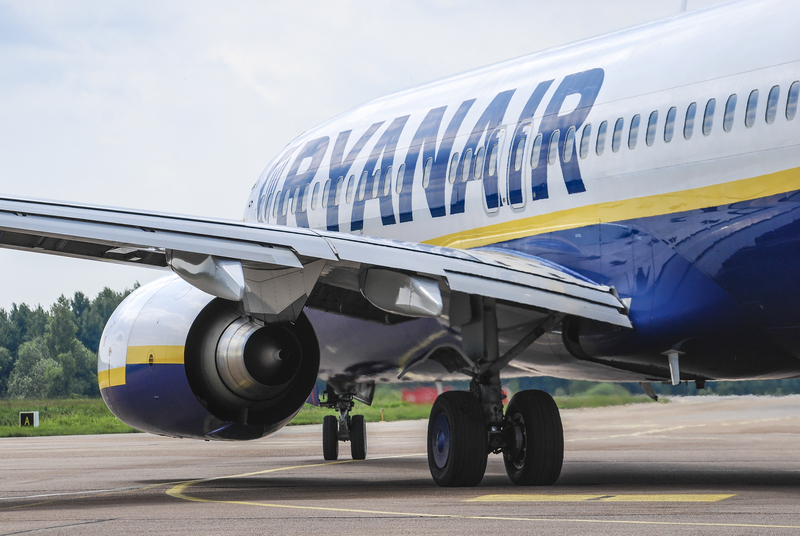
ID 56088932 © MrFly | Dreamstime.com
What Does It Mean When an Aircraft Window “Dislodges”?
The wording used in early reports requires some technical context.
A passenger window is not a single sheet of material. Transport-category aircraft use a multilayer window assembly that normally includes an outer pressure-bearing pane, an inner structural pane, and a thinner interior scratch pane that passengers can touch.
Damage to only the interior scratch pane would not create an opening to the atmosphere or cause the cabin to depressurize. Because oxygen masks deployed and passengers described a powerful outward airflow, the damage evidently affected the pressure-retaining portion of the window assembly.
It remains unclear whether one or more panes fractured, whether the complete window assembly separated from its frame, or whether damage around the window opening allowed the pressure seal to fail.
There is also an important difference between a broken window and a structural fuselage rupture. Greek authorities said there was no separate crack or breach in the aircraft’s fuselage skin. In other words, the opening appears to have been confined to the window area rather than a larger failure of the surrounding pressure vessel.
Investigators will examine the remaining window structure, retaining system, fuselage skin, cabin interior, engine fan section, inlet, fan cowls, and the trajectory of any debris that separated from the engine.
Until that work is completed, it is premature to say exactly which engine component struck the window or whether the window itself departed as a complete assembly.
Investigators Must Determine Whether the Failure Was Truly “Uncontained”
Several early reports described the event as an uncontained engine failure. That description may ultimately prove accurate, but the aviation industry uses the term more precisely than it is often used in general news coverage.
A fan-blade failure may initially be contained by the reinforced engine fan case while blade fragments, inlet components, fan cowls, or other nacelle structures subsequently separate from the aircraft.
Investigators must therefore establish whether rotating engine components directly penetrated the containment structure or whether the visible external damage resulted from the failure and separation of surrounding nacelle components.
That distinction does not reduce the seriousness of the incident. Debris departing an engine installation can strike the wing, control surfaces, fuselage, or cabin windows even when the primary fan-blade failure technically remains contained within the engine case.
The damage to 9H-QEU’s right engine and cabin window will require detailed metallurgical analysis, examination of the fan blades and fan disk, and reconstruction of the debris path before authorities can establish the sequence of events.
Strong Parallels With Southwest Airlines Flight 1380
The circumstances have drawn immediate comparisons with Southwest Airlines flight 1380, which suffered an engine failure on April 17, 2018.
That flight was operated by a Boeing 737-700, another member of the 737 Next Generation family, and was also powered by CFM56-7B engines.
A fatigue crack caused a fan blade in the left engine to separate while the aircraft was flying at approximately 32,000 feet. The blade struck the fan case, and the resulting forces caused portions of the engine inlet and fan cowl structure to separate.
One of the departing components struck the fuselage near a cabin window. The window departed, the cabin rapidly depressurized, and passenger Jennifer Riordan was partially pulled through the opening. Other passengers brought her back into the cabin, but she died from her injuries.
The National Transportation Safety Board’s final report found that the location of the fan-blade impact placed severe loads on the engine’s fan cowl structure. The NTSB recommended that Boeing redesign portions of the 737NG nacelle system to better withstand a fan-blade-out event.
FAA Ordered 737NG Nacelle Modifications After Earlier Failures
The regulatory timeline is more complicated than some early accounts suggest.
The Federal Aviation Administration proposed new requirements for the 737 Next Generation fleet in December 2023. The agency then issued final airworthiness directives in March 2025, with an effective date of April 8, 2025.
The requirements address the inlet cowl, fan cowl, radial restraint system, support-beam attachments, and other structures that could be damaged during a fan-blade-out event.
Under the FAA’s final rule, affected aircraft must receive specified modifications within the established compliance periods. Some of the major nacelle changes have a deadline of July 31, 2028.
The European Union Aviation Safety Agency has also published the U.S. directive through its safety-publication system for operators under European oversight.
It has not been disclosed whether 9H-QEU had already received any of the applicable modifications. The current incident also cannot be attributed to the same mechanism as Southwest flight 1380 unless investigators identify matching physical evidence.
The similarities are notable, but a similar result does not automatically establish an identical technical cause.
The Same Aircraft Returned to Thessaloniki One Day Earlier
Flight-tracking records show that 9H-QEU also returned to Thessaloniki (SKG) on the evening of July 9 while operating Ryanair flight FR5004 to Sarajevo International Airport (SJJ).
The aircraft departed Thessaloniki (SKG) at approximately 7:32 p.m. local time but turned back shortly after takeoff instead of continuing to Sarajevo (SJJ).
No verified explanation for that return had been released as of July 11.
The earlier diversion will receive considerable attention during the investigation. Authorities will review the aircraft’s technical log, flight crew reports, maintenance actions, engine-monitoring data, and any inspections performed before 9H-QEU was released for the following morning’s flight to Memmingen (FMM).
There is currently no public evidence establishing that the July 9 return was related to the engine failure and decompression on July 10. Linking the two events without maintenance records or investigative findings would be speculative.
Aircraft Remains Grounded as Investigation Begins
The damaged Boeing 737-800 remained on the ground at Thessaloniki Airport (SKG) after the emergency landing.
Because the incident occurred while the aircraft was flying over North Macedonia, that country is leading the investigation. Authorities from Malta, the aircraft’s state of registration and operator oversight, are also expected to have an important role.
Greece is involved because the flight departed from and returned to Thessaloniki (SKG). Boeing said it is supporting the investigation, while the FAA has offered technical assistance. CFM International may also be asked to participate in the examination of the engine.
Investigators will seek to determine the initiating failure, the origin of the debris, the condition of the window before impact, the aircraft’s recent maintenance history, and whether any warning signs were present during the previous day’s return.
Ryanair arranged a replacement aircraft for the passengers traveling to Memmingen (FMM). The replacement departed Thessaloniki (SKG) at 9:53 a.m. local time, according to the airline.
Bottom Line
Ryanair flight FR1879 experienced a rare and potentially catastrophic combination of apparent engine damage, a breached cabin window, and rapid decompression shortly after departing Thessaloniki Airport (SKG).
The pilots stopped the climb, returned to Thessaloniki (SKG), and landed the Malta Air Boeing 737-800 safely. The passenger seated beside the damaged window survived with injuries that were not considered life-threatening.
The aircraft has been identified as 9H-QEU, an 18-year-old Boeing 737-8AS operated by Malta Air. Preliminary reports indicate that debris from the right engine struck the window, but investigators have not yet issued a final determination.
The parallels with Southwest Airlines flight 1380 are impossible to overlook. Both incidents involved a CFM56-powered Boeing 737 Next Generation aircraft, significant engine or nacelle damage, a failed cabin window, rapid decompression, and a passenger being partially pulled through the opening.
However, the exact failure sequence aboard FR1879 remains unconfirmed. The investigation must establish whether a fan blade fractured, which components escaped the nacelle, how the window failed, and whether the aircraft’s return to Thessaloniki (SKG) the previous evening had any connection to the accident.
Until those questions are answered, the engine-debris explanation should be treated as a strong preliminary account—not a final finding.