British Airways Barbados Cancellation Shows How One Crew Issue Can Ground a Long-Haul 777
British Airways is investigating after a London-bound flight from Barbados was canceled following allegations of inappropriate crew conduct during a layover at a luxury resort.
The flight involved was British Airways BA254 from Grantley Adams International Airport (BGI) in Bridgetown to London Heathrow Airport (LHR). The service was due to operate on Sunday, but passengers were left in Barbados after BA reportedly stood down the operating crew.
The situation has attracted attention because of the nature of the allegations. According to reports first published by The Sun and later carried by several other outlets, members of the crew were accused of drinking heavily at a Barbados resort before they were due to operate the return flight to London. British Airways has not confirmed the full details publicly, but the airline said it expects the highest standards from its crew and is urgently investigating the matter.
For passengers, it was a major disruption. For airline professionals, the incident highlights a more technical operational reality: if an airline cannot legally and safely crew a long-haul flight, the aircraft does not depart. It does not matter whether the airplane is serviceable, the weather is good, the passengers are boarded, or the route is commercially important.
BA254 Is a Key Barbados-London Rotation
BA254 is one of British Airways’ long-haul Caribbean services from Bridgetown (BGI) to London Heathrow (LHR). Barbados is an important market for BA, combining premium leisure traffic, visiting-friends-and-relatives demand, cruise connections, UK-Caribbean family links, and high-season vacation travel.
The return sector to London is normally an overnight transatlantic flight. Passengers depart Barbados in the late afternoon or early evening and arrive in London the following morning. That makes the route especially sensitive to crew availability because the flight depends on a rested, legal, and fit operating crew at the outstation.
When the operating crew is stood down at a destination like Barbados, recovery is not easy. British Airways cannot simply call in a full replacement crew from across town. It must find qualified flight crew and cabin crew, position them to BGI if needed, manage duty-time limitations, coordinate hotel accommodation, rebook passengers, handle baggage, and protect onward connections at Heathrow (LHR).
That is why a crew issue at an overseas station can become a full flight cancellation rather than a delay measured in minutes.
The Aircraft: British Airways Boeing 777-200
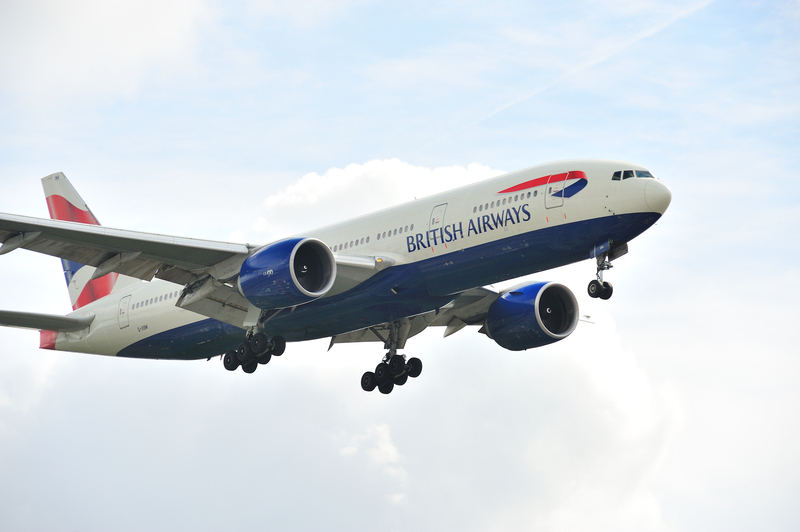
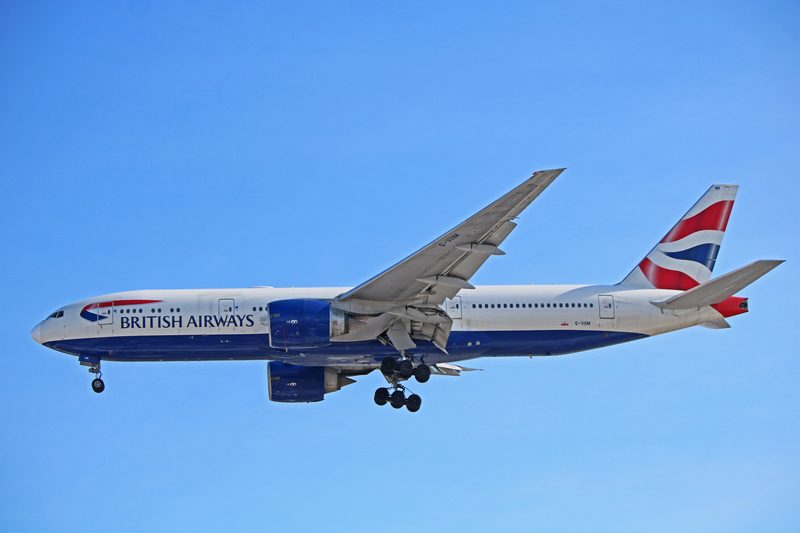
The canceled flight was reported to involve a Boeing 777-200, one of British Airways’ core long-haul aircraft types.
The 777-200 and 777-200ER have been central to BA’s long-haul network for decades. The type is well suited to Caribbean routes because it offers strong range, meaningful belly cargo capability, and enough passenger capacity for leisure-heavy markets. British Airways uses multiple 777-200 layouts across its long-haul operation, with seating capacity varying significantly by configuration.
That matters in this case because a single canceled 777 flight can strand several hundred passengers. Reports cited up to 336 affected travelers, which is consistent with BA’s higher-density 777-200 layouts. Even if the exact number of passengers on the affected flight was lower, the operational effect is still large: one long-haul widebody cancellation can require hundreds of hotel rooms, meals, ground transport, rebooking actions, call-center support, and downstream connection recovery.
A narrowbody cancellation is disruptive. A long-haul 777 cancellation at a Caribbean outstation is much more expensive and complex.
Why Crew Fitness Is Non-Negotiable
The seriousness of the incident comes from the safety role of airline crews.
Cabin crew are not simply service staff. They are safety professionals responsible for emergency evacuation, fire response, decompression procedures, medical events, passenger management, door operation, security support, and communication with the flight deck. On a long-haul aircraft such as the Boeing 777, that safety role is critical because the aircraft can carry hundreds of passengers over water and remote areas.
UK aviation rules reflect that. The UK Civil Aviation Authority says flight crew and cabin crew assigned to operational duty can be subject to alcohol testing, and a positive test prohibits the crew member from performing duties on the flight. The CAA also says operators must report cases involving misuse of psychoactive substances by safety-sensitive personnel.
That framework explains why British Airways would have little room for compromise if there were concerns about crew fitness. The threshold is not whether a crew member feels able to work. The threshold is whether the airline can safely and lawfully dispatch the flight with the assigned crew.
If that confidence is gone, the flight must not operate.
The Reported Hotel Conduct Creates a Reputational Problem
The operational issue is serious enough, but the reported setting makes the reputational damage worse.
The alleged incident took place at a high-end Barbados resort where other guests reportedly complained about crew behavior. Several reports described guests filming the group, with claims that one crew member became ill and another had to be helped away from the bar. British Airways has not publicly verified those specific details, so they should be treated as allegations while the airline investigates.
Even so, the optics are damaging. Airline crews often stay at premium hotels during long-haul layovers because rest, security, location, transport, and operational reliability matter. Those hotel arrangements are part of the airline’s safety and fatigue-management system, not simply a perk.
When a crew layover becomes the focus of guest complaints and media coverage, the issue extends beyond one canceled flight. It affects hotel relationships, corporate travel contracts, staff rules, public trust, and the airline’s internal culture.
For BA, the investigation will need to determine not just what happened, but whether procedures around layover conduct, alcohol, reporting, and crew readiness were followed.
ID 143062202 © Tom Samworth | Dreamstime.com
Why the Entire Crew May Have Been Stood Down
Reports said British Airways stood down the entire operating crew, not only the individuals under investigation. That may sound excessive to passengers, but it can make operational sense.
A long-haul crew operates as a team. If there are concerns about several crew members, the airline must assess whether the remaining roster still meets minimum crew requirements, role qualifications, rest rules, cabin position requirements, and operational confidence. On a Boeing 777, the number of required cabin crew depends on the aircraft configuration and regulatory requirements, and the airline may also roster above the legal minimum for service and safety reasons.
If a subset of crew members is removed, the airline may no longer have enough legal crew to operate. Even if the legal minimum could technically be met, the airline may decide the safest and cleanest action is to remove the whole crew from duty and investigate properly.
That appears to be what happened here. The result was severe for passengers, but the alternative — dispatching a long-haul flight with unresolved questions about crew fitness or crew integrity — would be unacceptable.
Outstation Recovery Is Expensive
A cancellation at Bridgetown (BGI) is not like canceling a short-haul flight at Heathrow (LHR).
At Heathrow, British Airways has crews, aircraft, engineers, managers, customer-service teams, and operational control resources on site. In Barbados, the airline is operating away from its home base. The aircraft may be available, but the replacement crew may not be.
That creates immediate costs. Passengers may require hotels, meals, transportation, rerouting, refunds, compensation depending on circumstances, and rebooking onto later BA or partner services. Some may have missed connections from London to Europe, the Middle East, Asia, or domestic UK points. Others may have work, cruise, medical, or family commitments affected by the delay.
The aircraft itself also becomes a problem. A 777 sitting in Barbados is not operating its next scheduled rotation. Depending on the recovery plan, BA may need to ferry the aircraft, operate it with a replacement crew, or use another aircraft to protect later services.
This is why reports estimating six-figure disruption costs are credible. The direct cost of passenger care is only one part of the bill. The broader cost includes aircraft utilization, crew positioning, schedule recovery, customer goodwill, and reputational impact.
Crew Discipline Issues Are Rare, But High Impact
Most airline crew layovers happen without incident. Long-haul crews understand that rest periods are part of the job and that they are expected to report for duty fit, professional, and compliant with company and regulatory rules.
That is why cases like this stand out. They are rare, but when they occur, they generate disproportionate attention because they involve the public’s trust in aviation safety.
The industry is built on layers of professionalism. Pilots, cabin crew, dispatchers, engineers, ramp teams, controllers, and airport staff all rely on each other to operate safely. If one layer is compromised, the system is designed to stop the operation before passengers are put at risk.
In that respect, the cancellation is not evidence of a safety failure in flight. It is evidence that the airline did not operate a flight when there were concerns about the crew. That is exactly how the safety system is supposed to work, even when the customer-service consequences are painful.
Barbados Is Too Important for BA to Let This Linger
Barbados is a valuable and high-profile route for British Airways. The airline has served the island for decades and remains one of the most important long-haul carriers linking Barbados with the United Kingdom.
That makes the incident especially unwelcome. Caribbean markets rely heavily on airline confidence, repeat leisure traffic, premium holiday bookings, cruise flows, and strong destination branding. BA’s relationship with Barbados is not just about one daily or near-daily flight. It is part of a broader UK-Barbados travel corridor.
The airline will therefore need to resolve the matter quickly and visibly. Internally, that means determining what happened and taking disciplinary action if warranted. Externally, it means reassuring passengers, tourism partners, hotel partners, and airport stakeholders that the incident was isolated and that normal standards are being enforced.
ID 13506198 © Michael Fischer | Dreamstime.com
What Passengers Should Expect in These Situations
Passengers affected by a crew-related cancellation should keep all documentation: boarding passes, booking references, hotel receipts, meal receipts, transport receipts, emails, app notifications, and any rebooking communication from the airline.
In a long-haul cancellation, the airline typically has to provide assistance such as meals, accommodation, and rerouting when passengers are stranded away from home. The exact compensation and reimbursement framework depends on the route, operating carrier, timing, cause of cancellation, and applicable passenger-rights rules.
The important practical point is that passengers should ask the airline to confirm the cancellation reason in writing where possible and should submit claims through official airline channels with receipts attached.
For BA254 passengers, the frustration was compounded by the reported lack of immediate explanation. That is common during sensitive crew investigations, but it can make the passenger experience worse. Travelers do not need every disciplinary detail, but they do need clear instructions, rebooking options, and care support.
The Larger Lesson for Airline Operations
This incident is a reminder that crew reliability is part of network reliability.
Airlines often focus public attention on aircraft, routes, lounges, seats, and schedules. But the entire operation depends on having legal, rested, medically fit, and professionally ready crews in the right place at the right time.
A single layover incident can break that chain. When it happens at a long-haul outstation, the disruption can be expensive, visible, and difficult to recover.
For airline managers, the lesson is not simply “discipline the crew.” It is to examine the full control system: layover policies, hotel selection, crew reporting channels, alcohol rules, fitness-for-duty checks, supervisor escalation, reserve crew planning, and passenger recovery procedures.
The flight did not operate because BA apparently determined it could not safely proceed with the assigned crew. That decision was disruptive, but it was the correct safety posture.
Bottom Line
British Airways’ canceled BA254 service from Bridgetown (BGI) to London Heathrow (LHR) is a serious crew-discipline and operational-control story, not just a tabloid layover scandal.
Reports allege that several crew members behaved inappropriately after drinking at a Barbados resort before they were due to operate the Boeing 777 flight back to London. British Airways has said it expects the highest standards from its crew and is urgently investigating.
The airline’s decision to stand down the crew and cancel the flight left passengers stranded, but the safety logic is clear. If there is any doubt about whether an operating crew is fit for duty, a long-haul aircraft should not depart.
For BA, the cost will include passenger disruption, schedule recovery, internal discipline, and reputational damage. For the wider industry, the case is a reminder that aircraft reliability gets the headlines, but crew readiness is just as critical to keeping the network moving.