GOL’s First A330 Marks a New Widebody Chapter for Brazil’s Largest Domestic Airline
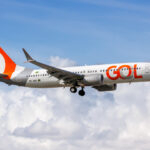
GOL has taken a major step into long-haul flying with the arrival of its first Airbus A330-200 in GOL colors, a wet-leased aircraft from Wamos Air that will support the airline’s new nonstop service between Rio de Janeiro Galeão International Airport (GIG) and New York John F. Kennedy International Airport (JFK).
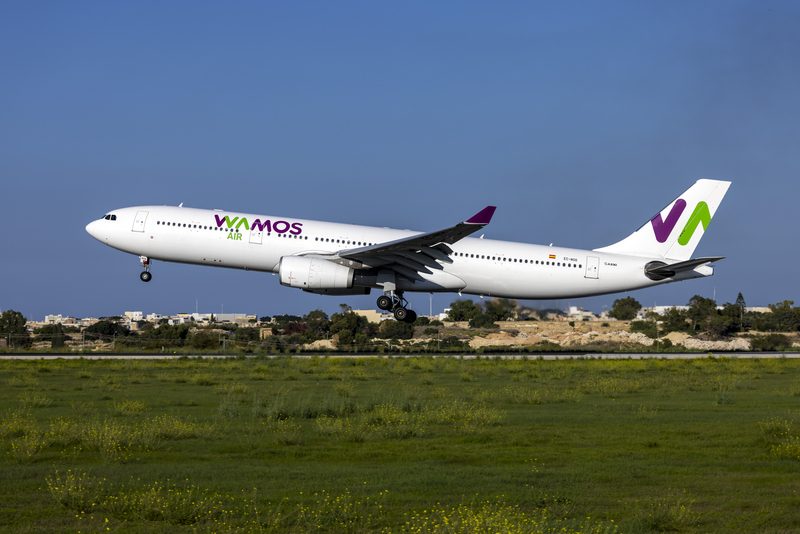
The aircraft, registered EC-NBN, arrived in Brazil from Madrid ahead of GOL’s July 8 launch of Rio de Janeiro (GIG)-New York (JFK) flights. For an airline long defined by its all-Boeing 737 narrowbody operation, the A330’s arrival is more than a fleet addition. It is the start of a new strategic phase built around long-haul flying from Rio de Janeiro.
GOL is not yet operating the aircraft in the traditional sense. The A330-200 is being provided under an ACMI agreement, meaning Wamos Air supplies the aircraft, crew, maintenance and insurance. GOL crew members are expected to support the onboard customer experience, but the aircraft remains a Wamos-operated widebody. That structure gives GOL a faster way to enter the long-haul market while it prepares for its own Airbus A330-900neo aircraft.
A Wamos A330 in GOL Colors
The aircraft involved is Airbus A330-200 EC-NBN, manufacturer serial number 818. Wamos Air identifies the aircraft as an A330-243 with 280 seats: 20 in Business Class and 260 in Economy Class.
That configuration is important. It gives GOL a real premium cabin for its first long-haul flights while still offering enough economy capacity to support a leisure-heavy Rio-New York market. Wamos lists the Business Class cabin with full-flat reclining seats and 58 inches of pitch, while Economy offers in-seat entertainment and seat pitch of 31 to 32 inches depending on the section.
For GOL, the aircraft also introduces a customer experience far beyond its domestic 737 product. The airline is marketing its long-haul premium cabin as Business INSIGNIA by GOL, with lie-flat seats, amenity kits, lounge access, priority services and an upgraded onboard meal concept.
That matters because GOL cannot enter a market like New York with only a low-cost short-haul mindset. The JFK market has premium passengers, corporate demand, U.S.-Brazil business traffic, visiting-friends-and-relatives demand, and high-spending leisure travelers. A widebody premium cabin gives GOL a product that can compete more credibly than a purely economy-heavy operation.
Why the A330-200 Is the Right Bridge Aircraft
The Airbus A330-200 is an older-generation widebody, but it remains a highly capable long-haul aircraft. Airbus describes the A330-200 as a flexible twin-aisle aircraft typically carrying 210 to 250 passengers, with higher-density configurations possible and range of up to 7,250 nautical miles.
That makes the aircraft more than capable of operating Rio de Janeiro (GIG)-New York (JFK), a sector of roughly 4,200 nautical miles depending on routing. The A330-200’s range, twin-aisle cabin, belly cargo capability and mature operating economics make it a logical bridge aircraft for GOL’s initial long-haul program.
The word “bridge” is key. GOL’s long-term plan is not built around secondhand A330-200s from Wamos. Abra Group, which controls GOL and Avianca and has a strategic investment in Wamos Air, has announced that it will incorporate seven Airbus A330-900 widebodies into the group fleet during 2026 and 2027. Up to five of those aircraft are expected to be operated by GOL, while two will support Avianca’s growth.
The A330-200 allows GOL to launch Rio-New York now. The A330-900neo is the aircraft that should define the longer-term long-haul product.
Rio-New York Is the First Test
GOL’s official booking page lists the New York (JFK)-Rio de Janeiro (GIG) operation from July 8 through October 22, 2026. Flights from New York are scheduled on Mondays, Thursdays and Saturdays at 11:00 p.m., while return flights from Rio operate Wednesdays, Fridays and Sundays at 9:55 p.m.
That schedule points to a carefully limited launch. GOL is not entering JFK with daily service from the start. It is beginning with three weekly flights, giving the airline a way to test demand, build brand awareness, refine the product and manage widebody utilization while relying on Wamos’ ACMI platform.
The route itself is commercially attractive but competitive. New York is one of the most important long-haul markets for Brazil, and Rio de Janeiro is both a tourism icon and a major business destination. The nonstop also gives GOL’s domestic network more international relevance, because passengers can connect over Galeão (GIG) from other Brazilian cities.
That is where the strategy becomes interesting. GOL is not simply flying from Rio to New York. It is trying to turn Rio de Janeiro (GIG) into a long-haul gateway again, using domestic feed from its Brazilian network and international feed through partnerships.
A Major Shift for a 737 Airline
GOL has spent most of its history as a Boeing 737 operator. Its current fleet is centered on the Boeing 737-700, 737-800, 737 MAX 8 and 737-800 converted freighter. That fleet simplicity has been central to the airline’s low-cost model.
The A330 changes the equation.
Widebody flying introduces different crew requirements, maintenance planning, training, airport handling, catering, cargo processes, premium service standards, spare parts, ground equipment and scheduling logic. A 737 network can be highly flexible, with short turns and dense domestic rotations. A long-haul A330 network requires a different kind of discipline.
That is why the Wamos wet lease makes sense. Instead of building every widebody capability internally from day one, GOL can use an experienced ACMI operator already inside the Abra Group ecosystem. Wamos Air specializes in widebody wet-lease and charter operations, making it a practical partner for a carrier entering intercontinental flying.
For GOL, the A330-200 is not just an airplane. It is a training ground for the entire long-haul business model.
The A330-900neo Is the Long-Term Prize
The future aircraft is the Airbus A330-900neo, a newer-generation widebody with Rolls-Royce Trent 7000 engines, improved aerodynamics, greater efficiency and a more modern cabin platform than the A330-200.
Abra Group says the A330-900 aircraft will have more than 290 seats, including a Business Class cabin, and will be deployed on strategic routes connecting South America with North America and Europe.
That aligns with GOL’s publicly discussed long-haul ambitions from Rio de Janeiro. In addition to New York (JFK), GOL has pointed to future direct service from Rio (GIG) to cities such as Lisbon and Paris. Those are logical markets: large Brazil-Europe flows, strong tourism and VFR demand, and opportunities to connect GOL’s domestic network with Abra Group’s broader platform.
The A330-900neo should give GOL better economics than an older A330-200, especially on long sectors where fuel burn, maintenance cost and product quality matter. It also allows the airline to present a more permanent widebody strategy rather than a temporary ACMI solution.
Why Galeão Matters
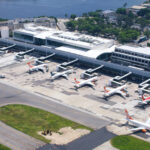
The decision to build long-haul flying around Rio de Janeiro Galeão International Airport (GIG) is strategically important.
Galeão has spent years trying to regain long-haul relevance after traffic shifted toward São Paulo and after Rio’s aviation market suffered from economic weakness, airport competition and international service reductions. A GOL long-haul operation gives GIG a major boost, especially if the airline can feed the flights from its domestic network.
Rio is a global tourism brand, but tourism alone does not sustain a long-haul hub. The airport needs connecting traffic, corporate demand, inbound leisure, cargo and consistent aircraft utilization. GOL can help with that because it has a large domestic footprint and a strong Brazilian customer base.
For GOL, using GIG also creates a differentiated position. São Paulo Guarulhos (GRU) is Brazil’s dominant international gateway, but it is also more crowded and more competitive. Rio gives GOL a chance to build a long-haul identity around a city with global recognition and room for growth.
What the Wet Lease Means for Passengers
Passengers booking GOL’s Rio-New York service should understand the operating structure. The flight is sold by GOL, marketed with GOL’s long-haul product, and painted in GOL colors, but the aircraft and operating crew come from Wamos Air under the ACMI arrangement.
That is common in aviation, especially when airlines need rapid capacity or specialized aircraft before their own fleet arrives. For travelers, the most visible effects may include cabin layout, seat type, crew composition, onboard procedures and aircraft registration.
The advantage is that GOL can launch the route months before its own A330-900neos enter service. The risk is that passengers may compare the temporary A330-200 product with what they expect from a future GOL-operated A330neo. Managing that expectation will be important.
The Wamos aircraft gives GOL a credible start. The A330-900neo will need to prove the long-term product.
Cargo Could Help the Route Economics
The passenger story will get most of the attention, but belly cargo should not be overlooked. A widebody A330 offers far more lower-deck cargo capacity than GOL’s 737 fleet.
On a route like Rio de Janeiro (GIG)-New York (JFK), cargo can materially improve economics. Brazil-U.S. flows can include pharmaceuticals, perishables, e-commerce, industrial goods, documents, high-value products and time-sensitive freight. Even if passenger demand is seasonal, cargo can help support the aircraft year-round.
GOL already has cargo experience through its 737-800BCF operation and domestic freight network. The A330 adds a different kind of cargo capability: long-haul belly capacity on intercontinental routes.
That becomes more valuable if GOL expands to Europe. Lisbon, Paris and other potential destinations could support both passenger and freight flows from Brazil, especially if the airline can connect cargo from domestic Brazilian cities into Galeão.
A Controlled Step Into a Hard Market
Long-haul flying is not easy, especially for an airline emerging from years of financial and operational pressure. GOL’s decision to enter the widebody market comes after a period of restructuring, fleet modernization and broader coordination under Abra Group.
The opportunity is clear. Brazil has large long-haul demand, Rio needs more international connectivity, and GOL has a domestic network that can feed intercontinental flights. Abra Group also gives GOL access to broader expertise, fleet planning and aircraft resources.
The risk is equally clear. Long-haul routes require strong yields, premium revenue, reliable aircraft availability, crew stability, fuel discipline and competitive pricing. New York is a high-profile market, but it is not forgiving. GOL will be competing against established airlines with long-haul experience, loyalty programs, corporate contracts and deeper international networks.
That is why the Wamos A330-200 is a sensible first step. It lets GOL enter the market without waiting for its own A330neos, while limiting some of the operational burden during the launch phase.
Bottom Line
GOL’s first wet-leased Airbus A330-200 is a major symbolic and operational milestone for the Brazilian carrier. The arrival of EC-NBN in GOL colors marks the start of the airline’s current widebody long-haul strategy and sets up the July 8 launch of nonstop Rio de Janeiro (GIG)-New York JFK service.
The aircraft itself is a Wamos Air A330-200 operating under an ACMI agreement, with 280 seats, including 20 Business Class seats and 260 Economy seats. It gives GOL an immediate long-haul platform while the airline prepares to receive up to five Airbus A330-900neos through Abra Group’s wider fleet plan.
For GOL, this is not simply a new airplane. It is a strategic pivot from a 737-centered domestic and regional model into intercontinental flying from Rio de Janeiro. The wet-leased A330-200 is the opening act. The real test will come when GOL’s own A330-900neos arrive and the airline has to prove that Rio can support a durable long-haul network to North America and Europe.