Ryanair Check-In Failure at Stockholm Arlanda Leaves Passengers Stranded During Morning Holiday Rush
A technical failure at Ryanair’s check-in operation at Stockholm Arlanda Airport (ARN) caused major disruption on Wednesday morning, leaving passengers stuck in long baggage queues and, in several cases, unable to reach their flights before boarding closed.
The problem affected Ryanair passengers departing from Arlanda (ARN), Sweden’s largest airport and the main international gateway for the Stockholm region. Local reports described long lines at the airline’s check-in counters, confusion over baggage handling, passengers running through the terminal after finally receiving their boarding documents, and flights departing without some booked travelers who had arrived at the airport well before departure.
Ryanair later said the disruption was caused by a temporary technical issue involving an external system provider at Stockholm Arlanda (ARN). The airline said the problem had been resolved and normal operations had resumed. Airport operator Swedavia also confirmed that the issue was specific to Ryanair’s check-in system and was not a general airport-wide check-in failure.
A Local System Failure With Network-Level Consequences
The disruption shows how vulnerable a low-cost airline operation can be when one part of the passenger-processing chain fails.
Ryanair’s model depends on fast turns, high aircraft utilization, short ground times, and strict boarding cutoffs. That works efficiently when online check-in, bag drop, document checks, and gate processes run on schedule. But when the baggage check-in system fails during a morning departure bank, the entire process can unravel quickly.

Passengers reported waiting in queues for extended periods before they could check bags. Some then had to clear security, move between terminal areas, reach bus gates, and board remote-stand aircraft. By the time they arrived, gates had closed and aircraft were leaving.
That is the operational tension. Airlines cannot normally hold a flight indefinitely because a check-in queue is delayed. Holding one aircraft can disrupt the next sector, crew duty limits, airport slots, and downline passengers. But from the passenger’s perspective, the situation is deeply frustrating: they arrived early, joined the correct queue, and still missed the flight because the airline’s processing system failed.
The Chania Flight Became the Most Visible Case
One of the most visible disruptions involved passengers traveling from Stockholm Arlanda (ARN) to Chania International Airport (CHQ), serving western Crete.
Flight-status data shows Ryanair FR7693 operated from Arlanda (ARN) to Chania (CHQ) on July 8. The flight was scheduled to depart Stockholm at 05:45 but actually departed at 07:32, later landing in Chania at 11:54 local time, around 69 minutes behind schedule.
Local Swedish reports described passengers bound for Crete saying they had stood in line for hours, eventually reached the gate area, and were then denied boarding because the aircraft had already closed. One passenger told Aftonbladet that a large number of travelers missed the Crete flight, though exact passenger numbers have not been independently confirmed.
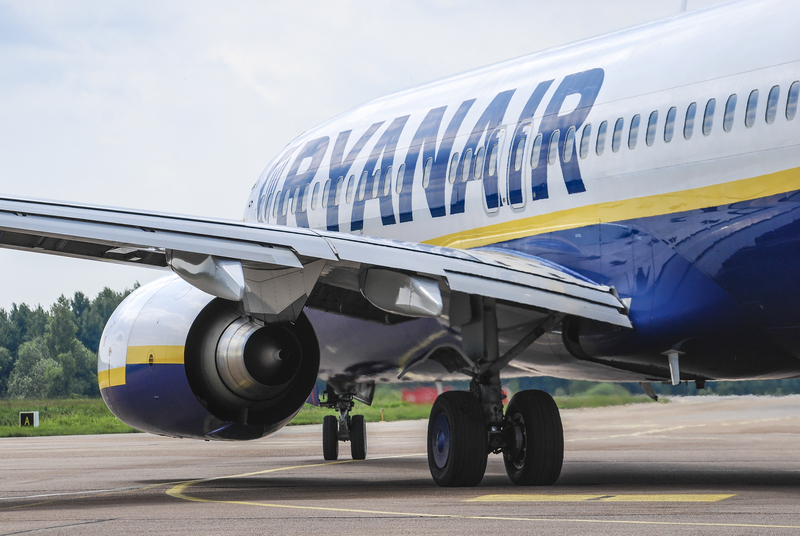
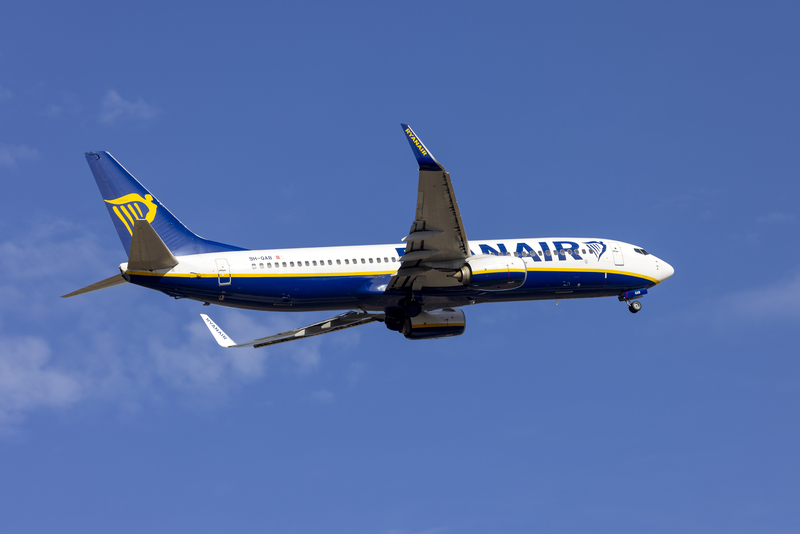
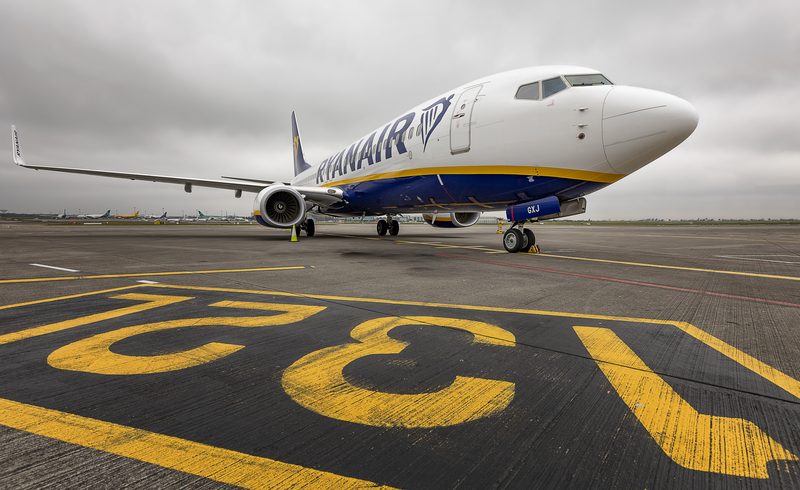
The aircraft type on FR7693 was not shown in the publicly available flight-status data, but Ryanair’s Arlanda-Chania service is typically operated by the carrier’s Boeing 737 family. Ryanair’s mainline fleet includes the 189-seat Boeing 737-800 and the higher-density Boeing 737 MAX 8-200, which Ryanair markets as the “Gamechanger.” Both types are central to Ryanair’s short- and medium-haul European operation.
That makes the reports of large numbers of missed passengers especially significant. A single 737 departure can carry roughly 189 to 197 passengers, depending on the aircraft variant. If dozens of passengers were left behind, the operational and customer-service consequences would have been substantial.
ID 341890260 | Air © Gordzam | Dreamstime.com
Why Baggage Check-In Is a Critical Bottleneck
For passengers traveling with only cabin baggage, an airline check-in system problem may be manageable if they already have a mobile boarding pass. For passengers with checked baggage, it is different.
Checked bags must be accepted, tagged, screened, loaded into the baggage system, reconciled with passengers, and delivered to the aircraft. If the airline’s check-in or bag-tagging system stops working, the passenger cannot simply proceed to security and solve the issue later.
That is why the Arlanda disruption created such a visible bottleneck. The issue was not just a slow line. It affected the ability of passengers to enter the rest of the airport process.
Swedavia’s own passenger guidance notes that recommended airport arrival time depends on whether travelers have checked baggage, whether the airline offers self-service bag tag printing, whether documentation checks are required, and whether passengers need passport or border control. In other words, a passenger’s journey through the airport depends heavily on the exact airline and destination process.
When that process breaks at the first stage, even passengers who arrived early can lose the time cushion they expected to have.
Swedavia Says the Wider Airport Was Not the Problem
Swedavia’s position is important because it helps separate an airport-capacity issue from an airline-system issue.
According to local reporting, Swedavia confirmed that Ryanair had a disruption in its check-in system during the morning. The airport operator also directed passengers with questions about their trips to contact Ryanair, reinforcing that the disruption was not a general Arlanda (ARN) infrastructure failure.
That matters for accountability. At a large airport, passengers often blame “the airport” when lines are long or flights are missed. But airline check-in desks, baggage acceptance, document checks, gate control, and boarding decisions are usually airline or ground-handler functions, even though they take place inside airport buildings.
For Arlanda (ARN), this distinction is especially important during the summer peak. The airport handles a large mix of Scandinavian, European, long-haul, low-cost, charter, and domestic traffic. If one airline’s system fails, the disruption can look chaotic in the terminal, but it does not necessarily mean the airport’s broader check-in infrastructure has failed.
Ryanair Says Passengers Will Be Rebooked
Ryanair said affected passengers would be rebooked free of charge on the next available flights and would receive assistance at the airport.
However, some passengers told Swedish media that their experience on the ground did not match that statement. One group traveling to Chania (CHQ) said they were initially told they could rebook only after paying a €100 “missed flight fee,” while others said they struggled to find Ryanair staff able to assist them at Arlanda (ARN).
That gap between airline statement and passenger experience is common during irregular operations. An airline may issue a central policy, but if passengers cannot reach the right desk, app function, phone agent, or handling representative, the practical recovery can feel very different.
For affected travelers, the key issue will be documentation. Passengers who missed flights because of the airline’s own check-in system issue should preserve boarding passes, booking references, baggage receipts, screenshots, time-stamped photos of queues, app messages, replacement-ticket receipts, hotel bookings, and any written communication from Ryanair. Those records can matter when seeking reimbursement or rebooking support.
The Customer-Service Problem Is Larger Than the Technical Failure
The technical failure was the trigger. The customer-service response may become the longer-lasting issue.
In airline operations, a system outage can happen. What passengers remember is how the airline manages the recovery. Were there enough staff? Was information clear? Did the airline hold flights where possible? Were passengers prioritized by departure time? Were bags handled properly? Were rebooking options explained? Were families kept together? Were replacement flights offered without additional fees?
Those questions matter because missed flights are not just schedule disruptions. They can destroy a holiday itinerary. Passengers may have hotels, rental cars, cruise departures, package tours, event tickets, and connecting transport waiting at the destination.
For a leisure-heavy Ryanair route such as Stockholm (ARN)-Chania (CHQ), many travelers are likely headed for vacation. Missing the outbound flight can mean losing a day or more of a short holiday, especially if the next available low-cost seat is several days away.
ID 179459908 | Air © Peter Krocka | Dreamstime.com
Why Gate Closure Still Matters
Passengers often ask why an aircraft cannot simply reopen boarding when stranded travelers arrive late because of an airline-caused check-in problem.
In some cases, it can. In others, it cannot.
Once boarding is closed, the airline must account for passengers, baggage, load control, weight and balance, security rules, crew duty time, slot compliance, and departure sequencing. If checked bags were loaded but passengers did not board, bags may need to be offloaded depending on the circumstances and applicable security requirements. If the aircraft is at a remote stand, reopening boarding can require buses, ramp staff, gate agents, aircraft crew coordination, and potentially a new departure slot.
That does not mean passengers are wrong to be angry. It means the aircraft departure process has hard operational limits. Once a low-cost carrier’s schedule starts slipping during a morning wave, the airline may decide that departing the aircraft is less damaging to the network than holding it for late-arriving passengers.
The more fundamental problem is that those passengers were late through no apparent fault of their own if the airline’s check-in process had failed.
Arlanda’s Morning Rush Made the Failure Worse
Morning is one of the most unforgiving times for a check-in failure. Airports are busy, many leisure flights depart early, and low-cost carriers often schedule first-wave departures to maximize aircraft utilization throughout the day.
At Arlanda (ARN), an early problem at Ryanair’s counters meant passengers were competing against time from the start. For flights to holiday destinations such as Chania (CHQ), Thessaloniki (SKG), and other summer markets, the passenger mix can include families, large checked bags, and travelers less familiar with fast low-cost airport processes.
That combination creates pressure. Families may need more time to check bags. Vacation travelers may have multiple suitcases. Some destinations require additional document checks. If the system slows or stops, the queue can grow faster than staff can recover it.
Once that happens, airport disruption becomes visible: long lines, passengers running through terminals, crowded baggage areas, missed gate cutoffs, and angry travelers looking for answers.
What Ryanair Will Need to Address
The immediate technical issue has reportedly been fixed. The next question is how Ryanair handles the aftermath.
The airline will need to identify exactly which flights and passengers were affected, determine who missed flights because of the check-in failure, and provide rebooking or reimbursement in line with its obligations and public statements. It will also need to coordinate with its ground-handling partners and the external system provider to understand why the outage occurred and how a similar failure can be prevented.
The incident may also prompt questions about contingency procedures. Airlines need fallback plans when check-in systems fail, especially during peak holiday departure periods. That can include manual processing, additional staff, passenger prioritization by flight time, temporary bag-tag workarounds, clearer terminal announcements, and better coordination between check-in, security, gate agents, and airport operations.
The technology failure may have been temporary. The operational lesson is permanent: when the first step in the passenger journey fails, recovery must be fast, visible, and clearly communicated.
Bottom Line
Ryanair’s check-in system failure at Stockholm Arlanda Airport (ARN) turned a Wednesday morning departure bank into a major passenger disruption, with long baggage queues, missed flights, confusion at the gate, and travelers forced to seek new ways to reach their destinations.
Swedavia says the issue was specific to Ryanair’s check-in system and was not a wider Arlanda airport failure. Ryanair says the temporary technical problem was caused by an external system provider, has been resolved, and affected passengers will be rebooked on the next available flights.
For passengers, the distinction between airline system, ground handler, airport operator, and external supplier matters less than the result: they arrived for their flights and still did not travel. For airline professionals, the incident is a reminder that low-cost operations are only as resilient as their weakest processing point. When check-in and bag drop fail during a summer morning rush, the impact can move from a technical issue to a full customer-service breakdown in minutes.