Etna Ash Shuts Down Catania as Sicily’s Busiest Air Gateway Faces Another Volcanic Disruption
A renewed eruption at Mount Etna has heavily disrupted flight operations at Catania-Fontanarossa Airport (CTA), forcing Sicily’s busiest airport into a major operational slowdown after volcanic ash moved across eastern Sicily.
The latest activity intensified between Sunday, July 5, and Monday, July 6, with ash emissions from Etna’s summit area creating unsafe conditions for aircraft operating to and from Catania (CTA). Airport authorities suspended arrivals and departures, with the disruption extended until at least 10:00 local time on Tuesday, July 7, as operators waited for volcanic conditions, ash dispersion and runway safety to improve.
For passengers, the impact was immediate: canceled flights, delayed departures, and diversions to Palermo Falcone Borsellino Airport (PMO). For airlines and airport operations teams, the problem was more complex. Volcanic ash is not just a visibility issue. It is an aircraft, runway, engine and airspace safety issue.
Catania’s Location Makes It Highly Exposed To Etna
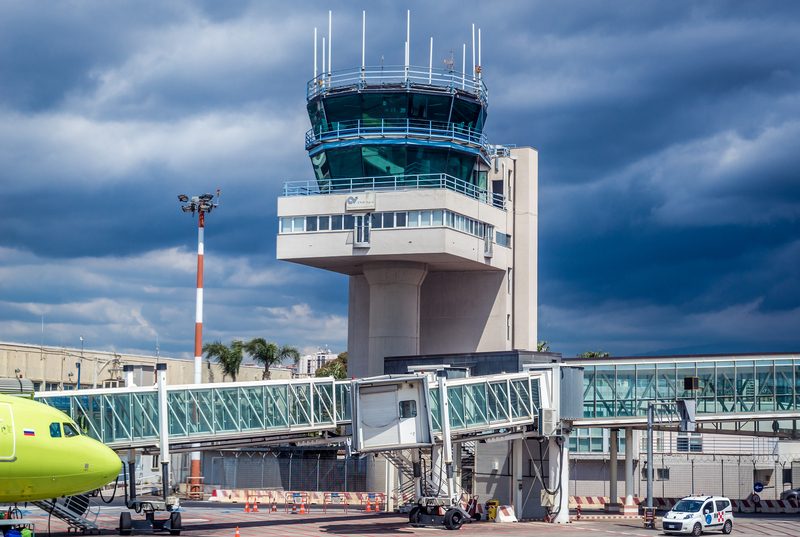
Catania-Fontanarossa Airport (CTA), also known as Vincenzo Bellini Airport, sits on Sicily’s eastern coast, south of the city of Catania and within operational reach of Mount Etna. That geography is one of the airport’s great commercial strengths and one of its recurring operational risks.
CTA is the main air gateway for eastern Sicily, including Catania, Taormina, Siracusa, Mount Etna tourism, and the wider Ionian coast. It handles heavy low-cost, domestic, leisure, and international traffic, with airlines such as Ryanair, easyJet, ITA Airways, Wizz Air, Lufthansa, KLM and other European carriers serving the airport.

But when Etna produces ash and the wind carries it toward the airport or its approach and departure paths, Catania (CTA) can lose capacity quickly. The airport has a single main runway, 08/26, which means there is limited operational redundancy when runway contamination, airspace restrictions, or ashfall require inspections and cleanup.
That is the core reason Etna eruptions can have an outsized aviation impact. The airport is not simply near an active volcano. It is a high-volume commercial airport operating near one of the most persistently active volcanoes in the world.
The Ash Plume Was Low, But Still Operationally Serious
The latest eruption did not need to send ash into the upper atmosphere to create disruption. Reports from volcanic monitoring and aviation sources described an ash column reaching about 1.5 km above Etna’s summit and drifting south to south-southeast.
That detail matters. A 1.5-km column above the summit is not the same as a 1.5-km altitude above sea level. Mount Etna itself rises more than 3,300 meters, so even a relatively modest summit plume can place ash high enough to affect local aviation, especially around approach corridors, climb-out paths and airport surface operations.

Volcanic activity also developed after an effusive lava phase that had started in late June and reportedly stopped on July 4. The renewed ash emissions then changed the aviation picture almost immediately.
For pilots and dispatchers, the most important question is not whether the eruption is visually dramatic. It is where the ash is, how dense it is, which direction it is moving, and whether it affects the aircraft’s route, altitude profile, destination airport, alternate planning, or runway surface.
Why Volcanic Ash Is Such A Serious Aircraft Hazard
Volcanic ash is dangerous to aircraft because it is made of tiny particles of pulverized rock, minerals and volcanic glass. It can be abrasive, electrically disruptive, and damaging to engines and airframes.
The European Union Aviation Safety Agency maintains guidance for volcanic ash operations, while the UK Civil Aviation Authority notes that jet aircraft engines can be damaged by ash exposure. Ash can erode compressor blades, damage cockpit windows, contaminate systems, interfere with sensors and, in high concentrations, create serious engine-risk scenarios.
There is also a runway issue. Ash deposited on a runway or taxiway can reduce braking action, contaminate aircraft surfaces, and create foreign object debris risks. When ash is wet, it can become even more problematic because it can form a slippery, cement-like residue.
That is why airports such as Catania (CTA) do not simply continue operating because the runway looks usable from a distance. If ash is present, the surface must be inspected, cleaned, monitored and cleared before normal operations can safely resume.
Palermo Becomes The Natural Relief Airport
With Catania (CTA) heavily disrupted, some inbound flights were diverted to Palermo (PMO), Sicily’s other major international gateway. Palermo sits on the opposite side of the island and is often less directly exposed when Etna’s ash plume is moving south or southeast from the volcano.
That does not make diversions simple. Moving a flight from Catania (CTA) to Palermo (PMO) creates immediate passenger-handling problems: ground transportation across Sicily, baggage recovery, crew duty limits, aircraft rotation disruption, missed connections, and the need to reposition aircraft once Catania reopens.
For airlines, the decision depends on aircraft fuel state, the destination alternate already planned, passenger needs, crew legality, available ground handling, and whether a later recovery flight into Catania is possible. For passengers, the diversion may look like a straightforward airport swap. Operationally, it can disrupt the aircraft’s entire rotation for the rest of the day.
That is especially true for low-cost carriers, which often run high aircraft utilization and tight turnarounds. A diverted aircraft can quickly affect several later sectors.
Toulouse VAAC Remained Central To The Aviation Response
The Toulouse Volcanic Ash Advisory Center continued issuing Etna volcanic ash advisories into July 7. VAACs are a critical part of the aviation safety system because they provide forecast and advisory information used by airlines, air traffic control, dispatchers and regulators.
For Etna, the process involves volcanic observations, satellite data, meteorological models, wind forecasts and local monitoring from Italian scientific authorities. Airlines then use that information alongside their own risk assessments and regulatory requirements to decide whether flights can operate safely.
This is one of the biggest changes since the 2010 Eyjafjallajökull eruption in Iceland. European aviation no longer treats every ash event as a continent-wide shutdown. Instead, operators work with more targeted ash modeling, risk assessment and airspace management. That allows more flights to continue when conditions permit, but it still means airports like Catania (CTA) may close or severely restrict operations when ash directly affects the airport environment.
Catania Has Seen This Before
Etna-related disruption is not unusual for Catania (CTA). The airport has repeatedly faced temporary closures or restrictions during ash events, including previous eruptions in 2023, 2024 and 2025.
That history matters because CTA has procedures for volcanic events, but procedures cannot eliminate the underlying risk. If ash is falling over the airport or moving through local airspace, flight safety takes priority over schedule recovery.
The disruption can be frustrating for travelers because Etna eruptions are often brief, localized and highly variable. A flight may be canceled in the morning, while another airline may operate later in the day if the ash plume shifts and the runway is cleared. That variability is not inconsistency. It reflects changing volcanic and wind conditions.
For airline operations teams, Etna is one of the more challenging recurring natural hazards in European aviation because it can affect both the airspace and the airport surface at the same time.
The Operational Impact Extends Beyond Sicily
A Catania closure does not only affect flights within Italy. CTA has extensive links across Europe, including service to London, Berlin, Paris, Amsterdam, Rome, Milan, Munich, Brussels, Malta, Vienna and other key markets.
When the airport closes, aircraft and crews can quickly end up in the wrong places. A canceled London-Catania flight may affect a later Catania-London sector. A diverted arrival to Palermo (PMO) may require a ferry flight or passenger bus transfer. A delayed departure from Catania may cause missed slots at another congested airport.
The result is a network-level disruption from a local volcanic event. That is why airlines often cancel more aggressively than passengers expect. If the runway reopening time is uncertain, holding aircraft and crews out of position can create more problems than canceling early and rebuilding the schedule later.
Passengers Should Treat The Situation As Fluid
Travelers booked to or from Catania (CTA) should check directly with their airline and the airport before leaving for the terminal. Etna disruption can change quickly depending on ash emissions, wind direction, runway contamination and airspace restrictions.
Passengers should also pay attention to which airport is listed on their revised itinerary. A flight may be canceled, delayed, diverted to Palermo (PMO), or rebooked through another airport such as Comiso Airport (CIY) or Trapani-Birgi Airport (TPS), depending on airline arrangements and capacity.
For airlines, the recovery will depend on how quickly Catania (CTA) can reopen safely, how much aircraft repositioning is required, and whether crews remain legal to operate delayed sectors.
Bottom Line
Mount Etna’s latest eruption has again shown why Catania-Fontanarossa Airport (CTA) is one of Europe’s most operationally exposed major leisure airports. The airport’s location gives eastern Sicily excellent air access, but it also places CTA directly in the shadow of one of the world’s most active volcanoes.
The ash column from the July 5-6 activity reached about 1.5 km above Etna’s summit and drifted south to south-southeast, prompting the suspension of most flight operations at Catania and diversions to Palermo (PMO). Even a relatively modest ash event can be serious for aviation because volcanic particles threaten engines, aircraft systems, cockpit visibility, runway braking and airport surface safety.
For passengers, this is a major travel disruption. For aviation professionals, it is a familiar but difficult Etna scenario: a single-runway airport, a shifting ash plume, high summer demand, and an operating environment where safety must override schedule recovery.