How a Chicago Storm Turned a Charlotte Flight Into a Minneapolis Diversion
For passengers on American Airlines flight AA836, what should have been a routine hop from Charlotte Douglas International Airport (CLT) to Chicago O’Hare International Airport (ORD) became a long, frustrating, three-airport journey that ended in Chicago almost half a day late.

The July 3 flight was already in trouble before it left North Carolina. AA836 was scheduled to depart Charlotte (CLT) at 1:05 p.m. EDT, but flight-tracking data shows it did not get airborne until 8:27 p.m. EDT. By the time the aircraft reached the Chicago area, thunderstorms and air traffic restrictions around O’Hare (ORD) had made a safe arrival impractical. The crew diverted to Minneapolis-St. Paul International Airport (MSP), where the aircraft remained on the ground before continuing to Chicago.
The flight eventually reached O’Hare (ORD) at 1:22 a.m. CDT on July 4. Against a scheduled arrival time of 2:20 p.m. CDT the previous afternoon, that put passengers into Chicago roughly 11 hours late.
A Long Delay Before the Diversion Even Began
The most painful part of AA836 was not just the diversion. It was the sequence.
Passengers first absorbed a delay of more than seven hours at Charlotte (CLT). Then, after finally departing, the flight tracked north toward Chicago (ORD) as convective weather complicated arrivals across the region. As the aircraft approached the Chicago terminal area, the crew diverted to Minneapolis (MSP), a safe and logical alternate given the weather constraints around O’Hare.

That distinction matters. Minneapolis was not the “wrong city” from an operational standpoint. It was the city that could accept the aircraft when Chicago could not. For passengers, the result felt absurd: a Chicago-bound flight landed in Minnesota after an entire day of delay. For the flight crew and dispatch team, it was an IROP decision shaped by fuel, weather cells, traffic flow programs, ATC acceptance rates, and the availability of a suitable alternate airport.
The aircraft later continued from Minneapolis (MSP) to Chicago (ORD) using the same tail number, completing the final sector early the next morning.
The Aircraft: American’s 196-Seat Airbus A321neo
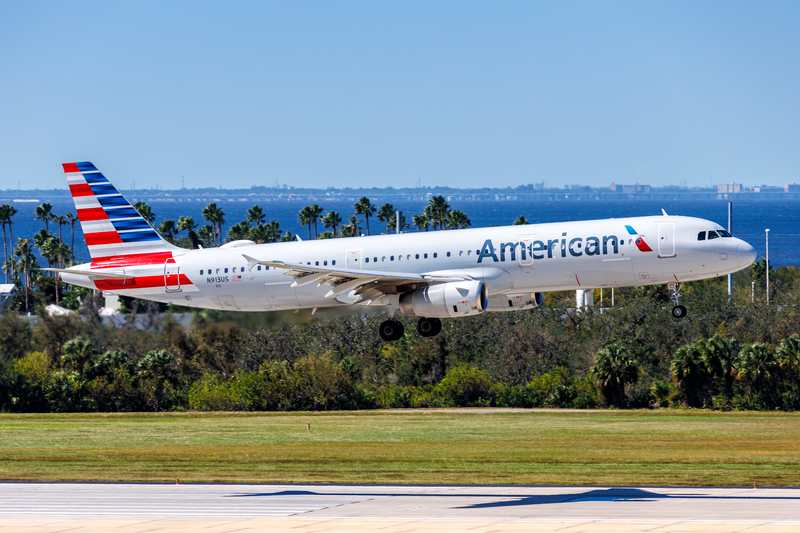
AA836 was operated by an Airbus A321neo, registered N957XV. On American Airlines, the A321neo is a high-capacity domestic narrowbody configured with 196 seats: 20 First Class seats, 35 Main Cabin Extra seats, and 141 Main Cabin seats.

That makes this more than a small operational inconvenience. A full or near-full A321neo can mean close to 200 passengers misconnected, rebooked, delayed, or stranded during a peak travel period. It also means crew duty limits, gate availability, baggage handling, catering, cleaning, and customer-service pressure all become part of the recovery problem.
The A321neo is one of American’s more efficient domestic aircraft. Compared with older-generation A321ceo aircraft, the “neo” family offers newer engines, improved fuel burn, better range, and lower operating costs. For American, it is a useful airplane on dense domestic routes such as Charlotte (CLT)-Chicago (ORD), where hub-to-hub traffic, connecting passengers, and local demand can support a larger narrowbody.
But when a hub operation is disrupted, that same capacity becomes a challenge. A 196-seat aircraft does not just carry more passengers. It creates a larger recovery burden when the operation breaks.
Chicago Weather Hit a Hub Already Under Pressure
The AA836 diversion was part of a much larger weather-driven disruption at O’Hare (ORD). Severe thunderstorms and strong winds affected the Chicago area on one of the busiest travel days of the summer, with ground stops and traffic management programs impacting both O’Hare (ORD) and Chicago Midway International Airport (MDW).

O’Hare is especially vulnerable to these cascading effects because of its scale. Airports Council International ranked Chicago O’Hare (ORD) first globally for aircraft movements in 2025, with more than 860,000 takeoffs and landings. That level of activity gives ORD enormous network power, but it also leaves little margin when thunderstorms cut arrival rates.
The airport was already operating in a constrained environment this summer. The Federal Aviation Administration issued a temporary summer 2026 scheduling order limiting O’Hare to 2,708 operations per day between 6:00 a.m. and 11:59 p.m. Central Time. The FAA said the limit was necessary because published schedules had exceeded the airport’s practical capacity during a season of construction, surface constraints, and competitive schedule growth.
That context helps explain why a single line of storms can create such a large operational ripple. When ORD is already close to its scheduling ceiling, there is less slack for recovery. A ground stop does not just delay arrivals for an hour. It displaces aircraft, crews, gates, passengers, and downstream departures across multiple hubs.
American and United Both Feel O’Hare’s Constraints
O’Hare is unusual because it is a major hub for both American Airlines and United Airlines. That makes ORD one of the most competitive large hubs in the United States and one of the most operationally complicated.
American has been trying to strengthen its Chicago schedule, while United remains the larger carrier at O’Hare. That competitive tension has been a major part of the 2026 ORD story. The FAA specifically cited competitive scheduling dynamics between the airport’s two largest carriers when it imposed the temporary summer operation limits.
For passengers, the airline rivalry is mostly invisible until something goes wrong. Then the effects become obvious. More departures mean more aircraft on the ground, more pressure on gates, more crews that must remain legal, and more flights competing for the same reduced arrival and departure capacity during weather events.
That is why AA836’s diversion should not be viewed as an isolated bad day. It was a visible example of what happens when severe weather intersects with an already tight hub schedule.
The Holiday Rush Made Recovery Harder
The timing could hardly have been worse. The disruption occurred during the Fourth of July travel period, one of the busiest stretches of the year for U.S. aviation. The Transportation Security Administration projected nearly 18.7 million passengers would be screened at U.S. airports between June 30 and July 6, with July 2 expected to top three million travelers.
Chicago was also preparing for heavy airport demand. The Chicago Department of Aviation expected roughly 1.95 million passengers to move through O’Hare (ORD) and Midway (MDW) during the holiday period, with O’Hare projected to experience its busiest Fourth of July travel period on record.
That kind of demand reduces recovery flexibility. Spare seats are harder to find. Crews are stretched. Hotels fill. Rebooking options are limited. For a diverted A321neo, especially one carrying connecting passengers through Chicago (ORD), the recovery challenge can quickly extend far beyond the passengers onboard that one aircraft.
The broader U.S. system was also under pressure. FlightAware’s Friday disruption dashboard showed more than 8,400 delays within, into, or out of the United States and more than 900 U.S. cancellations that day. In that environment, even a well-run airline operation has limited room to absorb a major hub weather event.
Why Minneapolis Made Operational Sense
To passengers, Minneapolis (MSP) may have felt like the wrong place. Operationally, it made sense.
A diversion airport must have suitable runways, acceptable weather, ATC capacity, ground handling, fuel, and enough operational support to receive the aircraft safely. It also needs to be within range based on the aircraft’s fuel state and weather avoidance routing. MSP is a large, well-equipped airport with multiple runways and significant airline infrastructure, making it a credible alternate when Chicago (ORD) is constrained by thunderstorms.
The A321neo also gives dispatchers and crews some flexibility. Its range and fuel performance are strong for a domestic narrowbody, but weather deviations, holding, and alternate planning still drive conservative decisions. Once the Chicago arrival picture deteriorated, diverting to MSP preserved safety and gave American a path to continue the aircraft to ORD once conditions and traffic flow allowed.
That is the part passengers rarely see. A diversion is disruptive, expensive, and unpopular, but it is almost always the safer choice when the destination is no longer a reliable option.
The Passenger Experience Was Still Rough
Operational logic does not make the experience pleasant. Passengers on AA836 faced a long delay at Charlotte (CLT), a flight that did not reach its intended destination, a ground stop in Minneapolis (MSP), and an overnight arrival into Chicago (ORD).
For travelers with Chicago as their final destination, the delay was exhausting. For connecting passengers, the disruption likely meant missed onward flights, rebooking, possible overnight stays, and baggage complications. For the crew, the day would have involved extended duty-time pressure, customer frustration, weather decision-making, and coordination with dispatch and ATC.
This is where airline operations and customer experience collide. The crew may have made the safest and most appropriate decision. The airline may have had limited options because of weather and hub congestion. But the passenger still experienced an 11-hour delay on a flight that normally takes less than two hours in the air.
That gap between operational reality and customer perception is one of the hardest parts of irregular operations.
Bottom Line
American Airlines flight AA836 was not simply a delayed Charlotte (CLT)-Chicago (ORD) flight. It was a case study in how a high-density domestic narrowbody, a constrained hub, severe weather, holiday demand, and limited recovery slack can combine into a major IROP.
The Airbus A321neo operating the flight eventually reached Chicago safely, but only after a long delay, a diversion to Minneapolis (MSP), and an overnight continuation to O’Hare (ORD). For passengers, it was a punishing travel day. For airline professionals, it was a reminder that when a major hub like ORD loses capacity during peak demand, the disruption does not stay local.
It moves through the network, one aircraft, one crew, and one delayed passenger load at a time.