VietJet’s Australian Ambition Could Bring A New Low-Cost Fight To Sydney, Melbourne And Brisbane
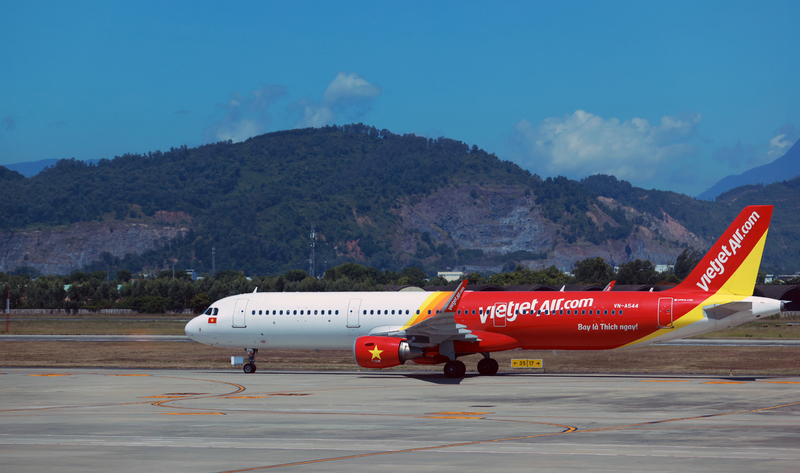
VietJet’s reported plan to launch a domestic airline in Australia could become one of the most closely watched market-entry attempts in the country since Virgin Blue disrupted the domestic market more than two decades ago.
The Vietnamese low-cost carrier has reportedly applied to the Civil Aviation Safety Authority for an Australian air operator’s certificate, the regulatory approval required to operate domestic commercial flights in Australia. The proposed airline would be locally incorporated and initially built around a fleet of 10 Boeing 737 aircraft, with reports pointing to the Boeing 737 MAX family as the likely platform.
If the plan moves forward, VietJet would be entering one of the most concentrated major domestic aviation markets in the world. Qantas Group, including Jetstar, and Virgin Australia dominate domestic flying, while previous challengers such as Bonza and Rex’s Boeing 737 operation failed to create a lasting third force.
That is why VietJet’s proposal matters. This is not a small Australian startup trying to lease a few aircraft and fight two entrenched incumbents. VietJet is a large Asian airline group with international scale, a large aircraft pipeline, experience operating low-cost subsidiaries, and an existing presence in the Australia–Vietnam market.
The question is not whether Australia has room for lower fares. It clearly does. The question is whether VietJet can build an Australian operation strong enough to survive the response from Qantas, Jetstar, and Virgin.
AOC Approval Comes First
The first hurdle is regulatory, not commercial.
Before VietJet can launch domestic services in Australia, it needs an Australian air operator’s certificate. CASA’s approval process is not a formality. It requires the regulator to assess safety systems, aircraft, maintenance arrangements, operating manuals, management structure, crew training, financial viability, and the airline’s ability to conduct the proposed operation safely.
That process can take months. Aviation Week reported that CASA typically takes six to 12 months to consider an AOC application, depending on the complexity of the proposed operation. A 10-aircraft Boeing 737 domestic airline would be a substantial certification project, especially for a foreign airline group setting up a new Australian entity.
That means any talk of flights beginning next year should be treated as possible, not guaranteed. Aircraft, slots, branding, fares, and routes all matter, but none of them means much until CASA grants the certificate.
Australia’s regulatory framework does make the ownership side easier than in many countries. Foreign entities can own domestic airlines in Australia, provided they meet the country’s safety and certification requirements. That open ownership structure is one reason VietJet can even consider the plan.
Sydney Slots Point To A Serious Proposal
The strongest sign that VietJet’s interest is more than market gossip is the reported Sydney slot allocation.
Slot data for Sydney Airport (SYD) reportedly shows enough capacity for up to seven daily return flights by the proposed operator. That does not automatically mean all seven would launch on day one, nor does it confirm the final route map. But it does show the scale of the ambition.
Sydney (SYD) is the prize. It is Australia’s busiest airport, the country’s largest corporate travel market, and the most important point in the domestic “Golden Triangle” linking Sydney (SYD), Melbourne (MEL), and Brisbane (BNE).
For any new Australian domestic airline, Sydney access is essential. A low-cost carrier can build around secondary airports for some routes, but it cannot seriously challenge the incumbents without a meaningful presence at Sydney (SYD). That is where the business traffic is, where high fares are most visible, and where aircraft utilization can be built around dense domestic demand.
Seven daily return services would not make VietJet a national giant, but they would give it enough schedule depth to be noticed.
The Boeing 737 MAX Would Be The Logical Aircraft
Reports have linked the proposed operation to Boeing 737 aircraft, with the Boeing 737-8/MAX 8 the most logical candidate.
The Boeing 737 MAX family is well suited to Australian domestic flying. The 737-8 has a published range of up to 3,500 nautical miles and typical two-class seating of 160 to 180 passengers, with a maximum certified capacity of 210 seats. For a low-cost operator, that gives the aircraft enough range for every major Australian domestic trunk route, plus the potential for short international sectors later if the airline chooses to expand.
In Australia, the MAX would be especially useful because domestic distances are longer than many people outside the market realize. Sydney (SYD)–Perth (PER) is a transcontinental sector of roughly five hours. Brisbane (BNE)–Perth (PER) and Melbourne (MEL)–Darwin (DRW) are also long narrowbody missions. Even the Golden Triangle routes are busy enough that fuel efficiency and aircraft utilization matter.
A 10-aircraft fleet would give VietJet enough scale to start, but not enough to cover the whole country. That means the first route choices would need to be disciplined. The airline would likely need to focus on high-volume city pairs where it can fill aircraft quickly, stimulate price-sensitive demand, and avoid spreading itself too thin.
The Golden Triangle Is The Obvious Starting Point
The most likely first markets are Sydney (SYD), Melbourne (MEL), and Brisbane (BNE).
These three airports form Australia’s Golden Triangle, the core of the country’s domestic aviation system. The routes linking them carry a mix of business travelers, government traffic, leisure passengers, international connections, students, visiting-friends-and-relatives traffic, and passengers connecting to long-haul flights.
Sydney (SYD)–Melbourne (MEL) is the biggest prize. It is one of the busiest domestic air routes in the world and the most visible measure of airline competition in Australia. Any new airline wanting national relevance eventually has to decide whether to enter SYD–MEL.
Sydney (SYD)–Brisbane (BNE) and Melbourne (MEL)–Brisbane (BNE) are also logical. Brisbane has strong population growth, major tourism flows, a large airport catchment, and a role as a gateway to Queensland. If VietJet has seven daily Sydney return slots, a simple initial pattern could include multiple daily flights from Sydney to Melbourne and Brisbane, with aircraft also rotating through Melbourne–Brisbane.
That kind of launch would make the airline relevant immediately, but it would also put it directly in front of Qantas, Jetstar, and Virgin on their most important territory.

ID 291254706 © Duc Huy Nguyen | Dreamstime.com
Why A New Entrant Could Pressure Fares
The fare argument is straightforward: concentrated markets tend to produce higher fares, and Australia’s domestic market has become highly concentrated again.
The collapse of Bonza and the end of Rex’s Boeing 737 capital-city operation removed much of the competitive pressure that briefly existed after the pandemic. Qantas Group and Virgin Australia now control nearly all domestic flying, with Jetstar serving as the main large-scale low-cost brand.
A VietJet-backed Australian carrier could change that, but only if it reaches enough scale. One or two aircraft would be easy for incumbents to contain. Ten aircraft is more serious, especially if the airline concentrates on a few dense routes instead of scattering capacity across too many cities.
The effect on fares would depend on how VietJet positions itself. If it adopts a true low-cost model with tight seat density, high aircraft utilization, paid ancillary services, aggressive online distribution, and limited complexity, it could undercut incumbents and force a response. If it launches with higher costs, weak frequency, or poor reliability, the fare impact may be temporary.
Australian passengers have seen this story before. New airlines often promise lower fares. Sustaining those fares while surviving the incumbent response is the hard part.
Where VietJet Could Fly First
If VietJet starts with seven daily Sydney (SYD) return flights, the first route map is likely to be conservative.
Sydney (SYD)–Melbourne (MEL) would be the flagship route. It gives the airline access to the country’s largest domestic market and the highest-profile fare battle. Sydney (SYD)–Brisbane (BNE) would be another natural early route, especially because VietJet already serves Brisbane internationally from Vietnam. Melbourne (MEL)–Brisbane (BNE) would round out the triangle and improve aircraft utilization away from Sydney.
A possible first phase could therefore be built around SYD–MEL, SYD–BNE, and MEL–BNE.
The next markets would likely depend on aircraft availability and airport access. The Gold Coast (OOL) is an obvious leisure target. So is Cairns (CNS). Perth (PER) is attractive but operationally different because of its stage length. Adelaide (ADL), Hobart (HBA), and Canberra (CBR) could all enter the discussion depending on the airline’s strategy.
The temptation will be to grow quickly. The smarter move would be to prove the model on a small number of high-demand routes before expanding.
Gold Coast Could Be The Leisure Play
Gold Coast Airport (OOL) is one of the most logical early expansion candidates beyond the Golden Triangle.
The Gold Coast is a large leisure market with strong demand from Sydney (SYD), Melbourne (MEL), and Brisbane-area travelers. It is also a market where low-cost carriers have historically performed well. Jetstar has a strong presence there, and Virgin and Qantas also serve key routes.
For VietJet, Gold Coast (OOL) could work because the airline’s brand is already associated with leisure, low fares, and price stimulation. It could enter Sydney (SYD)–Gold Coast (OOL) or Melbourne (MEL)–Gold Coast (OOL) with a product that is easy for passengers to understand: cheap fares, nonstop flights, paid extras, and high-density aircraft.
The challenge is competition. Gold Coast is not an ignored airport. It is a known leisure battleground. VietJet would need to decide whether it wants to fight Jetstar directly or use the Gold Coast later after establishing its core trunk routes.
Perth Is Tempting But More Complex
Perth (PER) is commercially attractive but operationally more demanding.
A Sydney (SYD)–Perth (PER) or Melbourne (MEL)–Perth (PER) route gives access to a large domestic market, mining-related travel, visiting-friends-and-relatives demand, and strong transcontinental traffic. It would also allow VietJet to connect its domestic Australian network with existing international services at Perth, if distribution and regulatory structure allow.
But Perth routes use aircraft for longer blocks. A low-cost airline must be careful with long sectors because aircraft time is the most valuable asset in the business. A single SYD–PER round trip can consume much of a day. That may be worthwhile if fares and loads are strong, but it is less forgiving than a short SYD–MEL rotation.
The Boeing 737-8 can operate the route, but aircraft range is not the issue. The issue is whether VietJet wants to spend early aircraft time on long transcontinental flying or build higher-frequency East Coast operations first.
A Perth move may make sense later. It is less likely to be the cleanest first step.
Western Sydney Airport Could Change The Equation
Western Sydney International Airport (WSI) is another major variable.
WSI is scheduled to open to passengers on October 25, 2026, and unlike Sydney Airport (SYD), it will operate 24 hours a day without a curfew. That matters because Sydney’s existing airport is constrained by curfew, slots, and congestion. A new airline may find it easier to grow at WSI than at SYD, especially if it is willing to serve western Sydney’s fast-growing population rather than focus only on the traditional business catchment closer to the city center.
For VietJet, WSI could be attractive in the medium term. A low-cost airline does not always need the most central airport if the fare is right and the catchment is strong. Western Sydney has a large and growing population, strong ethnic and visiting-friends-and-relatives demand, and a passenger base that may be more price-sensitive than the premium-heavy eastern suburbs market.
The risk is that WSI will need time to mature. Ground transport, passenger habits, airline awareness, and commercial services will not instantly match Sydney (SYD). A new entrant may prefer to start at SYD for visibility, then use WSI for growth once the airport establishes itself.
Existing VietJet Australia Flights Matter
VietJet is not starting from zero in Australia.
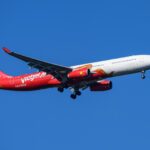
The airline already operates international services from Vietnam to Australian cities including Sydney (SYD), Melbourne (MEL), Brisbane (BNE), and Perth (PER). Sydney Airport welcomed VietJet as its 50th airline in 2023, when the carrier launched Ho Chi Minh City (SGN)–Sydney (SYD) using Airbus A330-300 aircraft.
That existing international presence matters for several reasons.
First, VietJet already has brand recognition among some Australian travelers, especially in the price-sensitive long-haul leisure market. Second, it already understands Australian airport operations, border processes, sales channels, and consumer behavior. Third, a domestic Australian airline could eventually feed passengers into VietJet’s international flights to Vietnam and beyond.
That feed would not automatically happen. It would depend on the corporate structure, booking platform, baggage agreements, regulatory approvals, and whether the Australian carrier is fully integrated into VietJet’s international network. But strategically, the logic is clear.
A passenger in Brisbane (BNE), Melbourne (MEL), Sydney (SYD), or Perth (PER) could use VietJet not just for domestic flying, but as a gateway to Vietnam and potentially to the carrier’s wider Asian network.
Why Bonza And Rex Failed Is The Warning
VietJet’s biggest advantage is scale, but Australia’s recent history is full of warnings.
Bonza tried to build a network around underserved leisure and regional routes using Boeing 737 MAX 8 aircraft. Its concept was interesting, but the airline struggled with aircraft availability, frequency, distribution, and market awareness. It collapsed in 2024.
Rex tried to move from regional flying into Boeing 737 capital-city trunk routes. It briefly added competition on major markets, but its jet operation entered administration in 2024 and withdrew from those routes.
Those failures do not mean a new airline cannot succeed. They do show that Australia is a brutally difficult market for new entrants. The incumbents have loyalty programs, corporate contracts, airport presence, lounges, distribution power, fleet scale, and the ability to respond with fares and capacity.
VietJet is different because it is already a large airline group. It has aircraft orders, international revenue, established systems, and experience running low-cost operations in multiple countries. But even a strong parent company cannot ignore Australian realities.
A new airline needs frequency, reliability, marketing, airport slots, customer service, maintenance support, crew availability, and enough cash to survive the first competitive response.
The Best Strategy May Not Be Purely Ultra-Low-Cost
VietJet’s core brand is low-cost, but Australia may require a slightly more careful product.
Australian domestic travelers are used to unbundled fares through Jetstar, but they also value reliability, baggage certainty, schedule frequency, and consumer protections. A pure ultra-low-cost model can stimulate demand, but it can also generate friction if passengers feel the total trip cost becomes unclear.
The smartest approach may be a disciplined low-cost model rather than a bare-bones one: simple fares, paid ancillaries, strong mobile distribution, clear baggage rules, reliable operations, and enough schedule consistency to build trust.
Aircraft utilization will be critical. So will on-time performance. A new entrant can win attention with cheap fares, but it keeps customers only if the operation works.
What Would Success Look Like?
Success would not require VietJet to overtake Qantas, Jetstar, or Virgin.
A realistic first goal would be a small but durable domestic operation built around Sydney (SYD), Melbourne (MEL), Brisbane (BNE), and possibly Gold Coast (OOL). If the airline can maintain reliable service, fill its aircraft, and create fare pressure on major routes, it would already be doing something Australia has not seen for some time.
A second phase could add Perth (PER), Adelaide (ADL), Hobart (HBA), Cairns (CNS), Canberra (CBR), or Western Sydney (WSI), depending on airport economics and aircraft availability.
A third phase could connect the domestic network more directly with VietJet’s international services to Vietnam, creating one-stop low-cost flows between Australian domestic cities and Asia.
But the first test is much simpler: get the AOC, launch safely, operate reliably, and avoid overexpansion.
Bottom Line
VietJet’s proposed Australian domestic airline could be the most credible challenge to the Qantas–Virgin structure in years, but it is still early.
The airline has reportedly applied for an Australian AOC and is planning around 10 Boeing 737 aircraft, with Sydney (SYD) slot allocations potentially supporting up to seven daily return flights. If approved, the obvious first markets would be the Golden Triangle routes linking Sydney (SYD), Melbourne (MEL), and Brisbane (BNE), with Gold Coast (OOL), Perth (PER), Adelaide (ADL), Hobart (HBA), Cairns (CNS), Canberra (CBR), and Western Sydney (WSI) all possible later candidates.
The Boeing 737-8/MAX 8 would be a sensible aircraft for the job, with the range and economics to handle Australia’s long domestic sectors. But the aircraft is only one piece of the puzzle. The real challenge will be regulation, airport access, operational reliability, competitive response, and whether VietJet can offer fares low enough to matter while building a business strong enough to last.
For Australian passengers, the upside is obvious: more competition and potentially lower fares. For Qantas, Jetstar, and Virgin, the warning is equally clear. If VietJet gets this right, Australia’s domestic market may finally have a new entrant with the scale and balance sheet to make the incumbents pay attention.