Air Congo Enters Brussels-Kinshasa Market With Ethiopian 787 Operation
Air Congo is preparing to open one of the most politically and commercially important routes in its young network, launching nonstop flights between Kinshasa and Brussels on July 1, 2026.
The new service will connect N’djili International Airport (FIH) in Kinshasa with Brussels Airport (BRU), restoring direct competition on a route long dominated by Brussels Airlines. Initial service is scheduled four times weekly, operating on Wednesdays, Fridays, Saturdays, and Sundays.
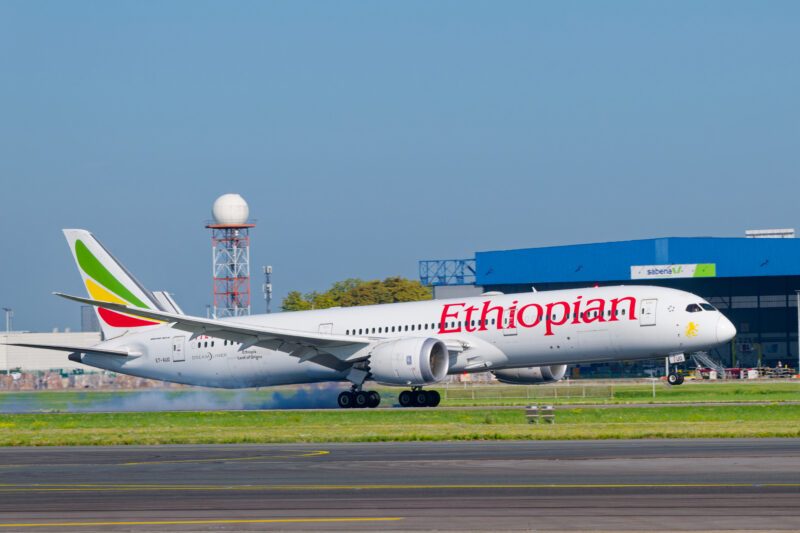
The aircraft and operating structure are just as important as the route itself. Although the flights are being marketed as an Air Congo service, current schedule filings show the operation using an Ethiopian Airlines Boeing 787-8 Dreamliner. That arrangement is central to the launch because carriers certified in the Democratic Republic of the Congo remain on the European Union Air Safety List and are not permitted to operate into EU airspace under their own certification.
Read our stories in your inbox
Two aviation newsletters. Zero fluff.
For passengers, the headline is simple: Kinshasa (FIH) and Brussels (BRU) will have a second nonstop operator. For the industry, the story is more layered. This is a new African flag carrier using a strategic shareholder’s long-haul aircraft and operating platform to enter one of the most sensitive Europe–Central Africa markets.
Air Congo Challenges Brussels Airlines On A Historic Route
The Brussels (BRU)–Kinshasa (FIH) market is not just another long-haul city pair. It is one of the most historically significant routes between Europe and Central Africa.
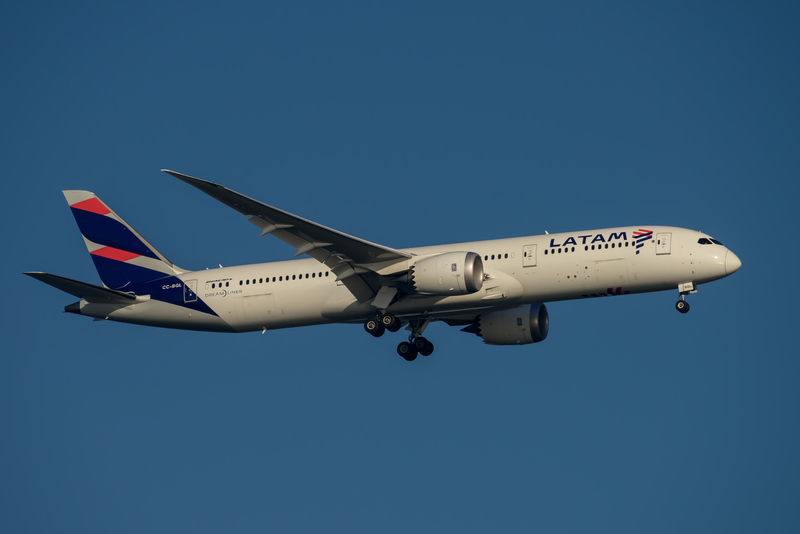
Belgium and the Democratic Republic of the Congo have deep political, family, business, diplomatic, cultural, and diaspora ties. Brussels has long functioned as one of the primary European gateways for travel to and from Kinshasa, and Brussels Airlines has built a strong position in the market with daily nonstop service.
Air Congo’s entry changes that dynamic. For the first time in years, Brussels Airlines will face a nonstop competitor on a route that has been one of its most important African long-haul markets.
That competition matters for fares, schedules, loyalty behavior, cargo capacity, and customer choice. A second nonstop operator can put pressure on pricing, improve availability during peak travel periods, and give passengers an alternative to Brussels Airlines’ Star Alliance-linked operation.
However, this is not a simple head-to-head fight between two equal long-haul incumbents. Brussels Airlines has brand recognition, established sales channels, corporate accounts, cargo relationships, and operational experience on the route. Air Congo brings national symbolism, Ethiopian Airlines backing, and the advantage of being a Congolese-branded carrier serving the country’s most important international city pair.
The Schedule: Four Weekly Flights From Kinshasa
Air Congo’s initial Brussels schedule is expected to operate four times weekly.
Booking information cited by Brussels Airport indicates a daytime departure from Kinshasa (FIH), with the aircraft leaving at 10:00 and arriving in Brussels (BRU) at 19:00. The return service departs Brussels (BRU) in the evening, at around 20:45, and lands back in Kinshasa (FIH) at 03:45 the following morning.
Current schedule filings show small day-of-week variations, with Wednesday timings moving about an hour later than the Friday, Saturday, and Sunday rotations. That is not unusual during a launch period, especially for a new long-haul service involving aircraft supplied by a partner airline.
From a passenger perspective, the schedule is practical. The northbound daylight flight from Kinshasa to Brussels avoids the overnight arrival pattern common on many Africa–Europe routes. The southbound return from Brussels arrives in Kinshasa before dawn, which is less convenient for local arrivals but allows the aircraft to cycle back into the wider Ethiopian and Air Congo operating plan.
The four-weekly frequency is also a measured entry. It gives Air Congo enough presence to be relevant, without immediately trying to match Brussels Airlines’ daily operation.
The Aircraft: Ethiopian Airlines Boeing 787-8
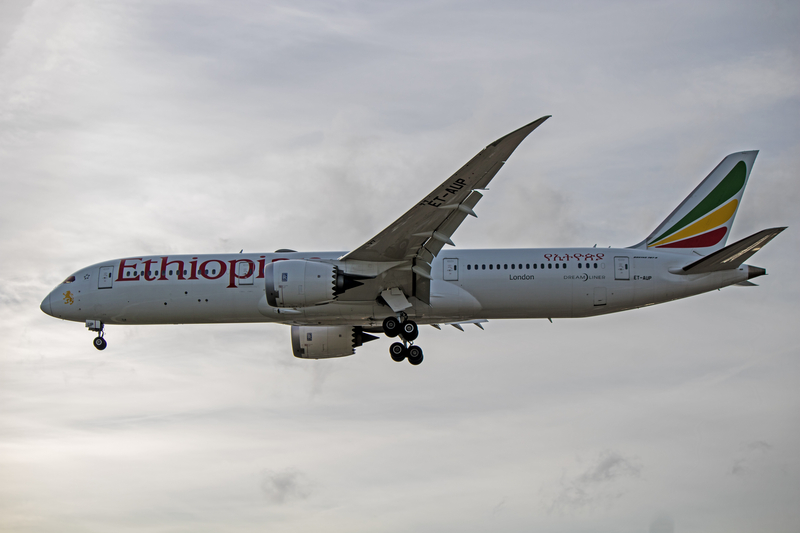
The route is scheduled with an Ethiopian Airlines Boeing 787-8 Dreamliner.
That is an important correction because some early reporting has referred generally to a Boeing 787 or specifically to a 787-9. Current schedule filings identify the aircraft as the 787-8, the smaller member of Boeing’s original Dreamliner family.
The 787-8 is well suited to the Kinshasa (FIH)–Brussels (BRU) mission. The route is roughly 3,900 miles depending on routing, comfortably within the type’s range. The aircraft gives the operation modern long-haul economics, lower fuel burn than older widebodies, and a passenger cabin designed for intercontinental service.
Ethiopian’s 787-8 fleet typically provides a two-class long-haul product, with business class and economy class seating. While the exact aircraft assigned can vary, the Dreamliner gives the route a credible onboard product and enough belly-cargo capacity to support commercial freight demand between Belgium and the DRC.
That cargo element should not be overlooked. Kinshasa–Brussels traffic is not only passenger-driven. The route also supports diplomatic shipments, pharmaceuticals, high-value goods, humanitarian logistics, personal baggage-heavy diaspora travel, and commercial cargo tied to the DRC’s economy.
Why Ethiopian Airlines Is Central To The Route
Air Congo is majority-owned by the DRC government, which holds 51%, while Ethiopian Airlines owns 49% and manages the carrier.
That structure is one of the most important elements behind the Brussels launch. Ethiopian is not merely supplying an aircraft. It is the technical and managerial backbone behind Air Congo’s early growth.
When Air Congo was launched in 2024, Ethiopian said the partnership included aircraft leases, technical support, systems support, and training for Congolese pilots, cabin crew, sales staff, service employees, and technicians. The arrangement fits Ethiopian’s broader African multi-hub strategy, which has included partnerships with ASKY in Togo, Malawi Airlines, and Zambia Airways.
For Air Congo, Ethiopian provides credibility and operational depth. For Ethiopian, Air Congo provides access to one of Africa’s largest and most strategically important countries, with Kinshasa (FIH) positioned as a potential long-term Central African platform.
The Brussels route shows how that partnership can work in practice. Air Congo gets a high-profile intercontinental route. Ethiopian provides the aircraft and operational framework needed to make it possible under current regulatory conditions.
The EU Air Safety List Explains The Operating Structure
The European Union’s air safety restrictions are central to understanding this launch.
As of the European Commission’s June 2026 update, all air carriers certified in the Democratic Republic of the Congo remain banned from operating within EU skies because of concerns about national aviation safety oversight. The restriction is not necessarily a judgment on every individual aircraft or crew. It reflects the EU’s assessment of the oversight system responsible for certifying and supervising airlines in the country.
That is why Air Congo cannot simply operate its own DRC-registered aircraft into Brussels under a Congolese air operator certificate.
The Ethiopian Airlines arrangement provides a practical workaround. Ethiopian is an established, EU-accepted international operator with extensive long-haul experience, its own air operator certificate, its own technical systems, and a modern widebody fleet. By using Ethiopian-operated 787 capacity, Air Congo can enter the Brussels market while the broader DRC safety-oversight issue remains unresolved.
This distinction matters for readers. Air Congo’s Brussels launch does not mean DRC-certified carriers have been removed from the EU Air Safety List. It means the route is being structured through Ethiopian Airlines’ operating capability.
Brussels Airlines Faces A New Kind Of Competition
Brussels Airlines remains the incumbent and the dominant player on Brussels (BRU)–Kinshasa (FIH). Its daily service gives it a frequency advantage from the start, and its long experience in Africa gives it deep market knowledge.
But Air Congo introduces a different competitive pressure.
For Congolese travelers, a national-brand option may carry emotional and political appeal. For passengers in Kinshasa, Air Congo may also benefit from local visibility, government support, and Ethiopian’s broader African distribution. For price-sensitive travelers, the presence of a second nonstop operator could create more competitive fares, especially outside peak periods.
Brussels Airlines will still have strong advantages. It can feed Kinshasa traffic through Brussels (BRU) from across Europe and North America via the Lufthansa Group and Star Alliance network. It also has established cargo relationships and a mature long-haul Africa product.
Air Congo’s challenge will be consistency. A four-weekly schedule can compete, but reliability, distribution, customer service, baggage performance, and long-term schedule stability will decide whether the route becomes a lasting alternative or a politically important but commercially fragile experiment.
A Strategic Route For Kinshasa
For Kinshasa (FIH), the route is highly significant.
N’djili International Airport is the DRC’s principal international gateway and the main airport serving Kinshasa, one of the largest cities in Africa. The airport is central to the country’s long-haul connectivity, but the DRC has historically struggled to maintain strong home-carrier access to Europe because of safety-list restrictions, fleet limitations, and earlier airline instability.
Air Congo’s Brussels service is therefore more than a network addition. It is part of a broader attempt to rebuild Congolese aviation credibility and restore a national carrier presence on routes of strategic importance.
Brussels is the obvious first European target. The Belgium–DRC market has deep historical ties, strong visiting-friends-and-relatives traffic, diplomatic demand, government movement, NGO travel, business links, and cargo flows. If Air Congo wants to prove itself internationally, Brussels (BRU) is one of the most meaningful places to start.
The service may also help position Kinshasa (FIH) for future network development. Air Congo has already been linked with ambitions beyond Brussels, including potential future service to Paris and Dubai. Whether those routes materialize will depend on aircraft availability, commercial performance, regulatory structure, and the airline’s ability to build trust.
The Dreamliner Gives The Route Credibility
Using a Boeing 787-8 helps the route commercially and symbolically.
The 787 is a modern long-haul aircraft with a strong passenger reputation, lower fuel burn than older widebodies, and enough range to connect Kinshasa with Europe and beyond. For a new airline brand entering a competitive long-haul market, aircraft perception matters.
Passengers may not understand every detail of wet leasing, EU safety restrictions, or air operator certificates. They will notice whether the aircraft is modern, whether the cabin feels comfortable, whether the airline operates reliably, and whether baggage and service delivery meet expectations.
The 787-8 also gives Air Congo a capacity level that is meaningful but not excessive. It is smaller than a 787-9 or Airbus A330-300, which can be useful when launching a four-weekly route against a daily incumbent. It gives the airline room to build demand without flooding the market with too many seats too quickly.
From an operational standpoint, Ethiopian knows the 787 well. That reduces risk compared with launching the route using an unfamiliar aircraft type or a newly built in-house long-haul operation.
The Long-Term Test Is Regulatory, Not Just Commercial
Air Congo’s Brussels launch is important, but it does not solve the DRC’s broader aviation challenge.
The real long-term objective would be for Congolese-certified carriers to regain access to EU airspace under their own authority. That requires sustained improvements in regulatory oversight, certification, airworthiness supervision, operations monitoring, maintenance control, and compliance with international safety standards.
Until that happens, Air Congo’s European ambitions will likely depend on arrangements with Ethiopian or other approved operators. Such partnerships can open routes, but they also limit full operational independence.
That is why the Brussels route should be viewed as both a milestone and a bridge. It gets Air Congo into Europe now, but it also highlights the work still needed for the DRC aviation system to regain full international confidence.
For aviation professionals, that is the central tension. The commercial opportunity is real. The national symbolism is powerful. But the regulatory environment remains the defining constraint.
Bottom Line
Air Congo’s Kinshasa (FIH)–Brussels (BRU) launch is one of the most important Central Africa–Europe route developments of 2026.
The service begins July 1 with four weekly flights and places a Congolese-branded carrier in direct competition with Brussels Airlines on a route the Belgian flag carrier has long dominated. The operation is scheduled with an Ethiopian Airlines Boeing 787-8 Dreamliner, reflecting Ethiopian’s 49% stake in Air Congo and its management role in the new carrier.
The aircraft arrangement is not just a fleet choice. It is the key to the route. Because DRC-certified airlines remain on the EU Air Safety List, Air Congo needs Ethiopian’s operating platform to serve Brussels.
For passengers, the new service means more nonstop choice between Belgium and the DRC. For Brussels Airlines, it brings long-awaited competition on a high-profile African route. For Air Congo, it is a major step into long-haul flying and a test of whether the DRC’s new national carrier can build a credible international network.
The route’s success will depend on more than national pride. It will require reliable operations, competitive pricing, strong passenger handling, cargo support, and continued regulatory clarity. But if Air Congo and Ethiopian execute well, Brussels could become the first real proof point for a much larger Congolese aviation comeback.
Keep reading FlyMag
Get the Daily Brief in the morning or the Route Watch weekly recap on Fridays. Or both.