Delta Takes Aim At United’s Newark-Los Angeles Stronghold With New A321neo Service
Delta Air Lines is preparing to enter one of United Airlines’ most important transcontinental markets, with new nonstop service between Los Angeles International Airport (LAX) and Newark Liberty International Airport (EWR) scheduled to begin on April 12, 2027.
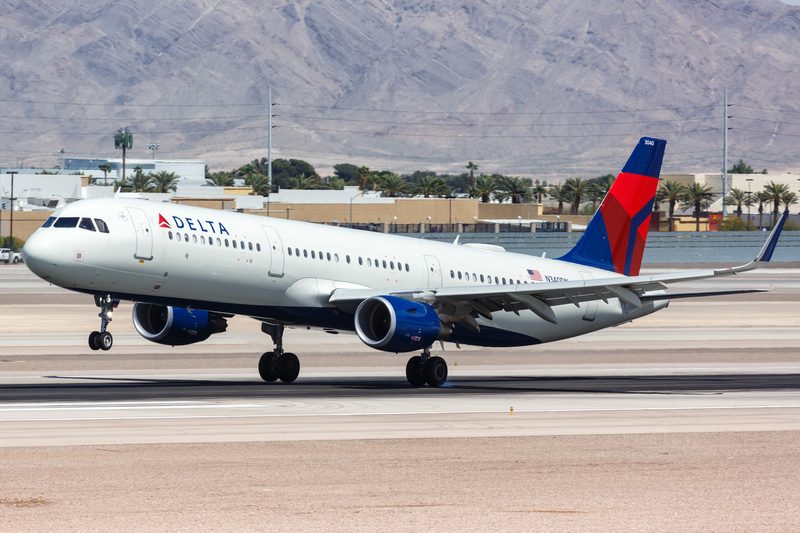
The new route will operate twice daily using the Airbus A321neo, giving Delta a direct presence between its growing Los Angeles (LAX) hub and United’s powerful Newark (EWR) gateway. The move adds another layer to the intensifying competitive fight for premium transcontinental traffic, especially in Los Angeles, where Delta and United have both been investing heavily.
On paper, this is just one new domestic route. In network terms, it is much more meaningful. Delta is not simply adding Newark (EWR) as another dot from Los Angeles (LAX). It is moving into a city pair that United has long dominated with frequency, connectivity, and a premium lie-flat product.
Read our stories in your inbox
Two aviation newsletters. Zero fluff.
Delta Adds LAX–EWR From April 2027
Delta’s Los Angeles (LAX)–Newark (EWR) flights are scheduled to launch on April 12, 2027, with two daily round trips.
The service gives Delta another nonstop option between Southern California and the New York metropolitan area. Delta already operates heavily between Los Angeles (LAX) and New York John F. Kennedy International Airport (JFK), one of the country’s premier premium transcontinental markets. Newark (EWR), however, reaches a different part of the region.
For travelers headed to northern New Jersey, parts of Manhattan, Staten Island, the Hudson Valley, and portions of Connecticut or Pennsylvania, Newark (EWR) can be more convenient than JFK. That geographic distinction is central to the route’s logic. Delta is not replacing its JFK–LAX franchise; it is adding another New York-area access point for customers who want Delta but prefer Newark.
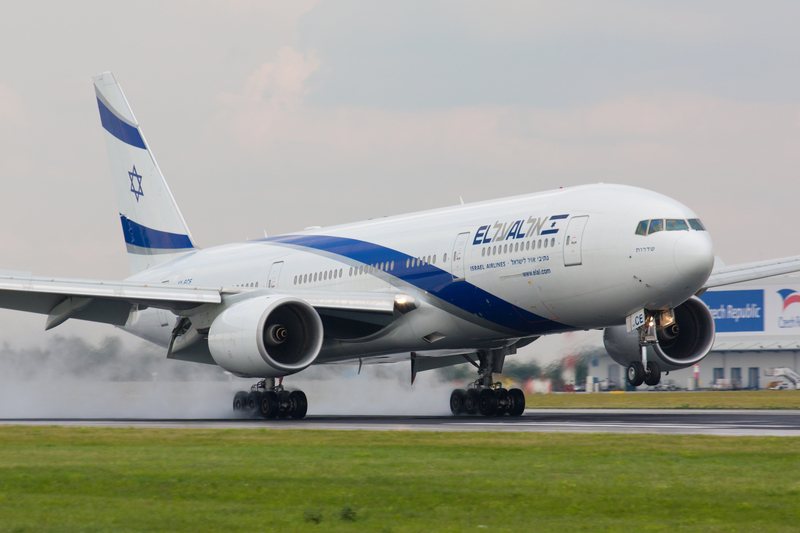
The new service also arrives at an opportune moment. JetBlue Airways is reported to be exiting the Newark (EWR)–Los Angeles (LAX) market in October 2026, leaving United and Alaska Airlines as the main operators before Delta enters the route in spring 2027.
That creates an opening. JetBlue’s Mint product has long been one of the strongest premium offerings in the U.S. transcontinental market, but the airline has been reducing its Newark presence as it reallocates aircraft and resources toward other priorities. Delta’s arrival does not fully replace JetBlue Mint from a hard-product perspective, but it does give the market another large-network competitor.
The Aircraft: Delta’s Standard Airbus A321neo
Delta will operate the route with the Airbus A321neo, but the important detail is which A321neo.
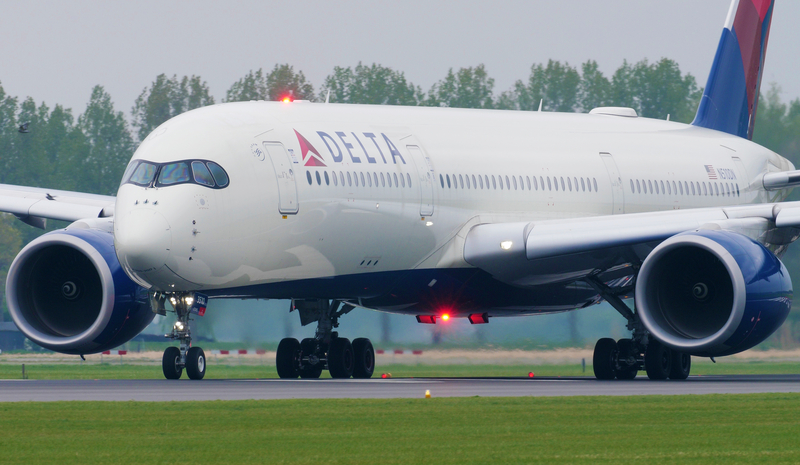
The aircraft planned for Newark (EWR)–Los Angeles (LAX) is the standard Delta A321neo configuration, not the newer premium-heavy version with 44 First Class seats. Delta’s standard A321neo seats 194 passengers, with 20 seats in Delta First, 60 in Delta Comfort+, and 114 in Main Cabin.
That gives Delta roughly 388 seats per day in each direction, or 776 total one-way seats across the city pair each day when both directions are counted.
The Airbus A321neo is a logical aircraft for the route. Delta lists the type with a range of more than 3,300 miles and a cruising speed of 525 mph, which makes it well suited for the roughly 2,450-mile transcontinental sector between Los Angeles (LAX) and Newark (EWR). The aircraft gives Delta strong narrowbody capacity, lower fuel burn than older-generation aircraft, large overhead bins, in-seat power, onboard connectivity, and seatback entertainment.
From a passenger-experience standpoint, the A321neo is a solid aircraft. From a competitive standpoint, however, it creates a clear product distinction. Delta’s A321neo offers domestic First Class recliner seats, not a lie-flat Delta One cabin. That means Delta will compete on schedule, loyalty, operational reliability, airport experience, and overall brand strength rather than matching United’s premium transcontinental hard product seat-for-seat.
United Still Owns The Route
United’s advantage on Newark (EWR)–Los Angeles (LAX) remains substantial.
Newark (EWR) is one of United’s most important hubs, and LAX is a major West Coast station for the carrier. United operates the route with significantly more frequency than Delta plans to offer, and its Newark (EWR) hub gives it deep connecting feed from the Northeast, Europe, Latin America, and domestic U.S. markets.
The product gap is just as important. United has made Newark (EWR)–Los Angeles (LAX) one of its flagship domestic premium routes, often using aircraft equipped with lie-flat Polaris-style business-class seating. That gives United a major advantage with corporate travelers, premium leisure passengers, and MileagePlus elites who value a true long-haul-style seat on a transcontinental flight.
Delta’s A321neo will not match that lie-flat cabin. Its 20-seat First Class cabin is comfortable for domestic flying, but it is not the same proposition as a flat-bed business-class seat on a five- to six-hour sector.
That does not make Delta’s move weak. It simply means the competitive target is different. Delta does not need to take the entire premium market from United. It needs to capture enough Delta loyalists, corporate-contract travelers, West Coast customers, and Newark-area passengers who want a Delta option without backtracking through JFK or LaGuardia (LGA).
Why Newark Matters To Delta
Delta’s New York strategy has historically centered on JFK and LaGuardia (LGA), while United dominates Newark (EWR). That division has shaped the region’s airline map for years.
Adding Los Angeles (LAX) from Newark (EWR) gives Delta a sharper presence in a market where its customers already exist but often have to choose between convenience and loyalty. A traveler based in northern New Jersey may prefer Newark (EWR), but if they are loyal to Delta, their best nonstop option to Los Angeles has often meant using JFK instead.
That is not ideal. In a premium market, convenience matters. Corporate travelers do not want to cross the region unnecessarily, and leisure travelers headed to the West Coast may choose the airline that offers the easiest airport, not just the best frequent-flyer program.
Delta’s move reduces that friction. It gives the airline a more complete New York-area offering to Los Angeles and allows it to compete for customers who might otherwise default to United simply because of airport geography.
It also strengthens Delta’s position with corporate accounts. For large companies with offices in both Southern California and the New York metropolitan area, the ability to offer LAX service from JFK and Newark gives Delta more relevance in travel programs, especially for travelers who live across a wide catchment area.
Los Angeles Is The Bigger Battleground
The route is also about Los Angeles.
Delta has spent years building Los Angeles (LAX) into one of its most important coastal gateways. The airline has invested heavily in Terminal 3, the Delta Sky Way, the Delta Sky Club, and the Delta One ground experience at LAX. It has also expanded internationally and domestically, including new or recent service to major markets such as Hong Kong (HKG), Chicago O’Hare (ORD), and other strategic destinations.
United has also been clear that it wants to grow its relevance at LAX. While United’s most powerful West Coast hub is San Francisco (SFO), Los Angeles remains too important to ignore. LAX is one of the world’s largest origin-and-destination markets, a major entertainment and corporate travel center, and a critical airport for premium international and domestic demand.
That makes Delta’s Newark (EWR) route part of a broader competitive chess match. United wants a stronger position in Los Angeles. Delta wants to defend and expand its LAX hub. American Airlines and Alaska Airlines remain relevant in the market as well. Every new route from LAX has to be viewed through that larger battle for local share, corporate contracts, and premium passengers.
Newark (EWR) is especially symbolic because it is United territory. Delta adding LAX–EWR does not threaten United’s dominance at Newark, but it does put Delta’s brand directly into one of United’s most visible hub-to-West Coast markets.
Alaska Becomes Part Of The Competitive Set
While the headline fight is Delta versus United, Alaska Airlines also matters on this route.
Alaska already operates between Newark (EWR) and Los Angeles (LAX), giving the market another non-United option. Depending on season and schedule period, Alaska has been shown with up to three daily flights in the market. Its presence means Delta’s new service will not simply be a binary challenge to United.
In some ways, Delta’s new operation may compete more directly with Alaska than with United. Both airlines will offer a narrowbody product without the same scale or lie-flat frequency advantage United brings to the market. Delta’s advantage is its larger global network, stronger position at LAX, SkyMiles base, corporate relationships, and airport investments. Alaska’s advantage is its West Coast loyalty base and its own network strength.
That makes the route more competitive than it may appear. United remains the capacity and product leader, but Delta and Alaska will fight for passengers who want alternatives, lower fares, different loyalty programs, or more convenient schedules.
JetBlue’s Exit Leaves A Premium Gap
JetBlue’s planned exit from Newark (EWR)–Los Angeles (LAX) changes the competitive balance.
JetBlue Mint has been one of the most respected premium products in the domestic U.S. market, with lie-flat seating and a strong reputation among transcontinental travelers. Its withdrawal removes a high-quality premium competitor from Newark (EWR), even as United continues to offer a strong lie-flat product.
Delta’s A321neo does not recreate the JetBlue Mint experience. That is an important distinction. Passengers looking specifically for a lie-flat seat between Newark (EWR) and Los Angeles (LAX) will likely continue to view United as the primary option.
But JetBlue’s exit also frees up demand among travelers who do not require lie-flat seating but still want a major carrier, reliable operation, loyalty benefits, and a comfortable cabin. That is where Delta can make its case.
A standard Delta A321neo with 20 First Class seats, 60 Comfort+ seats, and seatback entertainment throughout the cabin is a strong domestic narrowbody product. It may not win the lie-flat comparison, but it gives Delta enough premium seating to compete for business travelers who value schedule and loyalty over a bed.
A Route Built For Corporate Travelers
Los Angeles (LAX)–Newark (EWR) is not just another transcontinental route. It sits inside one of the most valuable business-travel corridors in the United States.
The market links Southern California with the New York metropolitan area, two regions with deep ties in finance, entertainment, media, technology, law, pharmaceuticals, consulting, sports, and high-end leisure travel. Newark (EWR) also serves one of the country’s most important corporate catchments in northern New Jersey.
For Delta, that makes the route more than a capacity add. It is a corporate-account tool.
A company with travelers in Los Angeles, Manhattan, New Jersey, and the broader Northeast may already use Delta heavily at JFK, LGA, and LAX. Adding Newark (EWR) gives Delta’s sales team another nonstop option to present. It also helps the airline compete against United in accounts where United’s Newark hub has historically been difficult to dislodge.
This is where the twice-daily schedule matters. Two flights per day will not match United’s depth, but it gives Delta enough presence to be credible. A single daily flight can look token. Twice daily creates more flexibility and improves the route’s usefulness for business travelers.
Product Will Be The Main Question
The biggest question is whether Delta eventually upgrades the route to a more premium aircraft.
For now, the standard A321neo is a reasonable starting point. It gives Delta nearly 200 seats per flight, a large Comfort+ cabin, and a 20-seat First Class section. The aircraft is efficient, widely available in the Delta fleet, and well matched to a twice-daily launch.
However, the route’s premium nature makes the product decision worth watching. Delta has begun introducing a premium-heavy A321neo configuration with 44 First Class seats and 164 total seats. That aircraft does not have lie-flat Delta One seats, but it does dramatically increase the number of premium recliner seats available on key domestic routes.
If Delta sees strong premium demand on LAX–EWR, the airline could eventually consider a higher-premium configuration, additional frequency, or schedule adjustments. If the route is driven more by broader economy and loyalty demand, the standard A321neo may remain the best fit.
The lack of lie-flat seating is not fatal. But it does define the competitive ceiling. Against United, Delta will be selling a premium overall journey rather than the best onboard seat.
Airport Experience Could Help Delta At LAX
Delta’s LAX ground product is one of its stronger arguments.
The airline operates from Terminal 3 at Los Angeles (LAX), where it has invested heavily in check-in, security, baggage claim, lounges, and premium customer flow. Delta One-eligible passengers have access to a dedicated Delta One experience at LAX, and the airline has continued to position Los Angeles as a premium gateway.
That matters even on a domestic route without Delta One onboard. For frequent travelers, airport experience can be part of the decision. A smoother terminal, stronger lounge network, more reliable connections, and better elite treatment can influence airline choice, especially when fares are close.
At Newark (EWR), United still has the stronger home-field advantage. But at Los Angeles (LAX), Delta can lean on its own terminal investments and customer base. The route becomes a contest between United’s Newark strength and Delta’s LAX strength.
Bottom Line
Delta’s new Los Angeles (LAX)–Newark (EWR) flights are a calculated move into one of United’s most important transcontinental markets.
The service begins April 12, 2027, with two daily round trips operated by the standard 194-seat Airbus A321neo. That gives Delta a meaningful but measured presence: enough capacity to matter, but not enough to directly match United’s scale or premium lie-flat product.
United will remain the dominant airline on Newark (EWR)–Los Angeles (LAX), with far more frequency, hub strength at EWR, and a stronger premium hard product. But Delta does not need to beat United outright for the route to make sense. It needs to give Delta loyalists and corporate travelers a credible Newark option while strengthening its broader Los Angeles strategy.
JetBlue’s exit creates the opening. Delta’s A321neo gives it the aircraft. The larger battle is about LAX, premium transcontinental travel, and which airline can win the most valuable customers between the East and West Coasts.
For United, Delta’s arrival is unlikely to be a capacity crisis. For the competitive map at LAX and Newark, it is still a clear signal: Delta is willing to challenge United where it matters.
Keep reading FlyMag
Get the Daily Brief in the morning or the Route Watch weekly recap on Fridays. Or both.