Middle East Airlines Returns To Berlin With New Beirut Link After 16-Year Gap
Middle East Airlines has returned to Berlin with a new nonstop service between Berlin Brandenburg Airport (BER) and Beirut-Rafic Hariri International Airport (BEY), restoring a direct air link between Germany’s capital region and Lebanon.
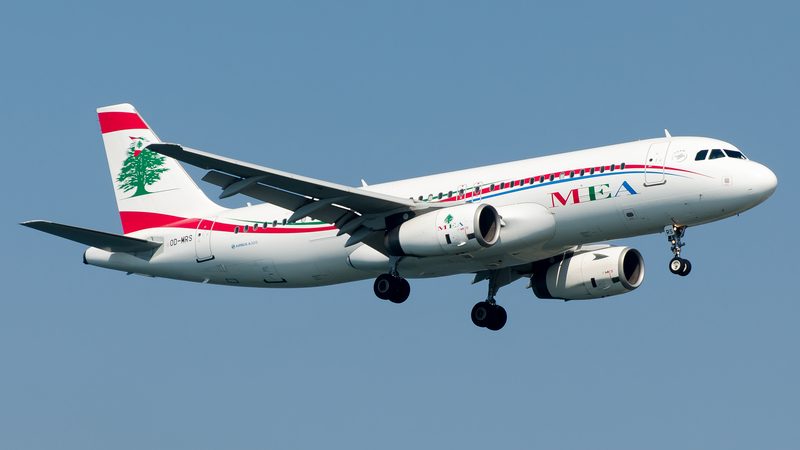
The route operates four times weekly, with flights on Tuesdays, Fridays, Saturdays, and Sundays. It is being flown by the Airbus A320, the short- and medium-haul workhorse of Middle East Airlines’ narrowbody fleet. The new service gives Berlin (BER) another direct Middle East connection while strengthening Beirut’s role as a regional gateway for passengers traveling to Lebanon and beyond.
For Middle East Airlines, also known as MEA, the route is more than a simple point-to-point addition. It reconnects the Lebanese flag carrier with Berlin after a long absence and gives the airline access to one of Europe’s most important capital-region markets.
Read our stories in your inbox
Two aviation newsletters. Zero fluff.
Berlin (BER)–Beirut (BEY) Returns With Four Weekly Flights
The new Berlin (BER)–Beirut (BEY) service operates as ME245/ME246.
According to schedule filings, the eastbound flight departs Beirut (BEY) at 09:05 and arrives at Berlin Brandenburg (BER) at 12:05. The return service leaves Berlin (BER) at 13:05 and lands back in Beirut (BEY) at 17:55.
That timing gives the route a useful shape. Passengers starting in Beirut (BEY) can arrive in Berlin (BER) around midday, while Berlin-originating travelers can reach Lebanon in the early evening. For visiting-friends-and-relatives traffic, weekend travel, family visits, and longer stays, the schedule is practical without requiring an overnight departure or awkward late-night arrival.
Berlin Brandenburg Airport’s operator said the service is designed to support flexible trips, including extended weekends and longer visits. That makes sense for a market where a large portion of demand is likely to come from Lebanese diaspora traffic, family travel, and personal links between Germany and Lebanon.
The route also restores a city pair that had been absent from MEA’s schedule for more than 16 years. That makes the launch significant not only for Berlin (BER), but also for MEA’s broader European network.
Why Berlin Matters For MEA
Berlin is a logical market for Middle East Airlines, even though it is not Germany’s largest long-haul hub.
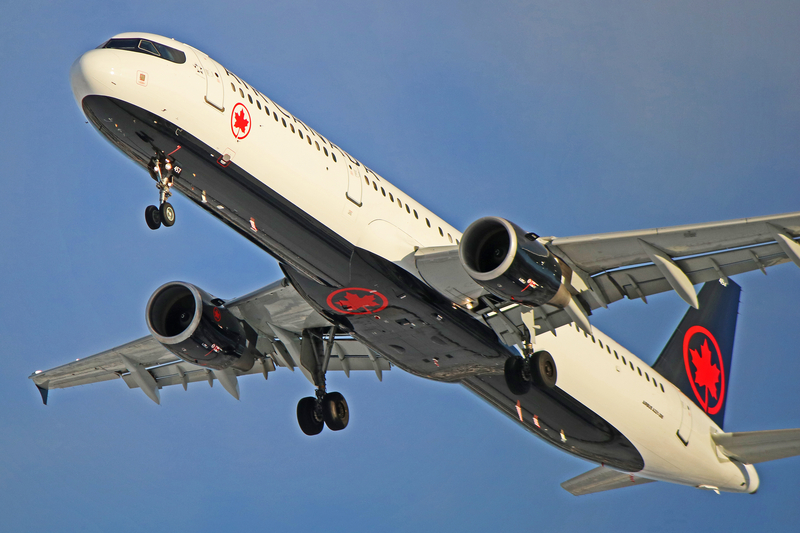
The Berlin-Brandenburg region has a sizeable Lebanese community and a wider population with family, cultural, business, and humanitarian ties to Lebanon and the surrounding region. For those travelers, a nonstop Berlin (BER)–Beirut (BEY) flight removes the need to connect through Frankfurt (FRA), Munich (MUC), Istanbul (IST), Vienna (VIE), Paris Charles de Gaulle (CDG), or other European and Middle Eastern hubs.
That convenience matters. A nonstop flight is not just shorter on paper. It reduces missed-connection risk, simplifies baggage handling, makes family travel easier, and is particularly valuable for passengers traveling with children, elderly relatives, or large amounts of baggage.
For MEA, Berlin (BER) also fits the airline’s network logic. The carrier is based at Beirut (BEY), where it operates a compact but strategically important network linking Lebanon with Europe, the Middle East, Africa, and selected regional markets. Berlin gives MEA another European capital with strong origin-and-destination potential rather than a route built purely around connecting feed.
The Aircraft: MEA’s Airbus A320
Middle East Airlines is operating the Berlin (BER)–Beirut (BEY) route with the Airbus A320.
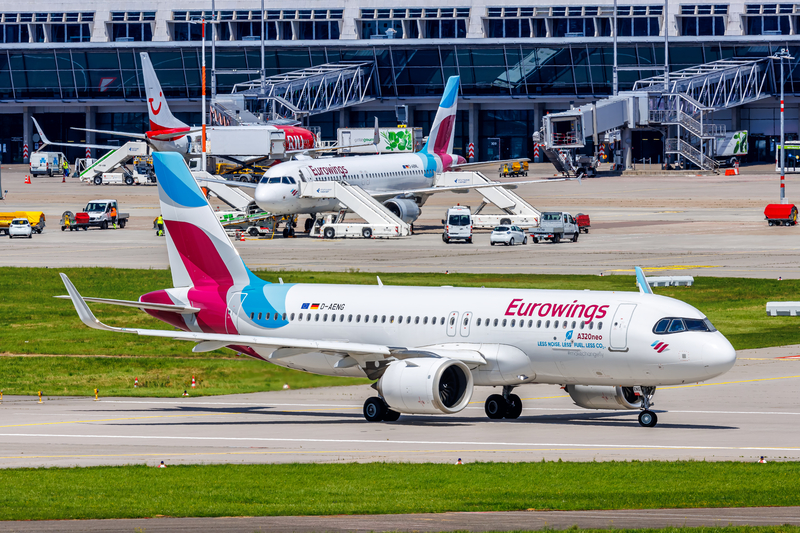
The A320 is a natural aircraft for the mission. The Berlin (BER)–Beirut (BEY) sector is well within the performance envelope of the type, and the route does not require the capacity or trip cost of a widebody such as MEA’s Airbus A330-200.
The Airbus A320 family is one of the most widely used aircraft families in commercial aviation. In general airline configurations, an A320 can seat roughly 150 to 180 passengers, depending on layout. MEA’s own A320 configuration is more premium-spaced than a high-density low-cost layout, with the airline listing 24 seats in Cedar Class and 102 seats in Economy Class.
That cabin detail is important. While airport announcements often refer to the A320’s maximum or typical seating capability, MEA’s A320 product is not a bare-bones high-density cabin. Its two-class configuration allows the airline to offer a proper premium cabin on a route that is likely to carry a mix of family travelers, business passengers, government and NGO traffic, and higher-yield passengers connecting through Beirut (BEY).
The aircraft is also operationally efficient for a four-weekly service. A narrowbody A320 gives MEA enough capacity to serve the Berlin market meaningfully while avoiding the risk of over-gauging a route that is returning after a long hiatus.
Beirut (BEY) Remains A Critical Regional Gateway
Beirut-Rafic Hariri International Airport (BEY) remains Lebanon’s primary international gateway and the main base for Middle East Airlines.
The airport plays an outsized role in the country’s connectivity. Lebanon’s geography and regional politics make reliable air access particularly important, and Beirut (BEY) functions as a key entry point not only for Lebanon-bound travelers, but also for passengers with onward plans across the wider Levant.
Berlin Brandenburg’s operator specifically noted that Beirut (BEY) offers onward travel opportunities within the region and may be especially relevant for travelers heading to Syria. That reflects a long-standing reality of the market: for many passengers with family or personal ties in Syria and neighboring areas, Beirut (BEY) can be an important access point when direct international options are limited or less convenient.
For MEA, this gives the Berlin (BER) route a demand base beyond conventional tourism. The flight can serve Lebanese expatriates, German residents with regional family ties, humanitarian and NGO travel, business links, and passengers connecting into MEA’s onward network.
A Useful Addition For Berlin Brandenburg
For Berlin Brandenburg Airport (BER), the arrival of Middle East Airlines adds another network carrier and improves the airport’s direct reach into the Middle East.
BER has spent the years since opening working to rebuild and expand Berlin’s long-haul and medium-haul connectivity after the closure of Tegel (TXL) and Schönefeld’s integration into the new airport structure. While Berlin has strong short-haul European coverage, the airport has often had to compete for intercontinental and Middle East connectivity against larger German hubs such as Frankfurt (FRA) and Munich (MUC).
That makes routes such as Beirut (BEY) valuable. They may not be the largest additions in seat count, but they connect Berlin (BER) to important ethnic, family, cultural, and regional travel flows that are not always fully captured by hub-and-spoke traffic data.
The new MEA service also adds product diversity. Middle East Airlines is a full-service network carrier and a SkyTeam member, giving Berlin passengers another alternative to low-cost and leisure-focused operators. For passengers loyal to SkyTeam carriers, MEA can also offer alliance-related connectivity and frequent-flyer relevance, depending on itinerary and program rules.
A Route Built Around Real Demand, Not Just Tourism
This is not a route that should be viewed only through the lens of leisure travel.
Beirut is a major cultural and commercial center, but the Berlin (BER)–Beirut (BEY) market is likely to be heavily influenced by visiting-friends-and-relatives traffic. That tends to produce different booking patterns from pure tourism. Travelers may stay longer, carry more baggage, travel around holidays and school breaks, and place high value on nonstop service even when one-stop fares are available.
The four-weekly schedule is also well matched to that demand profile. It provides enough frequency to be useful without requiring daily capacity from the start. Tuesday, Friday, Saturday, and Sunday flying gives passengers options for weekend departures, extended family visits, and longer trips.
For MEA, this is a sensible way to re-enter Berlin. The airline can test the market, build awareness, and adjust capacity or frequency over time if demand supports it.
Strategic Value For MEA’s European Network
Middle East Airlines has always had a European network that reflects Lebanon’s diaspora, business links, and historical travel flows.
Major European cities such as Paris, London, Frankfurt, Rome, Milan, Athens, and others have long been important to MEA. Berlin now strengthens that map by adding Germany’s capital and one of Europe’s most politically and culturally important cities.
The route also comes at a time when regional aviation around Lebanon remains complex. MEA has continued to play a central role in keeping Lebanon connected, even as foreign carriers have adjusted service during periods of regional instability. In that environment, adding or restoring European routes is commercially meaningful and symbolically important.
A four-weekly Berlin (BER)–Beirut (BEY) service is not a major capacity increase on its own. But for a carrier of MEA’s size, it is a focused network decision that expands reach, supports diaspora traffic, and reinforces Beirut (BEY) as the airline’s primary hub.
Bottom Line
Middle East Airlines’ return to Berlin gives the German capital a restored nonstop link to Beirut after more than 16 years.
The new Berlin Brandenburg (BER)–Beirut (BEY) route operates four times weekly on Tuesdays, Fridays, Saturdays, and Sundays using the Airbus A320. The aircraft is well suited to the sector, offering MEA a narrowbody with the right range, cabin flexibility, and economics for a returning European market.
For passengers, the route removes the need to connect through larger hubs and provides a direct link between Berlin’s Lebanese and regional communities and Beirut (BEY). For BER, it adds another established network carrier and strengthens the airport’s Middle East connectivity.
For MEA, the route is a smart, measured expansion: not a high-risk capacity play, but a targeted service built around family ties, regional access, and the enduring importance of Beirut as a gateway between Europe and the Levant.
Keep reading FlyMag
Get the Daily Brief in the morning or the Route Watch weekly recap on Fridays. Or both.