Syrian Airlines Eyes Amsterdam Return As Damascus Looks Back Toward Europe
Syrian Airlines says it is preparing to resume nonstop flights between Damascus and Amsterdam in early July, a move that would mark one of the carrier’s most important European steps in years.
The planned route would connect Damascus International Airport (DAM) with Amsterdam Airport Schiphol (AMS), one of Europe’s largest and most connected hubs.
Syrian officials say the remaining technical, legal and regulatory procedures are now being completed with Dutch authorities. However, the airline has not yet published a timetable, frequency, aircraft type, fares or booking date.
That makes this a planned resumption, not yet a fully confirmed commercial launch.
Still, the announcement is significant. If it goes ahead, Damascus (DAM)–Amsterdam (AMS) would be an important test of Syria’s ability to rebuild direct European air links after years of isolation.

A Planned July Start, But No Schedule Yet
Omar Hosari, head of Syria’s General Authority of Civil Aviation and Air Transport, said Syrian Airlines is working toward launching Damascus–Amsterdam flights during the first week of July.
According to Syrian state media, Hosari said the remaining steps are being completed with authorities in the Netherlands.
That is the key point.
The route has been publicly announced as an intention, but several practical details remain missing. Syrian Airlines has not yet disclosed the operating days, flight numbers, aircraft type, ticket-sale date or fare structure.

Travelers should therefore treat the route as pending until it appears in the booking system and receives final operational approval.
That distinction matters, especially in a market where airline schedules have been shaped by sanctions, airspace restrictions, insurance concerns and shifting regulatory requirements.
Amsterdam Would Be The First Step In A Wider Plan
Hosari described Amsterdam as the first destination in a broader international expansion plan.
That makes sense.

Amsterdam Schiphol (AMS) is more than a point-to-point destination. It is a major European hub with strong onward connectivity across Europe, North America, Africa and parts of Asia.
For Syrian Airlines, a return to Amsterdam would offer visibility that a smaller airport could not match. It would also reconnect Damascus with a large Syrian diaspora market and a major European transfer point.
For passengers, the route would reduce dependence on one-stop itineraries through cities such as Istanbul, Amman, Doha, Beirut or Ankara.
That is important for family travel, business trips, humanitarian travel and diaspora traffic.
A nonstop DAM–AMS flight would not solve every connectivity challenge. But it would be a meaningful first step.
EU Restrictions Have Changed
The Amsterdam plan follows major changes in European policy toward Syria.
In February 2025, the Council of the European Union suspended restrictive measures in key sectors, including transport. It also removed Syrian Arab Airlines from the EU list of entities subject to asset freezes.
In May 2025, the Council adopted legal acts lifting economic restrictive measures on Syria, except for measures based on security grounds.
That policy shift removed one of the largest obstacles to Syrian Airlines returning to Europe.
However, sanctions relief does not automatically restore flights.
Airlines still need national approvals, airport arrangements, insurance coverage, safety oversight, security procedures, ground handling, distribution access and commercial readiness.
That is why the Dutch approval process matters.
The legal door may be more open than before, but the operational route still has to be built.
Why DAM–AMS Matters For Syrian Airlines
Syrian Airlines has spent years operating under difficult constraints.
The airline’s network was heavily affected by war, sanctions, security issues and aircraft-support limitations. Many European routes disappeared, while regional operations became more important.
A return to Amsterdam would therefore carry symbolic and commercial weight.
It would show that Syrian Airlines can begin rebuilding beyond the region. It would also give the carrier a Western European destination with strong connecting potential.
That matters because Damascus (DAM) is not just a local market.
Syria has a large diaspora across Europe. Many travelers still need to move between Syria and European cities, but they often rely on indirect routes. A direct flight to Amsterdam could simplify that journey for some passengers.
The route would also help test whether Syrian Airlines can rebuild trust with European regulators, airports and customers.
Aircraft Type Has Not Been Announced
Syrian Airlines has not identified the aircraft it plans to use on the Amsterdam route.
That is an important missing detail.
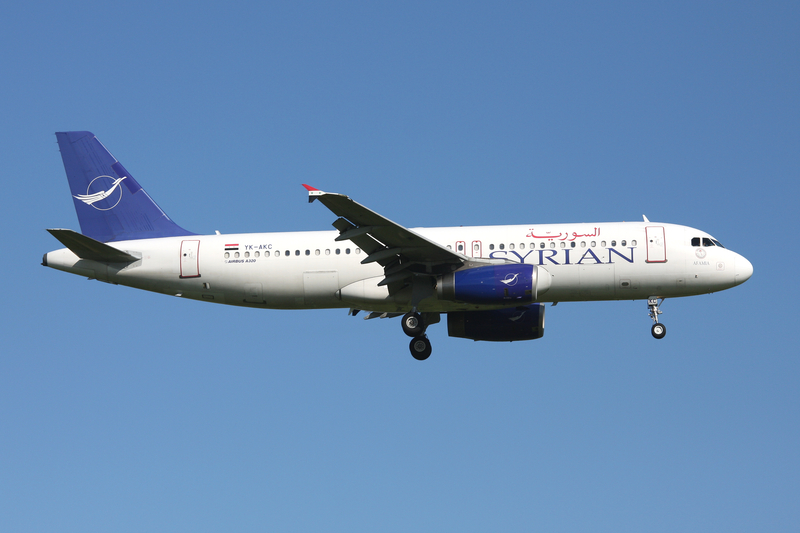
The Damascus (DAM)–Amsterdam (AMS) sector is not especially long by widebody standards. It is roughly a medium-haul Europe–Middle East flight. In normal conditions, it would sit comfortably within the range of an Airbus A320 family aircraft.
Syrian Airlines has used Airbus A320 aircraft for much of its regional and medium-haul network. The type would be a logical fit for a route of this length if the airline has a compliant aircraft available.
The airline has also operated Airbus A340 aircraft on longer sectors. However, an A340 would likely be more aircraft than the Amsterdam market needs, unless the airline sees strong demand or needs additional cargo and capacity.
For now, the safest conclusion is simple: the aircraft type remains unconfirmed.
That will be one of the most important details to watch when the schedule is published.
Damascus Airport Is Returning To A Larger Role
Damascus International Airport (DAM) remains Syria’s main aviation gateway.
The airport serves the capital and is the home base for Syrian Airlines. It has also been central to Syria’s gradual restoration of international air service.
A DAM–AMS route would strengthen that role.
The airport has historically handled regional and international flights, but years of disruption reduced its global connectivity. Restoring European links would be a major step in rebuilding its function as Syria’s primary international gateway.
The route would also be watched by other airlines and regulators.
If Damascus–Amsterdam launches smoothly, it could create more confidence around future European services. If it faces delays, the process may show how difficult Syria’s aviation recovery still is.
Germany Could Be Next
Syria is also discussing direct air links with Germany.
Hosari said talks with German authorities on lifting restrictions affecting Syria–Germany flights have made positive progress. He said a final decision could come in the first half of July.
No German destination has been confirmed. No airline has announced a schedule.
Still, Germany would be a logical next target.
Germany has a large Syrian community and strong demand for family and diaspora travel. Cities such as Berlin, Frankfurt, Düsseldorf and Munich would all have potential interest, depending on regulatory approvals and commercial viability.
However, Germany may also be more complex.
Airport access, security review, insurance, slot availability and political scrutiny could all shape the pace of any restart.
That makes Amsterdam an important first test.
A Route With Strong Diaspora Demand
The commercial case for Damascus–Amsterdam is likely built around diaspora and family travel.
The Netherlands has a significant Syrian community. Wider northern Europe also has demand for travel to and from Syria.
A nonstop flight could be attractive for passengers who currently need to connect through another country. It could also appeal to travelers carrying more baggage or making family visits, where direct service is often preferred.
That type of traffic can be resilient.
It is not purely seasonal tourism. It includes family, personal, humanitarian, business and official travel. Those passenger flows can support flights even when leisure demand is limited.
However, price and reliability will matter.
Passengers will need confidence that the flights will operate consistently and that bookings are protected if schedules change.
The Competitive Landscape Is Indirect
If Syrian Airlines returns to Amsterdam, it will not be competing mainly against other nonstop carriers.
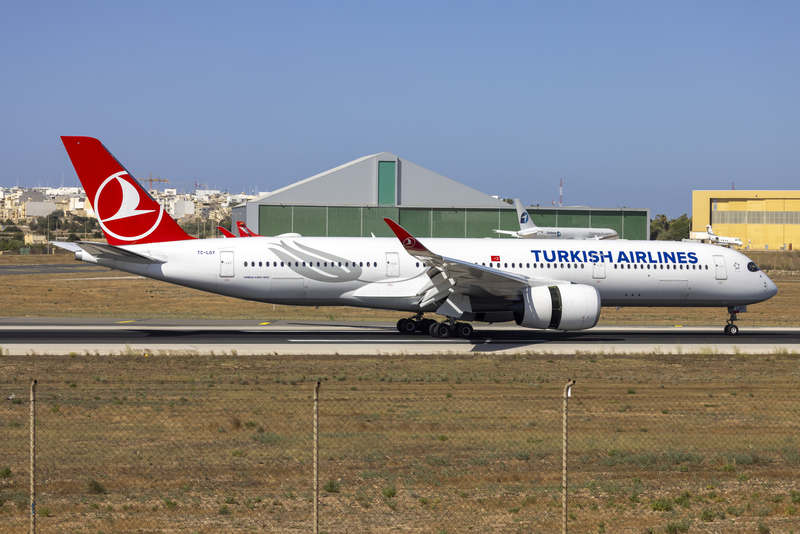
At the moment, travelers between Amsterdam (AMS) and Damascus (DAM) generally rely on one-stop routings. Carriers such as Turkish Airlines, Pegasus, Royal Jordanian and regional operators can all be part of the indirect market depending on schedules and availability.
That gives Syrian Airlines a possible convenience advantage.
A nonstop flight can be faster and simpler than connecting through Istanbul, Amman or another hub.
But indirect competitors may still have stronger distribution, frequent schedules and better onward networks.
Syrian Airlines will need to compete not only on the fact that it is nonstop, but also on schedule reliability, pricing and passenger confidence.
Insurance And Compliance Will Matter
The route’s success will depend on more than demand.
European operations require compliance with safety, security and operational standards. Airports and regulators will also consider insurance, aircraft documentation, crew procedures, maintenance support and airworthiness requirements.
This is where Syria’s aviation recovery becomes complicated.
An airline can announce a planned route. But starting it requires multiple systems to align.
The aircraft must be acceptable. The airline must be cleared to operate. The airport must be ready to handle the flight. The route must be insured. Tickets must be sold through functioning distribution channels. Passengers must have confidence in the service.
That is why the absence of a public timetable matters.
Until Syrian Airlines publishes full details and the route appears bookable, this remains a planned restart.
A Symbolic Return To Western Europe
If launched, Amsterdam would be one of Syrian Airlines’ most visible Western European returns.
That matters because aviation often acts as a signal of broader normalization.
A direct flight does not mean all political, economic or security challenges are resolved. But it does show that regulators, airlines and airports are willing to reopen certain channels.
For Syria, that would be a notable development.
For the Netherlands, it would restore a direct link to Damascus after years of suspension.
For passengers, it would make travel simpler.
For the aviation industry, it would be a case study in how quickly — or slowly — air connectivity can rebuild after sanctions and conflict reshape a market.
What To Watch Next
The next updates will be critical.
The most important details are the flight schedule, ticket-sale date, aircraft type, operating frequency and final regulatory approval from the Dutch side.
It will also be important to see whether the route appears in global distribution systems and whether it is bookable through Syrian Airlines or travel agencies.
Aircraft assignment will be especially interesting.
An A320-family aircraft would suggest a cautious medium-haul restart. A widebody would suggest stronger expected demand or different operational constraints.
The first actual flight will also matter.
A successful launch could encourage talks with Germany and other European countries. A delay would underline how many hurdles remain.
Bottom Line
Syrian Airlines’ planned Damascus (DAM)–Amsterdam (AMS) resumption is one of the most important signals yet that Syria is trying to rebuild direct European air connectivity.
Syrian authorities say flights could begin in the first week of July, with final technical, legal and regulatory procedures underway with Dutch authorities.
However, the route is not fully confirmed until the airline publishes a schedule, opens ticket sales and secures final operating clearance.
Amsterdam is a logical first European target. It offers strong connectivity, diaspora demand and major hub access. It also gives Syrian Airlines a high-profile test of whether it can return to Western Europe after years of suspension.
The opportunity is clear, but so are the challenges.
Aircraft readiness, insurance, regulatory compliance, security review and passenger confidence will all determine whether this planned route becomes a stable operation.
For now, Damascus–Amsterdam is best viewed as a major step forward, but not yet a finished launch.