British Airways Keeps Seven Middle East Routes Paused As Winter Restart Plan Takes Shape
British Airways is still working through one of the most complicated Middle East schedule disruptions in its recent history.

The oneworld carrier has paused or cancelled service from London Heathrow Airport (LHR) to seven Middle East destinations. The affected routes include Abu Dhabi, Amman, Bahrain, Doha, Dubai, Riyadh and Tel Aviv.
The airline says the changes are linked to continuing uncertainty and airspace restrictions in the region. That has forced British Airways to keep adjusting its network, even on routes that have historically played an important role in its long-haul schedule.
Read our stories in your inbox
Two aviation newsletters. Zero fluff.
The impact is not limited to one city. It affects Gulf business markets, leisure-heavy routes, religious and visiting-friends-and-relatives traffic, and key oneworld flows over Doha.
Seven British Airways Middle East Routes Remain Affected
British Airways’ current Middle East operation notice lists services to and from Abu Dhabi, Amman, Bahrain, Doha, Dubai, Tel Aviv and Riyadh as cancelled or temporarily suspended.
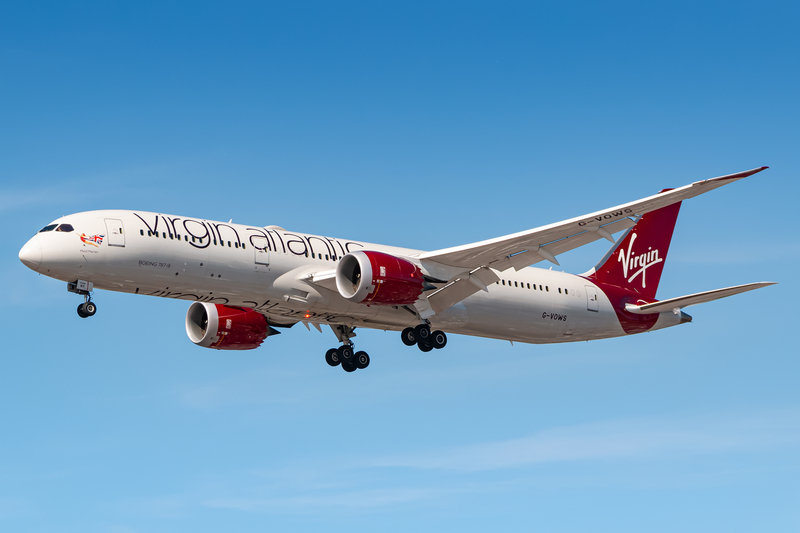
That covers a wide range of markets from Heathrow (LHR). Some are major premium routes. Others are important for regional connectivity, tourism or diaspora traffic.
The seven affected routes are:
- London Heathrow (LHR) to Abu Dhabi Zayed International Airport (AUH)
- London Heathrow (LHR) to Queen Alia International Airport (AMM)
- London Heathrow (LHR) to Bahrain International Airport (BAH)
- London Heathrow (LHR) to Hamad International Airport (DOH)
- London Heathrow (LHR) to Dubai International Airport (DXB)
- London Heathrow (LHR) to King Khalid International Airport (RUH)
- London Heathrow (LHR) to Ben Gurion Airport (TLV)
British Airways is also offering added flexibility for customers booked to travel to the region through October 31, 2026. That is a clear sign of how uncertain the schedule remains.
Jeddah Is Different: That Route Is Not Coming Back
Jeddah is a separate case.
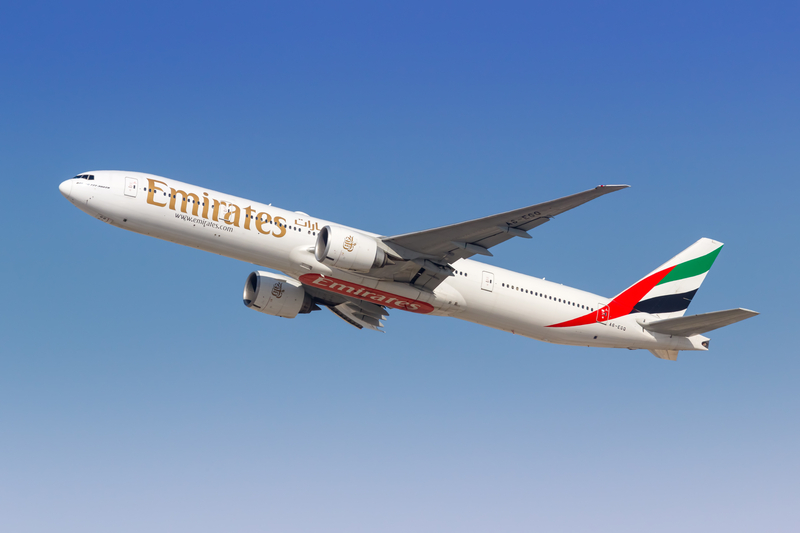
British Airways previously served King Abdulaziz International Airport (JED) from Heathrow (LHR). However, the airline has dropped the route rather than simply pausing it.
The final British Airways service to Jeddah (JED) operated in April 2026. That makes JED different from the other Middle East routes still listed for possible resumption.
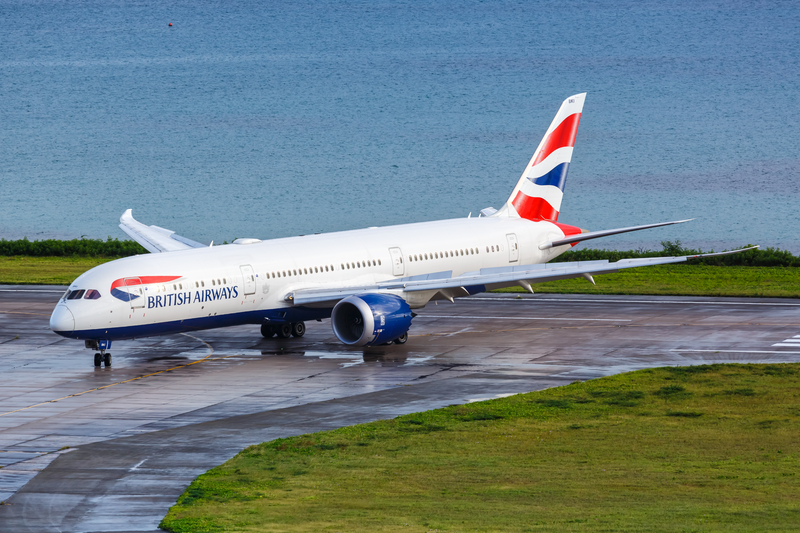
The decision is notable because British Airways only returned to Jeddah in November 2024. It operated the route with the Boeing 787 family, which gave the airline a lower-capacity long-haul aircraft for the Saudi market.
However, Jeddah is more leisure, pilgrimage and price-sensitive than Riyadh. By contrast, Riyadh (RUH) has stronger corporate and government demand.
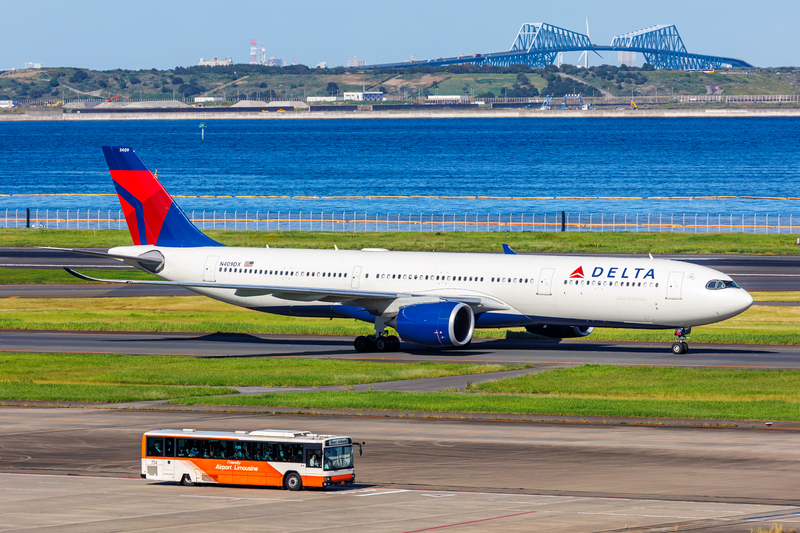
That difference matters at Heathrow (LHR), where every long-haul slot has to earn its place.
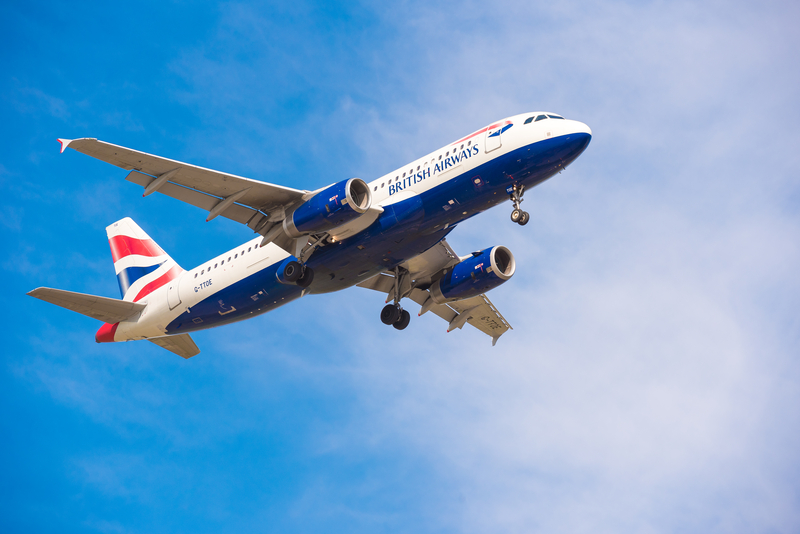
ID 96287717 | Airport © Gerold Grotelueschen | Dreamstime.com
Doha Looks Like The First Route Back
The most strategically important restart is likely Doha (DOH).
British Airways has a deep partnership with Qatar Airways and Iberia. The airlines cooperate across a large shared network linking the UK, Europe, Doha and onward points across Asia, Africa, Australia and the Middle East.
That makes Heathrow (LHR)–Doha (DOH) more than a normal city pair.
It is also a major oneworld flow market. Doha connects British Airways passengers to destinations that are not always easy to reach over London alone.
Current public updates point to Doha (DOH) being the first of the affected Middle East routes to return. The route is expected to restart before the main winter schedule transition, although the exact operating pattern remains subject to change.
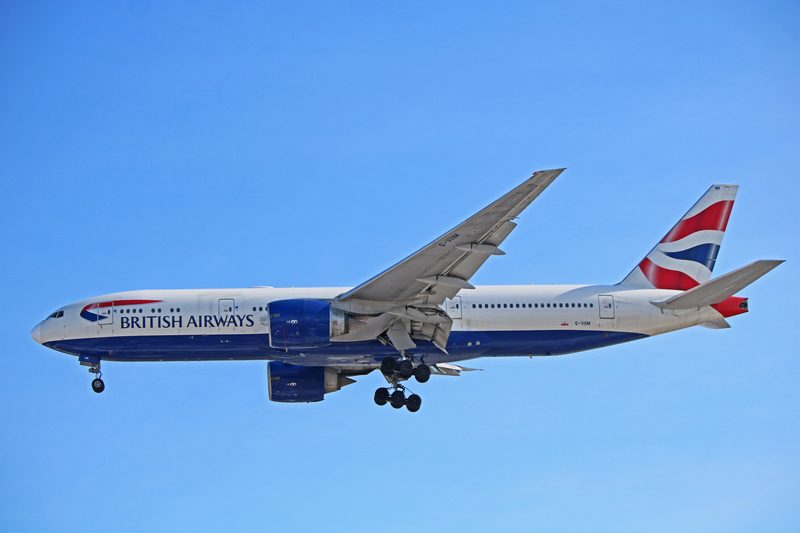
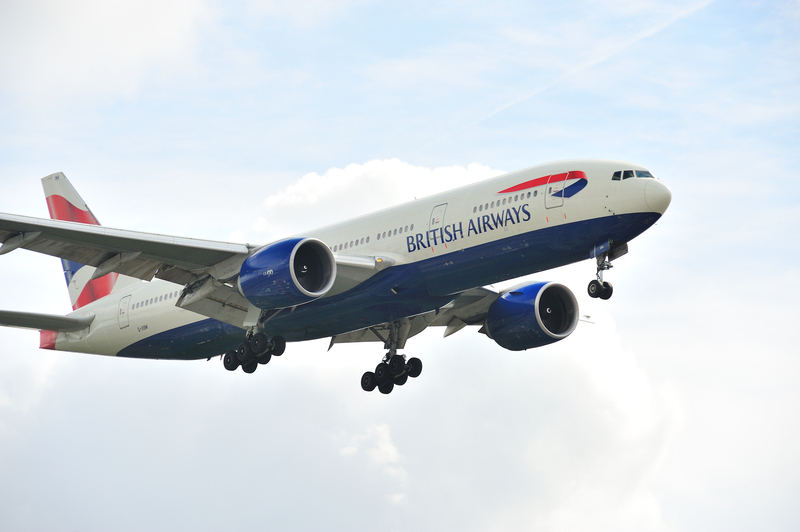
Aircraft choice also matters here. British Airways has used large long-haul types on Doha, including the Boeing 777-200ER and the Boeing 787-10.
The 777-200ER gives British Airways strong cargo and premium capacity. The 787-10 offers newer-generation cabin economics, better fuel efficiency and a smaller long-haul footprint than the A380 or larger 777 variants.
Dubai Remains The Biggest Gulf Prize
Dubai (DXB) is one of the largest and most important markets in British Airways’ Middle East network.
Before the disruption, British Airways had significant capacity between Heathrow (LHR) and Dubai (DXB). The route is important for premium leisure, business travel, expatriate demand and connections across the wider Gulf.
It is also one of the few Middle East markets where British Airways can justify its largest aircraft.
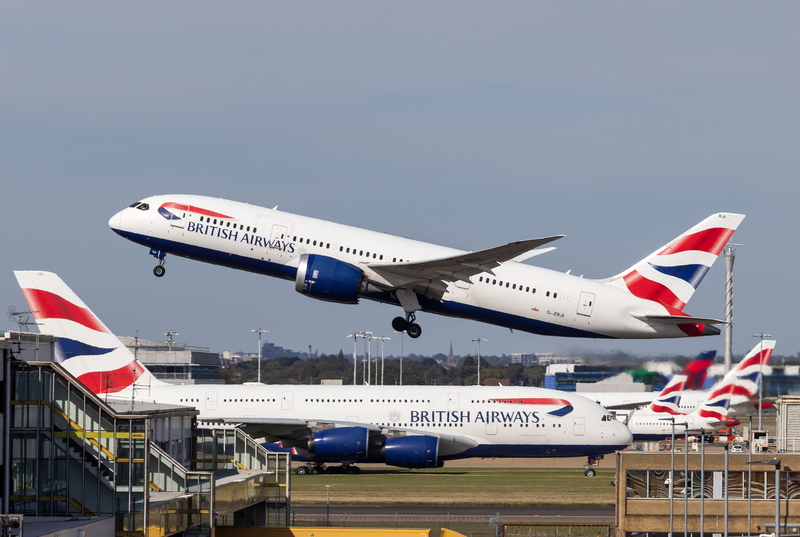
The Airbus A380-800 has regularly played a major role on Heathrow (LHR)–Dubai (DXB). British Airways’ A380 seats 469 passengers in a four-class layout. It offers First, Club World, World Traveller Plus and World Traveller.
That makes it useful when demand is strong. However, it also creates risk when demand weakens.
An A380 only works when an airline can fill the cabin at the right fares. During periods of uncertainty, a smaller aircraft such as the Boeing 787-10 can be easier to manage.
That is why Dubai’s eventual restart will be closely watched. The aircraft mix will say a lot about how much demand British Airways believes has returned.
ID 181024589 | Air © Boarding1now | Dreamstime.com
Riyadh Still Matters For Premium Demand
Riyadh (RUH) remains one of the strongest business markets in the region.
The Saudi capital has grown in importance as the Kingdom invests heavily in aviation, tourism, infrastructure and business travel. That makes Riyadh more attractive to British Airways than some other regional markets.
British Airways has served Riyadh (RUH) with Boeing 787 aircraft and Boeing 777 aircraft. The Boeing 787-8 and Boeing 787-9 are especially useful when demand is premium-led but not large enough for a bigger widebody.
The 787 family gives British Airways strong range, lower fuel burn and a modern long-haul cabin. The 787-9 also includes First Class on some British Airways aircraft, which is useful in premium-heavy markets.
Riyadh’s return will therefore matter beyond simple frequency. It will show whether British Airways sees enough corporate demand to restore a meaningful Saudi schedule.
Abu Dhabi, Bahrain And Amman Are Smaller But Still Important
Abu Dhabi (AUH), Bahrain (BAH) and Amman (AMM) are smaller markets than Dubai or Doha. However, they still matter for network coverage.
Abu Dhabi (AUH) is a premium government, energy and business market. It also sits close to Dubai, which can complicate demand forecasting when both airports are available from London.
Bahrain (BAH) has long-standing commercial links with the UK. It has historically supported business traffic tied to finance, energy and regional trade.
Amman (AMM), meanwhile, is a different type of route. It is often better suited to narrowbody aircraft from Europe.
That is why the Airbus A320neo and Airbus A321neo are important in this part of the network. These aircraft offer lower trip costs than widebodies while still giving British Airways a business-class cabin on short- and medium-haul routes.
The A321neo is especially useful. British Airways says the type offers a per-seat fuel improvement of around 20% compared with the older A321-200. That matters on thinner routes where fuel, crew and airport costs can quickly pressure margins.
ID 336986673 © Eren Erol | Dreamstime.com
Tel Aviv Remains Highly Sensitive
Tel Aviv (TLV) is one of the most politically and operationally sensitive routes in the British Airways network.
Service to Ben Gurion Airport (TLV) depends heavily on security assessments, insurance conditions, airspace access and customer confidence. Those factors can change quickly.
That makes Tel Aviv different from a normal commercial suspension.
The market itself is strong. London–Tel Aviv supports business travel, leisure demand, visiting-friends-and-relatives traffic and technology-sector links. However, airlines must balance that demand against operational risk.
When British Airways returns to Tel Aviv (TLV), schedule reliability will matter. Customers need confidence that flights will operate consistently, not just appear in the booking system.
Heathrow Slots Add Another Layer
British Airways’ Middle East decisions are also shaped by Heathrow.
London Heathrow (LHR) is one of the world’s most slot-constrained airports. British Airways cannot treat unused long-haul capacity casually.
If a Middle East route is suspended, the airline has to decide where the aircraft and crews should go instead. In recent months, British Airways has shifted some capacity toward other long-haul markets, including India, Africa and Asia.
That is not surprising.
Airlines do not like aircraft sitting idle. They also do not like Heathrow slots being underused. If a Gulf route cannot operate reliably, British Airways can redeploy aircraft to markets with stronger near-term demand.
However, that creates another challenge. When Middle East routes return, British Airways must decide whether to unwind those temporary changes or keep the aircraft elsewhere.
That is why October 25 matters. It marks the start of the northern winter airline schedule season, when carriers usually reset long-haul patterns.
British Airways Is Not Alone
British Airways is not the only European carrier making Middle East changes.
Airlines across Europe have suspended, reduced or delayed service to several cities in the region. That includes members of the Lufthansa Group, Air France-KLM, Finnair and other carriers.
The disruption has several layers. Airspace restrictions can lengthen flights. Insurance costs can rise. Passenger confidence can weaken. Crew safety rules can also limit what airlines are willing to operate.
For Gulf hubs, there is another issue.
Some travelers may avoid connecting through the region during periods of tension, even when the airport itself remains open. That can reduce connecting demand and weaken yields.
This affects both European airlines and Gulf carriers. It also changes competitive dynamics on long-haul flows between Europe, Asia, Africa and Australia.
ID 19909019 © Tommy Beattie | Dreamstime.com
What The Winter Schedule Could Look Like
If the current plan holds, British Airways will rebuild much of its Middle East network during the second half of 2026.
Doha (DOH) is expected to be among the first routes back. Riyadh (RUH) is also expected to return before several of the more sensitive or lower-frequency markets.
The main winter restart group is expected to include Abu Dhabi (AUH), Amman (AMM), Bahrain (BAH), Dubai (DXB) and Tel Aviv (TLV), although all dates remain subject to change.
Aircraft assignments may include a mix of Boeing 777-200ERs, Boeing 787-8s, Boeing 787-9s, Boeing 787-10s, Airbus A320neo-family aircraft and Airbus A380s.
That mix shows how varied the network is.
Dubai (DXB) can support very large aircraft when demand returns. Doha (DOH) benefits from oneworld connectivity. Riyadh (RUH) is a premium business route. Amman (AMM) is more suited to narrowbody flying. Tel Aviv (TLV) depends heavily on security conditions.
In other words, British Airways is not dealing with one Middle East market. It is dealing with several different markets at the same time.
Bottom Line
British Airways’ Middle East network remains in a highly fluid position.
The airline has paused or cancelled service from London Heathrow (LHR) to Abu Dhabi (AUH), Amman (AMM), Bahrain (BAH), Doha (DOH), Dubai (DXB), Riyadh (RUH) and Tel Aviv (TLV). Jeddah (JED), meanwhile, has been dropped rather than simply delayed.
The planned restart will likely be staged. Doha and Riyadh are the key early markets, while several other routes are expected to return around the winter schedule period if conditions allow.
For British Airways, this is a network, safety and aircraft-utilization problem all at once. The airline must protect crews and passengers, preserve Heathrow slots, serve high-value markets and avoid putting too much capacity into uncertain demand.
For travelers, the message is simpler. Check bookings closely, watch for schedule changes and expect British Airways’ Middle East timetable to keep moving until the regional situation becomes more stable.
Keep reading FlyMag
Get the Daily Brief in the morning or the Route Watch weekly recap on Fridays. Or both.