WestJet’s 2026 International Expansion Adds Europe, South America And More Sun Flying
WestJet is making 2026 one of the most ambitious international growth years in its history.

The Canadian carrier is adding a wide mix of new routes. Some are short cross-border or sun-market flights. Others are long transatlantic services using the Boeing 737 MAX 8. One route reaches even farther, with the Boeing 787-9 Dreamliner opening a new South American link from Calgary.
The expansion is also notable because it is not focused on one hub.
Read our stories in your inbox
Two aviation newsletters. Zero fluff.
Calgary (YYC) remains WestJet’s global base. But Toronto (YYZ), Halifax (YHZ), Edmonton (YEG), Winnipeg (YWG), Québec City (YQB), and Saskatoon (YXE) all play roles in the 2026 international push.
That makes this more than a route announcement. It shows how WestJet is trying to build a broader Canadian network.
The 13 New International Routes
WestJet’s 2026 international expansion includes 13 routes across Europe, the United States, Latin America, the Caribbean, Mexico, Iceland, and South America.
Some have already started. Others are scheduled later in the year or during the winter 2026/27 season.
| Canadian Airport | New International Route | Planned Launch / Season | Notes |
|---|---|---|---|
| Toronto (YYZ) | Medellín (MDE) | April 28, 2026 | WestJet’s first nonstop South America route from Toronto |
| Toronto (YYZ) | Glasgow (GLA) | May 15, 2026 | Seasonal return to Scotland |
| Toronto (YYZ) | Cardiff (CWL) | May 22, 2026 | North America’s only nonstop to Wales |
| Toronto (YYZ) | Ponta Delgada (PDL) | June 12, 2026 | New Azores link |
| Halifax (YHZ) | Lisbon (LIS) | May 1, 2026 | Seasonal transatlantic route |
| Halifax (YHZ) | Madrid (MAD) | May 15, 2026 | Seasonal transatlantic route |
| Halifax (YHZ) | Detroit (DTW) | May 18, 2026 | Daily Delta hub connection |
| Halifax (YHZ) | Copenhagen (CPH) | May 28, 2026 | Seasonal Nordic route |
| Edmonton (YEG) | Reykjavik/Keflavík (KEF) | June 26, 2026 | Weekly summer route |
| Winnipeg (YWG) | Reykjavik/Keflavík (KEF) | June 27, 2026 | Weekly summer route |
| Calgary (YYC) | São Paulo/Guarulhos (GRU) | December 2026 | 787-9 route to Brazil |
| Québec City (YQB) | Roatán (RTB) | Winter 2026/27 | Seasonal sun route |
| Saskatoon (YXE) | Mazatlán (MZT) | Winter 2026/27 | Seasonal Mexico route |
The list shows two clear themes.
WestJet wants more Europe from Eastern Canada. It also wants more sun and long-haul leisure flying from secondary Canadian cities.

Halifax Becomes A Bigger Atlantic Gateway
Halifax Stanfield International Airport (YHZ) gets one of the biggest boosts.
WestJet is adding four international routes from Halifax in 2026. Three are transatlantic: Lisbon (LIS), Madrid (MAD), and Copenhagen (CPH). The fourth is Detroit (DTW), a major U.S. hub and an important partner connection point through Delta Air Lines.
The Halifax strategy is easy to understand.
YHZ is geographically well placed for Europe. Flights from Halifax to Western Europe are shorter than from many other Canadian cities. That makes the 737 MAX 8 a useful aircraft for the mission.

The aircraft does not have the capacity of a widebody. But it has enough range for thinner transatlantic routes. That gives WestJet a lower-risk way to connect Atlantic Canada with Europe.
It also gives Halifax more visibility as an international gateway.
Lisbon, Madrid And Copenhagen Add Variety
The three new European routes from Halifax are not identical.
Lisbon Airport (LIS) gives WestJet access to Portugal’s capital and a strong leisure market. Lisbon also has deep cultural and visiting-friends-and-relatives traffic with Canada.
Madrid-Barajas Airport (MAD) gives Halifax a direct link to Spain’s capital. It also adds another major European city to WestJet’s East Coast network.
Copenhagen Airport (CPH) is different again. It adds a Nordic market and gives Atlantic Canada a nonstop option to Denmark.
Together, the three routes create a much broader European map from YHZ.
That is the real story. WestJet is not just adding one seasonal flight. It is building Halifax into a stronger summer transatlantic platform.
Detroit Is About Connectivity
The Halifax–Detroit Metropolitan Airport (DTW) route is not a leisure headline like Lisbon or Copenhagen.
But it may be just as important.
Detroit is a major Delta Air Lines hub. WestJet and Delta already have a partnership, and DTW gives Halifax passengers better access to the U.S. Midwest, South, and West.
For WestJet, this route is not only about local Halifax–Detroit traffic.
It is about connections.
A daily YHZ–DTW flight gives travelers in Atlantic Canada more U.S. options. It also brings more U.S. feed into Halifax.
That makes it a strategic route, even if it is shorter and less glamorous than the transatlantic additions.
Toronto Adds Four International Markets
Toronto Pearson International Airport (YYZ) is also central to the expansion.
WestJet is adding or resuming four international routes from Toronto: Medellín (MDE), Glasgow (GLA), Cardiff (CWL), and Ponta Delgada (PDL).
These routes fit WestJet’s Eastern Canada leisure strategy.
They are not designed to compete with the largest transatlantic trunk routes. Instead, they target specific markets with clear demand.
Medellín gives WestJet a South American beach-and-city growth opportunity. Glasgow brings back a Scotland link. Cardiff gives Wales a rare direct North American connection. Ponta Delgada opens the Azores to nonstop service from Canada’s largest air market.
That is a smart mix.
Cardiff Is The Most Unusual Toronto Route
The Toronto–Cardiff Airport (CWL) route stands out.
Cardiff does not have the same global profile as London Heathrow (LHR), Paris (CDG), or Amsterdam (AMS). But that is exactly why the route is interesting.
WestJet is offering the only nonstop link between North America and Wales.
That gives the airline a unique selling point. It also gives Welsh travelers direct access to Canada without connecting through London, Dublin, Amsterdam, or another European hub.
For Toronto passengers, Cardiff can also work as a gateway to Wales and western England.
The route is niche. But niche routes are where the 737 MAX 8 can make sense.
Ponta Delgada Opens The Azores
The Toronto–Ponta Delgada Airport (PDL) route is another targeted play.
Ponta Delgada is the main airport in the Azores. The islands sit in the North Atlantic and have strong cultural ties with Canada, especially in Ontario.
The route launched on June 12, 2026.
It is a good fit for WestJet because the distance is shorter than many mainland Europe routes. That makes it well suited to a narrowbody aircraft.
It also supports leisure, heritage travel, and visiting-friends-and-relatives traffic.
For WestJet, PDL is not a generic European add. It is a route with a clear community and leisure base.
Iceland Returns From Edmonton And Winnipeg
WestJet is also adding new Iceland service from Western Canada.
Edmonton International Airport (YEG) gains weekly flights to Keflavík International Airport (KEF) starting June 26, 2026.
Winnipeg Richardson International Airport (YWG) follows with weekly Keflavík (KEF) service starting June 27.
Both routes use WestJet’s 737 MAX fleet.
These are small routes in frequency, but they matter. They restore direct Europe-style access from cities that do not always have a deep long-haul network.
They also support WestJet’s partnership with Icelandair. KEF is a useful connecting point for Europe.
For passengers in Edmonton and Winnipeg, the benefit is simple. Iceland becomes a nonstop destination, and Europe becomes easier to reach with one connection.
Calgary–São Paulo Is The Flagship Route
The most ambitious route is Calgary (YYC) to São Paulo/Guarulhos (GRU).
WestJet announced the route as its 100th nonstop destination from YYC Calgary International Airport (YYC). It will also be the airline’s first nonstop link between Western Canada and South America.
The route will use the Boeing 787-9 Dreamliner, WestJet’s long-haul widebody aircraft.
That aircraft is essential.
The route is too long for a 737 MAX. It also requires the comfort and range of a widebody. WestJet’s 787-9 gives the airline Business Class, Premium Economy, and Economy capacity for a long intercontinental flight.
The route was originally planned to run from November 2026 through April 2027. However, Pax News reported that current schedule updates now show a shorter operating window from mid-December to mid-February.
That change matters.
It suggests WestJet is being careful with its first Brazil route. The airline still wants the market, but it appears to be testing the strongest winter travel window first.
Smaller Cities Get Sun Growth
Not every new route is aimed at Europe.
WestJet’s expansion also includes more sun flying from smaller Canadian cities.
Québec City (YQB) is expected to gain seasonal service to Roatán (RTB) in Honduras. Saskatoon (YXE) is set to add seasonal service to Mazatlán (MZT) in Mexico.
These are not major business routes. They are winter leisure routes.
That is still important.
After integrating Sunwing, WestJet has a larger role in the Canadian vacation market. The airline can now use its aircraft, tour operator links, and vacation packaging to support routes from more Canadian cities.
This helps explain why smaller airports are seeing new international flying.
A once-weekly winter sun route can work if it is supported by package demand, leisure traffic, and the right aircraft.
The MAX 8 Is Doing Much Of The Work
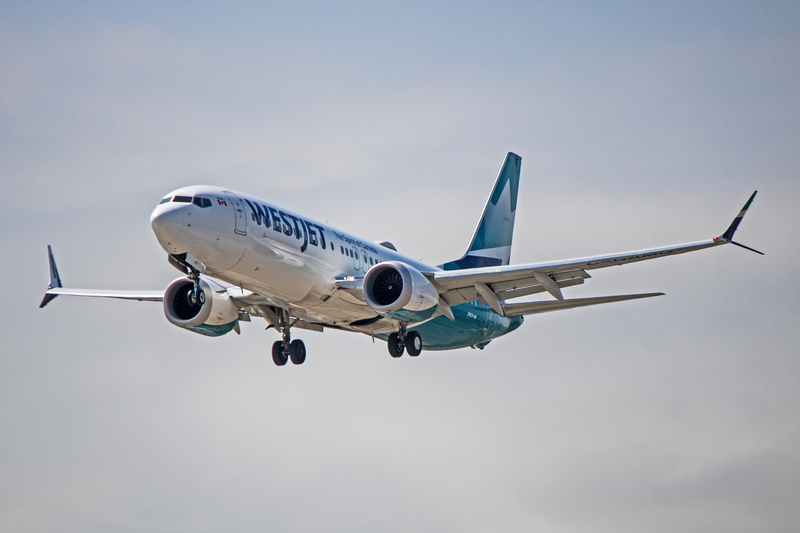
The Boeing 737 MAX 8 is the key aircraft behind most of the expansion.
WestJet lists the type with 12 Premium seats and 162 Economy seats in one common layout, for 174 seats total. The airline also lists a 6,480 km range, CFM LEAP-1B engines, and a cruise speed of 850 kph.
That range is what makes the European growth possible.
The MAX 8 can connect Eastern Canada with many thinner European markets. It can also serve Iceland from Western Canada.
This gives WestJet flexibility.
A widebody would be too large for many of these routes. A smaller older narrowbody may not have the same range or economics. The MAX 8 sits in the middle.
That is why it is central to the airline’s 2026 international plan.
WestJet Is Reducing Reliance On The U.S.
The expansion also says something about demand trends.
WestJet has been shifting more attention toward Europe, Latin America, and sun destinations. That comes as Canadian demand for U.S. travel has been softer in some markets.
The airline is not abandoning the United States. Detroit is part of this expansion, and WestJet still has a large U.S. network.
But the growth emphasis has clearly changed.
WestJet is leaning into places where Canadians are still showing strong demand: Europe, Mexico, the Caribbean, Central America, Colombia, Iceland, and now Brazil.
That makes the network more balanced.
It also gives WestJet more ways to use aircraft outside the traditional Canada-U.S. leisure cycle.
Halifax And Toronto Are Becoming More Important
Calgary remains WestJet’s most important global hub.
But 2026 shows that the airline also wants more growth from Eastern Canada.
Toronto and Halifax are the biggest examples.
Toronto gives WestJet access to Canada’s largest population base. Halifax gives the airline a shorter transatlantic stage length and a useful Atlantic Canada gateway.
Those two airports allow WestJet to use the MAX 8 in ways that would be harder from Western Canada.
A Halifax–Europe flight is shorter than a Calgary–Europe flight. That opens more markets to narrowbody aircraft.
Toronto also has the demand base to support unique routes like Cardiff, Ponta Delgada, Glasgow, and Medellín.
A More Complex Airline Than Before
WestJet is no longer just a low-cost domestic carrier.
Its network now includes domestic trunk routes, U.S. flying, sun destinations, European narrowbody routes, Iceland links, and long-haul 787 services.
That brings opportunity. It also brings complexity.
Longer routes require more careful planning. Weather, aircraft utilization, crew scheduling, international approvals, and seasonal demand all matter more.
The Calgary–São Paulo schedule change is a good example. A route can be strategically attractive and still need adjustment before launch.
That does not make the expansion weak. It shows the airline is testing markets carefully.
Bottom Line
WestJet’s 2026 international expansion is one of the airline’s most interesting network moves in years.
The carrier is adding 13 international routes across Europe, South America, Iceland, Latin America, the Caribbean, Mexico, and the United States.
Halifax (YHZ) gets a major transatlantic push with Lisbon (LIS), Madrid (MAD), and Copenhagen (CPH), plus a daily Detroit (DTW) link. Toronto (YYZ) adds Medellín (MDE), Glasgow (GLA), Cardiff (CWL), and Ponta Delgada (PDL). Edmonton (YEG) and Winnipeg (YWG) gain Keflavík (KEF). Calgary (YYC) gets the flagship São Paulo (GRU) route on the 787-9. Québec City (YQB) and Saskatoon (YXE) add more winter sun access.
The Boeing 737 MAX 8 makes much of this possible. It gives WestJet the range and seat count to open thinner international routes without using widebody aircraft.
The 787-9 handles the bigger long-haul opportunity to Brazil.
For WestJet, the message is clear. The airline is becoming more international, more seasonal, and more balanced across Canada. Calgary remains central, but Halifax, Toronto, Edmonton, Winnipeg, Québec City, and Saskatoon are all part of the next stage.
Keep reading FlyMag
Get the Daily Brief in the morning or the Route Watch weekly recap on Fridays. Or both.